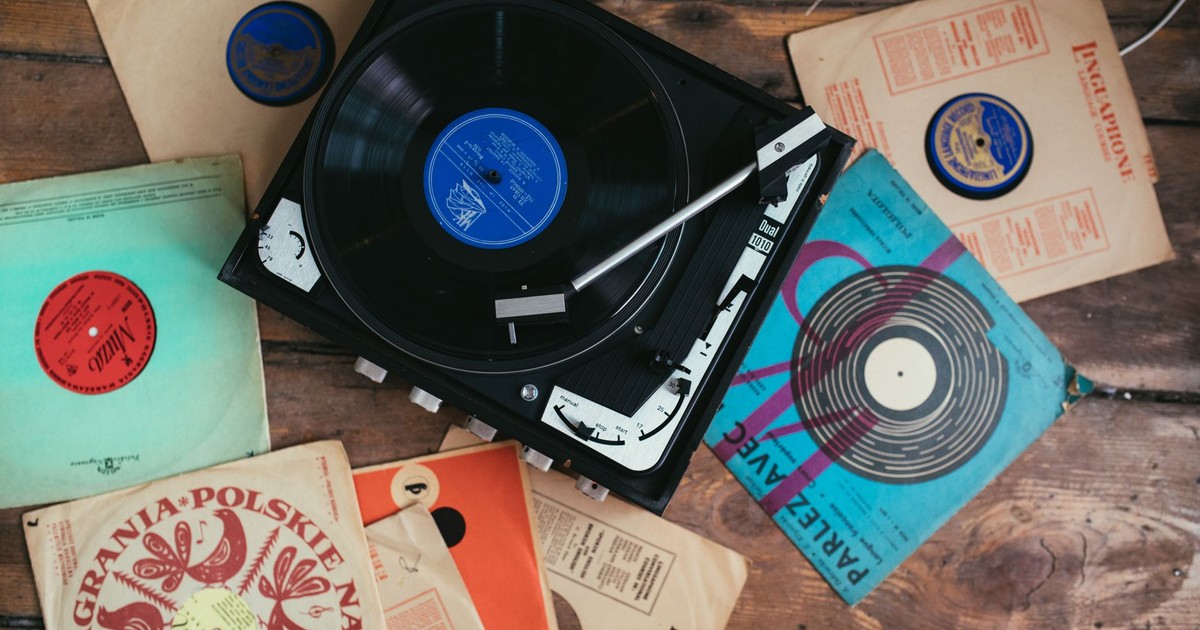

Put on a record in 1960 and you’d have heard Chubby Checker trying to convince America to contort itself at parties. Play something from 1969, just nine years later, and you might land on Marvin Gaye or the Stones or a Hendrix cover that rewrote the original. The decade moved that fast. The distance between “The Twist” and “Gimme Shelter” is not just musical – it’s a full cultural rupture, squeezed into less than a decade and delivered through transistor radios and AM stations and the occasional television variety show performance that stopped households mid-dinner.
Rock and roll found new ground, soul found its full voice, Motown built an empire, and folk rewrote what a pop single was allowed to say. The 16 songs below aren’t simply a “greatest chart-performers” list, though most of them were exactly that. They’re the ones that tell the story of a decade that refused to stand still.
The 1960s also changed how people listened. AM radio still ruled singles, but FM radio grew in importance later in the decade, eventually becoming home for the longer, more adventurous records that couldn’t fit the three-minute AM mold. Television helped break artists through variety shows and youth programs. Albums became more important as artists began treating LPs as complete experiences rather than just containers for singles. By the time the decade closed, a song like “Hey Jude” could run seven-plus minutes and get played front to back on the radio without anyone flinching. That would have been unthinkable in 1960. This list moves roughly chronologically, because the decade’s story is most interesting when you watch it build.
The Twist – Chubby Checker (1960 and 1962)
Chubby Checker’s rock-indebted dance track “The Twist” is the only song ever to hit No. 1 in two separate runs, in 1960, and again in 1962 due to its revival in pop culture. No other song in the history of the Billboard Hot 100 has managed that, before or since. The Twist didn’t just sell records, it sold a physical vocabulary, a new way to move at a party, a reason for teenagers and their parents to argue about propriety. It gave TV hosts something to clutch their pearls about.
Will You Love Me Tomorrow – The Shirelles (1961)
The Shirelles were one of the first all-female groups to reach No. 1 on the Billboard Hot 100 with this track, written by Gerry Goffin and Carole King. It asked a question that polite society preferred nobody ask out loud, particularly not young women on record. The soft, strings-drenched arrangement gave the song cover; the lyric underneath was something else entirely. It pointed the way toward what the decade would keep doing: wrapping subversive content inside something the radio would actually play.
Surfin’ U.S.A. – The Beach Boys (1963)
Before the British Invasion reshuffled everything, the Beach Boys had already built their own mythology around California sun and teenage freedom. “Surfin’ U.S.A.” became the sound of a specific American fantasy: open roads, summer permanence, the feeling that the best version of life was always happening somewhere slightly west of wherever you currently were. It didn’t need to be complicated. It just needed to be irresistible, and it was.
I Want to Hold Your Hand – The Beatles (1964)
“I Want to Hold Your Hand” became an instant No. 1 on the Billboard Hot 100 when it arrived in early 1964, and what followed was total occupation. During the week of April 4, 1964, the Beatles famously dominated the Billboard Hot 100, including holding the entire top five. “I Want to Hold Your Hand” was the opening statement, deceptively simple, constructed with a precision that disguised how much craft was packed into three minutes. It also changed what American teenagers thought British music could sound like, which is to say: everything.
My Girl – The Temptations (1965)
Motown in 1965 was not a record label so much as a feeling. Motown practically created its own genre, landing 18 songs atop the Hot 100, including 12 from the Supremes. The Temptations were the other side of that coin: five men, perfect harmonies, choreography so tight it looked effortless. “My Girl” was their first No. 1, and it became the Motown template: warm without being saccharine, optimistic without being naive, and built around a hook that nobody has ever successfully gotten out of their head. David Ruffin’s lead vocal has a quiet certainty to it that still works sixty years later. You believe him completely.
(I Can’t Get No) Satisfaction – The Rolling Stones (1965)
If the Beatles’ arrival was a party, the Stones were what happened when the party got complicated. “(I Can’t Get No) Satisfaction” became the Rolling Stones’ first No. 1 on the Billboard Hot 100, reaching the top on July 10, 1965, and staying there for four weeks. From the album Out of Our Heads, this rock ‘n’ roll classic pokes fun at little ironies that we all observe. Keith Richards famously recorded the opening riff on a cassette player in a hotel room in the middle of the night, half-asleep, expecting to erase it in the morning. He fell back to sleep before he could. The fuzz-toned guitar line that resulted became one of the most recognizable in rock history, and the lyric underneath it turned commercial frustration and boredom into something that sounded like a full-throated rebellion. Connecting that raw energy to the decade’s musical evolution is easy when you remember what dance-band music sounded like just fifteen years earlier.
Like a Rolling Stone – Bob Dylan (1965)
Bob Dylan’s “Like a Rolling Stone,” released in 1965, marked a turning point in music history. The song’s introspective and poetic lyrics challenged the conventions of popular music, redefining what a hit single could be. At over six minutes long, it defied radio norms yet captivated listeners with its raw emotion and complexity. Dylan had already established himself as a folk icon, but this record announced something different: a harder, electric sound that his core audience initially rejected. He was booed at Newport. He didn’t particularly care. “Like a Rolling Stone” was later voted the greatest song of all time by Rolling Stone magazine, cementing Dylan’s legacy as a cultural icon.
Good Vibrations – The Beach Boys (1966)
By 1966, the Beach Boys weren’t making surf music anymore. Brian Wilson had moved indoors, reportedly recording in his sandbox-filled living room, and was building something architecturally complex enough to challenge whatever the Beatles were doing in the studio. “Good Vibrations,” released in 1966, is considered one of the most innovative pop songs of all time. It took six months and seventeen recording sessions across four different studios to complete. The result was a pocket symphony, a song that kept changing shape just when you thought you understood it, and one that proved pop music had no ceiling, only producers and musicians who weren’t ambitious enough to find it.
Respect – Aretha Franklin (1967)
Aretha Franklin’s “Respect” became an empowering anthem for women and civil rights in 1967, though it was originally written by Otis Redding. Franklin’s rendition, with its dynamic vocals and commanding presence, transformed the song’s meaning, emphasizing personal and collective strength. Redding’s version was good. Franklin’s version was a reckoning. She didn’t just cover a song, she redefined its terms, spelled out its central demand letter by letter, and handed it back to the culture as something it hadn’t asked for but clearly needed. The R-E-S-P-E-C-T spelling had no precedent in popular music. It became a cultural shorthand for an entire movement.
Groovin’ – The Young Rascals (1967)
Not every song from this decade needed to carry the weight of history. “Groovin'” did something rarer: it made doing absolutely nothing sound like the best possible use of a Sunday afternoon. It was a No. 1 record in the spring of 1967, and its whole appeal was the absence of urgency, a warm, lilting groove about wanting time to slow down. In a decade that was often extraordinarily loud about everything, the song’s gentleness was its own kind of statement.
Light My Fire – The Doors (1967)
Jim Morrison wrote the verses. Robby Krieger wrote the chorus and brought the song to the band. What emerged was a track that spent three weeks at No. 1 in 1967 and introduced a generation to the idea that a pop song didn’t need to stay inside three minutes or avoid the uncanny. The album version ran to seven minutes and six seconds, far beyond what AM radio’s three-minute rule would allow, so Elektra Records edited it down to under three minutes for commercial airplay, a practice that would become standard procedure for overlong singles throughout the rest of the decade. The Doors sounded like nobody else on the radio, which was the point.
Ode to Billie Joe – Bobbie Gentry (1967)
Four weeks at No. 1, and nobody has ever entirely agreed on what it means. Bobbie Gentry wrote, arranged, and produced this southern Gothic narrative herself, an almost unheard-of level of control for a debut artist in 1967, let alone a female one. The song withholds more than it reveals: a death, a family at dinner, something thrown off a bridge. The unanswered questions were the whole architecture of the thing. It stayed No. 1 long enough that people started inventing their own answers, and the conversation about what Billie Joe threw into the Tallahatchie River is still technically ongoing.
Hey Jude – The Beatles (1968)
Paul McCartney penned “Hey Jude,” a song initially meant to comfort John Lennon’s son, Julian, during his parents’ divorce. The track, with its soothing melody and uplifting message, quickly became an anthem for unity and healing. It was also the first song ever released on Apple Records, the Beatles’ own label. The seven-minute running time was scandalous for a commercial single. It spent nine weeks at No. 1 in the United States and remains one of the best-selling singles in British music history. The na-na-na outro, which McCartney originally intended as a placeholder for real lyrics, stayed in because it turned out to be exactly right. Sometimes the placeholder is the point.
I Heard It Through the Grapevine – Marvin Gaye (1968)
“I Heard It Through the Grapevine” is one of the most emotionally gripping soul recordings ever released. Built around haunting production and Marvin Gaye’s unforgettable vocal performance, the song became a defining moment for Motown and late-1960s soul music as a whole. Gladys Knight and the Pips had already released a version earlier that year. Gaye’s take had actually been recorded first and then shelved by Motown for over a year, because the label thought it was too dark. They were correct about the darkness. They were wrong to think that was a problem. When it was finally released, it spent seven weeks at No. 1 and became one of Motown’s biggest-selling singles of all time.
Aquarius / Let the Sunshine In – The 5th Dimension (1969)
“Aquarius / Let the Sunshine In” peaked on the Billboard Hot 100 for six weeks, resulting in the best-selling record of 1969. It was drawn from the Broadway musical Hair and brought the counterculture’s most optimistic language to the mainstream, not as protest, but as pageant. The 5th Dimension made it feel accessible rather than confrontational, which is probably why it connected with such a wide audience. The Age of Aquarius had been coming for a while; this song made it sound like a party invitation.
Come Together – The Beatles (1969)
The Beatles ended the decade the same way they dominated it: with something that didn’t sound like anything else. “Come Together” delivered swampy, hypnotic rock energy, while George Harrison’s “Something” on the same double A-side revealed one of the most beautiful love songs in the entire Beatles catalog. Together, the pairing became a massive commercial success and one of the defining chart entries of the late 1960s. John Lennon wrote it for Timothy Leary’s California gubernatorial campaign, a context that explains everything and nothing about the finished song. The lyrics resist interpretation on purpose. The groove was the point.
What the Decade Actually Did
The 16 songs above don’t represent every corner of the 1960s. They don’t capture the full scope of the civil rights soundtrack, or the protest folk movement’s deepest cuts, or the dozens of Motown singles that could each make a credible claim to this list. What they do capture is the shape of a decade that couldn’t stop reinventing itself, from Chubby Checker’s dance craze to the Beatles’ studio experiments, from Aretha Franklin rewriting a man’s song into a demand, to Bob Dylan refusing to be what anyone expected him to be.
The 1960s music classics on this list hold up not because nostalgia smooths over their edges, but because the edges are still there. “Satisfaction” still sounds restless. “Respect” still sounds like a demand. “Like a Rolling Stone” still sounds like Dylan is a little bit irritated, which is maybe the most honest thing about it. These songs don’t ask you to remember them fondly. They just keep being exactly what they were, which turns out to be more than enough.
AI Disclaimer: This article was created with the assistance of AI tools and reviewed by a human editor.