

You wake up and your shoulder hurts. Not in a “slept funny” way that shakes itself out by the time the coffee brews, but in a deep, dull, won’t-quit way that follows you through the morning and sometimes well into the afternoon. You haven’t lifted anything heavy. You haven’t started a new exercise routine. You’ve done nothing different except sleep.
Sleep position shoulder pain is a documented physiological process playing out on your shoulder joint every night for seven or eight hours at a stretch. Your body is compressed, your tendons are squeezed, and the blood that those tissues need is restricted at the exact time they’re supposed to be recovering.
What’s Actually Happening Inside the Joint

The rotator cuff is a group of four muscles and their tendons that wrap around the shoulder joint, holding the ball of the upper arm bone snugly in its socket while also powering the full range of arm motion. It does a tremendous amount of work during the day, and ideally gets a genuine rest at night. The quality of that rest depends entirely on how much pressure is sitting on those tendons while you sleep.
Shoulder impingement syndrome, clinically known as subacromial impingement syndrome, is a spectrum of disorders involving rotator cuff tendinopathy, partial or complete tears, and inflammation of the subacromial bursa, the fluid-filled cushioning sac between the rotator cuff and the bone above it. When you sleep in a position that compresses this space, the subacromial space narrows, squeezing the structures beneath it and contributing to tissue damage that accumulates over months and years.
If you’re waking up with rotator cuff pain, commonly felt in the deltoid muscle or upper arm, your sleep position could be responsible. Sleeping in awkward positions puts direct stress on the shoulder joint and increases the risk of impingement or compression of the rotator cuff tendons. At night, this isn’t a brief moment of awkward pressure. It can be sustained for hours, in the same position, with no muscles actively stabilizing the joint.
Rotator cuff pain also tends to intensify at night for another reason: research shows that proinflammatory proteins increase during sleep, which worsens shoulder discomfort in people with existing rotator cuff injuries. You’re compressing an already-irritated structure, in a position that may reduce blood flow, while the body’s own inflammatory processes ramp up.
Why Side Sleeping Is the Main Culprit

Side sleeping is the most common sleep position according to medical research. It is also the position most directly associated with sustained compression of the shoulder tendons and bursa.
Prolonged pressure on one shoulder during side sleeping can reduce blood flow, limiting the delivery of oxygen and nutrients to the tissues. That compression also squeezes the surrounding soft tissues and strains the rotator cuff. For a few hours, the body can handle this. Over years and decades of sleeping the same way, night after night, the cumulative effect on tendon integrity is harder to dismiss.
A 2024 study examined 58 consecutive patients who all had confirmed partial- or full-thickness rotator cuff tears. Of those 58 adults with rotator cuff injuries, 52 were side sleepers. The association was statistically significant.
An association between side sleeping and rotator cuff damage isn’t proof that side sleeping alone causes the tear. Age, occupation, and genetics all play roles in tendon degeneration. The mean patient age in the 2024 study was 60.3 years, suggesting cumulative damage from decades of sleeping in the same position rather than a single night of poor positioning. But the pattern is consistent enough that side sleeping on an already-compromised shoulder is worth taking seriously.
The Specific Positions That Load the Shoulder
Not all side sleeping is equally problematic, and the details matter. Sleeping directly on the affected shoulder is the most obvious issue. Body weight presses down on the joint, restricting blood flow and increasing pressure on the tendons and bursa for hours at a time. The bursa, a small fluid-filled sac that cushions the space between the rotator cuff and the bone above it, becomes further inflamed when direct pressure from side sleeping is applied overnight.
Sleeping with your arm raised overhead compounds the problem even when you’re not lying on that shoulder. Sleeping with your arms overhead in any position risks compressing the rotator cuff tendons by narrowing the subacromial space from a different angle. Many people do this without realizing it, waking to find their arm tucked under the pillow or stretched above their head, unaware that they’ve spent the last three hours in a structurally unfavorable position.
Stomach sleeping creates its own issues. In this position, the neck is rotated to one side for hours, creating torsion that radiates through the shoulder blade and upper arm. Even if the shoulder itself isn’t under direct compression, the chain of tension from the neck through the shoulder girdle is rarely comfortable for anyone dealing with existing shoulder pain.
A 2018 cross-sectional study found that the primary proposed causes behind sleep-related shoulder pain are subacromial tendon compression and reduced tendon blood flow, and some sleep postures specifically increase subacromial pressure.
The Mattress and Pillow Equation
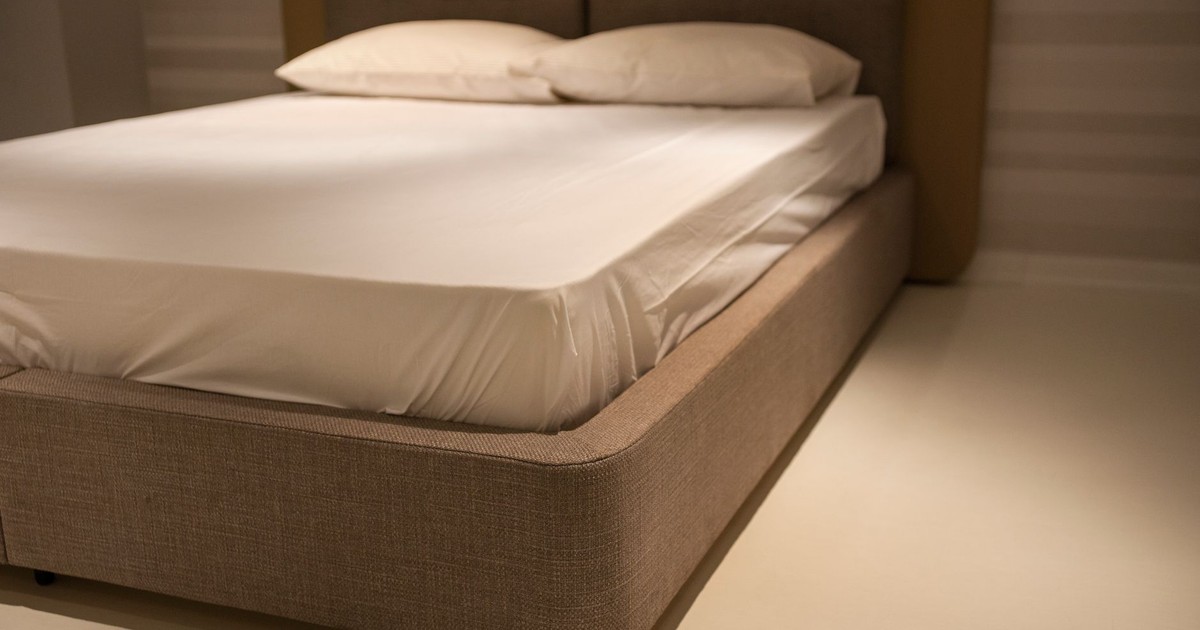
The position itself is only part of the equation. A mattress that doesn’t accommodate your shoulder width, specifically one that is too firm to allow the shoulder to sink in naturally when you’re on your side, increases the pressure on the joint even in what should be a neutral position.
Side sleeping on a mattress that is too firm for your body weight creates excessive pressure on the shoulder joint. What “too firm” means varies by body size and shape: a smaller person sleeping on a firm mattress will have proportionally less cushioning at the shoulder than a larger person on the same surface, because the shoulder-to-hip width ratio changes how the body distributes weight during side sleeping.
Pillow height matters in a related way. A pillow that is too low leaves the head dropping toward the mattress, pulling the top shoulder forward and internally rotating the arm, which increases pressure in the subacromial space. A pillow that’s too high pushes the neck into lateral flexion, creating muscular tension throughout the shoulder girdle. The goal is a pillow height that keeps the head, neck, and spine aligned while the shoulder has enough room to sit comfortably without torquing. If you’re a side sleeper and memory foam mattresses are on your radar, they’re specifically designed to distribute body weight more evenly, which can relieve pressure at the shoulder, hip, and back compared to firmer options.
What the Research Says About Back Sleeping

The best sleeping position to prevent rotator cuff pain is on your back, with your arms resting comfortably at your sides. This removes sustained compression from both shoulders, keeps the subacromial space open, and allows tendons to recover overnight rather than spending eight hours under load.
For shoulder pain specifically, sleeping on your back with your arms resting at your sides is the recommended alternative, but if back sleeping is difficult, lying on the opposite side while hugging a pillow can keep the sore shoulder slightly forward and supported, relieving pressure on the irritated tissues and allowing blood to flow more freely through the joint.
You don’t get to consciously choose your position all night. Accelerometer-based research on 664 sleepers found that participants spent approximately 54 percent of the night sleeping on their side and 37 percent on their back. Changing your default sleep position takes time and usually requires some physical cues: pillows placed strategically to make rolling onto the painful shoulder less likely, or a body pillow hugged to the front to discourage full rotation onto the affected side.
For anyone already dealing with shoulder pain, the practical guidance is to sleep on your back or on your unaffected side. If back sleeping is your goal, a medium-height pillow paired with a small pillow placed under the affected arm can maintain that position more comfortably.
When Stretching and Strengthening Enter the Picture

Sleep positioning sits inside a larger picture of shoulder joint health. Tendons that are already degenerating or inflamed are more vulnerable to compression during sleep; tendons that are well-supported by strong surrounding musculature are more resilient.
Five to ten minutes of gentle shoulder mobility before bed can reduce overnight stiffness by improving circulation and lengthening tissues before they remain in one position for hours. Looser, better-circulated tissue going into sleep is less reactive to the sustained compression that follows.
Rotator cuff tendinopathy is mostly associated with pain during arm elevation and external rotation, but pain can also occur during sleep or rest in more irritable presentations. If you’ve reached the point where lying down hurts regardless of position, a physiotherapist or orthopedic clinician can assess what’s happening structurally.
Rotator cuff-related shoulder pain has a multifactorial cause including age, loading history, biomechanical factors, psychosocial factors, lifestyle, and general health. First-line treatment should be non-operative, including exercise prescription with or without pharmacological treatments or other modalities such as manual therapy.
What to Watch For

Morning shoulder pain that eases as you move through the first thirty to sixty minutes of the day is the most common presentation of sleep-related shoulder damage. The joint warms up, blood flow returns, and the compressed tissues get some relief. If your shoulder pain is significantly worse first thing in the morning and improves with movement, sleep position is almost certainly a contributing factor, even if it isn’t the whole story.
Pain that radiates down the arm, causes numbness or tingling in the fingers, or fails to improve at all after you’ve been moving for an hour suggests something more complex than pure sleep positioning: nerve involvement, a significant rotator cuff tear, or cervical spine issues that can mimic shoulder pain. This warrants proper evaluation rather than pillow rearrangement.
Rotator cuff injuries, tendonitis, arthritis, or shoulder instability often worsen when you sleep directly on the affected side. If a specific diagnosis is already in play, the urgency of addressing sleep position increases. You’re not just uncomfortable; you’re potentially sleeping on an injured structure for eight hours every night.
The Long Game

Sleep position shoulder pain is one of those problems that feels minor until it isn’t. The pattern tends to be slow: a bit of stiffness that becomes occasional pain that becomes pain most mornings that becomes pain most nights, at which point getting a good night’s sleep is no longer something you can take for granted.
The earlier you take it seriously, the more options you have. A pillow adjustment costs nothing. Sleeping on your back instead of your side is uncomfortable for a few weeks and then, for most people, perfectly manageable. A mattress that actually fits your body type is a significant investment but one that pays off in ways that extend well beyond shoulder pain.
Some of these patterns go back years, and changing a sleep position that your body has settled into over decades isn’t a single-night fix. Paying attention to where your arm rests when you close your eyes costs nothing at all.
Disclaimer: This information is not intended to be a substitute for professional medical advice, diagnosis, or treatment and is for information only. Always seek the advice of your physician or another qualified health provider with any questions about your medical condition and/or current medication. Do not disregard professional medical advice or delay seeking advice or treatment because of something you have read here.
AI Disclaimer: This article was created with the assistance of AI tools and reviewed by a human editor.