

Your parents probably don’t lead with it in conversation, but ask the right question and it comes out: the year a teacher hit a classmate with a wooden paddle in front of the room, the morning they got sent home for wearing the wrong length skirt, the shop class they were sorted into at thirteen based purely on whether they were a boy or a girl. The 1970s American school day was governed by a set of rules that felt completely normal to the people living inside them, which is part of what makes them so striking to read about now.
Every era has its norms. The children who sat through paddlings, mandatory prayers, and gender-sorted class schedules are the parents and grandparents of students today. The gap between those two realities is not as wide as it might seem.
This is a look back at 15 1970s school rules that shaped a generation, told through what actually happened rather than what we’d prefer to remember.
1. Corporal Punishment Was Standard Discipline
The wooden paddle was not some relic from a harder century. Teachers and principals kept paddles in their offices the way they kept attendance ledgers. It was simply part of the furniture.
The prevalence of school corporal punishment in the United States declined from four percent of the total number of children in schools in 1978 to less than one percent in 2014, which tells you something important: at the start of the decade, paddling was very much a live practice in most of the country. In 1977, the question of the legality of corporal punishment in schools was brought to the Supreme Court. At that point, only a handful of states had outlawed physical punishment in public schools. The Court upheld the legality of corporal punishment in schools in the landmark Ingraham v. Wright. The ruling didn’t create the practice. It just confirmed that nobody had to stop. For most of the decade, if a teacher decided a student needed to be hit, the law was squarely on the teacher’s side.
Between 1974 and 1994, 25 states enacted bans on corporal punishment in public schools. States like Massachusetts, Hawaii, Maine, and Rhode Island were among the early adopters. But that movement away from paddling happened slowly and unevenly. For the kids in the middle of the decade, in states that hadn’t yet banned it, a paddle in the principal’s office was simply the consequence you risked if you stepped too far out of line.
2. Girls Were Banned From Wearing Pants

Getting dressed for school in the early 1970s often came down to one expectation: a skirt or a dress, no exception. Dress codes in many districts treated pants as too casual or inappropriate for female students. Neatness, femininity, and respect were tied directly to wearing a skirt, turning clothing into a statement about behavior. Turning up in trousers could mean being sent right back home. Acceptance of pants for girls did not become widespread until later in the decade.
The battles over this rule were real and sometimes organized. Students staged walkouts. Petitions circulated. Girls who violated these codes faced being sent home or receiving demerits that could affect their academic standing. The fight for girls to wear pants to school became a significant battleground in the women’s rights movement, with court cases throughout the 1970s eventually leading to more equitable dress policies.
Meanwhile, miniskirts were perfectly legal. So a girl could walk into school wearing a skirt barely covering the tops of her thighs and nobody would send her home, but a pair of clean, well-fitted trousers was grounds for immediate removal. The logic was its own kind of statement about what the rules were really about.
3. Skirt Length Was Physically Measured by Teachers
Even once girls were allowed to wear skirts, the skirts themselves were subject to a level of regulatory scrutiny that would stun any modern administrator. Hemlines had a clear boundary in many 1970s school dress codes, with the knee acting as the unofficial finish line. Teachers and administrators sometimes measured skirts directly against a student’s knee to enforce the rule. Official policy mixed with awkward moments, creating a situation that felt both serious and oddly absurd.
Skirt length was checked by having girls kneel, with hemlines required to touch the floor. Some schools used rulers. Others used the kneeling method. The point was that a teacher could, at any moment, physically check the clothing of a teenage girl to make sure her knees were sufficiently covered. That this happened during the same decade that the feminist movement was reshaping American law says something about how long institutions take to catch up with culture.
The asymmetry wasn’t lost on the students at the time, and it didn’t disappear quietly. Girls who had been sending notes through the student council about dress code unfairness graduated into the generation that fought for equal rights in the workplace. The hem-check was, for many of them, the first time they understood what it meant when the rules weren’t written for them.
4. Boys’ Hair Was Regulated by the Inch

Long hair brushing a collar could land a kid in the principal’s office before the first bell even rang. Many school districts in the early 1970s enforced written rules limiting how long boys could wear their hair, often measuring it against ears, collars, or eyebrows. Policies sounded almost comedic on paper, yet enforcement was real, with students sent home until they returned with a fresh haircut. Hair length turned into something treated like a moral concern rather than a simple style choice.
School dress codes of the era illustrate exactly how precise these rules got. Boys’ hair had to be kept above the eyebrows, trim and neat, with sideburns not permitted below the bottom of the ear. In some districts, this represented a relaxation of even stricter prior policies. Progress, apparently, was measured in millimeters.
The cultural backdrop makes the rule stranger in retrospect. The biggest rock stars on the planet had hair past their shoulders. The counterculture had been making long hair synonymous with a whole set of values that school administrators were specifically trying to suppress. Sending a boy home to get a haircut wasn’t just about aesthetics. It was a statement about who got to set the terms for what a young man was allowed to look like.
5. Boys Had to Be Clean-Shaven

Hair length wasn’t the only grooming rule on the books for male students. Strict no-beard and no-mustache rules appeared in many school grooming codes for male students during that era. Even a little peach fuzz could mean a trip to the office and a call home to parents. In some schools, students could be sent to fix the issue before returning to class. Clean-shaven faces were seen as a sign of discipline and respect for the institution.
Even sideburns had a strict boundary in the 1970s school rulebook, and that boundary was the earlobe. Schools that allowed some facial hair still drew the line at sideburns creeping past a certain point. A teacher might actually pull out a ruler to check, which must have felt completely surreal on a Monday morning. Elvis had made long sideburns cool, which is probably exactly why school officials wanted them gone.
The message to teenage boys was consistent: your face is not your own. Your hairline is not your decision. The institution has an opinion about your eyebrows. Whatever you felt like you were expressing through your appearance, the school had a rule that preemptively disagreed.
6. Designated Student Smoking Areas Were Officially Sanctioned

Many high schools in the 1970s had designated smoking areas for students. These “smoking corners” or “smoking courtyards” were officially sanctioned spaces where students aged 16 and up could light up between classes.
The legal smoking age was 18, but enforcement was lax, and it wasn’t uncommon to see students as young as 16 lighting up during breaks. Schools rationalized that it was better to give kids a designated space rather than have them sneak off-campus. This was the educational equivalent of a harm-reduction strategy, except the “harm” was entirely the school’s willingness to watch teenagers smoke on a bench near the gym. Teachers would often join students for a smoke, and the practice began phasing out only in the late 1970s as health concerns grew.
The CDC confirms that the Surgeon General released his first report linking cigarettes to cancer in 1964. By the 1970s, this wasn’t exactly breaking news. And yet, schools maintained the smoking courtyards. The distance between what was known and what was done says a great deal about how slowly institutional behavior changes, even when the evidence is in front of everyone.
7. Home Economics Was Mandatory for Girls

Schools routinely assigned boys to shop classes (carpentry, mechanics) and girls to home economics (cooking, sewing). These courses reinforced traditional gender roles, preparing boys for physical labor and girls for domestic responsibilities. The sorting was not presented as a choice. It was simply the schedule. A girl who wanted to learn how to fix a carburetor and a boy who wanted to learn to make a pie crust were not exactly encouraged.
The feminist movement of the 1960s and 1970s challenged these gendered roles. Title IX, passed in 1972, prohibited discrimination based on sex in education, which included requiring students to take gender-specific classes. By the 1980s, students were allowed to choose their electives regardless of gender.
Reading accounts from women who grew up in this era, what stands out is how invisible the arrangement felt to them at the time. It wasn’t a policy they were aware of being subjected to. It was just what happened. Girls went to home ec. Boys went to shop. The assumption was so thoroughly embedded in the structure of the school day that it didn’t register as a rule worth questioning until the legal framework caught up and made it one.
8. School Prayer Was a Morning Routine
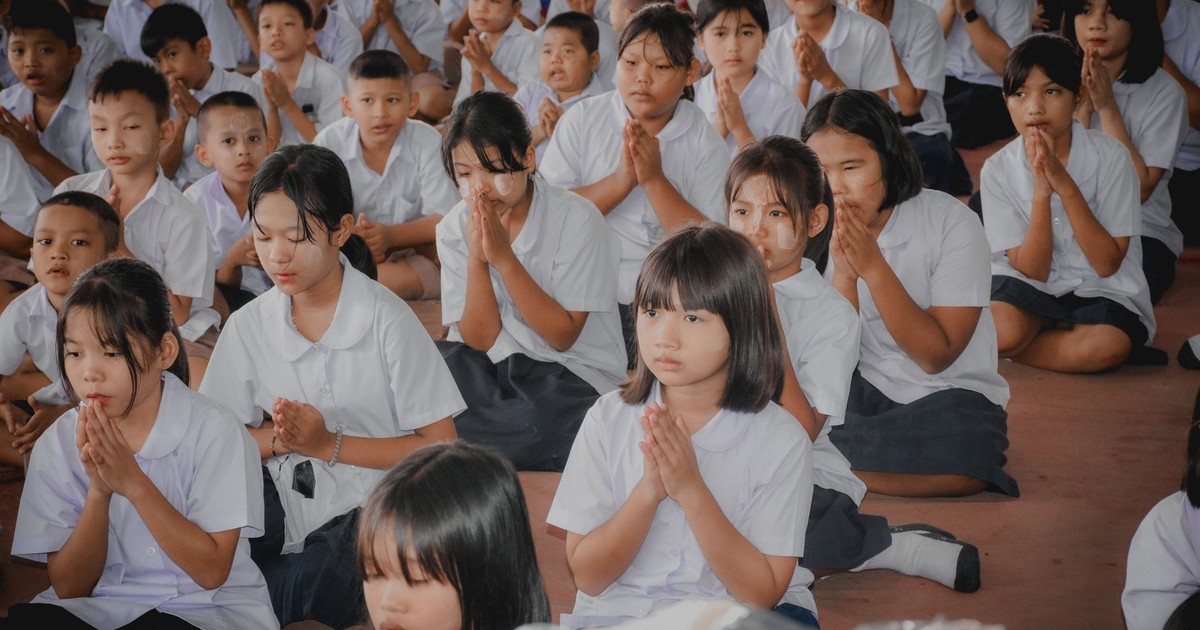
Many schools started each day with Christian prayer and Bible readings, regardless of students’ religious backgrounds. No opt-out options were available. Such practices would violate current separation of church and state requirements in public schools.
The Supreme Court had actually ruled against state-sponsored school prayer much earlier, in Engel v. Vitale (1962). But court rulings don’t always change what happens in individual classrooms, especially in communities where the practice was deeply embedded in local culture. Many schools continued opening the day with prayer well into the 1970s, relying on the distance between what federal law required and what anybody was willing to enforce locally.
Subsequent court rulings deemed mandatory school prayers unconstitutional, promoting religious freedom and inclusivity. Today, public schools focus on creating an environment that respects diverse beliefs, fostering a more inclusive community for all students. For children who were not Christian, or not religious at all, the morning prayer was a daily reminder that the institution had decided whose beliefs counted as the default.
9. The Pledge of Allegiance Was Not Optional in Practice

Every morning started with the Pledge of Allegiance, and participation was generally not considered optional. While a 1943 Supreme Court case protected a student’s right to sit out, the social pressure was immense. Refusing to stand could land you in trouble with teachers and the principal, who viewed it as a sign of disrespect. Today, while the pledge is still recited, students’ rights to abstain are much more widely acknowledged and respected.
The legal right to decline existed on paper. What existed in practice was a teacher standing at the front of a room full of thirty students, hand over heart, looking directly at the child who was still in their seat. The law said you didn’t have to participate. The environment said something different. For most students, the distinction between a rule enforced by policy and a rule enforced by social pressure was not a meaningful one.
This is one of those 1970s school rules that didn’t disappear so much as it reconfigured. The legal landscape never changed. What changed was the willingness of institutions to acknowledge that the law had always been there.
10. Students Were Publicly Weighed During Health Screenings
Students were weighed in front of their classmates during health screenings, with results announced aloud. The logic, presumably, was efficiency. One scale, one class, work your way down the row. That this involved announcing a teenager’s body weight in a room full of their peers was not considered a problem worth solving.
The understanding of how body image, weight stigma, and adolescent psychology interact hadn’t yet made its way into school policy. Research connecting weight-related teasing to disordered eating, anxiety, and long-term self-esteem problems would develop significantly in the decades that followed. In the 1970s, the annual weigh-in was simply part of the health curriculum. Students who came out of it with a new nickname and a complicated relationship with their body were considered, in the vocabulary of the time, sensitive.
Modern school health protocols have largely moved these assessments to private settings, often with the option for parents to opt out. The change reflects a broader understanding that measuring a child’s body in front of an audience is not a neutral act.
11. Pregnant Students Could Be Expelled

Even when pregnant students were permitted to remain enrolled, they were often segregated in special programs or homebound instruction and banned from participating in extracurricular activities. Pregnant students were prohibited from attending major school events like prom or graduation ceremonies to avoid “glorifying” their condition. Title IX regulations and subsequent court cases eventually provided pregnant students protection against educational discrimination.
The reasoning, when articulated at all, was about moral example. A visibly pregnant teenager was understood to be setting the wrong kind of precedent for other students, as though pregnancy were contagious by proximity. The student who was pregnant faced the loss of her education, her social life, and frequently her standing in the community, while the other person involved in the pregnancy attended school as usual.
Title IX’s 1972 passage eventually made it illegal to push pregnant students out of school programs. But cultural enforcement of these informal rules continued well past the legal change, and in some communities, the pressure to disappear quietly lasted much longer than any policy required.
12. Left-Handed Students Were Forced to Switch Hands

Left-handed students in the early 1970s faced institutional discrimination in many classrooms, where teachers actively tried to convert them to right-handedness. The practice had roots going back much further, tied to a long history of treating left-handedness as a defect or even a moral failing. By the 1970s, the overt stigma had faded somewhat, but the practical bias had not.
Left-handed students used scissors that didn’t fit their hands, sat at desks designed for right-handed users, and were sometimes corrected by teachers who took their pencils and moved them to the right hand. The connection between forced hand-switching and the development of difficulties with writing, stuttering, and coordination had been documented, but the practice persisted in pockets of American education long after the evidence was in.
The shift away from this practice came gradually as understanding of neurological difference improved and the idea that a child’s dominant hand was something to override rather than accommodate fell out of favor. For students who experienced it, the correction was one more lesson that the classroom’s job was to produce conformity, not accommodate individuality.
13. Students Could Be Sent to the Hallway or Confined to Closets

Some educators would lock misbehaved children into closets or empty rooms as a means of “cooling off.” They were dark, dusty, and unsupervised. Students sometimes stayed there for hours. This would be deemed illegal confinement or even abuse today.
The hallway detention was its more benign cousin, common enough that it barely registered as a punishment. A student who disrupted class was simply removed from it, left to sit in a corridor with no supervision and no instruction, sometimes for an entire period. The academic cost of missing that time was not considered part of the punishment calculus.
Both practices reflect an underlying assumption about what school discipline was for. The goal was the removal of disruption from the classroom environment, not the education or rehabilitation of the student causing it. What happened to that student during their time in the hall or the closet was largely irrelevant to the logic of the policy.
14. Written Lines Were Assigned as Punishment

A frequent punishment was to be made to write the same sentence hundreds of times: “I will not talk without raising my hand,” for example. Some students were made to write until their hands ached or they had no more paper. It was not so much about reflection as sheer mental and physical weariness.
The written line was a punishment built on the assumption that repetition produces compliance. Write it enough times and the rule will lodge itself somewhere in the body. Whether any student ever stopped talking in class because they had written “I will not speak out of turn” 500 times is a question nobody seems to have asked seriously at the time.
What the punishment did accomplish was a measurable physical experience of discomfort. Cramped hands, ink-stained fingers, and a page full of identical sentences were proof that something had been endured. The distinction between enduring something and learning from it was not a priority in the 1970s classroom management toolkit.
15. Students with Disabilities Had No Guaranteed Right to Education

In the 1970s, special education services were minimal, and students with disabilities often faced significant challenges. Many schools lacked the resources and trained staff to support these students effectively. The phrase “significant challenges” is doing a lot of work in that sentence. For many children with physical, intellectual, or developmental disabilities, public school was simply not available to them. They were turned away at the door, placed in institutions, or left at home entirely.
The Education for All Handicapped Children Act, passed in 1975, changed this by establishing for the first time that children with disabilities had a right to a free, appropriate public education. Before 1975, that right did not exist. Schools could and did exclude children with disabilities without legal consequence, and most of the infrastructure for supporting those students, from accessible classrooms to individualized education plans, had to be built from scratch in the years that followed.
This is perhaps the sharpest edge on this list, because it wasn’t a rule that governed how students were treated once inside. It was a rule about who got to be inside at all. The generation of children who were excluded from school entirely during the first half of the 1970s are now in their late fifties and sixties. Some of them caught up. Many of them didn’t.
Read More: 13 Things Parents Did in the 50s & 60s That They Could Never Do Today
What These Rules Actually Tell Us

Reading through these 1970s school rules together, a pattern emerges that goes beyond any individual policy. The school day was built around the premise that a student’s primary obligation was compliance, and that the institution’s job was to produce it by whatever means necessary. Clothing, hair, hands, weight, religion, pregnancy, and disability were all understood as variables the school had both the right and the responsibility to control.
Modern education, at its best, operates on the premise that the student is a person whose individual needs the institution exists to serve, rather than a variable the institution exists to regulate. That shift is real, even if it’s incomplete, and it didn’t happen automatically. It happened because people, including plenty of people who went through those 1970s schools, decided the old logic wasn’t good enough and pushed hard enough to change it.
The rules on this list didn’t fade because societies naturally evolve toward better answers. They faded because specific individuals made specific arguments, won specific legal cases, and refused to accept that how things had always been done was a sufficient reason to keep doing them. The children who were weighed in front of their classmates, sent home for the wrong hemline, or turned away from the school door entirely didn’t have a framework for calling what was happening unjust. They just knew it felt wrong. The frameworks came later, built by some of those same people. That’s how most things actually change.
AI Disclaimer: This article was created with the assistance of AI tools and reviewed by a human editor.