

Forty arrives quietly for some women and like a door slamming shut for others, but either way, something changes. Not in a dramatic, movie-montage sense. More like a gradual recalibration – the way a compass steadies after you stop spinning it. The things that used to feel unavoidable, the obligations you swallowed, the relationships you maintained out of guilt, the apologies you offered reflexively – they start to look different. Not because life gets easier after 40, but because the tolerance for things that have never actually served you runs out.
Self-esteem follows a relatively consistent developmental pattern: it increases from adolescence to young adulthood, continues to increase through mid-adulthood, and research places the genuine peak somewhere in the 50s to early 60s before it begins to turn downward. By 40, most women have accumulated enough evidence about what works in their lives and what doesn’t to stop pretending otherwise.
And for women over 40, boundaries stop being something you aspire to and start being something you simply have. Here are 20 things that tend to fall away.
1. Apologizing for Taking Up Space

There’s a specific kind of apology that women learn before they can articulate why they’re doing it – the preemptive “sorry” before stating an opinion, the hedged “I might be wrong, but,” the voice that goes up at the end of a statement as though asking clearance to have just said it. By 40, this pattern becomes audible in a way it never was before. You hear it coming out of your own mouth and recognize it for what it is: a habit, not a truth.
Stopping doesn’t mean becoming loud or combative. It means allowing your words to land without softening them into oblivion first. The opinion is still yours. The request is still reasonable.
2. Friendships That Only Flow One Direction

According to a longitudinal self-esteem study, self-esteem increases through mid-adulthood before turning toward a decreasing trajectory around the 50s or 60s – which means the women most likely to reassess one-sided friendships are doing so at the precise moment their confidence is highest.
Research continues to show that women who make time for close friends feel happier, calmer, and more fulfilled. By your 40s, you’ve had long enough to notice the pattern: you’re always the one who reaches out, always the one who listens for two hours and gets twelve minutes in return, always the one who remembers the important dates.
Letting these dynamics go isn’t a declaration of war. It’s often just a reduction in effort – you stop doing all the reaching, and you find out quickly enough who notices. The friendships that survive that test are the ones worth keeping.
3. Explaining Yourself to People Who Aren’t Listening

Somewhere in the first three or four decades of life, many women develop an elaborate internal legal system. You don’t just make a decision – you prepare the case for it. You anticipate objections, preemptively address them, and deliver the whole argument to someone who had already made up their mind before you started talking.
The realization that comes around 40 is that the explanation was never actually for them. It was for you – proof that you had a good enough reason. When you stop needing that proof, the explanations get shorter. “No, I can’t make it.” Full stop.
4. Relationships With People Who Drain More Than They Give

Self-esteem can be affected when social supports or learning opportunities are limited, and studies show that the quality of relationships plays a key role: women with lower-quality connections often report lower self-esteem, but strong, supportive relationships can buffer this effect.
After 40, you’ve lived in your own body long enough to feel the difference between a conversation that leaves you energized and one that leaves you staring at the ceiling at 11 p.m., replaying everything that was said. That cost becomes impossible to ignore. It doesn’t mean cutting everyone who is going through a hard time – it means distinguishing between a friend in a rough patch and a relationship that is structurally built on your depletion.
5. Being the Family Conflict Absorber

In many families, one person performs the invisible labor of managing everyone else’s feelings about each other. They translate between the sibling who doesn’t call and the parent who takes it personally. They carry the news carefully before delivering it. They stay on the phone for an hour after every holiday managing the aftermath of something they didn’t cause.
By 40, that person – often a woman, often the eldest daughter, often someone who learned this role so young she mistook it for personality – starts to recognize the work for what it is. Unpaid, unacknowledged, and exhausting. The disengagement isn’t about caring less. It’s about recognizing that managing everyone else’s emotions isn’t actually within your job description.
6. Staying Silent When Something Is Wrong
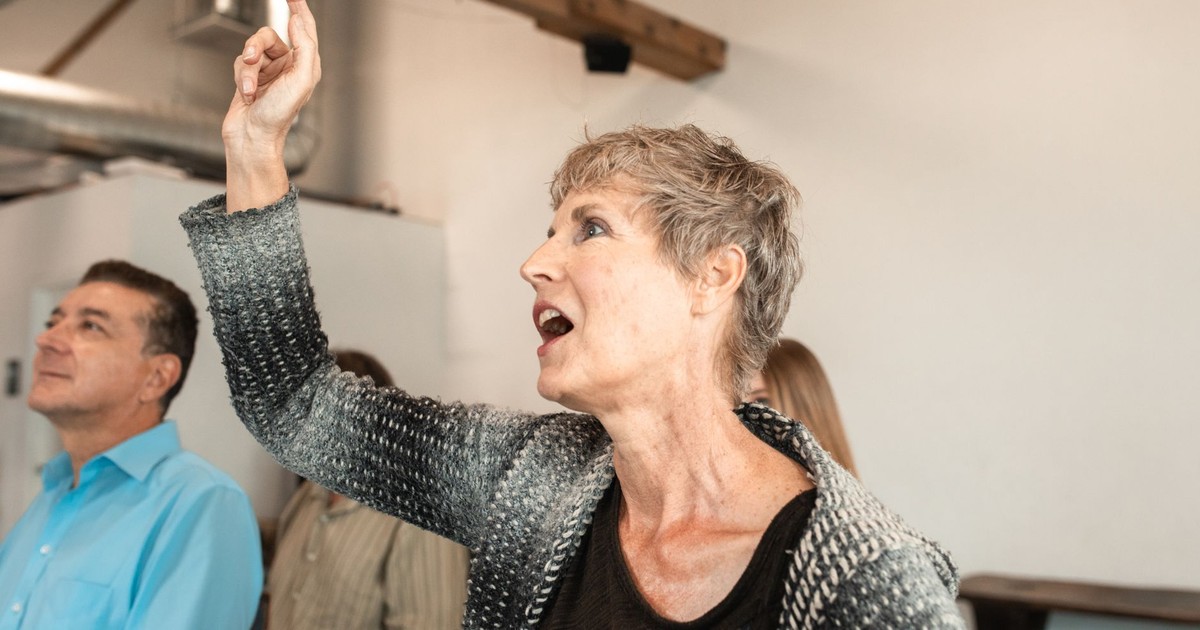
The SWAN study on perceived stress found that self-reported stress decreased for most women as they transitioned through midlife, though results varied by race and site. Women in their 40s are more likely to say the thing. Not aggressively, not after months of passive resentment, but in the moment, directly, without waiting to see if the problem resolves itself.
The alternative – swallowing it, storing it, bringing it up six months later in a context where it doesn’t belong – costs more than the momentary discomfort of naming something when it happens. This is not a personality change. It’s the accumulated cost of the other approach finally exceeding the cost of honesty.
7. Performing Happiness You Don’t Feel

The social requirement to project cheerfulness in situations that don’t earn it is one that many women spend decades meeting. The smile at the work event where you’d rather be anywhere else. The enthusiasm for the relative’s announcement you have complicated feelings about. The “I’m fine” that means the complete opposite.
By 40, this performance becomes harder to sustain, partly because the gap between the performance and the reality gets wider, and partly because you’ve accumulated enough data to know that the people worth being around don’t actually require it. You can say “I’m having a rough week” without the sky falling. It turns out that’s also more interesting to everyone involved.
8. The Guilt Trip as a Relationship Strategy

Guilt is useful information. It tells you when you’ve genuinely done something that conflicts with your values. What it isn’t useful for is a lever that other people get to pull whenever they want a different outcome from you. The guilt trip – the pointed silence, the “I guess I’ll just manage on my own,” the comparison to what you did for someone else in 2018 – stops working when you’ve separated the real signal from the manipulation.
The ability to say “I can see you’re disappointed, and I’m still not able to do that” is not coldness. It’s clarity.
9. Unsolicited Opinions About Their Body or Choices

The comments about your weight, your hair, your relationship status, your decision not to have children or to have three of them, your career, your lifestyle – they don’t stop coming in your 40s. They just stop registering the same way. Research from a qualitative study on midlife body image confirms that women feel society expects them to look and behave a certain way, which negatively impacts them across life stages.
What changes by 40 is the internal capacity to receive that comment and then decline to internalize it. This is a quieter recalibration than the others. Nobody announces it. You just notice that the remark your aunt made about your weight at the last family gathering occupied about thirty seconds of your mental space rather than three weeks.
10. Chronic Overcommitment Out of Obligation

The calendar packed with things you said yes to because saying no felt complicated. The volunteer slot you took because no one else would. The dinner you agreed to because the pause after the invitation went on too long and you panicked.
By 40, a different calculation takes over. Your time has demonstrated its finite nature in a way it hadn’t in your 20s, when you still believed there was always more of it coming. You start treating your schedule like something that belongs to you rather than something to be allocated to whoever asks first. This is not selfishness. It’s basic resource management, applied to the only resource you can’t make more of.
11. Holding Back on What They Actually Want

The relationship you want, the career change, the solo trip, the creative project that never gets started because there’s always something more urgent – by 40, the waiting starts to look less like patience and more like avoidance. Waiting for someone to say it’s okay. Waiting until the circumstances are better. Waiting until you’ve earned it sufficiently.
At some point the question stops being “when will I be ready” and starts being “what am I actually waiting for.” The answer, usually, is an endorsement from somewhere external that was never going to arrive.
12. Being Interrupted Without Pushing Back

When someone interrupts, women who haven’t yet claimed their confidence go quiet. Self-assured women advocate for their right to speak in a kind yet assertive way, and have no problem saying, “I’m not finished talking.”
This is one of those things that sounds small until you count how often it happens in a week. Across meetings, dinners, conversations, every room where someone talks over you and the room just continues. Reclaiming your sentence – without drama, without apology, just “I wasn’t finished” – is a different kind of muscle. By 40, a lot of women have started to use it.
13. Emotional Labor That Was Never Reciprocated

The remembering of every important date in the social circle. The checking in on people who never check in on you. The maintenance of relationships that would collapse tomorrow if you stopped doing the invisible work of sustaining them.
Research notes that women who grew up minimizing their own needs often carry those habits into every relationship they form as adults. What changes at 40 isn’t always that the labor stops – it’s that it becomes visible to the woman performing it. And once you can see it, you can choose what you actually want to keep doing.
14. Romantic Relationships Without Real Reciprocity

Women stop tolerating emotionally unavailable partners once they know their value. They won’t settle for less than they deserve in a relationship, and that requires a vulnerability these people cannot hold.
By 40, most women have had long enough experience with what a relationship without real reciprocity actually feels like – not just the dramatic version, but the quieter kind where someone is technically present but emotionally elsewhere, where your needs are an afterthought, where you’re always the one accommodating. The higher tolerance for this kind of arrangement tends to erode. Not because 40-year-olds are pickier, but because the contrast between what a relationship can be and what this one is becomes harder to blur.
15. Shrinking Themselves in Professional Settings

The idea that being competent and direct is somehow aggressive. The performance of being less certain than you are so the men in the room feel more comfortable. The credit that gets absorbed by someone louder. By 40, many women have spent enough time in enough rooms to understand the game and to be genuinely tired of playing it.
This doesn’t solve structural inequality, but the internal move – from managing how your competence is perceived to simply demonstrating it and letting that be enough – changes what you’re willing to put up with. The job that ignores you for three years while promoting someone with half your experience doesn’t get indefinite patience anymore.
16. The Narrative That Aging Is Something to Apologize For

The anti-aging language that treats the accumulation of your own life as a failure. A qualitative study on midlife body image found that the persistent pressure by Western society for women to be thin is at odds with the natural biological changes most women experience during midlife, including the onset of perimenopause, changes to body shape, weight gain, wrinkles, and greying hair. By 40, a growing number of women have started to push back on the idea that natural change is the same as deficiency.
This is not a uniform experience, and it doesn’t mean every woman loves every change. It means the cultural pressure to perform distress about aging starts to lose some of its grip. The gray can stay. The wrinkle can stay. You’ve got other things to do.
17. People Who Only Appear During Their Own Crises

The friend who surfaces every eighteen months with a catastrophe that needs your full attention, and who is reliably unreachable during yours. The family member whose calls always arrive when they need something and who is conveniently busy during the year you needed support. The pattern is usually visible long before anyone acknowledges it.
By 40, the willingness to be perpetually available to people who are never available in return runs short. This isn’t about abandoning people in genuine need. It’s about noticing the difference between a crisis and a pattern.
18. Pretending Difficult Relationships Are Fine

The relationship with the parent who has never quite changed but whom you’ve spent years describing as better than they are. The partnership that has structural problems you’ve been calling a “rough patch” for four consecutive years. The friendship that you’d describe to anyone else as problematic but that you’ve decided to keep categorizing as normal because naming it accurately would require a decision.
This one is genuinely hard and there’s no clean resolution waiting at the end of it. What changes at 40 is less about fixing the relationship and more about stopping the internal performance of pretending it’s something it isn’t. You can stay in a complicated relationship and still be honest with yourself about its complexity.
19. Doing Everything Themselves Because Asking Feels Harder

The belief that asking for help is an admission of inadequacy rather than a basic feature of how humans were built to live. The exhausted competence that takes everything on because delegating requires explaining, and explaining requires time, and it’s just easier to do it yourself.
By 40, the math on this has usually played out badly enough times that a different approach becomes attractive. Asking is not weakness. Insisting on doing everything alone isn’t strength – it’s a very effective way to run yourself into the ground while everyone around you assumes you’re fine because you always seem fine.
20. The Idea That These Things Make Them Difficult

The meta-shift. The one that makes the other nineteen possible. The belief that having standards, declining things, naming problems, and protecting your time makes you hard to deal with – demanding, ungrateful, cold.
Career milestones, parenting challenges, and financial responsibilities provide concrete evidence of competence, reducing the need for external validation. Part of what that reduced need for validation makes room for is the recognition that having a self – a real one, with actual preferences and limits – is not a character flaw. Women who stop tolerating the things on this list are not difficult. They’re just no longer performing an easier version of themselves for the comfort of people who benefited from that performance.
What Actually Stays

None of this means the 40s are a magic era of effortless confidence. The relationships are still complicated. The history doesn’t disappear. There are still conversations you dread and family dynamics that didn’t resolve just because you decided to stop managing them.
What tends to stick around, and to get richer, is everything that was already real: the friendships that were already mutual, the work that already meant something, the version of yourself that existed underneath all the accommodating. She doesn’t owe anyone an apology. She just needed enough time to become unmistakable.
Some of these patterns go back further than the relationships they live inside. The habit of explaining yourself to people who weren’t listening probably started decades before you noticed it. The reflex of managing everyone else’s comfort at the cost of your own probably felt like kindness for years before it felt like exhaustion. Naming that isn’t the same as fixing it – but it is usually where the real reckoning starts, and 40 turns out to be a reasonable place to begin.
Disclaimer: This information is not intended to be a substitute for professional medical advice, diagnosis, or treatment and is for information only. Always seek the advice of your physician or another qualified health provider with any questions about your medical condition and/or current medication. Do not disregard professional medical advice or delay seeking advice or treatment because of something you have read here.
AI Disclaimer: This article was created with the assistance of AI tools and reviewed by a human editor.