

The conversation about who gets to give birth on American soil has never been louder, but the question being asked right now is different from any version of it before. It is no longer just about what citizenship means after a child is born. The debate has moved upstream – to the border itself, to the question of whether a pregnant woman should be allowed to board a plane to the United States at all.
After losing the birthright citizenship case at the Supreme Court, President Trump’s aides and MAGA allies quickly pivoted to a new plan: blocking pregnant foreign women from entering the United States. The ink on the ruling had barely dried, and the response was already in motion. Not a period of reflection, not a policy working group – a plan to screen women at the point of entry based on whether they appear to be pregnant.
This is the state of the proposed pregnant women immigration ban in the summer of 2026. It is not yet law. It may never be law. But it is a serious proposal with serious institutional momentum behind it, and it deserves a clear-eyed look at what it actually says, where it came from, and what it means for any woman – not just foreign nationals – who might one day need to board a flight to the United States while expecting.
The Supreme Court Ruling That Started It
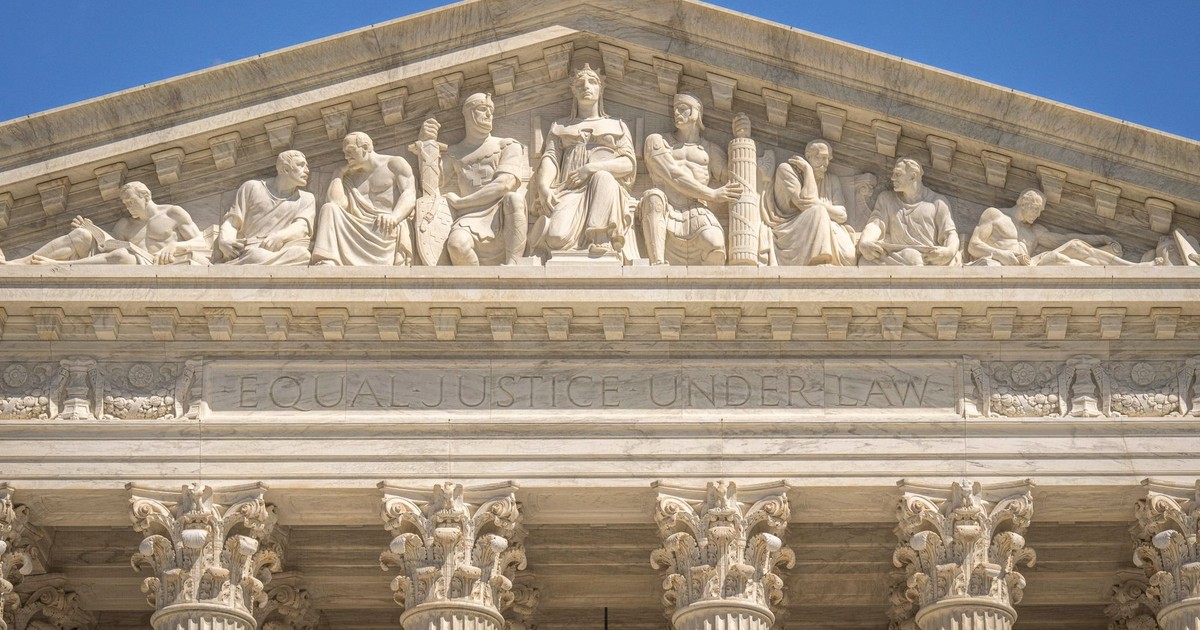
The Supreme Court ruled 6-3 on June 30, 2026 to uphold birthright citizenship, citing the Fourteenth Amendment as clearly enshrining the principle that anyone born on U.S. soil is a citizen. Chief Justice John Roberts wrote the majority opinion, joined by Justices Amy Coney Barrett and Brett Kavanaugh — both Trump appointees — along with the court’s three liberal justices. That order had been blocked by lower courts almost immediately after it was signed on Trump’s first day back in office, and the high court’s ruling was the final word.
The Fourteenth Amendment to the U.S. Constitution automatically conveys U.S. citizenship on anyone born in the United States, regardless of the legal status of their parents. That guarantee has been in place since 1868, and the court confirmed it is not going anywhere by executive fiat. Kica Matos, president of the National Immigration Law Center, called the ruling “an important victory for our democracy” while warning that it showed “how fragile even our most foundational constitutional guarantees have become,” adding that the president “will continue his assault on immigrant communities and the Constitution.”
Within hours of the ruling, administration figures and congressional allies were openly discussing whether the government could simply prevent pregnant women from entering the country in the first place.
What the Proposed Ban Would Actually Do

Tennessee Republican Rep. Andy Ogles introduced the Anchors Away Act on June 30, 2026, legislation that amends the Immigration and Nationality Act to clarify when a child born in the United States is considered “subject to the jurisdiction” of the United States, and makes inadmissible certain pregnant nonimmigrant aliens seeking entry when their primary purpose is to obtain U.S. citizenship for a child by giving birth on American soil.
The bill’s scope is broader than that narrow framing might suggest. The Anchors Away Act would make inadmissible any pregnant alien seeking entry to the United States as a nonimmigrant who is not married to a U.S. citizen – meaning the restriction would apply broadly to pregnant women seeking tourist, student, business, and other temporary visas, regardless of whether they intend to give birth in the United States or seek citizenship for their child.
A pregnant woman on a business visa. A pregnant woman visiting a sick relative. A pregnant woman flying to a conference. Under the language of the bill as written, all of them could be turned away. Katie O’Connor, senior director of federal abortion policy at the National Women’s Law Center, told Axios: “The idea that data about who’s pregnant and how pregnant could get into the hands of the federal government, much less the state governments, that’s a really dangerous proposition.”
House Speaker Mike Johnson has indicated he is weighing a vote on the legislation, giving it more momentum than most fringe proposals ever see.
The “Birth Tourism” Problem – And How Big It Actually Is

The administration frames all of this around birth tourism, the practice of traveling to the U.S. specifically to give birth so a child receives automatic citizenship. It is real. It is also, by most measures, rare.
The U.S. Centers for Disease Control and Prevention estimated that about 9,000 of the 3.5 million babies born in 2024 were to foreign residents – a figure that represents a fraction of a fraction of total U.S. births. Estimates of the broader phenomenon vary widely depending on methodology, with figures cited in various analyses ranging from roughly 20,000 to more than 33,000 births annually to women traveling temporarily to the United States. Even at the higher end of that range, birth tourism accounts for less than one percent of all U.S. births annually.
That context does not make the practice above scrutiny. The Department of Justice announced on the day of the Supreme Court ruling that it would make prosecution of birth tourism schemes a priority across the country, and there is an established commercial industry around it – agencies that charge premium prices for luxury maternity packages in states like California, often while coaching clients on how to misrepresent the purpose of their travel on visa applications. Visa fraud is already illegal, and the DOJ has existing tools to pursue it. The question the current push raises is whether those tools justify screening every pregnant foreign woman at the border.
Stephen Miller, State Department Measures, and the Administrative Track
The legislative path is one front. The executive track is another, and it has been moving longer.
Trump advisor Stephen Miller told Fox News host Jesse Watters on the day of the court decision that America must “think very carefully about who you let into your country, even on a temporary basis,” because children born to noncitizens can become U.S. citizens and access the social safety net. That statement was notable not because it was surprising, but because it confirmed the administration was already thinking about the border as the new pressure point.
The State Department had already enacted several measures to crack down on birth tourism through amended visa visitor rules and giving consular officers the power to deny visa applications if they believe the applicant’s primary purpose is to give birth in the U.S. Those rules date back to Trump’s first term, when the administration implemented them in January 2020. The current push is to go further – from screening intent to screening bodies.
The practical implementation of any such ban would require border agents or consular officers to make a determination about pregnancy at the point of entry. No federal protocol currently exists for this. There is no established, humane way to require a pregnant woman to medically verify her status before being admitted to a country for any reason. The proposal does not yet address how that determination would be made, by whom, and what recourse a woman would have if the determination was wrong.
Texas Moves Independently

The federal debate has a state-level parallel. Texas Governor Greg Abbott issued an executive order to crack down on birth tourism, a move that appears to be a direct response to the Supreme Court ruling upholding birthright citizenship. Abbott’s order directs six health-focused state agencies to investigate schemes aimed at helping non-citizens travel to the United States for the alleged purposes of giving birth and securing U.S. citizenship for their children.
Abbott stated: “Texas will not tolerate the exploitation of our immigration laws by individuals traveling to the United States illegally or under false pretenses to give birth and secure citizenship for their child,” and said the order would hold “accountable any provider that facilitates this fraud.” Enforcement mechanisms under the order include revoking licenses and suspending state contracts for providers found to be participating in or advertising birth tourism packages.
The Texas order is narrower than the federal legislative proposal in that it targets schemes and providers rather than pregnant women themselves. But its existence signals that even without federal legislation, states with strong Republican leadership are actively building infrastructure around birth tourism enforcement – infrastructure that exists regardless of what happens to the Anchors Away Act in Congress.
The Constitutional and Practical Complications

Even supporters of restricting birth tourism acknowledge the legal complexity here. Justice Brett Kavanaugh, in his concurrence, wrote that while the executive order violated federal statute, Congress could – consistent with the Fourteenth Amendment – enact new legislation establishing exceptions to birthright citizenship for children born to foreign citizens temporarily in the country. That concurrence is being read by the Anchors Away Act’s supporters as an invitation.
Whether a blanket ban on pregnant travelers would survive constitutional challenge is a different question from whether Congress has the theoretical power to legislate around birthright citizenship. A law that singles out pregnant women as a class for immigration restriction would face immediate legal challenges on multiple grounds, including potential equal protection arguments and questions about medical privacy. Trump himself has not directly endorsed banning pregnant visitors, even as his first administration actively targeted birth tourism through other means.
The bill has not yet passed. It may not pass in its current form. But the conversation it represents – the idea that pregnancy itself could become a basis for denying entry to the United States – is already producing policy at the state level and shaping how the administration talks about immigration enforcement going forward.
What Happens Next

Prosecuting agencies that coach pregnant women to lie on visa applications is not a radical proposition. The law already prohibits it, and directing the resources of the DOJ toward enforcing existing law is legitimate ground.
A bill that bars any pregnant woman on a temporary visa from entering the country – regardless of her purpose, regardless of her intention, regardless of her individual circumstances – is not a targeted anti-fraud measure. It is a categorical restriction based on a physical condition. It would treat pregnancy itself as probable cause for exclusion, and it would require the U.S. government to implement a system for determining who is and is not pregnant at the point of entry. The cascading implications of that system, once built, would reach far beyond birth tourism.
The Supreme Court ruling made clear that the Fourteenth Amendment cannot be rewritten by executive order. What the weeks since that ruling have shown is that the administration and its congressional allies are determined to find another way. The pregnant women caught inside that debate – whether they are foreign visitors, women traveling internationally for work or family, or women in the U.S. who are watching all of this unfold – are not abstractions in a policy argument. They are the specific, human consequence of what happens when the government starts treating a body as a loophole.
Disclaimer: This information is not intended to be a substitute for professional medical advice, diagnosis, or treatment and is for information only. Always seek the advice of your physician or another qualified health provider with any questions about your medical condition and/or current medication. Do not disregard professional medical advice or delay seeking advice or treatment because of something you have read here.
AI Disclaimer: This article was created with the assistance of AI tools and reviewed by a human editor.