
An eastern brown snake in Australia doesn’t advertise itself. It doesn’t rattle, it doesn’t rear up, and it doesn’t make any sound at all. It simply holds still and waits for you to pass. Most people who have walked within inches of one never found out. The children in Eskdale, Victoria, were among the lucky ones who did, but only after the fact, in a photograph their mother scrolled back through after an afternoon she thought had been entirely uneventful.
The image has been circulating online since it first appeared in 2019, but it resurfaced with fresh viral momentum in July 2026, earning exactly the reaction it always did: a collective, full-body shudder from everyone who saw it.
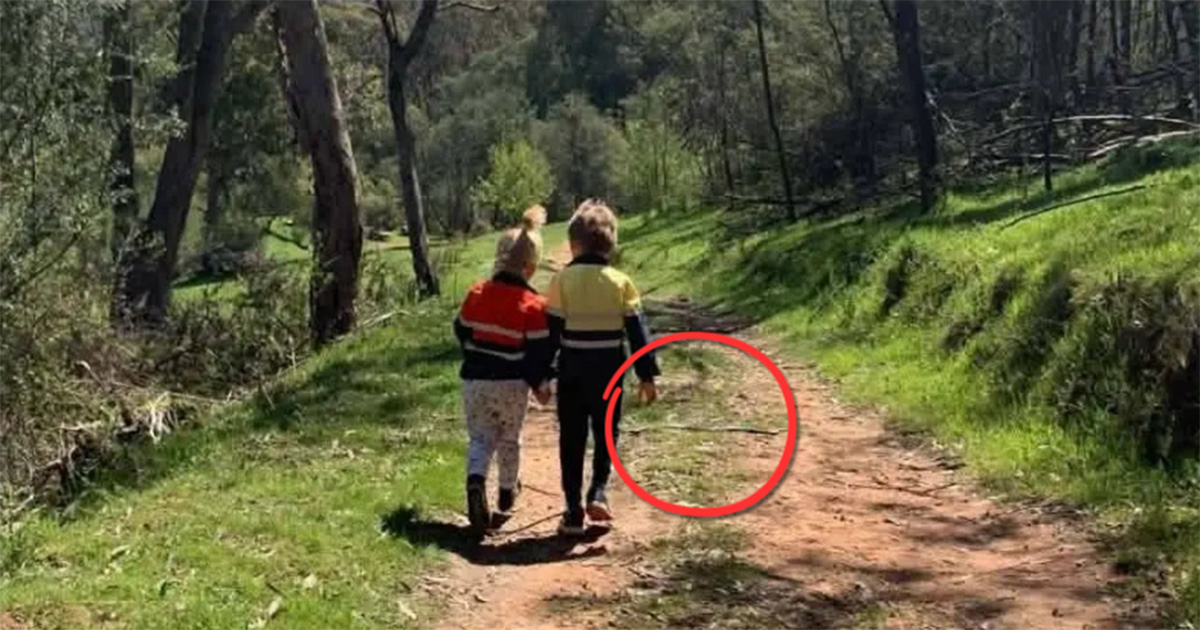
The photo was taken by the children’s mother, who had been walking with them along a dirt road near the town of Eskdale, close to the Mitta Mitta River in Victoria, Australia. The two children are walking along together, and at first glance there is nothing remotely alarming about the image. It is an entirely ordinary afternoon in the bush. Except it isn’t.
An eastern brown snake lies just inches from their feet as they pass. The snake is almost perfectly camouflaged against the dirt track. The mother only noticed it when she looked back at the photos from their outing. The original story details were reported by Newsweek, and a further account, including the detail that the children’s grandfather had sent the image to a local handler, was covered by Yahoo News Australia.
What Was Actually in That Photo
The image was uploaded to social media by veteran handler Barry Goldsmith of Snake Catcher Victoria, who used it as an opportunity to explain how to handle snake encounters, particularly as sightings rise heading into summer. His post attracted hundreds of comments and shares, with many users responding with their own photos and personal stories about close encounters.
When the image resurfaced again recently, the reaction was identical: disbelief, then a slow creeping dread, then the unavoidable thought that this particular near-miss had been completely invisible to everyone who lived it.
The Snake That Was Centimetres from That Child’s Foot
The eastern brown snake is not some obscure outback rarity that only turns up in remote stretches of Queensland. It is one of the most widely distributed snakes on the continent and it has a specific, documented relationship with the places where people actually live.
The eastern brown is Australia’s second most venomous land snake and causes more deaths from snakebite than any other species across the continent. According to FirstAidPro, the species is responsible for approximately 60 to 65 percent of all snakebite deaths in Australia, and it is ranked number two in the world for venomous land snakes, found from Queensland to South Australia.
An eastern brown snake bite can be “literally painless,” which makes them especially dangerous, according to Australian Reptile Park’s Billy Collett. The venom contains neurotoxins, cardiotoxins, and procoagulants that can cause progressive paralysis, cardiovascular collapse, and uncontrollable bleeding.
The animal in that photograph was not a freak encounter in a remote wilderness. It was representative of a species that coexists, very quietly, with suburban and rural life across the eastern half of a country.
Why the Snake Didn’t Strike
Goldsmith explained that the snake would not have seen the children as a threat as it observed them continue along the path. As he put it in his post: “No one saw the large eastern brown snake until they looked at the pics later. The snake saw them coming and watched as they unknowingly skipped past. Really goes to show snakes are not aggressive and just need respect.”
Goldsmith added that in Australia, at any given time, you are never more than a kilometre from a snake. “First thing to do is stop, look at the snake and appreciate it for the special Australian wildlife it is,” he said, even suggesting people take a photo if they want.
The instinct, when confronted with a snake, is often to run or to attack. Both are considerably more dangerous than standing still. The eastern brown snake generally will not bother humans if left alone. Most bites happen when people try to interfere with the snake.
The children in the photo were, without knowing it, doing exactly the right thing. They walked past, the snake watched, and everyone went home.
The Camouflage Problem
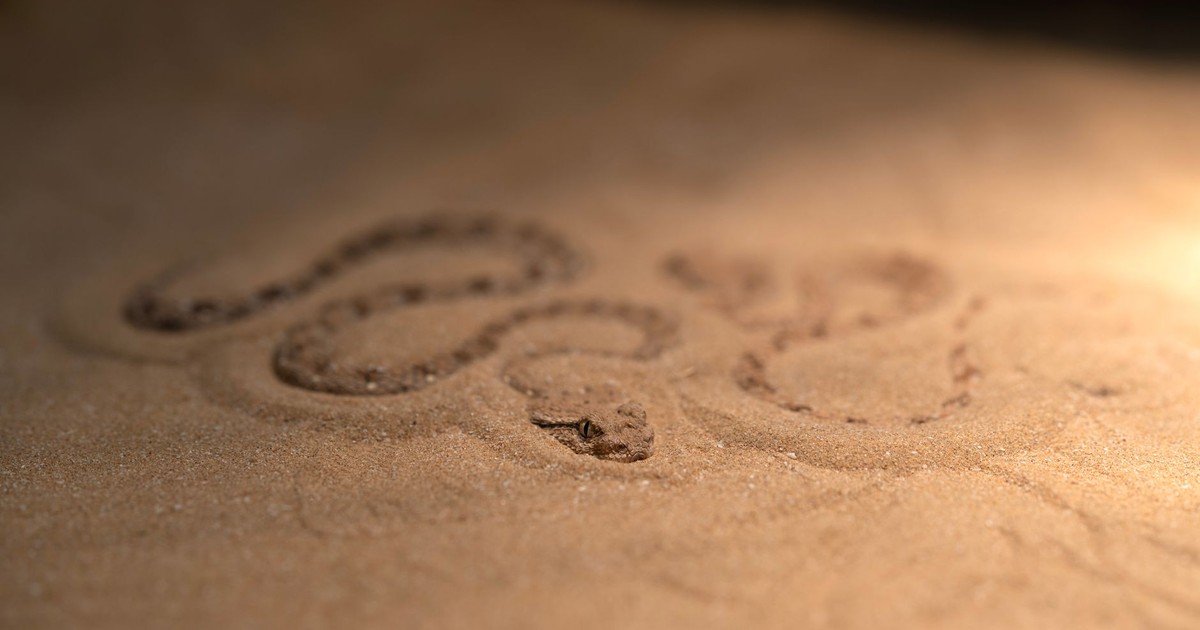
One of the most unsettling details in this story is how long it took anyone to notice. The mother took the photo. She looked at it afterward. And still, for a moment, she saw only her children.
In the snap, a snake can be seen just inches from one of the children’s feet, largely camouflaged by the dirt track. Eastern browns can reach up to two metres in length. The camouflage is simply that good, and the human eye is simply that unreliable when it comes to pattern recognition in natural environments.
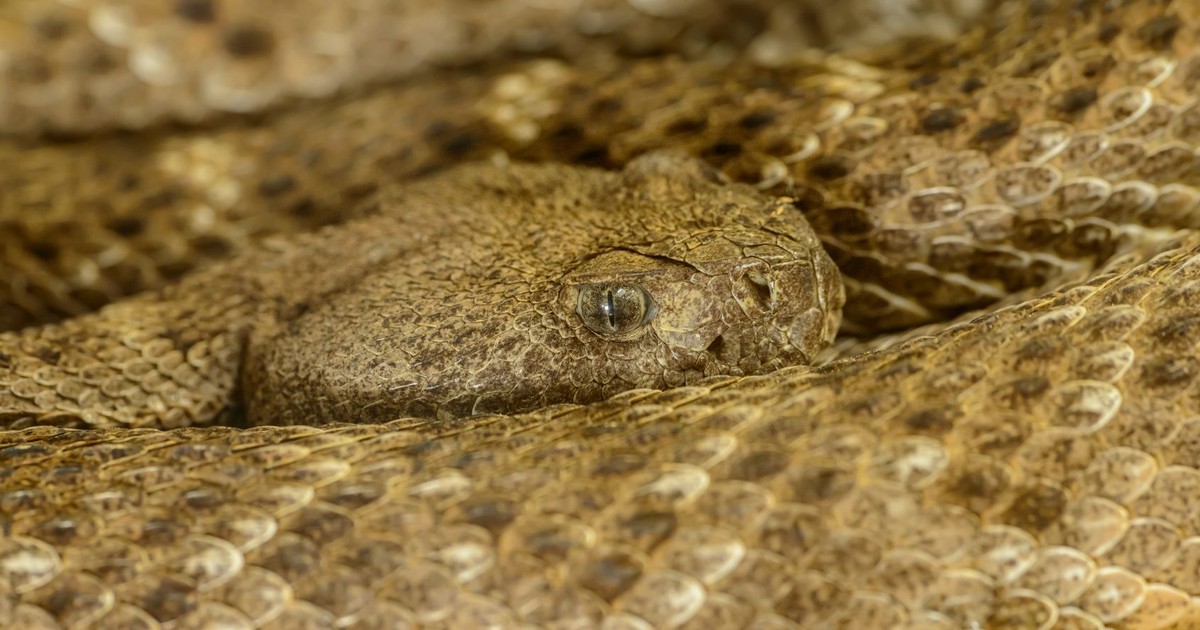
The snake’s coloring, a range of pale to dark brown tones, makes it functionally invisible against the kind of ground it prefers: dry soil, leaf litter, sun-bleached grass, dusty tracks through eucalyptus bush. The exact terrain an Australian family is likely to walk through on a Sunday afternoon. The exact terrain that looks, in a photo, like a perfectly safe backdrop for two children skipping along together.
The Viral Cycle and What It Actually Says

This photo has now gone viral twice. It went around in 2019 when Goldsmith first shared it, and it circulated again in 2026, attracting the same wave of comments, screenshots, and involuntary physical responses from people who had seen it a dozen times and still felt the cold recognition of it.
A statistic about snakebite deaths registers as information. A photo of two children with a deadly snake centimetres from their shoes registers as something else entirely, something more like memory, even for people who have never been to Australia and have never walked a bush track in their lives.
Parents who follow children’s safety content online will recognize the pattern: the image that spreads because it makes something abstract feel viscerally, specifically real. The photo of the children in Eskdale does not teach anything new about eastern brown snakes. What it does is collapse the distance between “that happens in Australia” and “that happened to someone’s children, on an afternoon that looked exactly like this one.”
Read More: Parents Find Missing Child in Minutes After Using ‘Looking Loudly’ Method
The Part Nobody Talks About
The children’s mother did not know the snake was there while she took the photo. She found out later, scrolling back through the afternoon on her phone. What that moment must have felt like, looking at an image you thought was a sweet souvenir of a walk in the bush and realizing, with a creeping, delayed horror, what was in it, is hard to fully inhabit.
The snake was gone by then. The children were home. Nothing had happened. And yet the knowledge of how close “nothing happening” came to not being the outcome is not the kind of thing that settles easily. That is a particular variety of retroactive fear that parents understand at a bone level: the near-miss you only find out about after everyone is already safe. The danger that passed without anyone’s knowledge or consent.
Goldsmith’s point about respect and coexistence is the right one. Eastern brown snakes are not patrolling bush tracks looking for small children. They are going about their lives in a landscape they have occupied for a very long time, and the photo from Eskdale was, from the snake’s point of view, an unremarkable afternoon that required nothing more than staying still and watching two humans pass.
The horror is entirely on our side of the lens.
Disclaimer: This information is not intended to be a substitute for professional medical advice, diagnosis, or treatment and is for information only. Always seek the advice of your physician or another qualified health provider with any questions about your medical condition and/or current medication. Do not disregard professional medical advice or delay seeking advice or treatment because of something you have read here.
AI Disclaimer: This article was created with the assistance of AI tools and reviewed by a human editor.