
You have been awake since 5:47 a.m. You have answered seventeen questions before 9 a.m., driven someone to practice, and are now standing in the kitchen eating a handful of crackers over the sink because sitting down to eat felt like a luxury you hadn’t earned yet. And the strange part is not that your life is like this. The strange part is that you have completely forgotten it doesn’t have to be.
Rest is not a reward for finishing your to-do list. It is not the hour you collapse into the couch after the kids are in bed, phone in hand, half-watching something you’ll have no memory of by morning. Real rest, the kind that actually restores you, is something most people stopped practicing so long ago that relearning it feels almost embarrassing, like being forty-three years old and realizing you’ve been breathing wrong.
The eight practices below are not a self-improvement plan. They are not productivity hacks wearing a cashmere sweater. They are simply ways back to something the body already knows how to do, if you give it half a chance.
1. Yoga Nidra (Yogic Sleep)

Yoga nidra translates to “yogic sleep,” and that translation does most of the work. The practice guides the body into a state somewhere between full wakefulness and deep sleep, a hypnagogic zone where the nervous system downshifts without fully going offline. You lie down, you follow an audio guide, and you do almost nothing. For people who have convinced themselves that rest has to be earned through effort, this is both the easiest and the most counterintuitive thing on this list.
After a two-week intervention with novice practitioners, researchers observed significantly increased sleep efficiency and percentage of delta-waves during deep sleep, alongside improvements in all tested cognitive abilities. What made this notable was that previous reports of yoga nidra’s benefits had relied mostly on subjective self-reporting. This 2023 ScienceDaily study used objective polysomnographic measures and a battery of cognitive tests, with measurements taken before and after two weeks of practice carried out using a 20-minute daytime audio recording. A 20-minute audio file. You don’t even have to sit up.
A 2026 meta-analysis published in the Annals of the New York Academy of Sciences reviewed 73 studies involving 5,201 participants and found significant benefits of yoga nidra for stress reduction, anxiety, and depression, with large effect sizes across both active-comparator and no-comparator conditions. If you are going to lie down anyway, and eventually you are, it is worth doing it this way.
2. Forest Bathing (Shinrin-Yoku)

Shinrin-yoku is a Japanese practice developed in the 1980s that involves spending slow, intentional time inside a natural environment, not hiking to a destination, not listening to a podcast while you walk. Just being in it. Noticing the light through the canopy, the temperature change under trees, the sounds that have no human origin. The point is not exercise. The point is sensory immersion without a goal, which for most women reading this is a genuinely foreign concept.
A 2025 PMC review found that forest bathing is associated with enhanced natural killer cell activity, modulation of inflammatory cytokine profiles, reductions in cortisol levels, and a pronounced move toward parasympathetic autonomic dominance. In plain English, the body’s stress response de-escalates and the immune system gets a boost. Spending time in forests has been shown to increase immune activity, balance inflammatory signals, and lower stress hormones, and it also enhances autonomic nervous system function, improving heart rate variability, lowering blood pressure, and fostering relaxation, with emerging evidence suggesting benefits for attention, memory, and creativity.
You do not need a forest per se. A park with enough trees to block out road noise will do a reasonable approximation. The key variable is slowing down enough for the environment to register. Most people walk through nature at the pace they walk through a parking lot, which is why they come back saying it didn’t help. Twenty deliberate, unhurried minutes is different from twenty brisk purposeful ones, and the body responds accordingly.
3. Slow Breathwork
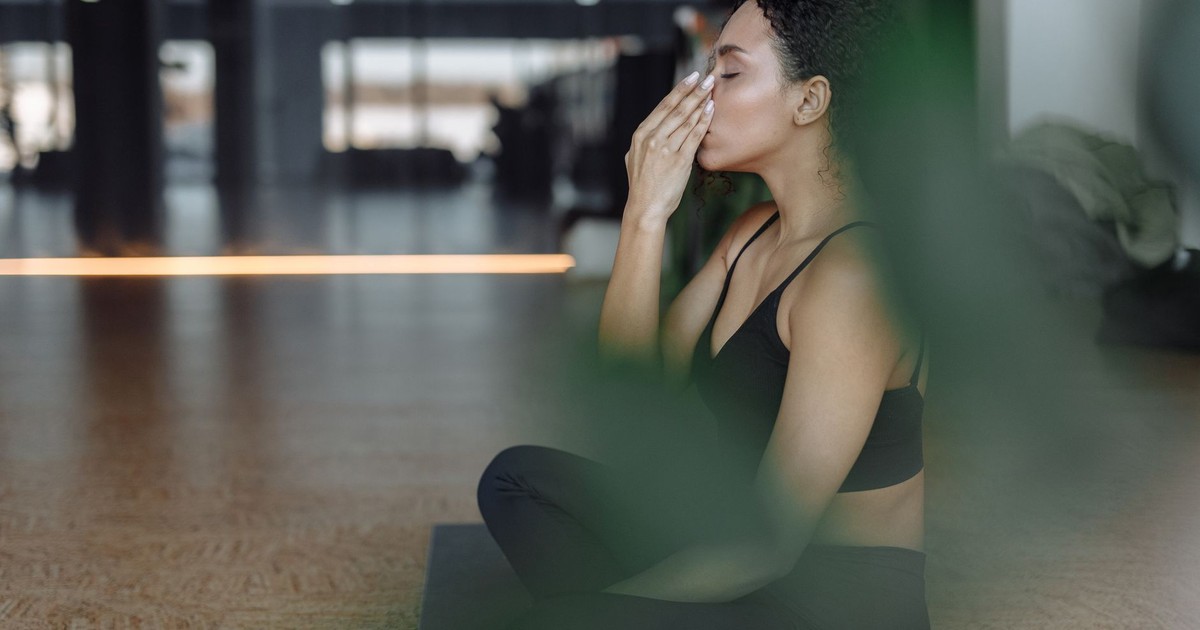
Breathing is the one autonomic function you can consciously override, and that is not a small thing. It is essentially a direct line to your nervous system. The parasympathetic nervous system, the one responsible for the “rest and digest” state, can be activated deliberately through slow, extended exhales, specifically by making the exhale longer than the inhale. Your body reads a long exhale as a signal that the threat has passed, even if the threat is a full inbox and a school pickup in twenty minutes.
The practice itself is not complicated. A simple approach: inhale for four counts through the nose, exhale for six to eight counts through the mouth. Do this for five minutes. A 2025 study in Frontiers in Human Neuroscience found that long-term mindfulness meditation increases the occurrence of sensory and attention brain states, with breathwork consistently appearing in the literature as one of the most accessible entry points into deliberate neural regulation of that kind. The Mayo Clinic notes that breathing-based mindfulness practices are among the most studied and most accessible forms of relaxation, requiring no equipment and no particular schedule.
Breathwork is on this list rather than in a yoga class brochure because it requires nothing from you except five minutes and a willingness to exhale slowly. You can do it in the car before you walk inside. You can do it at your desk. You can do it in the school pickup line, which, as a rest environment, has a lot of room for improvement.
4. Body Scan Meditation

A body scan is exactly what it sounds like: you lie down, close your eyes, and slowly move your attention through the body from feet to crown, noticing whatever is there without trying to change it. No breathing exercises, no visualizations, no mantras. Just noticing. It sounds almost aggressively simple, which is part of why people skip it.
What it does is get you out of your head and back into your body, which for anyone who spends the majority of their day managing logistics, other people’s emotions, and mental to-do lists, is a more radical act than it appears. The body holds a lot of information that the mind tends to steamroll over: the clenched jaw, the shoulders up near the ears, the stomach that’s been tight since Tuesday. The scan does not fix any of that. But noticing it breaks the loop of unawareness that lets it compound.
Practiced before sleep, a body scan can significantly reduce the time it takes to fall asleep, particularly for people whose minds resist going quiet. The technique is a core component of Mindfulness-Based Stress Reduction (MBSR), the structured eight-week program developed at UMass Memorial Medical Center that has decades of clinical research behind it. For chronic overthinkers, it also serves a practical function: giving the mind something specific to do (attend to the left knee, then the right knee) makes it harder for it to default to replaying the conversation from this afternoon or pre-worrying about next week. The body scan does not ask you to stop thinking. It just gives thinking somewhere more useful to go.
5. Mindful Walking

Not walking for exercise. Not the kind of walk where you listen to a true crime podcast and track your steps. Mindful walking is something older than fitness culture, the deliberate practice of moving slowly through a space and noticing what you notice: the sensation of the foot meeting the ground, the temperature of the air, the sounds at different distances, the way light changes between shadow and open sky.
This qualifies as genuine rest because it disengages the planning, problem-solving, future-projecting part of the brain and puts the senses in charge instead. This is what restores cognitive resources that sustained focused attention depletes, a phenomenon researchers call attentional restoration. You cannot think your way into this state. You have to look at something, or smell something, or feel the ground underfoot, and let the thinking recede on its own. It takes about ten minutes for most people to get there, which means you have to stay out longer than it takes to loop the block once.
If you are someone who has been using walks as extended productivity sessions, mentally composing emails, making decisions, rehearsing difficult conversations, this will feel strange at first. The strangeness is information. It is telling you how rarely your mind gets to just be a body moving through space with no agenda, and how much it apparently needed that.
6. Expressive Journaling

This is not gratitude journaling, which has its place, but which is not what this is. Expressive journaling, sometimes called free writing or emotional processing writing, means putting whatever is actually in your head onto paper without editing it for clarity, coherence, or palatability. The point is not to arrive at insight. The point is to get the contents of a busy mind onto a page rather than letting them keep circling.
A Baylor University study published in the Journal of Experimental Psychology found that people who spent five minutes writing out their unfinished tasks before bed fell asleep significantly faster than those who wrote about completed tasks, suggesting that the brain holds onto unfinished mental loops and that externalizing them provides genuine cognitive relief. For expressive writing more broadly, decades of research have found it reduces intrusive thoughts, lowers anxiety, and can meaningfully improve immune function when practiced regularly.
The practice does not require talent or structure. Fifteen minutes, paper and pen (not a phone, the screen activates a different mode), no rereading, no editing. Write what’s actually in your head, even if what’s in your head is “I don’t know what to write and this feels stupid.” You will arrive somewhere real within a few minutes. It helps to know that no one will ever read it, which is why burning or shredding old entries is not a dramatic gesture, it’s practically the whole point.
7. The Digital Sunset

The phone is not the problem, exactly. The problem is that the phone contains, in one glowing rectangle, every unresolved relationship, every professional obligation, every global catastrophe, and every social comparison your brain could possibly want to marinate in, all made available to you at the exact moment your nervous system is trying to wind down. The hour before bed is not the time for any of that.
A digital sunset is simply the practice of setting a daily cutoff time for screens, typically 60 to 90 minutes before sleep, and holding to it with something approaching the seriousness you’d apply to a work deadline. The research on blue light and melatonin suppression is by now well-established: the body runs its most important maintenance during sleep, consolidating memory, clearing metabolic waste from the brain, regulating hormones, and repairing tissue, and screens interfere with the hormonal cascade that makes all of that possible. As covered in sleep deprivation effects on this site, even one hour of disrupted sleep sets off a cascade of cognitive and physiological consequences most people massively underestimate.
The harder question is what you do instead, because “just stop looking at your phone” is advice that has never once worked for anyone. The answer is usually something analog that requires the hands: a book, a crossword, a craft, a bath, a slow conversation with someone you actually like. The goal is not to eliminate the evening entirely. It is to give the brain a ninety-minute runway before sleep that contains nothing it needs to process, decide, or respond to.
8. Doing Genuinely Nothing
This one is the hardest, and also the most honest. All of the other practices on this list give the mind something gentle to do: follow your breath, notice the trees, scan your body, write things down. This one gives the mind nothing. You sit, or lie somewhere comfortable, without a task. You do not meditate with intention. You do not journal. You do not walk with awareness. You simply exist in a space without agenda for ten or twenty minutes and see what happens.
What happens, for most people who have been chronically busy, is discomfort. The urge to check something, do something, justify the stillness by making it useful in some way, is overwhelming at first. That discomfort is not a sign you’re doing it wrong. It is the sound of a nervous system that has been operating in a state of low-grade urgency for so long it has forgotten what baseline actually is. You are not being lazy. You are recalibrating.
The research on default mode network (DMN) activity, the brain’s resting state, which is responsible for creativity, emotional processing, self-reflection, and memory consolidation, shows that it is most active precisely when you are not focused on a task. This is why your best ideas come in the shower. Your brain needs unstructured time to do its most important work, and it cannot get that time if you are always handing it something to focus on. Doing nothing is not, in the end, nothing. It is the specific condition under which the mind finally catches up with itself.
Why Rest Feels Like Work

There is a reason none of these practices feel natural right away. For a lot of people, especially women who have spent years as the person who keeps everything running, stillness carries an uncomfortable edge of guilt, the residue of every time someone called them lazy or every productivity narrative that insisted their value was proportional to their output. Rest, in that context, does not feel like restoration. It feels like falling behind.
The discomfort of rest is not evidence that you need less of it. If anything, the more intolerable stillness is, the more depleted the well. The brain and body are not malfunctioning when they resist stopping. They are responding rationally to a system that trained them to stay on. Relearning how to rest is not a personality upgrade. It is maintenance, the kind that cannot be indefinitely deferred without cost, even when everything on the outside looks fine.
Start with one practice, the one that felt least offensive to read about. Do it for a week before you assess whether it’s “working.” Some of these will feel useless for the first several days, and then, sometime around day four or five, often when you weren’t paying attention, the body will remember something it forgot it knew.
Disclaimer: This information is not intended to be a substitute for professional medical advice, diagnosis, or treatment and is for information only. Always seek the advice of your physician or another qualified health provider with any questions about your medical condition and/or current medication. Do not disregard professional medical advice or delay seeking advice or treatment because of something you have read here.
AI Disclaimer: This article was created with the assistance of AI tools and reviewed by a human editor.