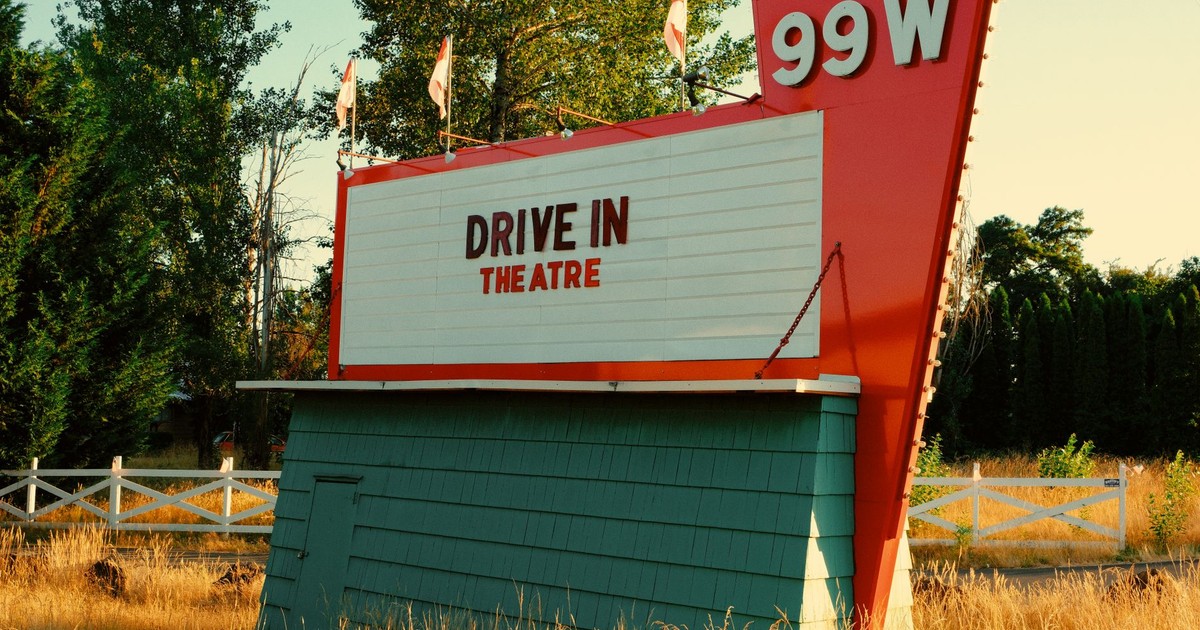

The last time someone genuinely surprised you by suggesting a drive-in movie on a summer night, you probably didn’t immediately picture a shuttered relic from the past. You pictured a parking lot full of cars, a massive lit screen against a darkening sky, kids in pajamas in the back seat, and the particular pleasure of not having to shush anyone. That image is still available to you, just not everywhere.
Drive-in movie theaters have survived decades of predictions about their imminent disappearance. Television was supposed to kill them. Then VHS. Then multiplexes, and DVD, and then streaming. At every turn, the people running these places found a reason to keep the projectors rolling. The result is a genuinely uneven map of American culture, where certain states cling to the format with real affection and others have let it go entirely, and where the difference between those two groups says something interesting about land prices, demographics, and what people are actually willing to drive twenty minutes to do on a Friday night.
Not every state made it. Alaska, Hawaii, Louisiana, and North Dakota don’t have a single operating drive-in between them. But in forty-one other states, someone still owns a projector and a large piece of land, and they’re still making it work. Here’s where they’re doing it the most.
The Numbers, First
Estimates vary by source, but drive-in directories place the current US total at somewhere under 300 operating theaters, down from a peak of over 4,000 in the late 1950s. The United Drive-In Theatre Owners Association, according to History.com, estimates there are just under 300 drive-ins remaining in the United States; in 2020, COVID-19 gave them a brief surge, as people sought safe, distanced entertainment, and pop-up drive-ins appeared in parking lots and fields, introducing new generations to a nostalgic form of moviegoing.
The math of survival is not kind to drive-ins as a format. They need enormous amounts of land in places where land values tend to rise as communities grow. They only operate after dark, cutting their potential revenue window in half. The switch from 35mm film to digital projection, the only way to secure first-run studio releases, required capital investments that shuttered many smaller operations before they could adapt. The ones that are still here cleared all of those hurdles, which means the surviving theaters are, almost by definition, the ones with something genuinely worth preserving.
New York: The Leader by Raw Count
With 27 operating drive-in theaters, New York ranks among the top states in drive-in count, according to Drive-Ins America. That number might surprise people who think of New York as synonymous with the city, but the state is enormous outside the five boroughs, and a lot of that upstate landscape, wide, rural, with long summer evenings and a tradition of staying out past dark, turns out to be ideal drive-in territory.
New York’s drive-in culture is clustered away from the dense metro areas, in small towns and rural counties where an outdoor screen is still a community institution rather than a novelty. These are places where a Friday night at the drive-in is a genuine tradition, handed down across generations, not a one-time Instagram experience. The sheer number of surviving locations makes New York the state most likely to have a working drive-in within a reasonable drive no matter where in the state you happen to be.
Pennsylvania: History in the Parking Lot
Pennsylvania has 29 remaining drive-in movie theaters, one fewer than New York by raw count, but with a claim to something New York can’t match: the oldest continuously operating drive-in in the country. Shankweiler’s Drive-in in Orefield is America’s oldest operating drive-in, having opened on April 15, 1934 as only the second drive-in to open in America. That first one, Richard Hollingshead’s original theater in Camden, New Jersey, was sold by Hollingshead in 1935; its new owner relocated the operation to Union, New Jersey. Shankweiler’s kept going, and it’s still going now.
Pennsylvania also has the Mahoning Drive-In Theatre in Lehighton, which runs on a completely different logic from most surviving drive-ins. Where other theaters rushed to secure digital projectors so they could show new releases, the Mahoning went the other direction, making 35mm film the point rather than a limitation. It draws cult film audiences from across the region specifically because of what it refuses to modernize. That combination of deep history and deliberate anachronism makes Pennsylvania one of the most interesting states on any drive-in map.
Ohio: The Quiet Anchor of the Midwest
Ohio ranks third with around two dozen drive-in movie theaters. The distribution matters here: Ohio’s drive-ins are spread across the state in a way that reflects the broader geography of small-city and rural Midwestern life. These aren’t clustered near one metro area. They’re in small towns, on the edges of mid-sized cities, in communities where the drive-in theater never became the kind of thing that felt out of place or anachronistic because it never stopped being part of the regular entertainment rotation.
The Ford Wyoming Drive-in in Dearborn, Michigan is one of the largest operating drive-ins in the US, with a current capacity of around 2,500 cars across five screens — a reminder that the Midwest built its drive-in infrastructure at a genuinely enormous scale, and that some of those venues have endured at that scale rather than shrinking.
Indiana and Texas: Volume Meets Legacy
Indiana and Texas each rank among the top states for drive-in count, with Indiana’s total especially notable given its population. The state has fewer than seven million residents, meaning its per-capita drive-in density is among the highest in the country. Indiana’s surviving drive-ins tend to be old, family-owned, seasonal operations where the business model has stayed essentially unchanged for fifty or sixty years. That consistency is either reassuring or a little fragile, depending on how you look at it.
Texas presents a different story. Some theaters in Texas even offer triple features on special occasions, which is a very Texas thing to do, and a reminder that the format can still be expanded upon rather than just preserved. At its peak, Texas led the nation in drive-in count. The state has shed most of that inventory across the decades, but what remains tends to be spread across a massive geographic footprint, with some drive-ins serving communities where the nearest indoor cinema is a serious distance away.
California: Hollywood’s Forgotten Backyard
California is sixth on the list, and its operating drive-in theaters feel almost modest for a state with 39 million people and the world’s largest film industry. The land economics are brutal here. A few acres of parking lot in greater Los Angeles or the Bay Area represents real estate value that almost no drive-in can compete with indefinitely. The ones that have survived are largely in inland areas and smaller cities where the pressure is lower.
Famous drive-in theaters in California include the Highway Drive-In of Santa Maria, Mission Tiki Drive-In of Montclair, West Wind Sacramento 6 Drive-In of Sacramento, Solano Drive-In, and South Bay Drive-In of Imperial Beach. The Mission Tiki in Montclair, with its mid-century Polynesian theme, represents the particular California version of drive-in preservation: the building and its aesthetic have become the attraction as much as the movies themselves. When the personality of a place is part of what people are buying, the business case for staying open becomes something more complicated, and more durable, than ticket revenue alone.
Florida, Michigan, and the Rest of the Top Ten
Florida has a long relationship with the format. The state’s first drive-in opened in Miami in 1938, just five years after the concept was patented. The warm climate made outdoor moviegoing viable for most of the year, and Florida developed a drive-in culture early. The surviving theaters benefit from that same climate advantage: there’s no hard cutoff in October the way there is in a New England or Midwestern state, where a seasonal theater might be open five or six months at best.
Michigan’s count has contracted significantly from its postwar peak. Drive-in theaters saw their heyday in Michigan during the 1950s, with 110 such venues reportedly in the state in 1958. The state went from 110 theaters to a fraction of that across the following decades, as land prices climbed, population moved toward the suburbs and away from rural corridors, and the digital projection transition forced dozens of operators to choose between expensive upgrades and permanent closure. The ones that remain, including the Ford Wyoming Drive-in in Dearborn, have generally survived by staying large enough or distinctive enough to justify the economics.
What States Have None at All
There are zero drive-in theaters in Alaska, Hawaii, North Dakota, and Louisiana. Alaska and Hawaii have geographic and logistical reasons that are easy to understand. North Dakota and Louisiana are more interesting: both are continental states with car culture and land to spare, and yet neither has sustained a single operating drive-in. Louisiana, in particular, had theaters that closed across the decades and weren’t replaced, a combination of urban concentration in New Orleans, a challenging summer climate, and the particular economics of a state that never rebuilt the infrastructure after the industry’s late-20th-century collapse.
Delaware, Wyoming, and a handful of other small states are in a similar position: not zero, but close enough that a single closing can leave a meaningful gap in the map.
Why the East and Midwest Still Dominate
The geographic pattern in drive-in survival is consistent enough to be more than coincidence. States with the highest number of drive-ins per capita are largely located in the Eastern and Midwestern United States. The reasons are layered. These regions built their drive-in infrastructure during the peak years of the 1950s in communities that were growing but not yet experiencing the suburban land-value explosion that would eventually make parking lots too expensive to keep as parking lots. They also developed cultural traditions around the format, specific theaters, specific summer rituals, specific family memories, that created constituencies for keeping them open.
The West, with a few California exceptions, and the South, with the exception of a handful of holdout states, tend to have fewer surviving drive-ins per capita. The Sun Belt’s population growth drove land prices up faster. The West’s population was more spread out, making any single drive-in’s catchment area harder to sustain.
The Format’s Actual Current State

The drive-in is not dying at the rate it was in the 1980s and 1990s. The pandemic gave drive-in movie theaters a surge of new popularity, as people were eager to be entertained but wanted to stay outside, though the difficulties drive-ins face remain hard to overcome, from the need for often expensive land to the cost of high-resolution projectors to show first-run movies. The operators who survived the digital transition, and the pandemic, and the streaming era, have generally found a sustainable enough niche that the total count has stabilized rather than continued its long decline.
A few things make that sustainability possible. Many surviving drive-ins have diversified into swap meets, concerts, and community events that generate revenue during daylight hours. Some have leaned into the nostalgia economy, charging a premium for an experience that indoor theaters literally cannot replicate. A handful, like the Mahoning, have built national reputations as destination theaters.
The Real Reason People Still Go
Drive-in movies solve a specific family problem with a kind of elegance that no other format matches. The kids can be loud. The baby can fall asleep. You can eat actual food that you brought yourself. Nobody is sitting behind you, and nobody is sitting in front of you, and the bathroom situation, while imperfect, is at least governed by your own schedule rather than the theater’s.
That practicality, combined with the fact that most surviving drive-ins still offer double features for less than the cost of a single indoor ticket, is what keeps the parking lots filling up on summer nights in New York and Pennsylvania and Ohio, decades after anyone expected them to. The people running these theaters didn’t survive because they found some new business model. They survived because the old one, for families at least, still works.
Where This Leaves the Map
The states at the top of the drive-in count, New York, Pennsylvania, Ohio, Indiana, Texas, California, aren’t there by accident. They’re there because enough people in those states kept choosing this over the alternatives, season after season, generation after generation, in numbers large enough to keep the lights on and the projector running.
The states with none at all tell a different story, but not necessarily a sadder one. Some formats survive in some places and not others, and the geography of American drive-in culture maps almost perfectly onto the geography of postwar American car culture: the places where the suburbs grew fast in the 1950s and then plateaued, leaving behind theaters on land that never quite got valuable enough to tear down. What looks like nostalgia is often just inertia, the best kind, where nobody ever found a compelling enough reason to stop.
Disclaimer: This information is not intended to be a substitute for professional medical advice, diagnosis, or treatment and is for information only. Always seek the advice of your physician or another qualified health provider with any questions about your medical condition and/or current medication. Do not disregard professional medical advice or delay seeking advice or treatment because of something you have read here.
AI Disclaimer: This article was created with the assistance of AI tools and reviewed by a human editor.