

Teenagers have always been hard to read. That’s not new. What is new is the volume of what’s happening underneath the surface, the weight they’re carrying into every ordinary Tuesday – into the cafeteria, into their bedroom, into the car ride home where they stare out the window and give you nothing. Anxiety in adolescents doesn’t always announce itself. It doesn’t declare itself or come with a note. It can look like a bad attitude, a dropped hobby, or a month of stomachaches that no doctor can explain.
Most parents who are worried about their teen already know, on some level, that something is off. The instinct is almost always there before the language for it is. The teen anxiety signs that matter most are often the ones that look like something else entirely – laziness, attitude, a phase, a bad week that somehow became a bad month.
The following seven signs are drawn from current clinical understanding of how anxiety actually presents in adolescents in 2026, a moment when anxiety – including social anxiety, test anxiety, and generalized worry – has become the most common reason teens seek school counseling. Some of these signs will be familiar. A few might reframe something you’ve been watching for a while.
1. Irritability That Looks Like a Bad Attitude

When people picture an anxious teenager, they usually imagine someone who is visibly nervous, tearful, or withdrawn. But according to the Child Mind Institute, symptoms of anxiety vary widely, from withdrawal and avoidance to irritability and lashing out. A teen who snaps at everything you say, who escalates minor disagreements into full confrontations, who seems perpetually on the edge of something – that anger is often fear that has nowhere else to go.
This is particularly true for adolescent boys. While teen girls show higher rates of reported distress, boys are significantly less likely to seek help, and are far more likely to act out behaviorally rather than report internal symptoms, which means their anxiety often goes unnoticed longer. For boys, the cultural script around expressing fear or overwhelm is much narrower than it is for girls, so anxiety tends to come out sideways – as frustration, defiance, or a slammed door – rather than as a stated feeling.
Anxiety-driven irritability is relentless, and the reactions are disproportionate to the trigger – the size of the explosion doesn’t match the size of the spark. Normal moodiness is episodic. A forgotten homework assignment becomes a crisis. A mild correction becomes a war. What looks like disrespect is often a nervous system that’s been running hot for months.
2. Physical Complaints With No Clear Medical Cause
Stomachaches on school mornings. Headaches that conveniently arrive on test days. Nausea that nobody can explain. These symptoms are real – anxiety produces genuine physical responses in the body – but they follow a pattern that’s worth paying attention to. Anxiety often manifests physically, and children may report stomachaches, headaches, or nausea, with symptoms that can worsen on school days and improve on weekends or holidays.
If your teen has been checked out medically and the results keep coming back normal, but the complaints keep coming, anxiety is worth considering as the underlying driver. Frequent headaches, stomachaches, or extreme fatigue can be somatic symptoms – meaning physical symptoms that arise from psychological distress – of anxiety. The body and the brain are not separate systems, and a nervous system under chronic stress will make itself known through whatever channel it can find.
A teen who mysteriously feels better on Saturday and worse on Sunday night, whose stomach settles during summer break, whose headaches cluster around midterms – that pattern is the body trying to communicate something the teen may not have words for yet, or may not feel safe saying out loud.
3. Avoidance of Things They Used to Enjoy

The friend group a teen stopped texting. The sport they quit without a clear reason. The hobby that just kind of fell away. When anxiety becomes severe enough, avoidance stops being a strategy and starts being a lifestyle, and the contraction of a teen’s world can happen so gradually that it’s hard to see until a lot has already been lost.
Anxiety is often overlooked because teenagers are good at hiding their thoughts and feelings, and avoidance is one of the primary ways they manage what they’re feeling. Avoiding the thing that triggers the anxiety brings temporary relief, which reinforces the avoidance, which gradually shrinks the range of things the teen will engage with. A year later, they’re doing almost nothing, and the reasoning has become “I just don’t like those things anymore.”
Watch for a pattern of exits rather than a single one. One dropped activity is nothing. A string of exits from things that used to bring joy – the drama club, the group chat, the standing Saturday plans – is the pattern that deserves attention. The teen often won’t be able to explain why they stopped. “I just didn’t feel like it” is frequently the honest answer, even when the real answer is that the anticipation became too much to manage.
4. Sleep Disruption in Either Direction

Anxiety and sleep have a difficult relationship, and it runs both ways. Some anxious teens can’t fall asleep because the moment the phone goes down and the room goes dark, the thoughts get loud. Others sleep far more than seems healthy – ten, twelve, fourteen hours on weekends – because sleep is the only place where the constant low-level dread stops. Sleep disturbances are a major red flag: staying up all night scrolling, or sleeping eighteen hours a day to escape – both extremes disrupt the circadian rhythm and worsen mental health.
The insomnia version often presents as hours of lying in bed before sleep arrives, early-morning waking with no return to sleep, or a phone checked compulsively at 2 a.m. because putting it down means being alone with anxious thoughts. The hypersomnia version – the oversleeping – is trickier to spot because it can look like laziness or depression (and often co-occurs with depression), but the function is the same: escape.
Either pattern, when it’s chronic rather than occasional, disrupts everything downstream. Concentration, emotional regulation, appetite, social energy – they all depend on sleep, and a teen running on either too little or too much is working against themselves at every turn, usually without fully understanding why they can’t seem to get it together the way they used to.
5. School Avoidance or a Sudden Drop in Academic Performance

A dramatic change in grades, a spike in absences, or an escalating resistance to going to school at all – these are among the most concrete and observable teen anxiety signs, and they’re also among the most frequently misread as laziness or defiance. Since so much of what adolescents are focused on is connected with school – academics, sports, other activities, and social life – school can be the setting for a lot of what a teenager might be anxious about, and when kids resist going to school, it’s not necessarily about school itself.
Teen school avoidance is an emotionally based pattern in which a young person resists attending school because of anxiety, panic, depressive symptoms, or intense distress, and it often co-occurs with somatic complaints like headaches or stomachaches. The mornings that produce a stomachache, the texts during second period asking to come home, the inexplicable exhaustion that only happens on school days – these are not manipulation tactics. They are a nervous system that has decided the environment is unsafe and is trying, in the only ways it knows how, to avoid it.
The academic decline piece follows a similar logic. A teen whose mental bandwidth is consumed by anxiety doesn’t have much left over for essay planning or math tests. Sudden drops in grades, missed assignments, or refusal to go to school are signs that deserve attention rather than punishment. Grounding a teen for bad grades when the grades are a symptom of something larger tends to add pressure to a situation that is already under too much of it.
6. Excessive Worry or Reassurance-Seeking

Every teenager worries. Tests, friendships, the future – that’s normal adolescence. What distinguishes anxiety is the quality and volume of the worry: the way it won’t resolve with a reasonable reassurance, the way it recycles the same fears on a loop, the way a teen asks the same question four times in an afternoon and doesn’t seem settled by any of the answers. Recurring fears and worries about routine parts of everyday life are a hallmark of how clinical anxiety presents in this age group.
Reassurance-seeking is one of the most recognizable patterns, and also one of the trickier ones for parents to respond to. The teen asks if everything is going to be okay. You tell them it is. They feel better for approximately forty minutes, then ask again. This isn’t a trust problem. It’s a feature of how anxiety operates: the relief from reassurance is real but brief, because the fear isn’t logic-based in the first place. Reassurance addresses the question; it doesn’t address the anxiety generating the question.
The National Institute of Mental Health reports that about a third of U.S. adolescents experience some form of anxiety disorder – which means this is far from a rare presentation. The teen who seems to need constant confirmation that they are liked, that they didn’t say something weird, that the friendship is fine, that you’re not mad at them, is often a teen whose anxiety has found its preferred subject matter and is running with it.
7. Social Withdrawal That Goes Beyond Normal Introversion
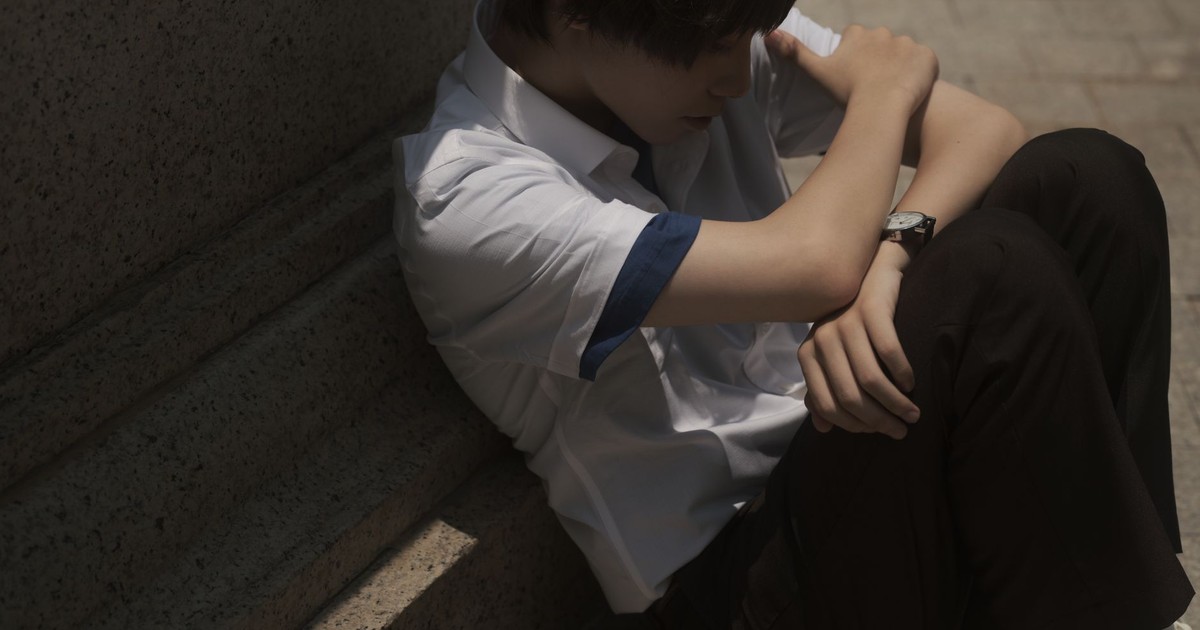
Teenagers pull back sometimes. That’s developmental. But there is a real difference between a teen who has always been more of a homebody and a teen who used to be social and has progressively retreated. Social withdrawal is one of the most telling signs of anxiety: if a previously outgoing teen stops answering calls, avoids friends, or has essentially stopped leaving the room, that change deserves attention.
Social anxiety in particular can create a feedback loop that accelerates quickly. The teen avoids a social situation because it feels overwhelming. Avoiding it brings relief. The next situation feels even more daunting because the avoidance has reinforced the idea that social situations are something to be survived rather than enjoyed. Friends stop reaching out because the teen keeps canceling. The isolation increases. The U.S. Surgeon General’s advisory on social media and youth mental health found that the digital world teens retreat into when they pull away from in-person connection often makes underlying anxiety worse, not better.
The line between introversion and withdrawal is usually visible in how the teen feels about the distance. An introverted teen is often content, energized by alone time, choosing solitude deliberately. A teen in anxious withdrawal is often unhappy, aware that something is wrong, missing friends they don’t know how to reach out to anymore. Chosen solitude looks like rest; isolation that arrived and wouldn’t leave looks like a person who has gone somewhere you can’t quite follow.
What to Do With What You’re Seeing

None of these signs exist in a vacuum, and one of them alone, on a bad week, doesn’t tell you very much. What matters is pattern, duration, and how much the behavior has shifted from who your teen was before. A teen who has always been a homebody is different from a teen who stopped wanting to see people six months ago and hasn’t come back. A teen who occasionally worries about tests is different from a teen who can’t stop talking about all the ways a test could go wrong even after it’s over.
If several of these signs are present and have been for more than a few weeks, the most useful thing you can do is not the thing that instinctively feels most urgent – the correction, the pep talk, the reminder that things aren’t as bad as they seem. What helps most is a conversation that asks without demanding, that makes space without filling it immediately. “I’ve noticed you seem like you’ve been carrying something heavy lately. I’m not going to make you talk about it right now, but I want you to know I’m here.” Some teens will take that opening on the spot. Most won’t – but they’ll remember it was offered, and they’ll use it when they’re ready.
The door being open is the thing that matters. And sometimes the most honest thing a parent can do is acknowledge that they don’t fully understand what their teen is going through – not as defeat, but as an invitation. Anxiety is isolating precisely because it’s so hard to explain from the inside. A teen who knows they won’t be dismissed or corrected is more likely, eventually, to try. You don’t have to have the right words. You just have to make sure the conversation isn’t something they have to brace for.
Disclaimer: This information is not intended to be a substitute for professional medical advice, diagnosis, or treatment and is for information only. Always seek the advice of your physician or another qualified health provider with any questions about your medical condition and/or current medication. Do not disregard professional medical advice or delay seeking advice or treatment because of something you have read here.
AI Disclaimer: This article was created with the assistance of AI tools and reviewed by a human editor.