

The puzzle seems simple and harmless at first. You look at a geometric drawing and try to count how many triangles are hidden within it. Some people quickly say eight or ten. Others stare longer and spot twenty or more. Occasionally, someone claims an even higher number after carefully tracing each line. Yet the moment people compare answers, the conversation changes. Why did different people see different numbers?
These triangle puzzles circulate widely on social media for a reason. They spark curiosity and debate almost instantly. Friends argue about the correct answer. Comment sections fill with different guesses. Some versions even claim the number you see reveals something about your personality. While those personality claims are often exaggerated, the puzzle does highlight something real about how the human brain processes visual information.
Our eyes collect enormous amounts of visual data every second. However, the brain must decide what matters and what doesn’t. In order to function efficiently, the brain simplifies what it sees. It groups shapes, fills in gaps, and searches for patterns. This process happens automatically and usually outside conscious awareness. When a puzzle challenges those shortcuts, different people may interpret the same image in different ways.
In other words, triangle puzzles are not really about mathematics alone. They are about perception. They reveal how the brain organizes visual information and how quickly it recognizes patterns. Sometimes the brain spots a hidden structure immediately. Other times, it overlooks it completely.
Researchers often look to the field of visual perception. This branch of psychology studies how the brain transforms raw visual input into meaningful experiences. It explains why we see shapes where none exist, why optical illusions trick us, and why two people may interpret the same image differently. When viewed through that scientific lens, a simple triangle puzzle becomes something more interesting. It becomes a demonstration of how the human brain interprets the world.
The Brain’s Pattern-Seeking Machine
Human beings evolved in environments where quickly recognizing patterns could mean survival. Early humans needed to detect movement in tall grass, identify safe foods, and recognize faces within a group. Over thousands of years, the brain became extremely skilled at spotting patterns quickly. Even today, that ability operates constantly in the background.
When you look at a triangle puzzle, your brain immediately begins searching for recognizable shapes. Instead of analyzing every individual line, it tries to identify familiar structures. A triangle appears simple enough. However, puzzles often contain overlapping shapes, shared edges, and hidden combinations that make the task more complicated than it seems.
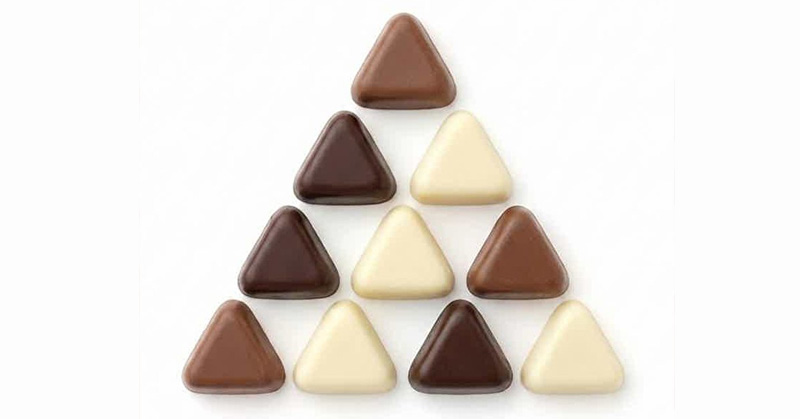
This is where the brain’s shortcuts come into play. Psychologists sometimes refer to these shortcuts as heuristics. They allow the brain to make quick judgments without analyzing every detail. Most of the time, these shortcuts work remarkably well. They help people navigate crowded streets, recognize objects instantly, and interpret visual scenes within fractions of a second.
However, puzzles deliberately exploit those shortcuts. A triangle puzzle might include several small triangles nested within larger ones. Because the brain prefers to process the most obvious shapes first, it may overlook the hidden combinations. Someone who takes more time to analyze the image carefully might discover triangles that others miss.
Interestingly, this difference does not necessarily mean one person is more intelligent than another. Instead, it often reflects different cognitive strategies. Some people focus on the overall structure of an image. Others instinctively break it down into smaller parts. Both approaches are useful in different situations.
Neuroscientists have found that visual recognition involves multiple areas of the brain working together. The occipital lobe processes basic visual features such as edges and lines. Meanwhile, higher regions of the brain interpret those features and assign meaning. In puzzles that involve overlapping shapes, the brain must repeatedly reinterpret what it sees, and each reinterpretation can reveal new patterns.
As a result, counting triangles becomes less about arithmetic and more about perception. The puzzle challenges the brain to move beyond its first impression and explore alternative interpretations of the same image.
Gestalt Psychology and Why We See Shapes
To understand why triangle puzzles confuse so many people, it helps to explore a concept known as Gestalt psychology. Developed in the early twentieth century, Gestalt theory focuses on how the brain organizes visual information into meaningful patterns.
According to Gestalt principles, the human mind prefers to see complete forms rather than disconnected pieces. Instead of analyzing individual lines, the brain tends to group them into recognizable shapes. This tendency helps explain why people sometimes see shapes that are not fully drawn.
One famous example involves a triangle that appears to exist even though its edges are missing. When three angled shapes point toward each other, many people perceive an invisible triangle floating in the center. This illusion demonstrates how strongly the brain wants to organize visual elements into coherent structures.

Several Gestalt principles help explain this behavior. One of the most important is the principle of closure. This principle suggests that when parts of a shape are missing, the brain automatically fills in the gaps. The mind prefers a complete figure rather than fragmented pieces.
Another key principle is proximity. Objects that appear close to each other tend to be perceived as part of the same group. In triangle puzzles, lines positioned near each other may be interpreted as forming a larger shape. However, that grouping can sometimes hide smaller triangles embedded within the design.
The principle of continuity also plays an important role. The brain tends to follow smooth paths rather than abrupt changes. When several lines intersect, the mind often assumes they continue in predictable directions. This assumption can cause viewers to overlook unexpected shapes hidden within the pattern.
Gestalt psychologists believed that perception involves more than simply detecting visual elements. Instead, the brain actively organizes those elements into meaningful wholes. This process happens automatically and almost instantly.
Triangle puzzles disrupt that natural organization. They force the brain to reconsider its first interpretation. What initially appears to be a single large triangle may actually contain multiple smaller ones. Recognizing those hidden shapes requires the viewer to override the brain’s instinct to simplify the image.
Because people rely on these principles differently, their interpretations may vary. One person might immediately see the large triangle structure. Another might focus on smaller shapes. Each interpretation reflects how that individual brain organizes visual information.
Why Different People See Different Numbers
If everyone looks at the same puzzle, why do the answers vary so widely? The explanation lies in how attention and perception interact within the brain. Attention acts like a spotlight and highlights certain elements of a scene while leaving others in the background. In a triangle puzzle, attention determines which lines a person examines closely and which ones they overlook.
People who scan the image quickly may count only the most obvious shapes. Their attention moves across the puzzle rapidly, identifying triangles that stand out immediately. In contrast, someone who studies the image carefully may begin combining smaller shapes into larger structures. That process often reveals additional triangles hidden within the design.
Experience also plays a role. Individuals who enjoy puzzles or visual games may already know that these designs often contain overlapping shapes. Because of that expectation, they may search for hidden combinations more actively.
Working memory can influence performance as well. Counting triangles requires the brain to keep track of shapes already identified while continuing to search for new ones. If the puzzle becomes too complex, the brain may struggle to maintain an accurate count.
Interestingly, visual perception research shows that the brain does not process every part of an image equally. Instead, it focuses on areas that appear most important or unusual. In some triangle puzzles, certain shapes dominate attention because they form strong visual patterns. Smaller shapes may fade into the background unless the viewer deliberately searches for them.
Another factor involves what psychologists call top-down processing. This occurs when expectations influence perception. For example, if someone expects to see only a few triangles, they may stop searching after finding several obvious ones. On the other hand, someone who expects hidden shapes might continue analyzing the puzzle longer.
Ultimately, the different answers people give are not random. They reflect the complex ways in which attention, experience, and cognitive strategies shape perception. Even though the puzzle remains the same, each brain approaches it slightly differently.
What the Number of Triangles You See Could Say About You
By now, you probably have a number in mind. While a triangle puzzle cannot fully define your personality, the way you approach it can offer small clues about how you think, process information, and make decisions. Your answer reflects more than just what you saw. It hints at how your brain prioritizes speed, detail, and pattern recognition in everyday situations.
Here is what your result could suggest:
9–10 Triangles
If you saw around nine or ten triangles, you likely rely on instinct and quick judgment. You prefer to take in the overall picture rather than getting caught up in details. People in this range often come across as decisive, practical, and efficient. You trust your first impression and move forward confidently. However, you may sometimes overlook smaller details unless something forces you to slow down.
12–15 Triangles
Seeing twelve to fifteen triangles suggests you have a balanced way of thinking. You notice more than just the obvious, but you also know when to stop and avoid overcomplicating things. This often points to a well-rounded personality, someone who blends intuition with logic. You are adaptable, able to shift between quick decisions and deeper thinking depending on the situation.
16–20 Triangles
If you counted sixteen to twenty triangles, you likely approach problems with curiosity and patience. You are willing to spend more time analyzing a situation and looking beyond what is immediately visible. This reflects someone thoughtful, observant, and detail-aware. You tend to question things, explore possibilities, and dig a little deeper before settling on an answer.
25+ Triangles
If you found twenty-five or more triangles, you probably took a very thorough approach. You examined the image carefully, revisited it, and tested different combinations to uncover hidden patterns. People in this group are often highly analytical, persistent, and detail-driven. You enjoy solving complex problems and are less likely to accept surface-level answers. You tend to notice things that others miss.
Below is a video showing the correct number of triangles in this particular puzzle.
Optical Illusions and the Limits of Human Vision
Triangle puzzles belong to a broader class of visual phenomena known as optical illusions. These images challenge the brain’s normal interpretation of visual information. Everything seems clear and logical at first. However, once you look closer, the image begins to behave in surprising ways. Lines appear to shift, shapes emerge where none exist, and hidden patterns suddenly reveal themselves.
Scientists study optical illusions because they expose the limits of human perception. Our eyes collect light and send signals to the brain, but the brain must interpret those signals quickly. To keep up with the constant flood of visual information, the brain relies on shortcuts. Most of the time, these shortcuts help us navigate the world efficiently. Yet when a puzzle or illusion deliberately manipulates those shortcuts, the brain can be fooled.
One well-known example is the Kanizsa triangle. In this illusion, three Pac-Man–shaped figures face inward toward an empty space. Even though no triangle is actually drawn, many people clearly see a bright white triangle hovering in the middle. The brain fills in the missing edges automatically. This phenomenon shows how strongly the mind prefers to organize shapes into complete forms.
Another famous illusion involves the so-called impossible triangle, also called the Penrose triangle. It looks like a solid object. However, once you examine it carefully, the geometry makes no physical sense. The angles contradict each other in ways that cannot exist in real three-dimensional space. Still, the brain attempts to interpret it as a real object.
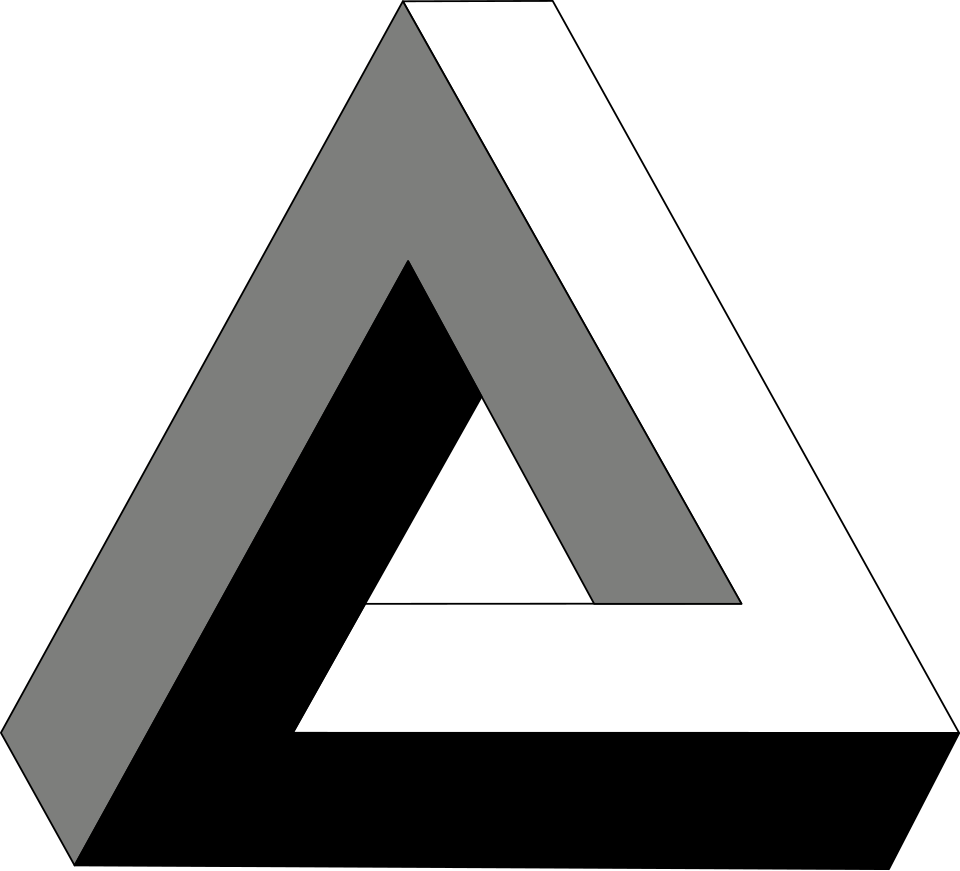
Triangle puzzles use similar tricks. By layering shapes and intersecting lines, they create patterns that appear simpler than they actually are. The brain identifies the most obvious triangles immediately. However, hidden combinations of lines may form additional shapes that are easy to miss. Once someone points out a hidden triangle, it suddenly becomes impossible not to see it.
This effect reveals something important about perception. What we see is not always a direct reflection of reality. Instead, it is the brain’s best interpretation of visual information at a given moment. When new clues appear, the brain updates its interpretation.
Optical illusions demonstrate that perception is an active process rather than a passive one. The brain continuously constructs meaning from the visual world. Sometimes that process works so efficiently that we barely notice it. Other times, as with puzzles and illusions, the brain’s assumptions become visible.
Because of this, visual puzzles often feel satisfying when solved. The moment someone discovers a hidden triangle or recognizes an illusion, the brain experiences a small burst of reward. It has successfully updated its interpretation of the scene. That feeling of discovery explains why people enjoy these puzzles so much.
What Triangle Puzzles Reveal About Thinking Styles
While triangle puzzles cannot truly reveal personality traits, they can highlight different thinking styles. The way someone approaches a puzzle often reflects how they process information more generally.
Some people instinctively focus on the big picture. When they look at a geometric puzzle, they quickly identify the largest shapes. Their brains prioritize the overall structure of the image rather than the fine details. This strategy helps in many real-world situations, especially when quick decisions are required. However, it can cause hidden shapes to go unnoticed.
Other people naturally take a more analytical approach. Instead of scanning the whole image at once, they break it down into smaller pieces. They trace individual lines, examine intersections, and test different combinations of shapes. This method often uncovers triangles that others miss.

Psychologists sometimes describe these two approaches as global and local processing styles. Global processing focuses on the overall pattern of an image. Local processing emphasizes smaller details and components. Both styles have advantages, and most people use a combination of the two depending on the situation.
Problem-solving strategies also play a role. Some individuals rely on intuition. They trust their first impression and make a quick estimate. Others prefer systematic analysis. They carefully examine every possibility before concluding.
Time pressure can influence the outcome as well. If someone tries to solve a triangle puzzle quickly, they may count only the most obvious shapes. Given more time, they might begin exploring more complex combinations. This change shows how perception can evolve when the brain revisits an image.
Interestingly, studies in cognitive psychology suggest that people who regularly engage with puzzles and spatial challenges may become more skilled at recognizing hidden patterns. Practice trains the brain to look beyond the most obvious interpretation. Over time, the mind becomes more flexible in how it analyzes visual scenes.

Image credit: Shutterstock.
However, this ability is not fixed. Anyone can improve their pattern recognition skills through experience. Activities such as puzzles, drawing, and even certain video games encourage the brain to examine visual details more closely. These activities strengthen the mental processes involved in spatial reasoning.
In this way, triangle puzzles offer more than a moment of entertainment. They provide a small glimpse into how different minds approach challenges. Some people prioritize speed and intuition. Others emphasize analysis and exploration. Both strategies reveal something about how the brain tackles complex visual information.
Read More: How Many Dots Can You Count? Quick IQ Test
The Hidden Lesson Inside a Simple Triangle Puzzle
Counting triangles might seem like a simple pastime. Yet the puzzle reveals something deeper about how the brain interprets the visual world. Our eyes gather raw information, but the brain decides how that information should be organized. It groups lines into shapes, fills in missing pieces, and searches constantly for patterns.
Because every brain approaches that task slightly differently, people may see different numbers of triangles in the same image. Attention, experience, and cognitive strategies all influence what stands out and what fades into the background. The puzzle becomes a small demonstration of how perception works.
Although the number of triangles you see does not truly reveal your personality, it does highlight the fascinating ways the human mind processes visual information. Some people instinctively see the big picture. Others uncover hidden details through careful analysis. Both approaches reflect the brain’s incredible ability to interpret complex scenes.
A.I. Disclaimer: This article was created with AI assistance and edited by a human for accuracy and clarity.
Read More: How Many Faces Can You Spot? It May Reveal Your True Character