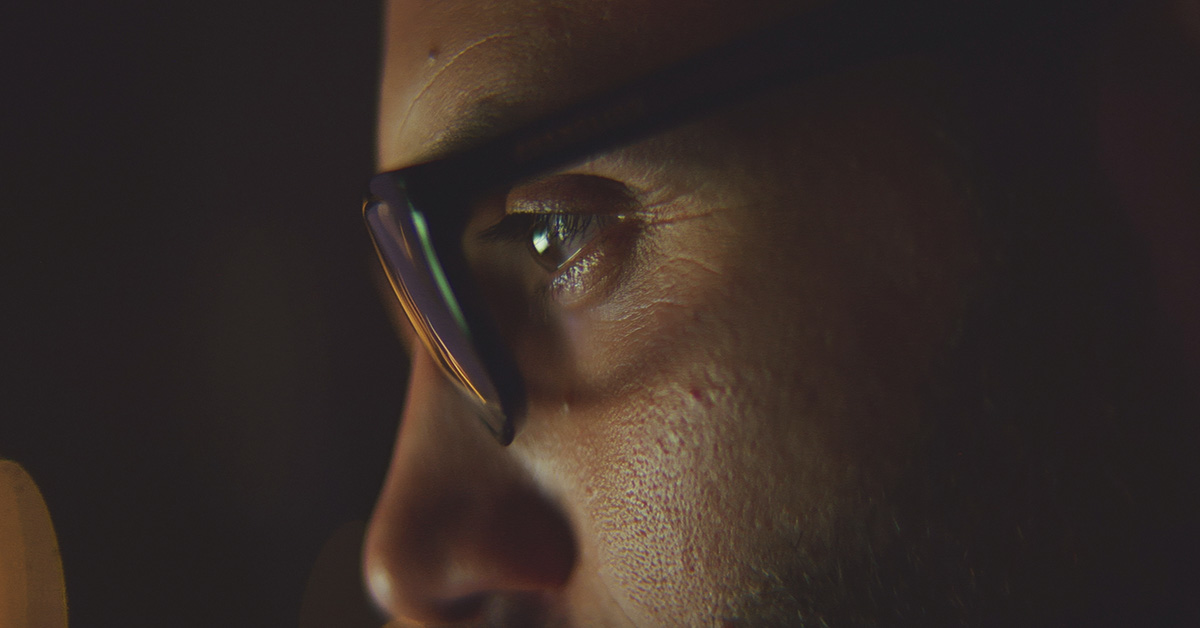

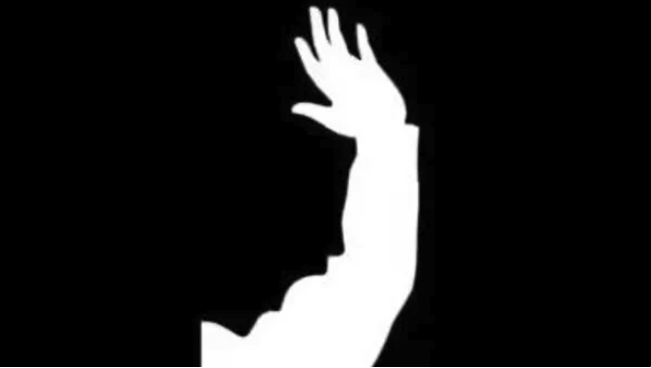
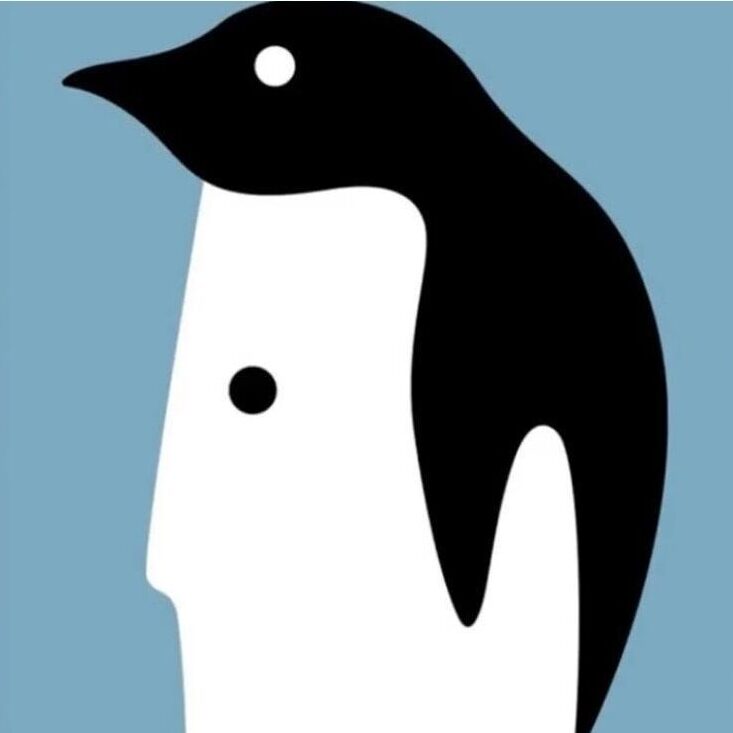
A new optical illusion, shared by TikTok creator Mia Yilin, has gone viral across social media. According to a video posted by Yilin, this viral image claims to identify whether a person is a deep thinker or a natural problem-solver based on what visual they notice first. The image features a man’s side profile and an outstretched hand. According to Yilin, the initial object your eye catches determines your cognitive type.
Two Camps, One Image
According to Yilin’s basic picture interpretation theory, first impressions of images reflect a person’s cognitive tendencies. Noticing the outstretched hand first suggests a proclivity for problem-solving under stressful conditions. Identifying the face of the shouting man first suggests that someone is a deep thinker. This view explains its popularity on social media since it is deliberately light and entertaining. Still, decades of research in cognitive science and neuroscience support the phenomenon of two people seeing the same picture and interpreting different elements differently.
What the Science Says About First Glances
How our brains receive visual information is not a passive exercise. Our visual perception does not directly show what is real in the world. The brain creates what we “see” by using memory, expectations, and experiences to put together a coherent picture from the sensory data it gets. As stated by the American Museum of Natural History, “Your brain does not simply receive this information. It creates your perception of the world.” The reason two individuals can perceive entirely different things when viewing the same ambiguous image is due to the construction process.
The Figure-Ground Relationship
Yilin’s illusion is best understood through the figure-ground relationship. The figure-ground relationship refers to our visual system’s ability to distinguish between the focal object we are looking at (figure) and its surroundings (ground) within a scene. When an image is ambiguous, offering equal visual competition, the element that the brain decides to prioritize first will determine which becomes the focal point (figure).
Attention Is Not Random
Neuroscience research, such as that published in the Proceedings of the National Academy of Sciences, shows that your initial visual response to any image is not purely objective. The brain employs a “priority map,” which is a topographical model used to rank various visual inputs. This ranking is based on a combination of factors: your cognitive goals, your experiences, and how physically noticeable the objects are. Consequently, the area of the map with the highest activation is the first to capture your attention. In essence, your history, established cognitive patterns, and the underlying neural structure you’ve developed over time significantly shape what you first perceive.
Deep Thinkers: What Spotting the Man Suggests
Yilin defines those who see the man first as deep thinkers who are most at ease in their inner world. Self-reflection comes naturally to this group, along with a strong awareness of personal strengths and areas for growth. This personality type is similar to what psychologists call introversion and reflective cognitive style, which means that the person tends to think before acting in the outside world.
Reflective Cognition and the Inner World
Research on cognitive styles consistently shows that people who process information by acting on it and people who process it by analyzing it are different. This group comes up with ideas slowly and carefully before deciding to go with one. These patterns are called “field-dependent” and “field-independent” cognitive styles by psychologists. Research shows that these styles have a direct effect on how people deal with problems. People who think in a field-independent way tend to pick out specific details from dense backgrounds. This is the exact kind of perception that would let the brain pick out a face from a dense visual field.
Kindness Without Perfection
According to research, people who actively engage with ambiguous images may have a genuine tendency toward self-awareness and conscientious thinking. According to a study published in the journal Nature Scientific Reports, there is a link between illusion sensitivity and agreeable and honest personality traits. While this link has not yet been scientifically established, there is a correlation. Yilin offers a note of self-compassion to this group, reminding them: “You’re doing great; remember, no one is perfect.”
Problem-Solvers: What Spotting the Hand Suggests
In Yilin’s writing, people who see the hand first are naturally good at solving problems and getting through tough situations. People with this personality type are likely to be task-oriented or action-first thinkers, according to cognitive researchers. For these people, external cues and resolution on the outside are more important than internal processing. For example, combining information quickly and making decisions on the spot are some of the cognitive skills that are needed to solve problems under pressure.
The Overthinking Paradox
One irony that Yilin brings up is that people whose minds work best under pressure also have trouble making simple choices. “When it comes to simple choices, like deciding where to eat, you might overthink and struggle to make a quick decision,” she says. According to research on problem-solving styles published in the journal VIEW, people with a Developer or task-oriented cognitive style exhibit higher stress responses in personal decision situations, even when the stakes are low. High capability under complex pressure does not always translate into ease of choice in everyday situations.
Obstacles as Fuel
People with problem-solving cognitive styles are great at combining different ideas and guiding others through difficult situations. A study published in Frontiers in Human Neuroscience supports the idea that action-oriented perception is dependent on selective spatial attention, which refers to the ability to focus on important things in a busy environment. Seeing a hand or arm stretched out (which can represent direction, reaching out, or making an offer) may indicate that your brain is predisposed to take action and find a solution after extended periods of thought.
The Neuroscience of Ambiguous Images
Visual illusions, by definition, create a dissociation between physical reality and subjective perception. “Everything we experience is actually a figment of our imagination,” the Scientific American publication states, adding that the real and the imagined share a physical source in the brain. When an ambiguous image presents 2 equally valid interpretations, the brain’s job is to resolve the competition. It uses boundary detection, surface completion, and pattern recognition to select a winner.
Neurons That Fill the Gaps
Research published in Nature Communications found that V1 neurons, which process basic image features, work alongside V2 neurons, which pull from stored memory, to construct perception. The brain essentially predicts what it expects to see and fills in the rest. This means your first interpretation of Yilin’s illusion may reflect not just your personality, but your history of visual exposure, your cultural context, and the specific neural pathways you have reinforced over time.
Complementary Brain Streams
A 2014 review in PMC explains that the brain uses parallel cortical processing streams that work with each other. One stream handles fine detail and boundary detection. Another handles broader spatial context and surface interpretation. The balance between these two streams in any given moment shapes which element of a complex image becomes dominant. In Yilin’s image, the man’s face and the hand each activate different streams. Which one wins is partly random, partly habitual, and only loosely tied to fixed personality.
Can a TikTok Test Reveal Your Personality?
Researchers have found that the appeal of optical illusion personality tests does not indicate their scientific validity. In a study published in the journal PeerJ, UK psychologists Richard Wiseman and Caroline Watt investigated this common belief. They used a crowdsourcing platform to explore whether people’s initial perceptions of ambiguous images were linked to specific personality traits. The results clearly showed no significant correlation between what participants first perceived and the personality traits often associated with those visual cues in social media posts.
Small Signals in the Data
Despite claims on social media that visual perception is linked to deep personality traits, the study found no scientific basis for this association. Minor associations were discovered by the researchers, such as a slight tendency toward spontaneous thinking in people who first saw the seal in a seal-and-donkey image. An age-related pattern was also discovered in the old-young woman illusion. However, these were weak data signals rather than indicators of distinct personality blueprints.
A Fun Mirror, Not a Diagnostic
Dr. Isabelle Mareschal, a lecturer in psychology at Queen Mary University of London, has explained the legitimate research value of ambiguous images. Scientists use these tools to gather quantitative data, particularly in studies involving conditions like schizophrenia, where perceptual differences offer measurable insight. But Mareschal also warned against using them to identify personality traits. “I think those interpretations are far-fetched,” she stated.
Why These Tests Still Work on Us
Optical illusion personality tests remain popular because they tap into a fundamental principle of character psychology: the desire for completeness. The brain experiences a clear, satisfying feeling when it successfully resolves an ambiguous image. Because this resolution is unique to each individual, it feels highly personal. Consequently, people readily accept the test outcome as a significant insight into their personality.
The Social Share Loop
Research on attention selection confirms that reward history shapes what the brain prioritizes visually. Sharing a personality result on social media is itself a small reward. The cycle reinforces itself. You see the test, feel the result resonates, share it, and watch others respond. The Allen Institute of Brain Science notes that optical illusions highlight “the dichotomy between what we expect and what the sensory information is giving us”. That gap between expectation and reality is precisely where engagement lives.
Self-Reflection Has Real Value
Even if the test cannot deliver a personality verdict, it prompts self-examination. A 2025 review in PMC on the relationship between critical thinking and problem-solving confirms that metacognitive thinking, awareness of your own thought processes, positively moderates problem-solving ability. Engaging with any test that asks you to consider how your mind works, even a TikTok illusion, may have incidental cognitive value. The act of wondering whether you are a deep thinker or a problem-solver is itself a form of deep thinking.
Read More: Internet Baffled by Optical Illusion – Can You Discover the Hidden Dog?
The Bigger Picture
Neuroscientist research from the Allen Institute confirms that perception is interpretive, not fixed. Your brain’s visual processing shifts with context, mood, focus, and even which eye is dominant at any given moment. Cognitive styles are also not rigid categories. Researchers consistently caution that field-dependent and field-independent thinking exist on a spectrum and that most people use both styles depending on the situation at hand.
What the Test Gets Right
Yilin’s test gets one thing genuinely right: the acknowledgment that there are different kinds of minds at work in the world. Research on cognitive style and problem-solving confirms that these styles do influence how people approach challenges. Deep thinkers and problem-solvers both exist as meaningful cognitive profiles. The test cannot verify which one you are through a single glance at an image.
Take the Test Anyway
The image is still worth looking at. Pay attention to where your eye lands first. Then consider whether Yilin’s interpretation matches how you actually approach your life, your decisions, and your relationships. The science may not confirm the result, but the reflection that follows it is yours entirely. And that kind of internal inquiry, whether prompted by psychology research or a viral TikTok video, is precisely where self-awareness starts.
Disclaimer: This content is intended for entertainment purposes only. Any quizzes, tests, or activities are not based on scientific evidence and should not be considered professional advice. Results are for fun and personal reflection only.
Read More: Optical Illusion That Looks Like a Person With Two Dogs Has The Internet Severely Confused