

The images ahead were drawn by Christo Dagorov, a Bulgarian artist based in Switzerland who works in pencil and silverpoint on paper. Each one holds a hidden scene inside the shape of a mouth. The subject your eye finds first says a lot about your personality. Dagorov built these drawings to test how your brain sorts what it sees. The mouth isn’t decorative. Lips are the surface where something private becomes something you can’t take back. Every drawing ahead holds more than one subject inside that surface. Your brain will choose between them before you realize it has.
Where Your Eyes Went First
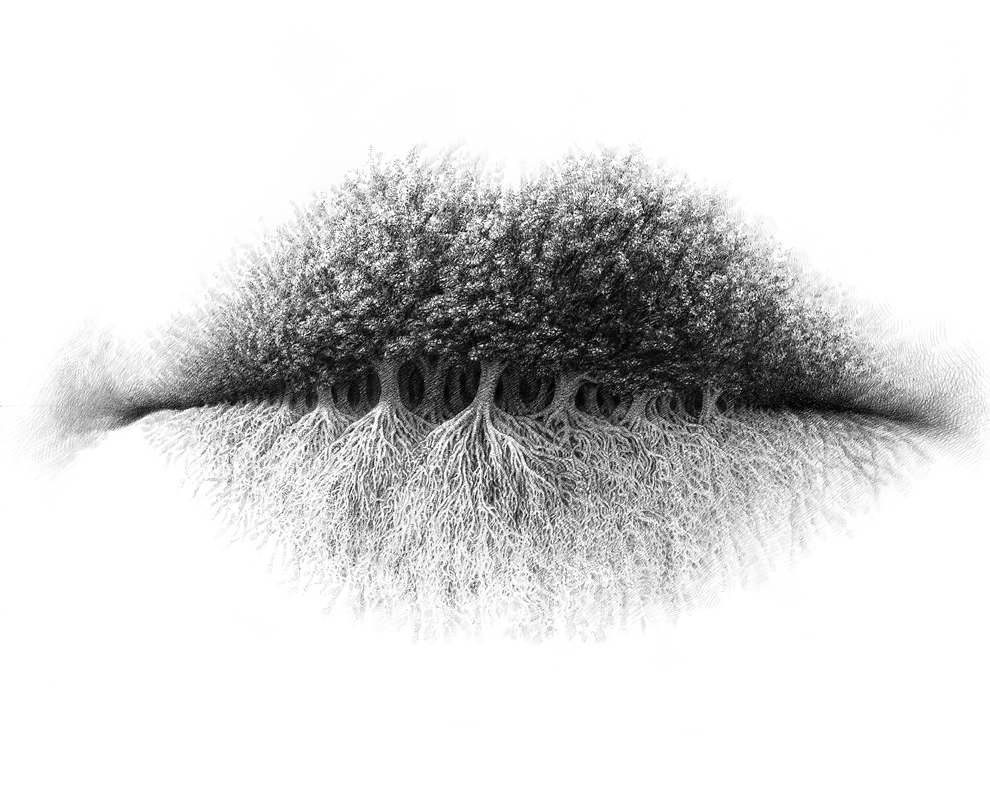
A row of trees fills the image, their canopy bunched so tightly that individual leaves disappear into one dense mass. It’s the part that takes up the most space and the part that faces the sun. Below the canopy, trunks stand in a line with bark visible between them, and beneath that, a root system stretches downward in fine, tangled strands. The roots are doing the harder work, but they’re easy to miss because attention gets there last. The title is “Authenticity,” and suddenly the image splits. Trees grow one way that everyone sees and another way that no one does, and people are built the same way.
Growth in Two Directions
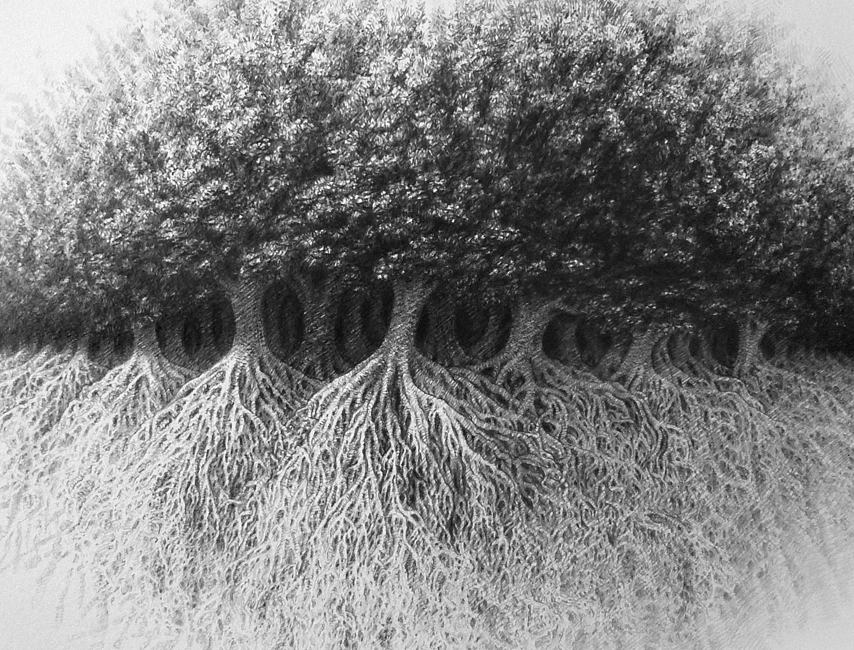
The canopy fills the frame. People drawn to it tend to read the world the same way it grows, outward and visible. They start with what someone shows them and take it as it is until something shifts that view. The roots ask for a different kind of attention. Focusing there often means you understand what it takes to hold things up when no one is watching, because you have done it yourself. The trunks sit between the two, both seen and steady, and people who notice them want that overlap in real life. They look for people whose inner strength matches what they show. All three appear together because most people carry each part, just not in equal measure.
A City Built From One Point
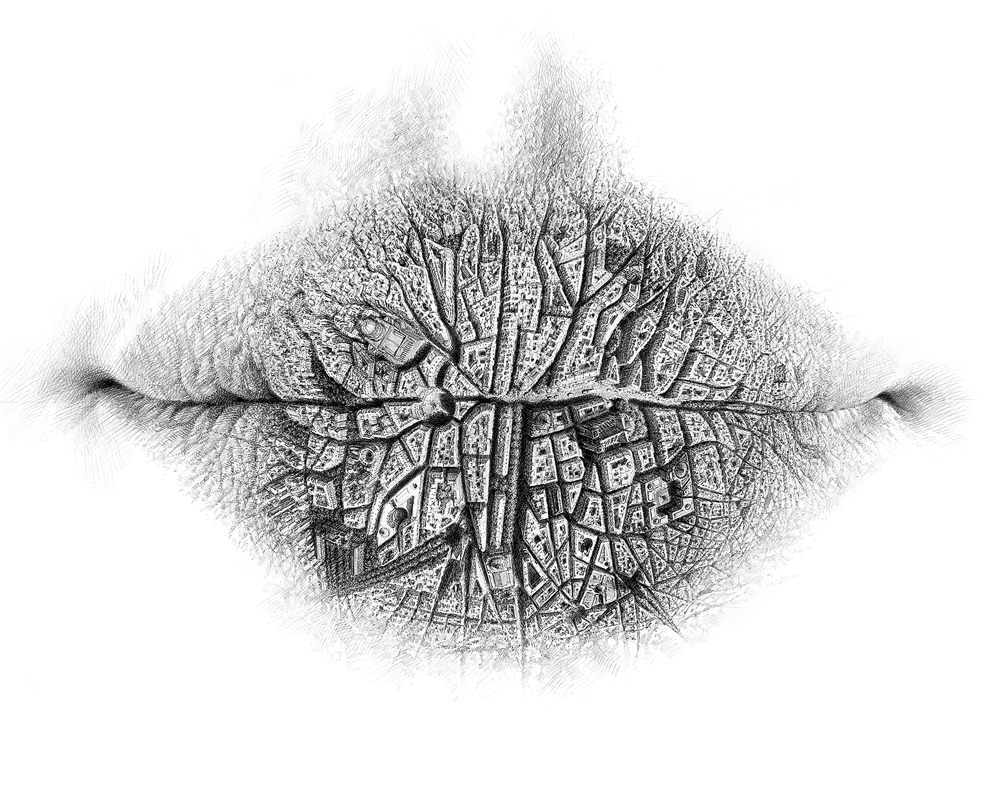
Dagorov called this one “Aspiration,” a word that means wanting more than what you have but also means to breathe, to pull air inward. Both meanings live in the drawing. One intersection sits at the center, and everything else pushes away from it. Streets radiate outward in uneven spokes, some cutting straight through blocks and others curving where the land or the builders refused to cooperate. The upper half is dense, rooftops nearly touching, while the lower half loosens and lets wider roads open between the structures. It looks like a city that grew over centuries from a single market square someone set up before there were maps.
The Origin
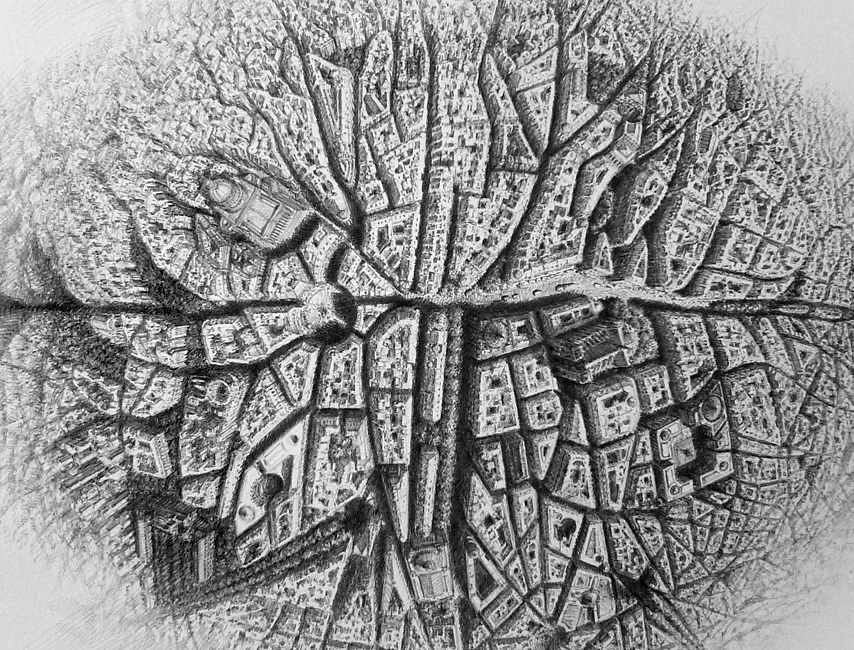
The streets are what move, so they catch attention fastest. People who start there are wired the same way, always oriented toward the next thing rather than the thing in front of them. The buildings don’t move at all. They’re what’s already built. If that’s where your eye went, you care more about what someone finished than what they planned to finish. The center is the hardest to explain. Some people go straight to the intersection where every street begins, skipping the movement and the stillness entirely to find the origin point. That quiet center is where aspiration lives before it becomes ambition. The city looks like it’s been moving away from it ever since.
The Cage Came After the Words
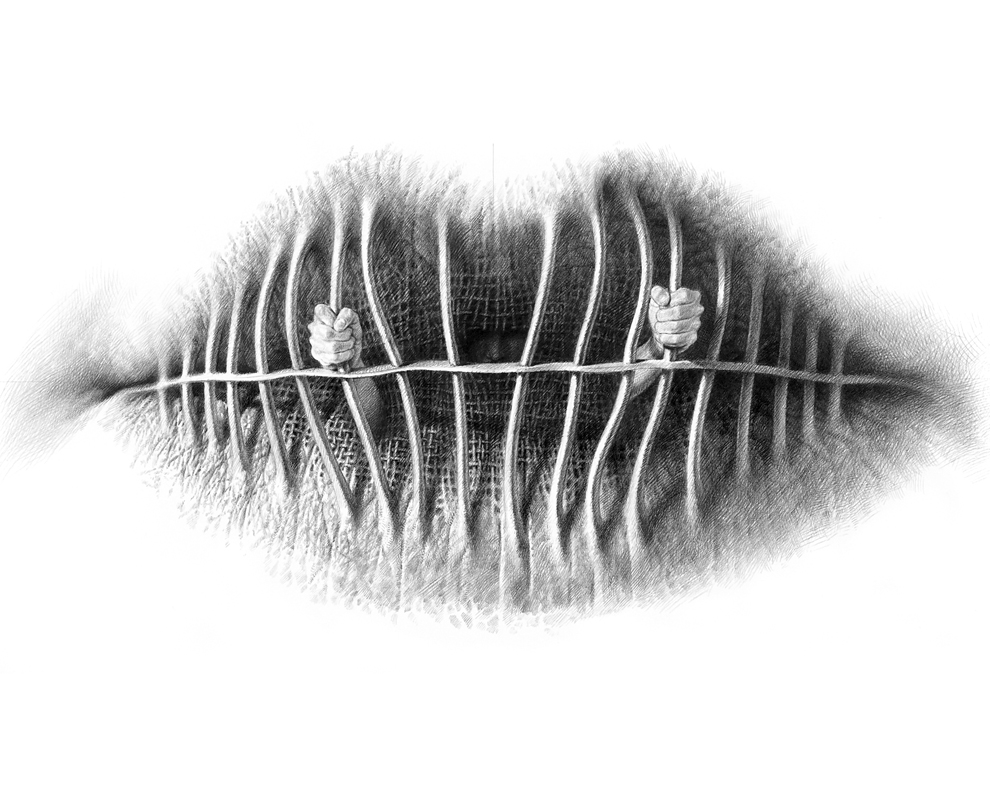
Bars bend and warp across the image in long, uneven curves, drawn thick enough that you can feel the weight. A horizontal crossbar cuts through the middle, and two fists grip it from behind, knuckles locked, fingers wrapped tight. Crosshatched darkness fills the space between the bars, dense and layered, swallowing whatever sits behind the figure holding on inside. The artist titled it “Indiscretion.” It’s the word people use when a secret slips or a truth arrives at the worst possible time. The bars don’t run straight because the things people say never stay the way they started. They twist and stretch the further they travel. By the time they settle into shape, the person inside doesn’t recognize what they built.
The Dark Behind Them
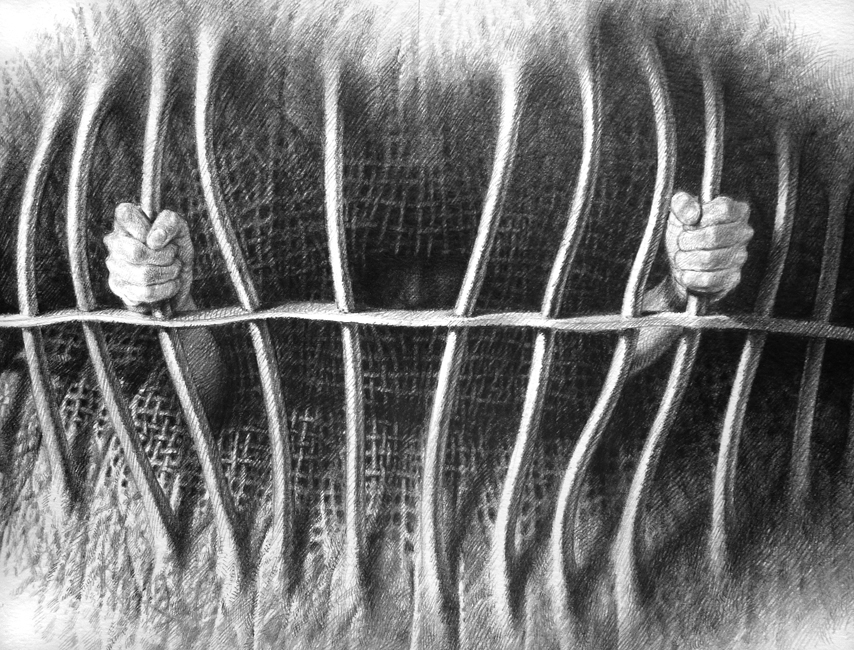
The bars take up most of the space. People whose eyes stay there read the damage in a situation before they register the person inside it. The hands shift the reading. Someone built this cage with something they said, and now they’re gripping the crossbar because there’s nothing left to do but hold on. If your eye went straight to the hands, that person matters to you more than the mess around them. The dark, empty space sits behind everything. Some people land there first, looking for the moment before the cage existed, when the wrong words were still just a thought. Something could have gone differently. He didn’t draw a way out.
What Your Brain Sorted First
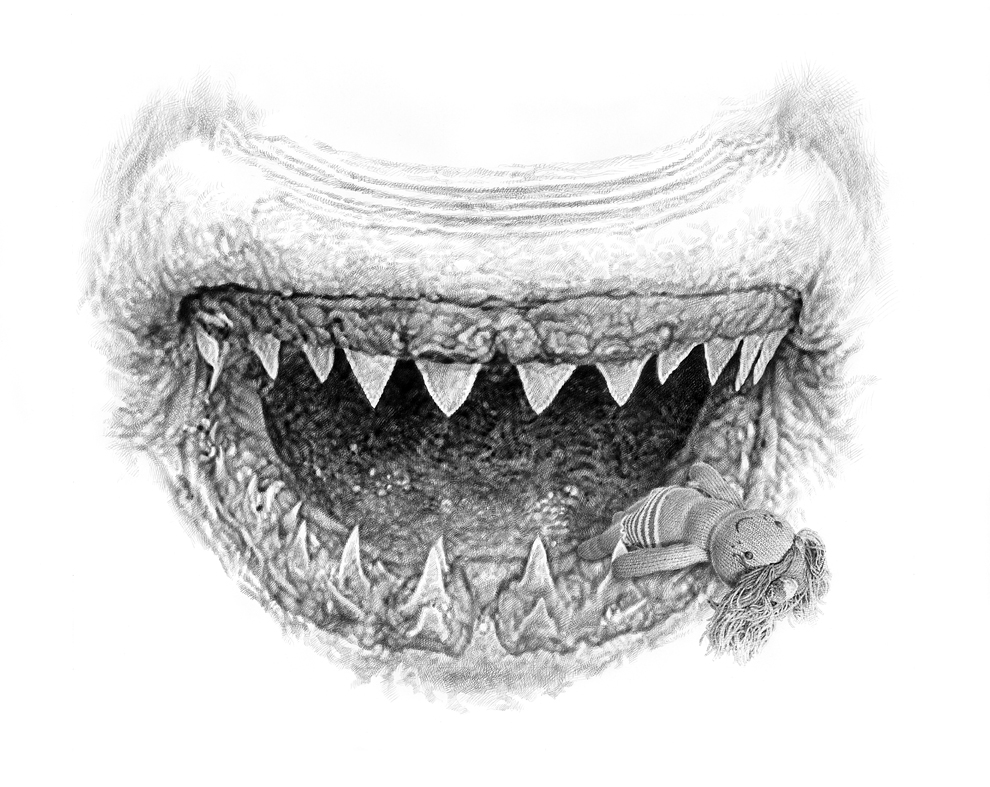
Both subjects are fully visible, and neither one hides behind the other or asks for a second look. The teeth take up more of the frame and pull harder on the part of the brain that watches for trouble. If they grabbed you first, your attention was sorting for danger before it sorted for anything else. That reflex usually belongs to people who learned early that what’s vulnerable in a room survives longer when someone spots the threat before it moves. It works, and it keeps working long after the original reason for it fades. But it runs when the room is safe, too. The doll sitting at the corner of the mouth can go unnoticed until the scan is already over.
The One Nobody Checked On
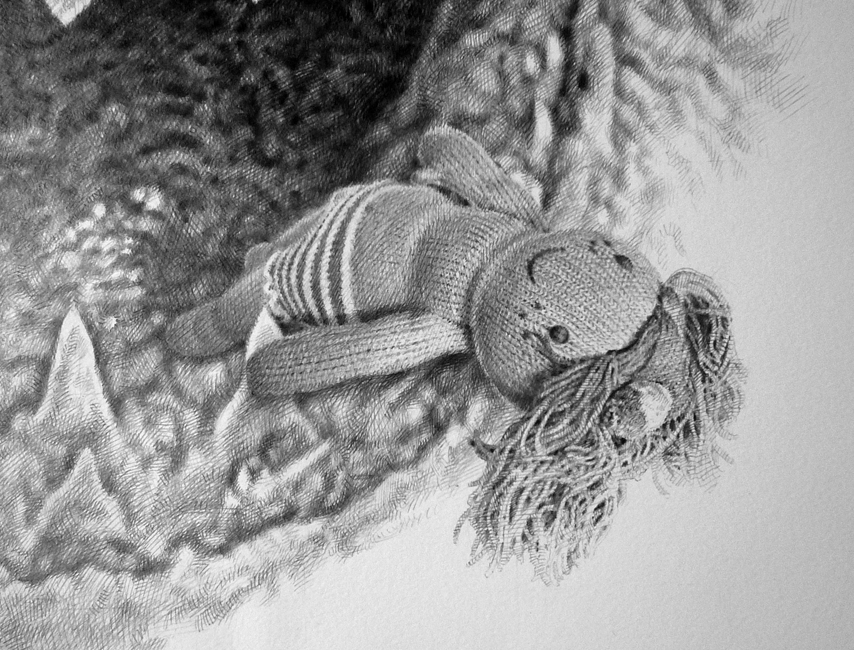
The doll is smaller and sits near the lower lip with yarn hair and a striped jumper worn soft from holding. It doesn’t tense or turn because the thing that can’t protect itself never knows it needs to. If the doll pulled you before the teeth did, your brain found whoever was most at risk before it measured the size of what put them there. That priority almost never comes from being sheltered. It tends to grow in people who notice when someone in the room isn’t being seen. This one is called “Innocence.” Both subjects sit on the same mouth with nothing between them, not a barrier, not even a line.
Shelter and Intrusion
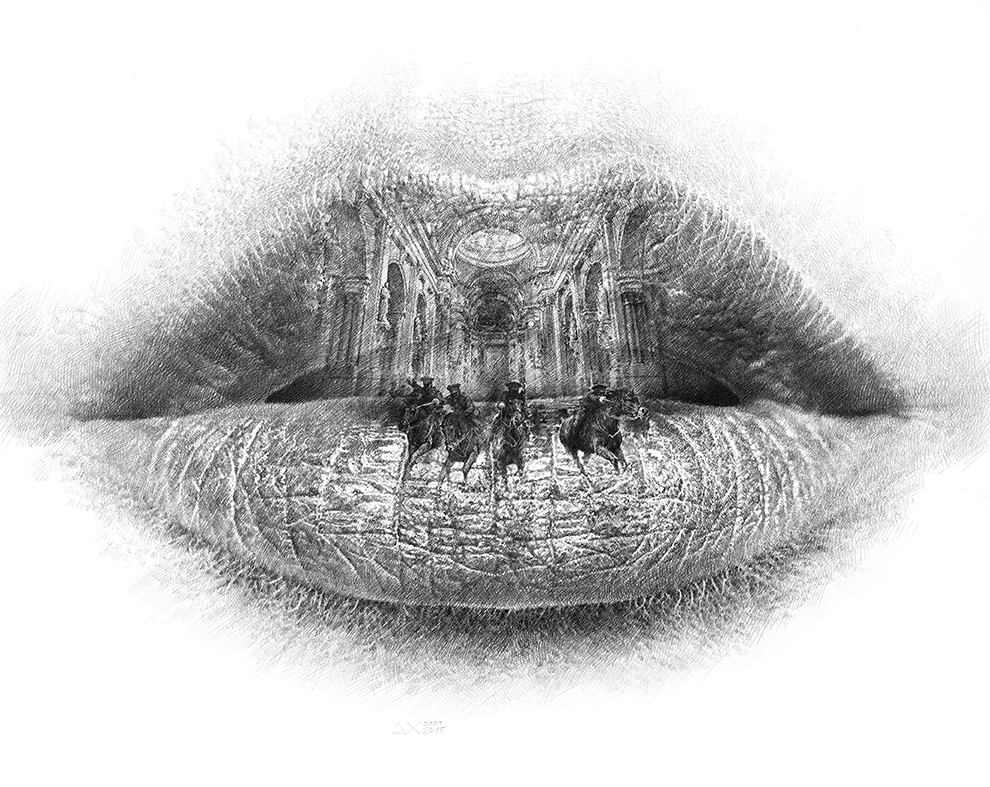
A grand cathedral rises through the upper half of the image. Its vaulted ceiling and ornate columns are drawn with enough detail that you can almost feel the cool air of the nave. Below it, mounted horsemen charge across a stone floor, frozen mid-stride but full of force. A cathedral is built to offer the kind of stillness that lets people lower their guard. The horsemen break all of it. It’s titled “Trust,” and once you sit with that word, the whole image shifts. Whether you saw the cathedral or the horsemen first comes down to how you read a space where safety and danger share the same ground.
Where You Feel Safe and Why
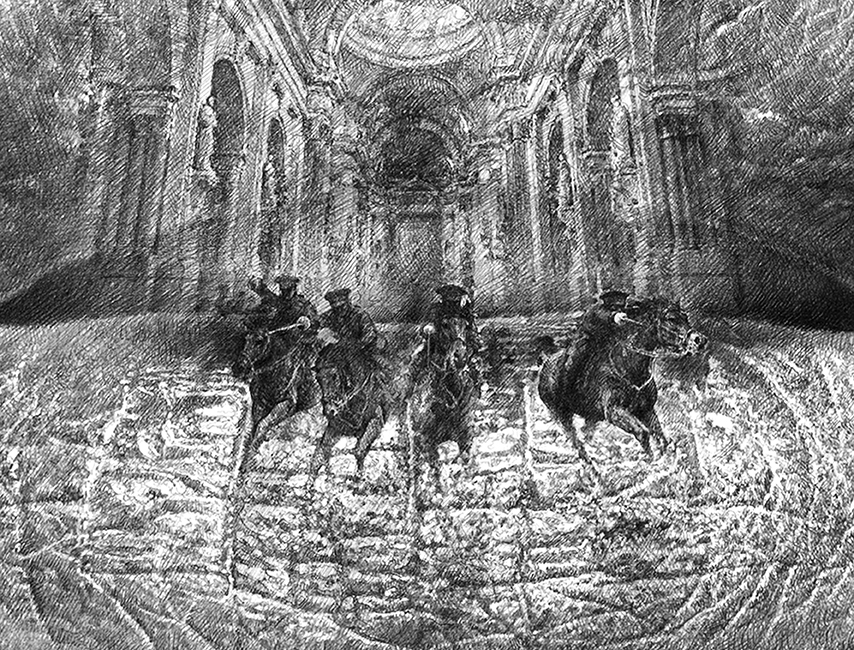
If the cathedral grabbed you, you process where you are before you process what’s happening. You pick up on mood and atmosphere faster than most. The horsemen pull a different kind of viewer, someone wired to track movement and behavior, who registers tension before the space around it comes into focus. The artist built the piece around that collision between shelter and intrusion. The title asks you to think about where your sense of security actually comes from. Safety depends on what you trust, and trust depends on what caught your eye.
What Grew Because No One Stopped It
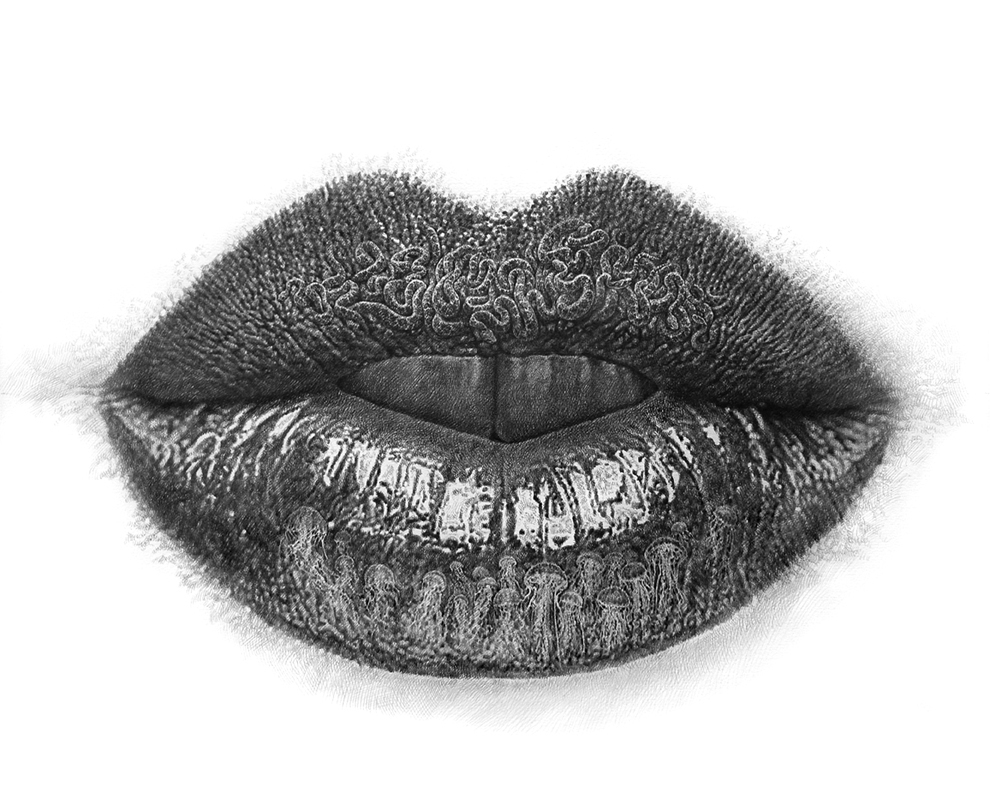
“Negligence” is the title, and the upper lip makes it feel physical. Dense, worm-like forms coil over each other in tight clusters, tangled and multiplying the way problems do when no one addresses them early enough. They look like deep-sea tube worms or intestinal parasites, something organic that thrived because it was left alone too long. If your eye goes to the upper lip first, damage registers with you before anything else does. You scan for what’s gone wrong, what’s been growing unchecked. That instinct usually builds in people who understand how small things turn into big ones when nobody catches them early.
The Quiet Version of the Same Neglect
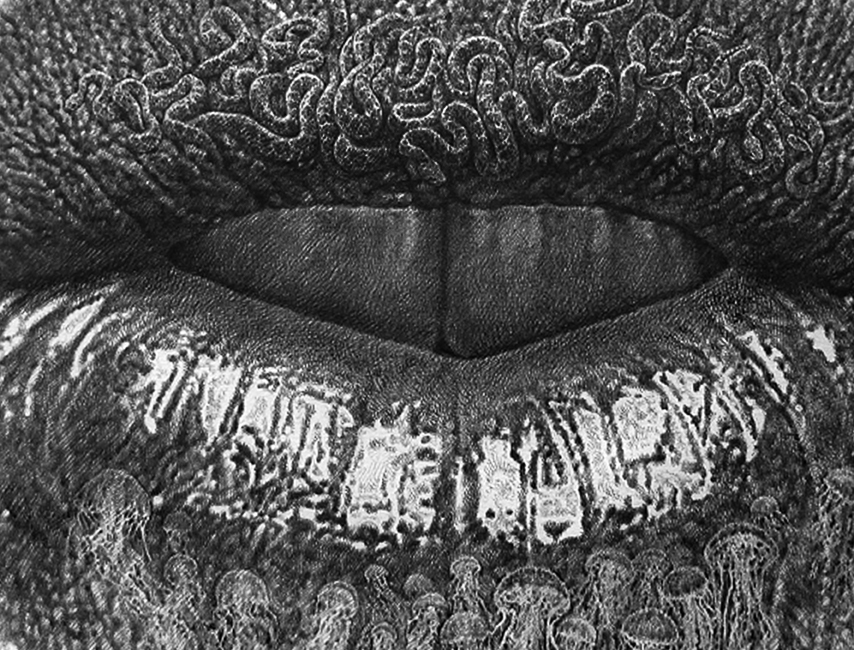
The lower lip holds the quieter half of that meaning. Translucent jellyfish hang suspended beneath the surface, tentacles trailing downward like threads of wet glass, drifting without direction or urgency. Negligence doesn’t always look aggressive. Sometimes it looks like this, passive and weightless, a slow fade rather than a visible mess. If the jellyfish caught your attention, you notice the subtler forms of neglect, the kind that does not announce itself. You pick up on when someone stops trying rather than when they start failing. That focus on absence over presence is rare, and the jellyfish speak to people who have it.
The Hardware Default
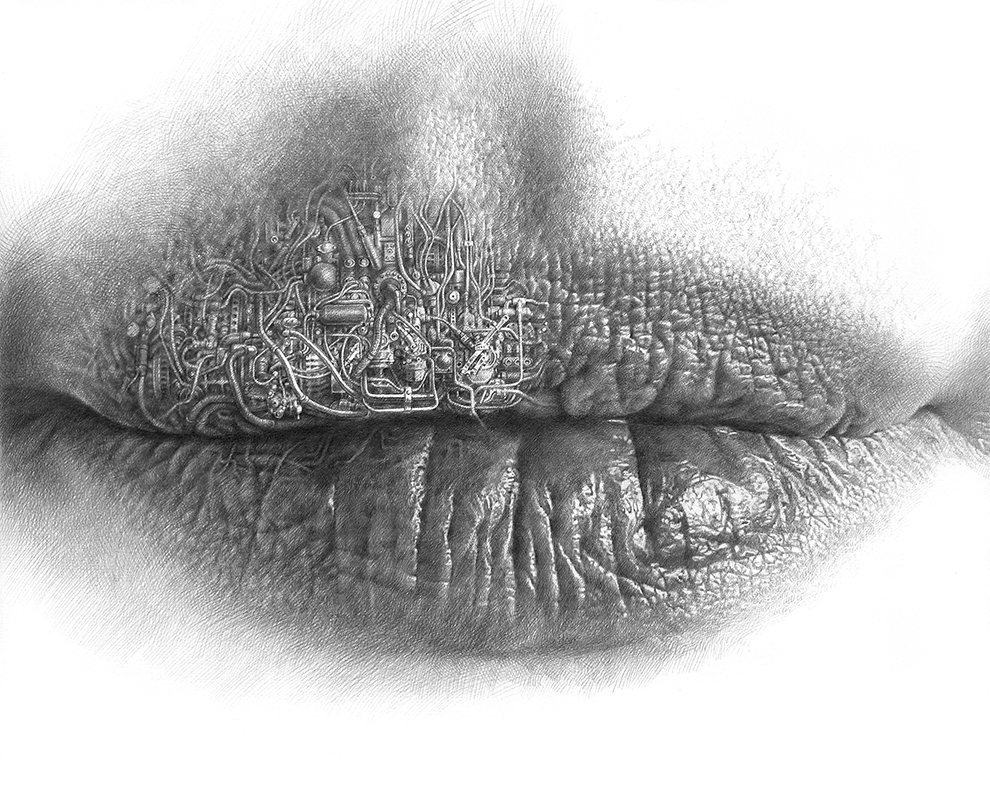
The drawing is dense with industrial machinery. Pipes bend and loop into one another, circuit boards crowd the surface, and wires thread between components that look fused to the tissue around them. The left side of the frame carries the heaviest concentration, packed so tight that individual components blur into a single mass of metal and cable. On the right, the organic texture still dominates, with the machinery thinning out as though it’s still spreading. “Slavery” is the word for this one, and it reframes the machinery as something parasitic rather than functional.
Where the Metal Meets the Skin
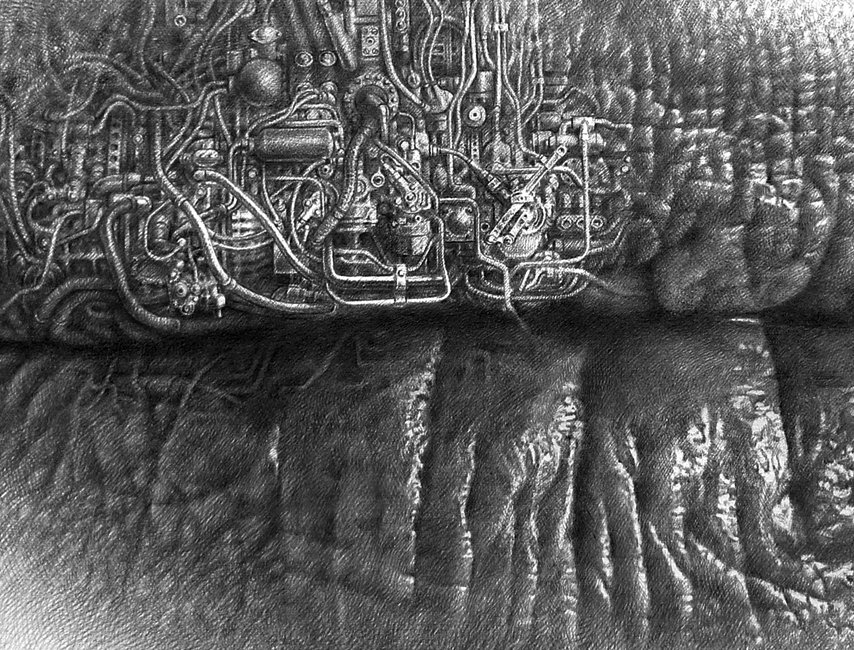
If the machinery grabbed you, you process the world through structure, looking for systems, wiring, hierarchies, and logic. The emotional layer arrives after. Skin texture pulls in the opposite direction, starting with warmth, pressure, and vulnerability, and the analysis follows. And if the boundary between metal and flesh is what caught your eye, the place where circuitry meets living tissue, you’re drawn to thresholds. That in-between space where two opposing things meet is where your attention naturally settles. He designed the piece to test exactly this. The series uses a familiar form as a doorway into something the viewer doesn’t expect to find.
The Same Order Every Time
If you went through all seven, you should have enough data on yourself now to notice something. Every drawing had two subjects, and most people noticed the same type first across the whole series. They went to the teeth before the doll, the bars before the hands, the machinery before the skin. Or they went to the opposite, consistently. That order stayed even though the subjects changed from one drawing to the next. But there might have been one that didn’t follow it, one drawing where the subject you kept noticing second showed up first instead. If that happened, something about that image overrode a priority your brain held for the other six. The question worth asking is why.
Why You Saw What You Saw
Your brain learns what to pay attention to first based on what your life has required you to notice. Every experience that demanded a quick read of your surroundings taught your visual system to rank certain types of information above others. Every room where you had to figure out what was safe, who needed something, or what had changed reinforced that ranking. Over time, it becomes automatic. Researchers call it attentional priority. It means that when you look at an image with two subjects in it, your brain doesn’t give both of them equal weight and let you choose. It sends your attention to whichever one matches the priorities it has already been trained on, before you’re conscious of having looked at anything at all.
The Part That Didn’t Wait
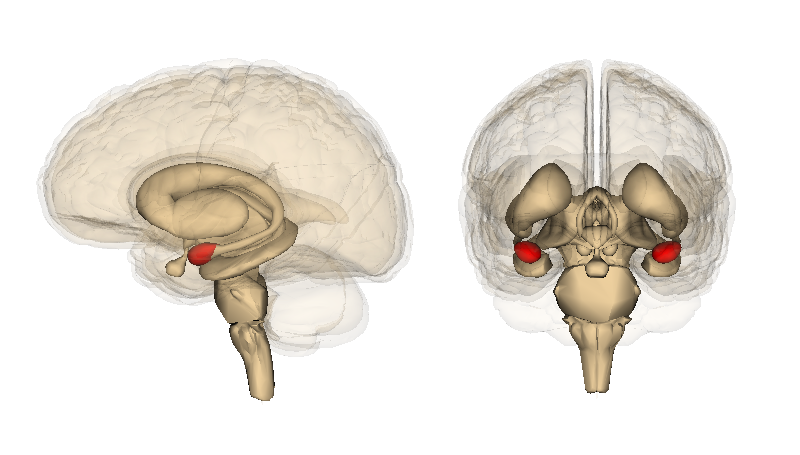
A small structure deep in the brain called the amygdala processes threat faster than almost anything else in the visual system. It uses a shortcut that skips the slower, more detailed processing, and the rest of the brain is still working through. In 2023, a team led by Yingying Wang at Zhejiang University recorded electrical activity from the amygdala and found that it responded to fearful faces in about 88 milliseconds. It works from a rough version of what you see, just enough to flag possible danger. That is why the teeth in Innocence stood out to some viewers before the doll. Their amygdala had already flagged a threat and pulled their attention there first.
Read More: How You See This Image First Could Reveal Your Mindset
The Person Behind the Mouth
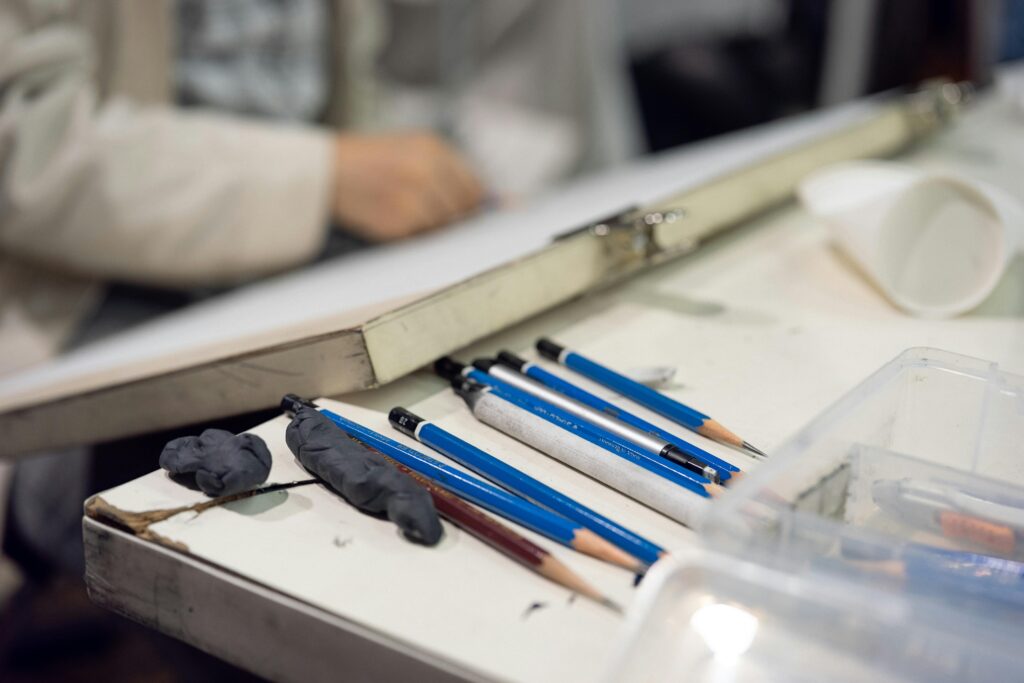
Christo Dagorov is self-taught. He set up his first studio at nineteen and spent years making hyperrealistic paintings of broken-down machines, working in a radical version of pointillism that used only five colors. When pure hyperrealism stopped holding his attention, he started merging and overlaying subjects inside single images. The Lips Series grew out of that shift. He doesn’t align himself with any artistic movement. When asked to define himself as an artist in an interview, he said he prefers to be “aware and human” rather than pick a label. You can see more of his work at christodagorov.com/about.
Read More: The First Thing You See Uncovers Surprising Facts About You