

Marriage is sold as the destination. The Pinterest boards, the bridal magazines, the group chat that goes feral the moment someone gets a ring – all of it points toward a single event and presents it as the beginning of something effortless and complete. What rarely gets discussed is the quiet audit that happens in the years before the proposal: the things a woman already knows she doesn’t love, but has decided, consciously or not, to perform with enough convincing enthusiasm that neither she nor her partner has to confront the gap.
Nobody does this cynically. Women pretend to enjoy marriage – or more precisely, pretend to enjoy the things that tend to come packaged with it – because love is real and connection is real and the desire to make something work is deeply, genuinely human. The performance starts early, often before the relationship even feels serious, and it becomes so practiced it stops registering as a performance at all. It’s just Tuesday. It’s just how things are.
Some of this is specific to individual relationships, and some of it is so consistent across women’s lives that it reads less like a personal pattern and more like a cultural script. The following twelve items are for the woman who has been nodding along for years and not entirely sure when she stopped meaning it.
1. His Social Circle

The weekend plans that somehow always include his friends. The group texts she got added to without asking. The inside jokes from college that are still being deployed in 2026, which she laughs at right on cue, not because they’re funny but because understanding the laugh is part of belonging. His friends are fine – she probably does genuinely like some of them – but “fine” and “the default setting for her social life” are different things, and the distance between them tends to close only in one direction.
There is something particularly invisible about this one because it reads as flexibility, as being easy, as not being the woman who is high-maintenance about friend dynamics. So the performance continues, and her own friendships get scheduled around whatever the group has already decided, and eventually she notices she has been “easy” for so long that she can’t remember what she actually prefers.
2. The Sports, the Games, the Franchises

Not every woman has done this one, but enough have that the pattern is recognizable. The team jersey. The three-hour game watched on a Sunday when there are seventeen other things she’d rather do. The video game she agreed to play because it seemed like a good idea to share the hobby and now there is an ongoing franchise commitment she did not anticipate. The ranking of every Marvel film in chronological versus release order, which she can do now because she has absorbed enough information through sheer proximity.
The thing is, some of this does become genuinely enjoyable. People surprise themselves. But there is a version that is purely performative – a version where she rooted for a team before she had any feelings about football at all, because he cared and it seemed easier to care too. That version is almost never reciprocal, which is worth noticing.
3. The Housework Equation

This one deserves to be said plainly: no woman on earth has ever pretended to enjoy cleaning the bathroom more than her partner. What she has pretended to enjoy, or at least accept without protest, is being the person who notices it needs cleaning in the first place. The mental overhead of running a household – tracking what’s out of stock, knowing when the insurance is due, remembering that the in-laws are coming and the spare room needs sheets – gets absorbed so gradually that it can be years before she even names it as labor.
According to a 2024 report from the Gender Equity Policy Institute, married women without children already do 2.3 times as much household work as their male counterparts – 14.3 hours per week compared to 6.2 hours for married men. That gap doesn’t exist because women enjoy it more. It exists because someone internalized early on that it was hers to manage, and the person who internalized it was almost always her. She may have told herself it was fine. She may still be telling herself that.
And research consistently confirms what that number represents beyond the hours themselves. A 2025 systematic review in the Journal of Family Theory & Review found that carrying a disproportionate share of household labor connects directly to lower mental health, reduced career advancement, and worse overall relationship functioning for women. The unnamed compromises work the same way. They are not loud enough to be grievances, but they accumulate in the body as a low, persistent weight, and one day she will look at the total and realize she never consented to any of it with full information.
4. His Family’s Traditions

Christmas at his parents’ house for the fourteenth year in a row. The Easter recipe that she is now expected to make because she made it once and everyone loved it and now it is her contribution to a family whose traditions she was handed rather than chose. The way his mother organizes the kitchen when she visits, which is different from how she organizes it, and which she has learned to say nothing about.
Women pretend to enjoy marriage partly by pretending to enjoy being absorbed into someone else’s family architecture without being asked whether it fits. The holidays that get split, the in-law visit that’s non-negotiable, the family nickname she got assigned – all of it gets filed under “this is what relationships require,” which is partially true and partially a story about who is expected to do the adapting.
5. The Emotional Support Without Reciprocity

She is his first call after a hard day at work. She is the one who knows his coworkers’ names, their histories, which ones he doesn’t trust and why. She holds the emotional map of his entire professional and personal life and keeps it updated in real time. This is intimacy. This is part of what makes a partnership feel like a partnership.
What she pretends to enjoy – or at least not mind – is that the map is not held in both directions with equal detail. Research into young men’s and women’s relationships has found that women are absorbing the emotional fallout of dynamics they didn’t create, according to a HuffPost report from a gender researcher in 2025. The attentiveness is real. The performance is in pretending that the imbalance is acceptable, or that it isn’t an imbalance at all.
6. Making All the Decisions (While Pretending She Isn’t)

“Whatever you want” from a partner is a beautiful thing when it’s occasional and genuine. When it is the default response to every restaurant question, every vacation debate, every weekend itinerary, it means she is now running a small event-planning operation with a participant who will have opinions about the outcome but no interest in the process. She makes the decision. He weighs in at the end. She pretends this is collaboration.
The particular flavor of this performance is that it gets read as her being in charge, which sounds like power but rarely comes with the authority version of power. She has the labor of deciding and the blame if it goes wrong. He has the comfort of not having to think about it. This is a common arrangement that women enter with full awareness and pretend to find workable, usually until they stop.
7. Shrinking Her Ambitions

Before things get serious, some women take inventory of what their partner is comfortable with and quietly file down the edges of their own ambitions to fit. Not in a dramatic, burning-manuscripts way. More like: she stops mentioning the job possibility that would require relocating. She frames the promotion as exciting but adds immediately that it comes with more travel, and the travel is a problem, so she’s not sure. The ambition is still there. It just gets introduced apologetically, in a register that preemptively manages his reaction.
Among married couples in the US, women’s financial contributions have grown steadily over decades, yet even when earnings are similar, husbands still spend more time on paid work and leisure while wives devote more time to caregiving and housework, according to the Pew Research Center. The version of her life she performs before marriage often has her ambitions pre-managed for palatability. She calls it being practical. It’s worth asking who that practice is actually for.
8. The Particular Hobbies She Dropped

Not the ones she gave up consciously after a frank conversation. The ones she just stopped doing because they were inconvenient or didn’t fit the shape of their shared life. The painting class that was on Tuesday nights, which was when he got home from work and wanted company. The travel she used to do alone that became logistically complicated. The friend group that skewed younger and more chaotic and that he found exhausting to hear about.
She didn’t stop these things because she was told to. She stopped them because love involves compromise, and the compromise, when totaled at the end of several years, turns out to have been made almost entirely in one direction. She’ll find it again later, she tells herself. She pretends it isn’t accumulating.
9. His Timeline for Everything

The engagement that happened on his schedule. The house purchase that waited until he felt ready. The conversation about children that was held off because this wasn’t the right time, and then the right time, when it came, turned out to be his idea of the right time rather than hers. Women adapt to relational timelines with remarkable willingness because the alternative – being the one who is pushing, the one who is impatient, the one who has given an ultimatum – feels like a worse position to be in.
This is one of the performances that women pretend to enjoy with the most conviction, because wanting what he wants when he wants it sounds like alignment. When patterns like this go unaddressed, they become exactly the kind of slow fracture that ends marriages – not in a dramatic fight but in a long accumulation of appointments he kept and timelines that weren’t fully hers. It takes years to identify it as a pattern rather than a series of reasonable individual compromises.
10. The Version of Herself He Fell For
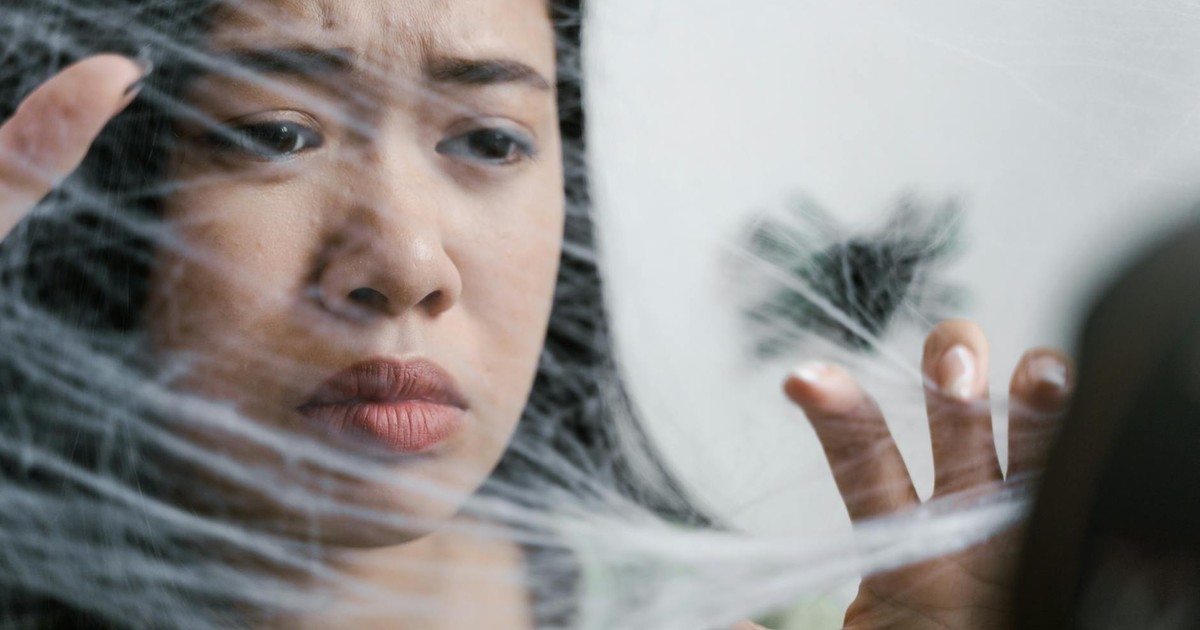
Early in a relationship, most people present an edited version of themselves – less chaotic, more patient, funnier on demand, more aligned on the things that seem to matter. This is normal and largely harmless. Where it becomes a performance is when the edited version becomes the permanent contract. She is the one who doesn’t get irritated by the dishes left out. She is the one who finds his particular brand of joking charming rather than occasionally exhausting. She is the one who is relaxed about everything.
The woman he is marrying is partly real and partly a character she has been sustaining with significant effort. She is not consciously deceptive. She is in love, and love has a way of making the performance feel like the truth for longer than it should. The version of herself she’s been performing will eventually ask for rest, and the rest of the relationship is often the story of what happens when she does.
11. The Compromises She Never Named as Compromises

There is a specific category of pre-marital performance that consists not of enjoying things but of not minding things. The city she would not have chosen. The apartment in his preferred neighborhood. The social life that is sized to his comfort level. The weekends that are structured around his recovery needs from the work week. None of these individual things would be worth a fight. Together, they constitute the entire texture of her daily life, and she has named none of them as a negotiation she participated in.
The unnamed compromises work the same way as the documented labor gap. They are not loud enough to be grievances, but they accumulate in the body as a low, persistent weight, and one day she will look at the total and realize she never consented to any of it with full information.
12. The Idea That This Is Enough

The last and most invisible item on this list is the performance of satisfaction. Not happiness, exactly – she may genuinely be happy much of the time – but the performance of sufficiency. The sense that this is the right amount of love, the right amount of reciprocity, the right amount of ambition, the right amount of space for her own wants. She does not always believe it, but she performs it well enough that she convinces herself, at least for stretches.
Women pretend to enjoy marriage, but what they are really pretending most of the time is that they are not pretending. That the shape of their life was arrived at freely. That the performance and the real thing are the same. This is possibly the most widespread piece of self-deception in the entire institution, and it is sustained with such skill, such daily maintenance, that noticing it at all feels like a kind of rebellion.
What You Actually Know

Nobody is suggesting she blow up her life. Nobody is claiming that any of the things on this list are, alone, reasons to reconsider anything. The point is not to manufacture a crisis but to name what is already there, doing its work in the background.
The performance doesn’t make her weak or naive. It makes her human, and it makes her someone who has been living inside a set of expectations that were never announced as expectations. They were just the water. They were just the way things go. The remarkable thing is not that she adapted to them, but that she adapted so completely that the adaptation stopped looking like adaptation.
What gets interesting is what happens once you see it. Not the list itself – anyone can compile a list – but the moment the pattern becomes legible, when a Tuesday that looked exactly like every other Tuesday suddenly has a name. That recognition doesn’t demand a response. It doesn’t require a conversation, a decision, or a plan. It just requires honesty, with yourself, in a room where nobody else is watching.
You don’t have to fix all twelve at once. You don’t have to fix them at all, at least not today. But knowing which ones are real and which ones are performed – that knowledge belongs to you alone, and it does not expire.
AI Disclaimer: This article was created with the assistance of AI tools and reviewed by a human editor.