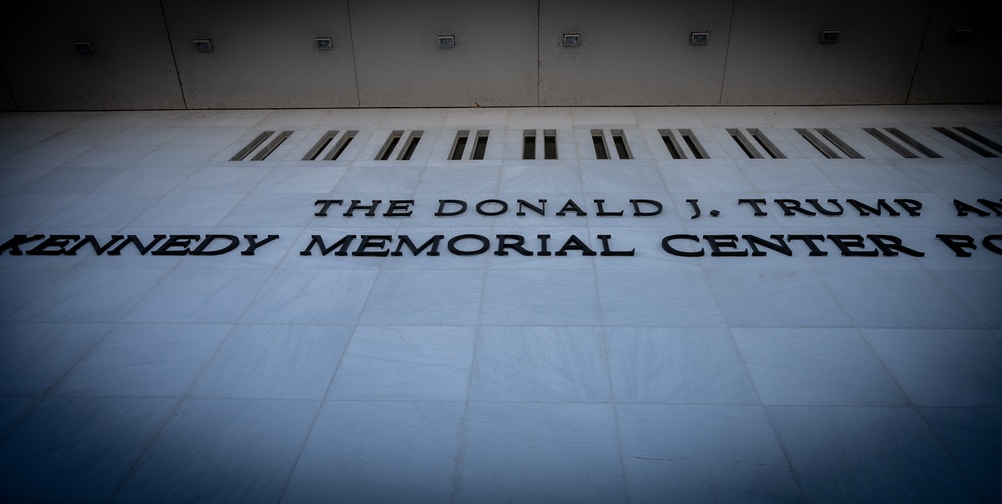

On May 29, 2026, a federal judge handed the Kennedy family something they hadn’t been able to buy, lobby for, or publicly demand into existence: a court order. Donald Trump’s name – affixed to the façade of the John F. Kennedy Center for the Performing Arts less than six months earlier – had to come down. All of it. The signage, the website, the letterheads, the branding. Gone, by June 12. And perhaps most satisfying of all, the ruling landed on what would have been President John F. Kennedy’s 109th birthday.
The timing was not lost on anyone, least of all the Kennedys themselves. A family that has spent the better part of the last two years watching their patriarch’s name get progressively sidelined in favor of a man who appointed himself chair of the arts center’s board, packed it with loyalists, and then presided over plummeting ticket sales and a string of high-profile artist cancellations – they had something to celebrate. And celebrate they did.
Maria Shriver posted first. Kerry Kennedy was close behind. And the reaction from both of them, warm and pointed in equal measure, captured something most people already felt but hadn’t quite seen said out loud with that particular combination of grace and satisfaction.
The Ruling Itself

U.S. District Judge Christopher Cooper ruled that Trump’s handpicked board did not have the authority to rename the facility on its own. The legal argument was not complicated, once someone bothered to make it in court. In his 94-page decision, issued on Kennedy’s birthday, the judge wrote that “the Kennedy Center’s organic statute makes crystal clear that the Center is to be named for President Kennedy,” and that “Congress gave the Kennedy Center its name, and only Congress can change it.”
The Kennedy Center’s board had, in December, attempted to attach Trump’s name to the storied institution, named by Congress after the assassinated former President John F. Kennedy in 1964. The board, whose members Trump hand-selected, voted unanimously to rename the building to honor both U.S. presidents, drawing fierce backlash from several high-profile Kennedys. The administration’s defense, when it came, was creative in the way that only a position you know you’re going to lose can be. The administration did not deny the center is legally required to be named after Kennedy, but instead tried to claim the center had not really been renamed, arguing that “Trump Kennedy Center” was “merely a secondary name” rather than a name change. The judge was not impressed. He noted pointedly that the “Trump Kennedy Center” label “adds an entirely new name to the Center’s formal title and relegates President Kennedy’s name to second place. If that is not a renaming, what is?”
Beyond the name, Cooper also temporarily blocked the performing arts landmark from being closed for two years for renovations at the behest of the president, who is chair of its Board of Trustees. Cooper found the board’s vote to shutter the facility was the result of an “ill-informed and seemingly preordained decision.” The judge pointed to comments from Matt Floca, who had been put in charge of the center, that appeared to show he was preparing for total closure months before Trump announced plans to shut the building down in February.
The Woman Who Started the Fight
None of this happened because the Kennedy family issued a strongly worded statement, or because Bernie Sanders posted on X, or because public outrage reached some tipping point. It happened because one person filed a lawsuit and refused to drop it.
The ruling came in response to a lawsuit by Rep. Joyce Beatty, an Ohio Democrat and ex officio Kennedy Center trustee, whose civil complaint challenged the renaming, the closure of the center for renovations, and being stripped of her voting rights by the board. After Trump’s handpicked board voted to rename the institution in December 2025, she filed suit to halt the renaming. Then in February 2026, in the wake of declining ticket sales and without any warning, Trump announced the Kennedy Center would shut down – and Beatty amended her lawsuit to also prevent the closure.
Beatty also disputed claims that the board’s vote to add Trump’s name was unanimous, saying she was muted and prevented from voicing opposition during the process. The court also ordered that Beatty have her voting rights restored as an ex officio trustee. Her statement after the ruling was precise: “The Kennedy Center is an institution that belongs to the American people, not to Donald Trump. He has desecrated this sacred memorial for his own vanity.”
The Kennedys React
JFK’s niece, journalist Maria Shriver, called the ruling “an appropriate birthday present on my uncle’s birthday today.” The ruling arrived on what would have been JFK’s 109th birthday. Shriver is the daughter of Eunice Kennedy Shriver, JFK’s sister, and she has been consistently vocal throughout the saga of the Trump Kennedy ballot on the center’s identity. The birthday timing, she made clear, was not lost on her.
Kerry Kennedy, daughter of Robert F. Kennedy and sister of Trump’s Health Secretary Robert F. Kennedy Jr., praised the ruling by referencing a vow she had made in December to “grab a pickax and pull those letters off that building” as soon as Trump was out of office, saying: “Perhaps I won’t need that pickaxe after all.” It’s a line that does a lot of work without trying too hard. The image of a Kennedy niece literally prepared to take a pickaxe to a federal building is both entirely believable and also, as it turns out, unnecessary.
Kerry Kennedy had written back in December that “President Kennedy proudly stood for justice, peace, equality, dignity, diversity, and compassion for those who suffer,” and that “President Trump stands in opposition to these values, and his name should not be placed alongside President Kennedy’s.” Half a year of legal proceedings later, a federal judge agreed with the basic legal mechanics of what she was saying, even if he phrased it more dryly.
The Broader Branding Picture
The Kennedy Center was not an isolated incident. The addition of Trump’s name to the Kennedy Center is part of what NBC News described as “an unprecedented wave of presidential branding being carried out in his second term,” with the addition of his name to federal buildings, battleships, passports, a drug website, and more. In the same week as the ruling, Treasury Secretary Scott Bessent said his department was preparing to print $250 bills with Trump’s face on them if Congress passes legislation to do so.
The ruling is a setback to Trump’s ongoing attempt to change Washington’s historical landmarks, which also includes plans to build a Triumphal Arch and ongoing demolition of the White House’s East Wing to make way for a ballroom – projects that are similarly facing legal challenges.
The president’s response to the court ruling was characteristically theatrical. Trump wrote in a Truth Social post that he had “instructed the Department of Commerce to make all necessary arrangements with Congress to allow a full and complete transfer of this Institution, giving them the responsibility for its Operation, Maintenance, and Management,” adding that he had “no interest in continuing” unless he was “free” to do what he wanted to do. The man who appointed himself chair of a national arts institution to put his name on it is now, apparently, washing his hands of it entirely.
The Countdown to June 12
The center’s office of the general counsel sent a memo directing staff to immediately remove the president’s name from email signatures, letterhead, and other documents, and replace it with “The Kennedy Center” or “The John F. Kennedy Center for the Performing Arts.” All other templates and forms, signage, brochures, and website pages were directed to be changed by June 12.
Lawyers at the Kennedy Center ordered Trump’s name stripped from the building by June 12 and “immediately” removed from marketing materials, staff signatures, and other documents. The center’s communications team struck what might be called a diplomatically impossible tone. “We are complying with the court’s order while evaluating all legal options to preserve this revitalization and recognize President Trump’s leadership,” the Kennedy Center’s vice president of public relations said in a statement to PBS News. That is the kind of sentence that takes real skill to write. Compliance and resistance, tucked into the same twenty-three words.
The center’s gift shop, notably, had recently put all “Kennedy Center”-branded merchandise on sale at 30 percent off ahead of the expected closure – a detail that says something about the institutional confidence, or lack of it, with which the whole renovation plan had been received.
Politicians Piled On
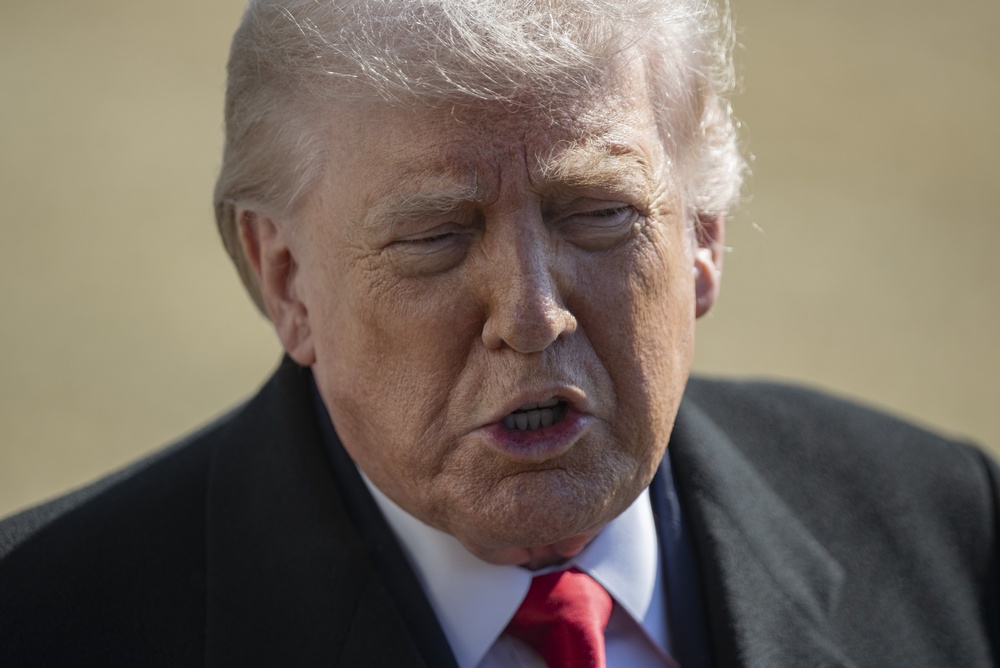
Senator Bernie Sanders wrote that “a federal judge just ordered Trump’s name removed from the Kennedy Center because it honors JFK, not Donald Trump,” adding that “America deserves a president, not a narcissist-in-chief who treats public office as a vehicle for self-promotion and personal enrichment.”
Rep. Jerry Nadler, meanwhile, took the ruling as an opportunity to press for something larger. He expressed support for the court’s decision and called for his bill – the PROTECT Act, introduced in April 2026 – to strip Trump’s name from all federal buildings to be passed. It’s a broader effort that reflects just how many structures now bear the president’s name and how many legal challenges may still be coming.
The question of whether the ruling holds on appeal remains open. The Kennedy Center’s PR team made clear the administration is “evaluating all legal options.” And Cooper’s ruling, while decisive on the naming question, did leave the door open for the board to revisit the closure question through a more thorough process. The building’s pipes are aging, the air conditioning is old, and the physical case for renovation is real, whatever the legal and political mess surrounding it.
Read More: Trump calls to cancel America’s 250th birthday party — here’s the full story
What Sticks
The name is coming down. The legal record now says, unambiguously, that a board appointed by one president cannot unilaterally append that president’s name to a federally designated memorial to another. That’s the ruling. The letters will be gone by June 12.
What’s harder to remove is the year-long disruption to an institution that exists, by its own founding statute, to keep art alive in the nation’s capital. Trump, who was elected chairman of the board last year, oversaw major programmatic and leadership changes that led to slumping ticket sales and major artists pulling out of planned appearances. A court order fixes the sign. It doesn’t restore the artists who declined to perform, the seasons that were thrown into uncertainty, or the institutional trust that was spent in the process.
Kerry Kennedy said she might not need a pickaxe after all. She was right, this time. The Kennedys got their building’s name back on a birthday, in a 94-page ruling, delivered by a judge appointed during the Obama administration. Some victories arrive tidily. Most don’t – and this one, satisfying as it is, leaves behind more unresolved questions than its clean headline suggests. The center’s future under a board still stocked with Trump loyalists, still reportedly evaluating appeals, is not a thing anyone gets to call settled quite yet.
AI Disclaimer: This article was created with the assistance of AI tools and reviewed by a human editor.