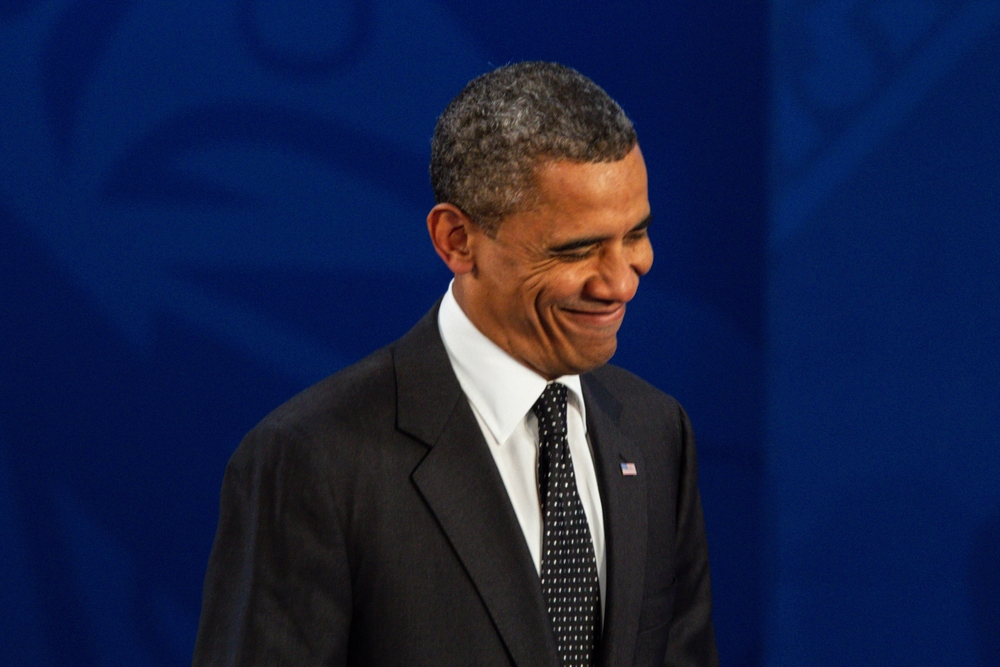

On a morning when Chicago’s South Side is bracing for thousands of visitors and global television cameras, the Obama Presidential Center opens its doors with a ceremony that reads less like a museum dedication and more like a cultural statement of intent. The guest list alone – Bruce Springsteen, Stevie Wonder, Bono and The Edge, Jennifer Hudson, John Legend, Christina Aguilera, Common, Eddie Vedder, The Roots, Marc Anthony, Tems, and Marsai Martin – is a catalog of achievement spanning six decades of American and global music. The contrast with the celebrity turnout for President Donald Trump’s recent marquee events is impossible to ignore, and across social media, millions of Americans are not trying to ignore it.
The Obama Presidential Center opening is not merely an occasion for ceremony and nostalgia. It is the culmination of a project nearly a decade in the making, one that cost nearly three times its original budget, survived multiple lawsuits, and arrives carrying the weight of genuine community debate about who benefits when a president builds a monument on land that belongs to a neighborhood. Every dimension of this story – the spectacle, the politics, the architecture, the economics – is worth examining in full.
This is an in-depth report on what the Obama Presidential Center is, how it was built, who turned out to celebrate it, and what it means for the city of Chicago and the broader political culture of a deeply divided United States.
The Grand Opening: Ceremony, Performers, and Deliberate Symbolism
On June 18, 2026, the Obama Foundation announced the performers who would take the stage at the Obama Presidential Center’s Grand Opening Ceremony. The historic event, held at the Center’s John Lewis Plaza, was declared a milestone for the city of Chicago and communities around the world. The ceremony was designed to bring together global leaders, artists, changemakers, and citizens for a celebration of the values that shaped the Obama presidency and continue to power civic engagement across generations.
The Obama Foundation confirmed a star-studded list of musical performers that would take the stage at the grand opening ceremony. The library’s grand opening was held the day before the presidential center opened to the public on Juneteenth, for thousands of invited guests.
The Performer Lineup
Performers taking part in the ceremony included multiple Grammy, Oscar, Golden Globe, and Special Tony Award-winning artist and Rock and Roll Hall of Fame inductee Bruce Springsteen; multiple Grammy Award-winning artist Christina Aguilera; multiple Grammy, Oscar, and Emmy Award-winning artist Common; multiple Grammy and Golden Globe Award-winning artist and Rock and Roll Hall of Fame inductee Eddie Vedder; multiple Grammy, Oscar, Emmy, and Tony Award-winning artist Jennifer Hudson; multiple Grammy, Oscar, Emmy, and Tony Award-winning artist John Legend; multiple Grammy and Oscar Award-winning artist and Rock and Roll Hall of Fame inductee Stevie Wonder; and Kennedy Center Honorees and Rock and Roll Hall of Fame inductees U2’s Bono and The Edge.
Also among the star-studded lineup tasked with bringing “music, performances, and hope” were The Roots, Marc Anthony, Tems, and actress and producer Marsai Martin.
Eddie Vedder has long been a supporter of Obama and performed ahead of Obama’s farewell address at the end of his presidency in 2017. Like Obama, Vedder also has roots in Chicago, having been born in Evanston, Illinois.
The Attendance List and One Deliberate Absence
Every living president would be in attendance except one: President Trump. During a press preview in early June, longtime Obama White House aide and current CEO of the Obama Foundation Valerie Jarrett said Trump was welcome to visit the museum and they would love to give him a tour – but he was simply not invited to the dedication. “I can tell you that this is a celebration for those who helped get President Obama where he is,” Jarrett said. “And this is a gift to them. And so the people who will be here are the people who’ve been helpful along the way.”
A VIP list of dignitaries, including former presidents and first ladies, joined the Obamas for Thursday’s ceremony, which started at 11 a.m.
The ceremony took place at John Lewis Plaza and was livestreamed worldwide beginning at 11 a.m. on Obama.org and the Obama Foundation’s TikTok, YouTube, and Facebook channels. While the ceremony itself was invite-only, the Obama Foundation hosted a free watch party on Midway Plaisance starting at 9 a.m.
Opening Weekend and Public Access
The public began visiting the campus and Museum on June 19, 2026. Obama Presidential Center Opening Weekend festivities took place June 20 and 21 with an array of public celebrations to welcome the community and guests from around the world to Chicago’s South Side. While museum tickets for opening weekend sold out, the rest of the campus was free and open to visitors.
What the Obama Presidential Center Actually Is
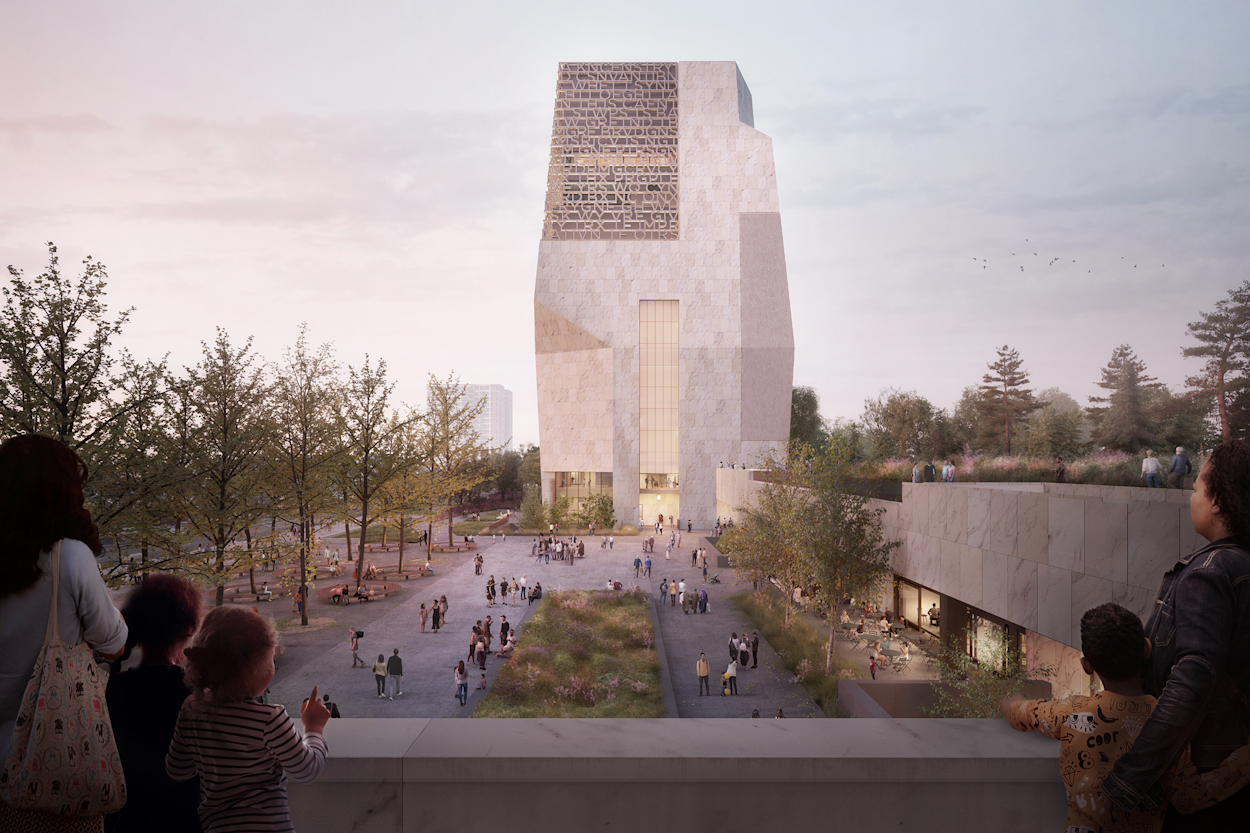
The ceremony and its celebrity roster have captured the headlines, but the campus itself is the more consequential story – and a more contested one than the guest list suggests.
The center is a more than 19-acre space on the south side of Chicago that describes itself as a campus. It features a towering museum that curators envision influencing change and offering hope, presenting a close look at what life was like in the Obama White House. The campus also houses a branch of the Chicago Public Library, as well as an NBA regulation-size basketball court and a Women’s Garden, created in tribute to female leaders.
The center includes a full-size basketball court, a public library, a vegetable garden, a rooftop playground, and a sledding hill. A hill for sledding in the winter was added at Michelle Obama’s request.
The Obama Presidential Center Museum explores the promise and power of democracy through the legacy of President and Mrs. Obama. Visitors journey through four levels of dynamic exhibits that tell the story of the First Family and the social movements that made their work possible, including memorabilia from the Obamas’ time in the White House, stories of iconic moments from the administration, and interactive activities for visitors of all ages and abilities.
Not a Presidential Library in the Traditional Sense
The center’s museum highlights the legacy of the former president, but it is not a traditional presidential library. The Obama Presidential Center will not be run by the National Archives and Records Administration and will not house all the documents from the Barack Obama presidency, which will be maintained by the Archives. It is the first completely digital presidential library.
Those presidential documents are held in the largely digital Barack Obama Presidential Library run by the National Archives, housed in a separate facility. The center’s work includes digitizing the Barack Obama Presidential Library with the National Archives and Records Administration, to create the first fully digitized presidential library.
A Landmark Art Commission
On September 10, 2025, the Obama Foundation announced that it had commissioned ten artists to create nine site-specific works for the Center. The artists include Nick Cave, Nekisha Durrett, Jenny Holzer, Jules Julien, Idris Khan, Aliza Nisenbaum, Jack Pierson, Alison Saar, Kiki Smith, and Marie Watt, with Cave and Watt collaborating on one work. They joined Lindsay Adams, Spencer Finch, Richard Hunt, Maya Lin, and Julie Mehretu, who had previously been commissioned.
The 175-foot frieze installation by artist Theaster Gates now anchors the atrium named after Hadiya Pendleton, the Chicago teenager shot and killed just days after marching in President Obama’s second inaugural parade.
A Decade in the Making: Construction, Cost, and Controversy
The Obama Presidential Center opening caps a process that began in 2015 and ran well over budget, well behind schedule, and through a thicket of legal challenges that reached the United States Supreme Court.
Site Selection and Early Opposition
Two parks near the University of Chicago’s campus, Jackson Park and Washington Park, were considered for the center’s location. On July 29, 2016, the foundation announced the selection of a portion of Jackson Park in the Woodlawn neighborhood. Jackson Park, designed by landscape architect Frederick Law Olmsted for the 1893 World’s Columbian Exposition, already houses the Museum of Science and Industry and a golf course.
Built on a parcel of land originally shaped by legendary landscape architects Frederick Law Olmsted and Calvert Vaux, the Obama complex was designed by architects Tod Williams and Billie Tsien and landscape architect Michael Van Valkenburgh and features four distinct buildings.
Construction of the center was originally expected to begin in late 2018 and be completed in 2020 or 2021. A federal review of the project began in late 2017, responding to local criticism and assessing whether the project affected Jackson Park’s status on the National Register of Historic Places.
On June 11, 2019, a judge ruled on the cross-motions for summary judgment and dismissed the lawsuit seeking to block construction of the Obama Presidential Center in Jackson Park. The case was appealed to the U.S. Supreme Court in August 2021, which denied the requested injunction against the city.
Construction Begins – and Costs Balloon
Construction on the 19.3-acre campus began in 2021; the tower topped out in mid-2024. The cost to build the Presidential Center rose to more than $615 million through the end of 2024, according to the latest filing from the Obama Foundation. That is more than double the $300 million estimate when the center was first contemplated in 2016. The foundation’s most recent all-in project cost estimate, including artifacts, exhibits, and finishes, reached $850 million.
At an estimated cost of $850 million, it is the most expensive presidential library built.
Construction began in August 2021. On September 28, 2021, the Obamas, Illinois Governor J.B. Pritzker, and then-Mayor Lori Lightfoot took part in the official ceremony marking the start of construction on the campus.
Public Infrastructure Spending on Top of Private Costs
The $850 million price tag does not tell the full story of the public investment behind the campus. When the Obama Presidential Center opened, there were two major financial contributors beyond the Obama Foundation: Chicago and Illinois taxpayers. The Chicago Department of Transportation reported spending $123.3 million since 2022 on capital projects aimed at remaking the roadways and green space in Jackson Park and around the center, with final public infrastructure costs likely approaching $200 million. Those costs are not part of the presidential center’s privately-funded $850 million price tag.
In May 2026, it was projected that the Presidential Center would attract over 700,000 visitors each year.
Community Tensions: Celebration and Displacement
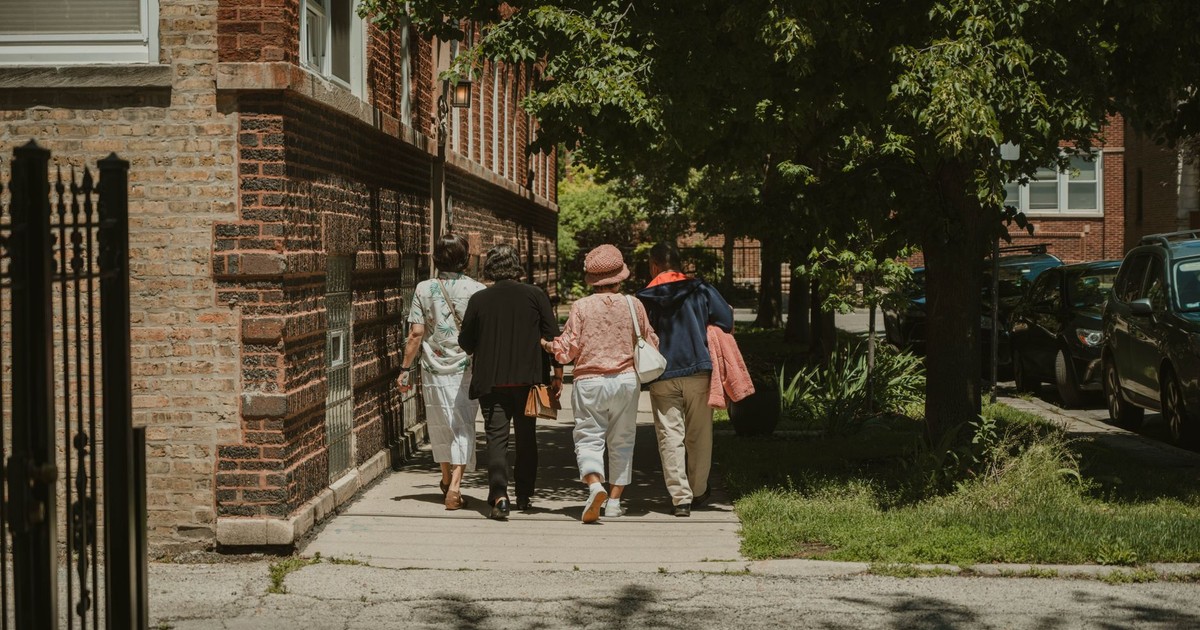
No account of the Obama Presidential Center opening is complete without addressing the concern that has shadowed the project since 2015: what happens to the people who already live here?
Rising Rents and Displacement Fears
The site of the Center, Jackson Park, lies at the intersection of three neighborhoods: the historically affluent, racially integrated Hyde Park and the more economically depressed, majority African-American Woodlawn and South Shore. Despite Obama’s longtime residence in and association with Hyde Park, the Center’s construction in Jackson Park has elicited widespread concerns about gentrification and the displacement of longtime South Side residents, especially African-American residents.
Median rents in the neighborhoods surrounding the campus have risen 43 percent since the project was announced in 2015. In the past 10 years, the median sale price of a single-family home in Woodlawn has jumped 4.6 times.
One South Side resident, Stevie Early, was forced to move from her longtime home in South Shore as rents increased with the Obama Presidential Center moving in. Community groups held a news conference in Woodlawn to highlight the increased cost of living for area residents.
Investors have continued buying up properties in Woodlawn, the historically Black neighborhood west of the center. In March 2026, tenants at the Chaney Braggs Apartments at 65th Street and Stony Island Avenue, less than a mile from the campus, formed a union after learning the foreclosed building could be sold to a California investor with plans to gut-renovate it. Residents said the prospective owner offered low-income renters $2,000 to move out.
Policy Responses – and Their Limits
The Woodlawn Housing Preservation Ordinance, passed in 2020 and spearheaded by 20th Ward Ald. Jeanette Taylor, was meant to preserve affordable housing in the area. The Illinois Answers Project published a report in May 2026 saying the city’s efforts to curb displacement in Woodlawn have been largely ineffective.
In September 2025, the City Council passed a $6 million Jackson Park Housing Pilot, which reserves 30 city-owned vacant lots for affordable housing, requires 120-day notice for lease nonrenewals in the pilot area, and offers grants of up to $5,000 to help longtime homeowners pay off property tax debt.
Emily Talen, professor of urbanism at the University of Chicago, has observed the changes in the neighboring Woodlawn community firsthand. “You have, for the past few years, brand new condo development kind of interspersed with vacant lots, dilapidated buildings, historic buildings,” Talen said.
Ahead of its opening, the Obama Center became for South Side residents a subject of pride, curiosity, nostalgia, and affection for the country’s first Black president, raising hopes for jobs and increased economic opportunity, as well as worries that its presence would speed gentrification and force out the poorest of its neighbors.
—
The Trump Contrast: Freedom 250, Celebrities Who Said No, and Dana White’s “Never Again”
The political undertow of the Obama Presidential Center opening is inseparable from events that unfolded just four days earlier on the South Lawn of the White House, where President Trump staged a $60 million UFC fight night to celebrate both America’s 250th birthday and his own 80th.
The UFC Freedom 250 Event
President Trump and UFC President Dana White watched the UFC lightweight championship fight during the UFC Freedom 250 event on the South Lawn at the White House on June 14, 2026. The estimated 4,300 people in attendance, which included about 1,200 active-duty service members, greeted the president with loud cheers. The $60 million event kicked off with the Marine Band’s performance of the national anthem, sung by country star Zac Brown, and was capped off with a flyover by the Navy’s Blue Angels and Air Force Thunderbirds.
On June 6, 2026, an emergency lawsuit was filed by the Public Integrity Project, an anti-corruption watchdog group, which aimed to block the event from occurring, describing it as a “deeply corrupt private, for-profit sports event.” The lawsuit challenged the transformation of the White House grounds without congressional approval and the financial benefits of the event for the UFC, Dana White, Donald Trump, and their allies.
The constant headaches over weather concerns in the rare outdoors show, the logistics of construction of the cage, and the soaring cost – which UFC said it was footing at $60 million – made Freedom 250 a one-off. “I can’t afford it,” White said afterward.
A-Listers Who Declined Trump’s Invitation
According to Vanity Fair, UFC President Dana White’s celebrity guest list included Adam Sandler, filmmaker Guy Ritchie, Tom Brady, Oscar winner Jared Leto, action star Jason Statham, Dwayne “The Rock” Johnson, and TV host Mario Lopez – none of whom attended.
Comedians Tony Hinchcliffe and Shane Gillis were among the crowd, as were Mark Zuckerberg, Joe Rogan, Melania Trump, Ivanka Trump, and Barron Trump.
The Freedom 250 Concert Collapse
The celebrity drought extended beyond the UFC event. Trump’s associated Freedom 250 concert series for the National Mall, branded the “Great American State Fair,” experienced a cascade of high-profile withdrawals before it even began. Rock singer Bret Michaels dropped out of the Great American State Fair, becoming the fifth artist to withdraw from President Trump’s Freedom 250 concert series. Michaels, the lead singer of Poison, announced he would no longer perform at the celebration on the National Lawn in Washington, saying what was initially pitched as a patriotic music festival had become increasingly divisive and raised safety concerns.
Michaels’ exit lined up with those of artists like Young MC, Martina McBride, and Morris Day, all of whom suggested, in one way or another, that they had no idea they were walking into a political minefield when they agreed to the shows.
“I had no clue it was considered a ‘Trump-backed’ event, so that was new to me,” Young MC told Rolling Stone. “My whole thing was ‘tell me what the event is, what it’s about, who you are, and then give me the choice of whether I want to do the event or not.’ I was never given that choice. I was told one thing and then it was a bait-and-switch.”
Freedom 250 was funded through a public-private partnership with funding from Trump-aligned tech firms Palantir and Oracle and federal contractors Deloitte and Lockheed Martin. It faced growing scrutiny from watchdog groups and members of Congress over the use of federal dollars for Trump-aligned events. Consumer advocacy group Public Citizen called for congressional investigations after The New York Times reported that donors to Freedom 250 were offered access to the president if they donated $1 million.
What This Opening Actually Means
The Obama Presidential Center opening is simultaneously a cultural event, a political counterpoint, and a live civic experiment. The performer roster at John Lewis Plaza – thirteen artists spanning rock, soul, R&B, hip-hop, pop, and global music – stands in stark contrast to a White House fight night from which the most-invited celebrities stayed home and a Freedom 250 concert series whose own headliners quit before a note was played.
But the building itself demands more than a moment of comparison with its political opposition. At an estimated $850 million, it is the most expensive presidential library ever built, constructed on land that has been the subject of contested legal and community battles for a decade. Median rents in the surrounding neighborhoods have risen 43 percent since the project was announced in 2015, and the median sale price of a single-family home in Woodlawn has jumped 4.6 times over the past decade. The arrival of 700,000 projected annual visitors will test every housing protection ordinance the city has managed to pass.
The opening day ceremony is a genuine and historically significant occasion. It is also the beginning of the harder question: whether a campus designed to inspire and empower will do so for the people who have lived within walking distance of its tower for their entire lives, or whether the benefits will accrue primarily to the visitors who arrive, spend a day, and return home. For South Side residents, the Obama Center has become a subject of pride, curiosity, nostalgia, and affection – raising hopes for jobs and increased economic opportunity, as well as worries that its presence will speed gentrification and force out the poorest of its neighbors. That dual reality is not a footnote to the opening story. It is the opening story.
AI Disclaimer: This article was created with the assistance of AI tools and reviewed by a human editor.