

Somewhere between 60 and 90 miles outside Madison, Wisconsin, on a country road in Dane County, there is a facility that most Americans had never heard of until this year. For nearly six decades, it housed thousands of dogs in windowless sheds, stacked in wire cages, beneath fluorescent lights that reportedly never went off. The dogs barked constantly, a noise so total it was practically its own kind of silence. They never ran on grass. Many never saw the sun. And they were beagles, which means they were, by nature, some of the sweetest, most trusting dogs alive – which is precisely the point.
That facility is called Ridglan Farms. And as of June 2026, after a decade of legal battles, two dramatic break-ins, tear gas, rubber bullets, felony arrests, and one of the most unusual protest movements in recent American history, it is shutting down for good.
This is not a simple story about good people versus bad people, though it is tempting to frame it that way. It is a story about what happens when the law is slow and the suffering is fast, and about what a handful of determined people decided to do about it.
Why Beagles, Specifically
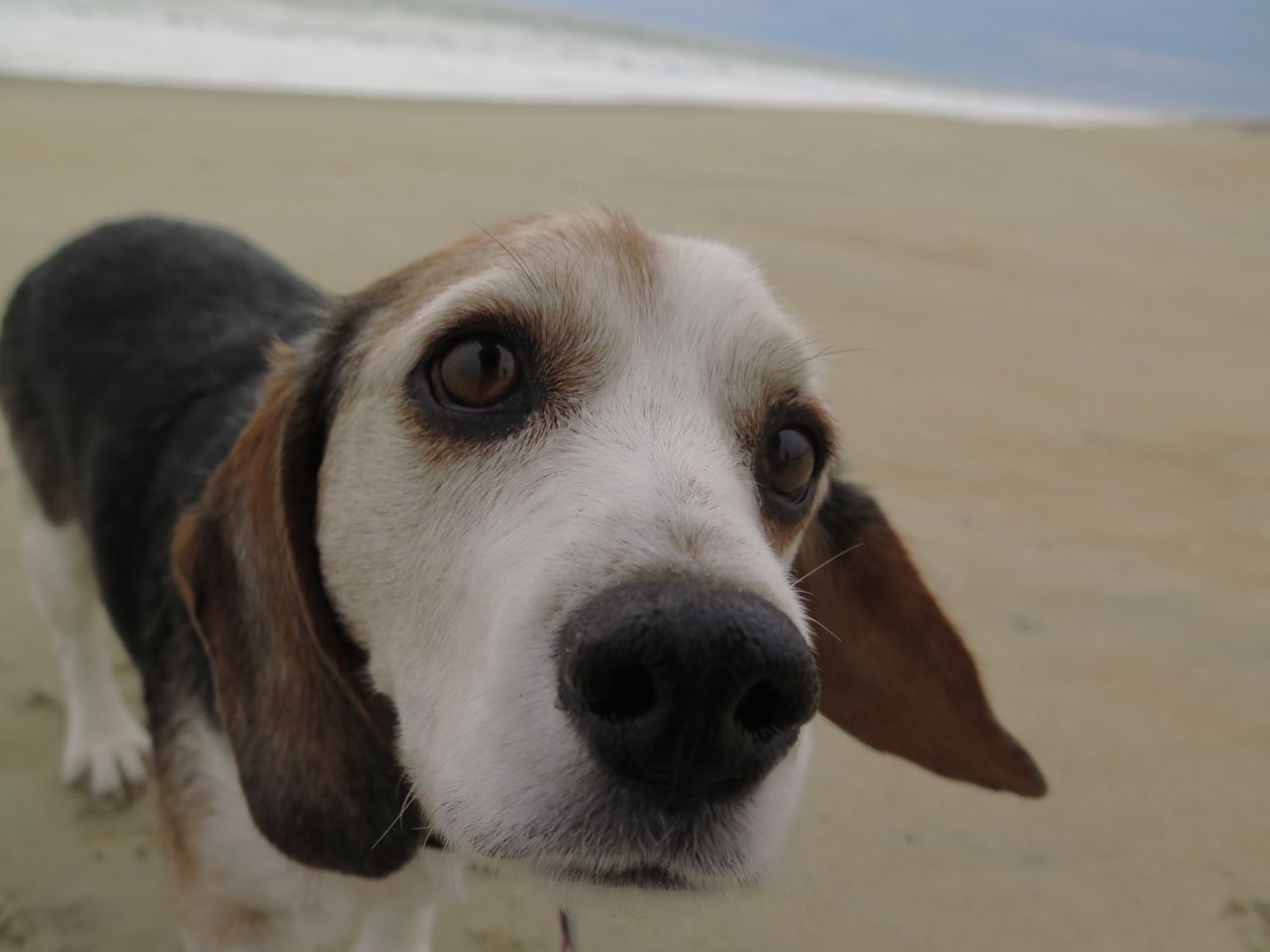
Before getting to the raids and the arrests and the moment a busload of dogs arrived in the San Francisco Bay Area and experienced grass for the first time, it helps to understand why beagles became the breed of choice for laboratory research in the first place. The answer is uncomfortable and oddly circular.
Beagles are the number one breed of choice for testing because of their friendly and docile nature – the same characteristics that make them incredible companions are why they are exploited by the animal testing industry. They are compact and easy to handle. They rarely bite. Once a species accumulates decades of baseline data, it becomes the default, and beagles have been accumulating that baseline since the middle of the last century.
According to The Progressive, Ridglan Farms, in Blue Mounds, Wisconsin, was one of the main suppliers of those dogs. The dog breeding and research facility has been in business since 1966 – the same year the federal Animal Welfare Act was passed to regulate the use of animals in research – and was the nation’s second-largest beagle breeder, housing roughly 2,000 dogs for use in scientific and medical research. The dogs lived in tiny cages, sometimes stacked two high, in windowless buildings. They never saw grass or sun. The sound from within those buildings was of dogs barking, a seemingly constant cacophony of distress.
The First Break-In, and the Charges That Followed
Wayne Hsiung is a California attorney and co-founder of Direct Action Everywhere, a grassroots animal rights network he helped found in 2013 in the San Francisco Bay Area. The organization’s philosophy is built around what it calls “open rescue” – activists enter facilities, document conditions, remove animals in visible distress, identify themselves publicly, and accept the legal consequences. In 2016, a doctoral student of philosophy at the University of Wisconsin-Madison organized one of the first vigils outside Ridglan Farms. The following year, he met Hsiung and told him about the facility. At the time, Ridglan’s address was not widely circulated.
In April 2017, three activists, including Hsiung, broke into Ridglan and removed three beagles. Photos and videos taken by the group showed dogs walking gingerly around wire enclosures coated in feces, including one with a large lesion between its toes. The footage formed the basis of a national investigation published by The Intercept in 2018.
The Direct Action Everywhere activists found dogs crammed into small cages that put them at risk of foot and leg injuries, with no access to the outdoors, forced to live under continuous 24-hour lighting, and living with noxious air and feces building up beneath the cages. They removed three beagles who appeared to be in particular distress, got them veterinary care, and found them homes. Then they posted about it publicly – which, under Direct Action Everywhere’s approach, is the whole idea. The documentation was the point.
Hsiung was facing criminal charges for entering Ridglan Farms in April 2017. He and two others who took part in that action, all affiliated with Direct Action Everywhere, were each charged with felony burglary and felony theft, and faced up to 16 years in prison. Those charges hung over them for years. Then, in early 2024, they were dismissed. Ridglan, perhaps reading the room, perhaps sensing the growing pressure, did not push forward. But Hsiung was not done.
The Special Prosecutor and the Deal That Didn’t Stick Fast Enough

For years, animal advocates had been petitioning Wisconsin authorities to investigate Ridglan on the grounds that what was happening inside the facility violated state animal cruelty laws. In October 2024, a judge reviewed the evidence and agreed there was probable cause. Animal advocates pushed for a criminal case, and a Dane County judge appointed a special prosecutor. That investigation found evidence that non-veterinarians had performed surgical procedures without pain relief, a violation of veterinary standards.
Former employees testified that dogs at Ridglan underwent cherry-eye surgeries and vocal-cord removal without proper anesthesia. Some were kept in windowless sheds, pacing in cramped wire cages stacked in long rows. Ridglan denied mistreating animals throughout the process, but the evidence was substantial enough that the facility ultimately negotiated a way out of prosecution. As the Wisconsin Examiner reported, prosecutors found that Ridglan Farms had violated state animal cruelty laws and ordered the facility to shut down its breeding operation. Ridglan Farms agreed in October to give up its state breeding license as of July 1 as part of a deal to avoid prosecution on felony animal mistreatment charges.
To many activists, this felt like a partial victory at best. The deal said Ridglan had to stop breeding and selling beagles to outside labs by July 1, 2026. But the facility could still conduct its own on-site research and, critically, still sell the thousands of dogs already living there to other laboratories before the deadline closed. The clock was ticking. Those dogs were still at risk.
Two Raids, One Trench Full of Manure

What happened next attracted national and international attention in a way that years of petitions and legal maneuvering had not.
On March 15, 2026, activists led by Hsiung broke into Ridglan Farms and took 22 beagles during an “open rescue.” The event resulted in at least 20 arrests. Among those arrested was Alexandra Paul, the actress known for Baywatch, who had become a vocal animal rights advocate. The images that came out of that morning – activists carrying beagles through a cut fence in freezing rain – spread widely. So did the footage of what they found inside.
Then came April. On April 18, over 1,000 people converged at Ridglan to nonviolently attempt to save the dogs. Wisconsin law enforcement responded with tear gas, pepper spray, rubber bullets, and stinger grenades, knocking peaceful activists to the ground. Wayne Hsiung, one of the lead organizers, was reportedly among the first people arrested. The Dane County Sheriff’s Office said on social media that he was arrested “within minutes” for conspiracy to commit burglary.
Four activists, including lead organizer Hsiung, were charged with felony burglary, and Ridglan Farms was cited for filling a trench around the facility with manure to deter the crowd, creating an environmental hazard. The facility had literally dug a moat of manure around itself. There are not many ways to say this that aren’t going to sound like the third act of a very strange film.
The Dogs Get Out
The raids did not immediately free the dogs inside. But they did something arguably more powerful: they made Ridglan Farms a household name. The protests generated sustained media coverage and sustained public pressure on both the facility and Wisconsin officials to do something before the July deadline allowed Ridglan to sell its remaining beagles to other labs.
In late April 2026, that pressure produced a concrete result. An agreement was reached between Ridglan and the Center for a Humane Economy and Big Dog Ranch Rescue to release 1,500 beagles. Those beagles were taken to various rescue groups to be adopted or fostered. In May, a busload of beagles rescued from the Wisconsin facility arrived in the Bay Area after roughly a 2,000-mile trip. Rescue groups said the animals were experiencing basic comforts many had never had, from walking on grass to drinking from bowls.
Then, on June 15, 2026, came the news that ended it entirely. According to ABC News and the Associated Press, Big Dog Ranch Rescue announced that it had reached an agreement for the permanent closure of Ridglan Farms and the transfer of its 475 remaining beagles starting that week. Spectrum News 1 reported that the Center for a Humane Economy’s attorney had negotiated the release of 350 beagles immediately and the remaining 150 later in the summer. Wayne Pacelle, president of the Center for a Humane Economy, said he “didn’t want to wait any longer to share this extraordinary news of Ridglan’s impending closure.”
The transfer of the remaining beagles – puppies not yet old enough to move – will happen in August. After that, the facility will wind down completely. Ridglan Farms has committed to permanently closing its dog breeding, sales, research, and testing operations.
What Hsiung Still Faces

It would be tidy to say this story has a clean ending. It does not. The 2,000-plus beagles are free, or soon will be. The facility is closing. But Wayne Hsiung and the other lead activists from the March and April raids still face felony charges, including burglary and conspiracy to commit burglary. A Wisconsin judge found enough evidence to move forward with a criminal case against Hsiung. He has said he intends to represent himself at trial, at least in part, as a way to actively participate in arguing his own defense.
The question of whether he will be convicted, and what sentence might follow, remains unresolved. What is resolved is that the facility those charges were meant to protect has closed anyway. The law moved slowly. The people moved faster. The dogs are out.
The System Behind the Story
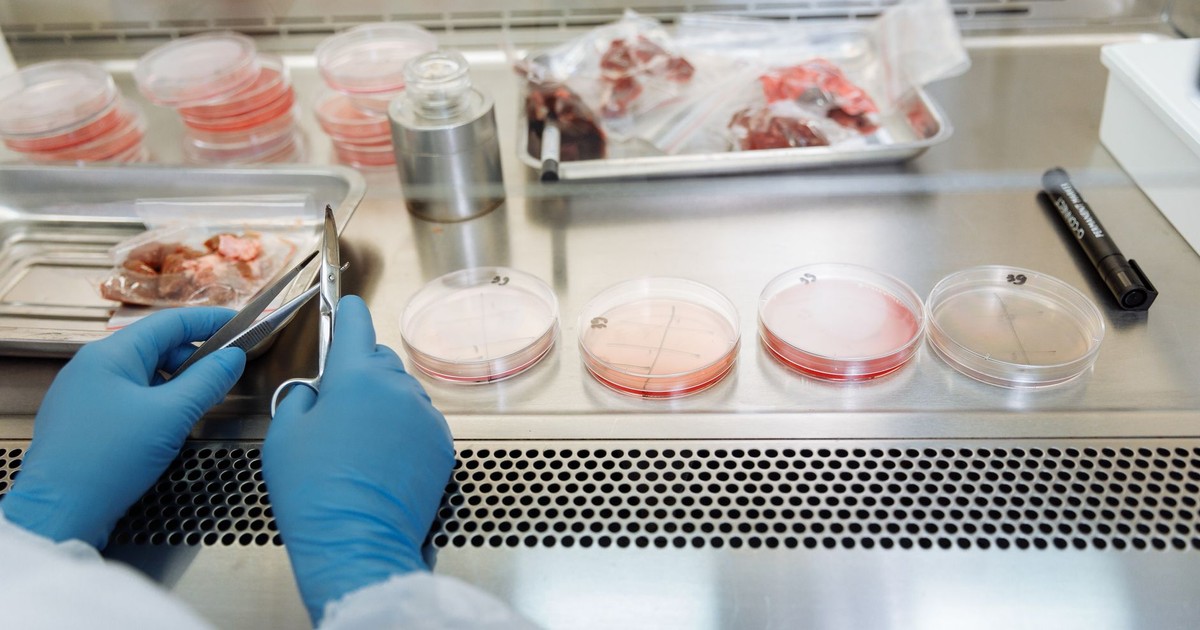
Ridglan was not an anomaly in the commercial beagle-breeding industry – it was a pillar of it. Ridglan Farms was the second-largest breeder of beagles for experimentation in the United States. The largest, Marshall BioResources in New York, continues to operate, and animal rights groups have already said they are turning their attention there next.
The closure of Ridglan does not end the use of dogs in research. It closes one of the country’s two primary pipelines for purpose-bred beagles – which is significant, but it leaves the broader system intact. Other commercial breeders continue operations and the use of dogs in research persists until broader reforms take effect. Advocates emphasize that while Ridglan’s transition is a victory, the end of one facility is not the end of the problem. There are still tens of thousands of dogs in laboratories across the country, most of them beagles, most of them bred specifically for that purpose.
What changed at Ridglan was a combination of things: documented evidence of conditions that appeared to violate existing law, a special prosecutor willing to act on it, sustained public pressure that grew loud enough to make political inaction genuinely costly, and a group of people willing to get arrested over and over and over again. None of those things alone was sufficient. All of them together, over nearly a decade, eventually were.
Where 2,000 Beagles Go Next
The beagles leaving Ridglan Farms in June and August 2026 are not, for the most part, dogs who know what a house is. Many have never been on grass. Some were debarked – their vocal cords surgically altered – so they couldn’t disturb the research environment. They have spent their entire lives in cages in windowless buildings. When they arrive at rescue organizations and foster homes, they will have to learn, at various ages, what it means to be a pet.
Rescue groups working with this population report that lab beagles often struggle with stairs, with open spaces, with the concept of toys. Some freeze when they step outside for the first time. Some don’t know what to do when someone sits beside them on the floor and does not do anything to them at all.
“Our focus now should be on supporting these dogs as they transition into their new lives,” said Lauree Simmons, founder of Big Dog Ranch Rescue. “These dogs will get to experience safety and a normal life for the first time.”
That transition is real work, and it takes time. People across the country are signing up to foster and adopt. The beagles from Ridglan are landing in places where someone will sit on the floor with them, and wait, for as long as it takes.
The Thing That Doesn’t Resolve
Hsiung and his co-defendants broke the law. Ridglan Farms was a licensed facility operating within a legal framework that has existed for sixty years. A court commissioner said, when denying Hsiung bail following the April arrest, that you do not get to take the law into your own hands. That is the law’s position, and it is a coherent one.
The other coherent position is the one Hsiung has been making for a decade: the law, as written, permitted conditions that the majority of the public, if they saw them, would find intolerable. Hsiung described a company that “cut the vocal cords out of dogs, held them down and injected them with rabies, and just killed them because it decided it did not want to waste money feeding them.” The special prosecutor’s investigation eventually confirmed that at least some of those conditions were, in fact, violations of existing Wisconsin law. Meaning the law was already on the books. It just hadn’t been enforced.
What changed was not the law. It was the noise. Thousands of people on a country road in Dane County making it impossible to look away. Former employees deciding it was time to testify. A prosecutor willing to act. A rescue group with the logistical capacity to move 2,000 dogs. None of it resolved the underlying ethical question about animal research, which remains genuinely difficult and genuinely contested. But it did, in this one specific case, in this one facility that opened the same year the Animal Welfare Act was signed, move 2,000 beagles from wire cages to somewhere that has grass and a floor and someone willing to sit down and wait.
Some stories don’t have clean endings. This one has 2,000 good ones, scattered across foster homes and rescue organizations from Wisconsin to California, learning, slowly, what they never had the chance to know before.
AI Disclaimer: This article was created with the assistance of AI tools and reviewed by a human editor.