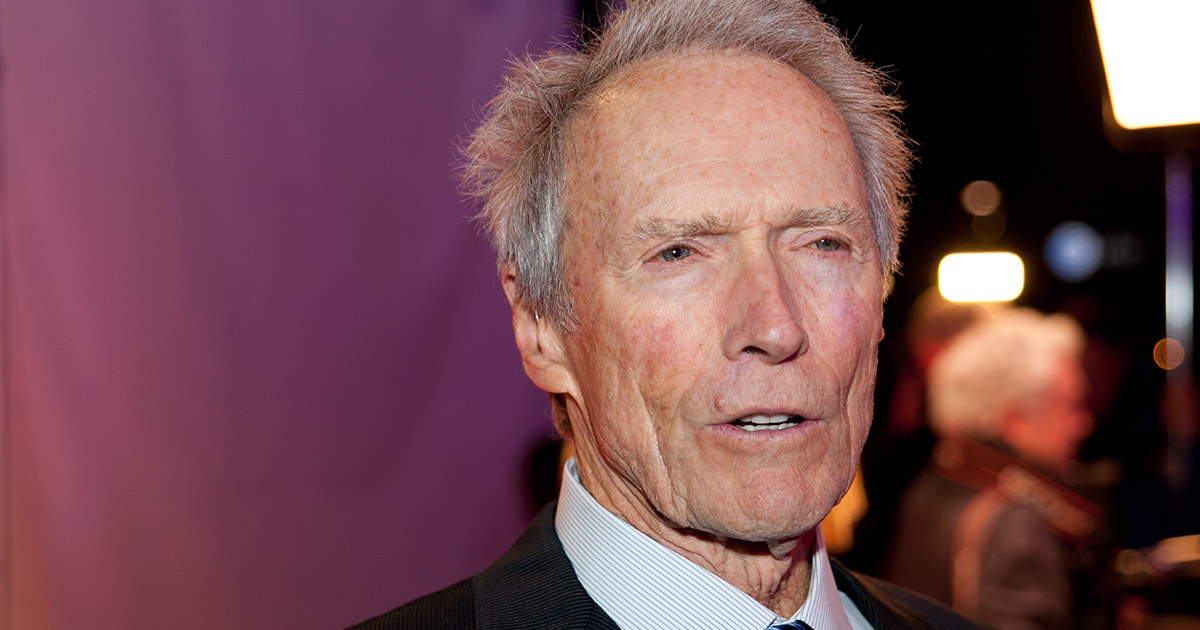

Stephen King confirmed his debt to Clint Eastwood not in an interview, but inside the novels themselves. The connection between Roland Deschain, the last gunslinger at the center of The Dark Tower series, and Eastwood’s iconic screen persona is not fan speculation. King wrote it into his own prose, more than once, across the very books that made Roland one of the most enduring characters in American fiction.
How a young King fell under the spell of a laconic Italian-made gunslinger, and then spent forty years translating that into eight novels and more than four thousand pages of fiction, is one of the more remarkable creative inheritance stories in modern literature. It also raises a question the film industry has been trying to answer for decades: when the time came to put Roland on screen, did anyone cast the right man for the job?
The Poem, the Film, and the Gunslinger
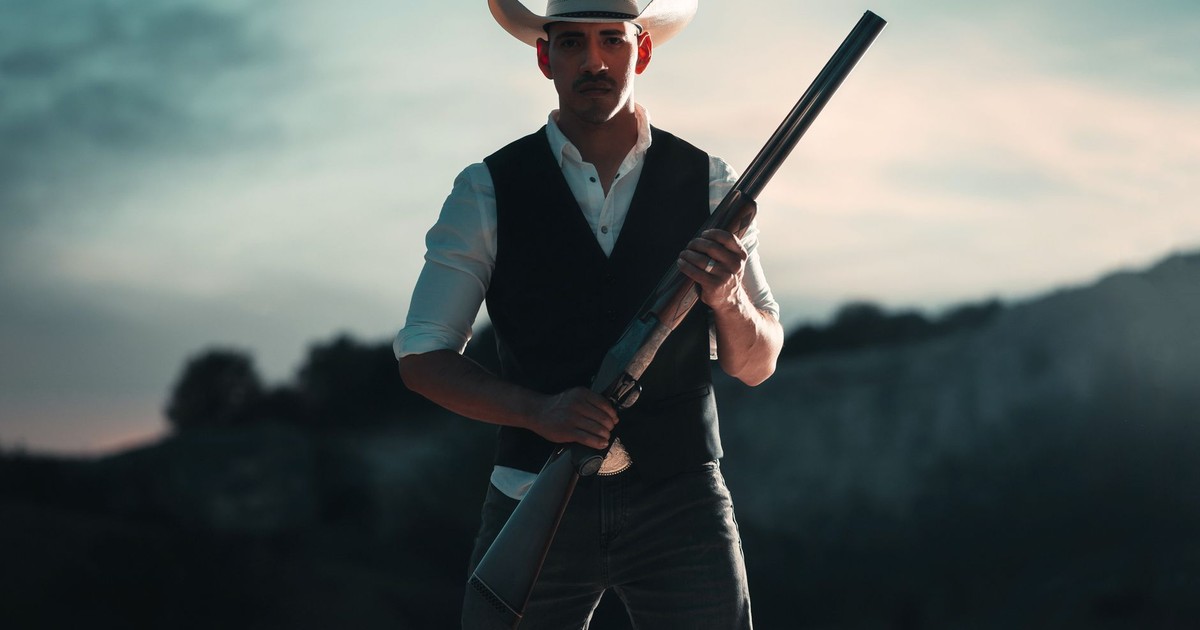
The Dark Tower series was chiefly inspired by the poem “Childe Roland to the Dark Tower Came” by Robert Browning. King encountered that poem as a college student, and its image of a knight pressing forward through a blasted, hopeless landscape never let him go. But a poem alone does not build a character who can carry eight novels. For the physical and psychological template of Roland Deschain himself, King reached toward something more visceral and more cinematic.
In the preface to the revised 2003 edition of The Gunslinger, King identifies The Good, the Bad and the Ugly as one of the series’ key inspirations, and he goes further than a general nod to the film’s atmosphere. He specifically identifies Clint Eastwood’s “Man with No Name” character as one of the major inspirations for the protagonist. King put it into the book itself, in his own prefatory remarks, so that any reader who picked up the revised edition would understand from the first pages exactly who Roland Deschain was modeled on.
Browning supplied the quest and the name; Sergio Leone and Eastwood supplied the body, the silence, and the moral ambiguity. The result was a character who felt like he had been pulled from two entirely separate traditions and fused into something new.
The Man With No Name: A Character Built to Be Borrowed
The Man with No Name is the antihero portrayed by Clint Eastwood in Sergio Leone‘s Dollars Trilogy: A Fistful of Dollars (1964), For a Few Dollars More (1965), and The Good, the Bad and the Ugly (1966). He is recognizable by his sarape, brown hat, tan cowboy boots, fondness for cigarillos, and the fact that he rarely speaks.
Eastwood insisted on removing some of the dialogue in the original script, making the character more silent and adding to his mystery. The less he explained himself, the more the audience projected onto him. It is the same dynamic that makes Roland Deschain so compelling across eight novels: he withholds, and readers fill the space.
The three films are consistently listed among the best-rated Westerns in history. King, by his own admission, was transfixed by The Good, the Bad and the Ugly in particular. When listing his favorite films for Entertainment Weekly, he wrote that “The Good, the Bad, and the Ugly is a film I’ve written about too often to rehash here; suffice it to say that I was astounded by the sheer size of things, and by the outrageous tricks of pacing that Sergio Leone tried… and pulled off, more often than not.”
Roland Deschain: Born From a Spaghetti Western
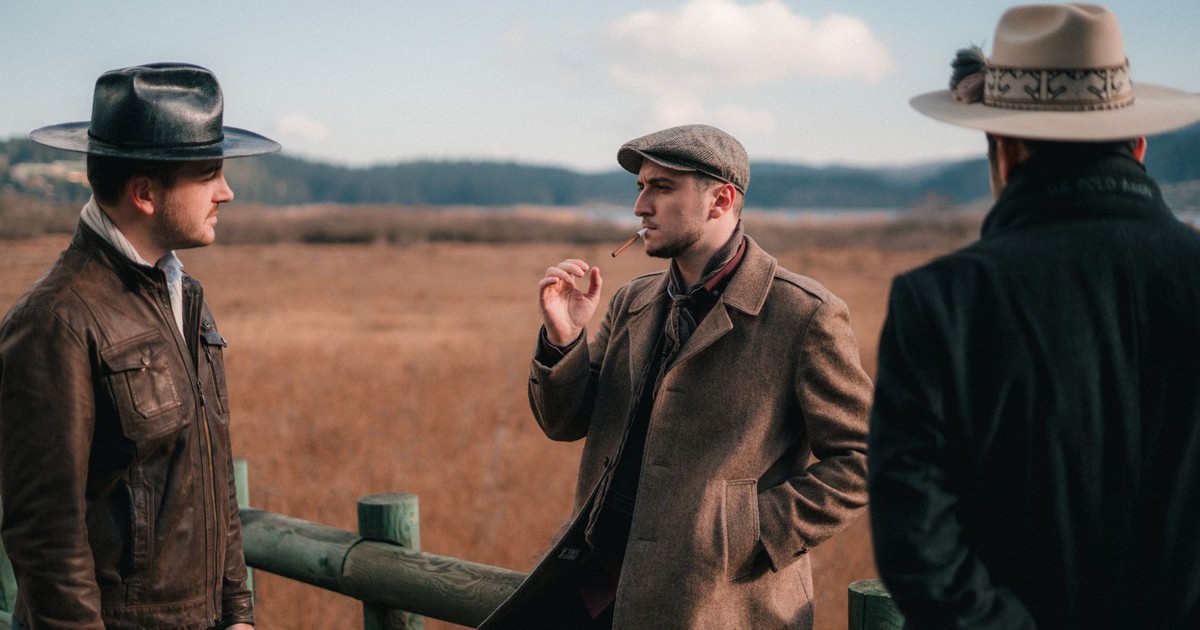
Roland Deschain is arguably Stephen King’s greatest character, having appeared in eight novels. Making his debut in 1982 in The Dark Tower: The Gunslinger, Roland first appeared even earlier as a short story published in The Magazine of Fantasy and Science Fiction in 1978, meaning King had been nursing this Eastwood-inflected hero for years before any publisher put him between hardcovers.
Known for wearing a long black duster and guns that always find their target, Roland became a wandering hero similar to Clint Eastwood’s Man With No Name. Both figures operate outside the systems that might otherwise govern their behavior. Neither answers to a government, a family, or a god. They answer to a destination.
Neither the Man with No Name nor Roland is a straightforward hero. They do terrible things. They sacrifice people they love. They press forward anyway. The Western genre, at its best, has always been a space for examining what a man who operates outside civilization is actually capable of, and whether the destination justifies the cost.
King Winks at His Own Influence – Twice

King acknowledged his debt to Eastwood inside the fiction itself, not once but twice. In the third book in The Dark Tower series, The Waste Lands, Jake Chambers walks through a street and stops by a poster displaying Clint Eastwood, pointing out the similarities between the Hollywood legend and the last remaining gunslinger. The moment is brief — a boy sees a movie poster and makes a connection the reader has probably already made — but its placement is not accidental.
The more emphatic admission comes in The Dark Tower VI: Song of Susannah, where King writes himself into the story as a character. The King character tells Roland, “As The Man With No Name – a fantasy version of Clint Eastwood – you were okay. A lot of fun to partner up with.”
King was not hiding his influences. He was celebrating them — embedding the acknowledgment directly into the text, delivered in the voice of the author himself meeting his own creation.
A Western DNA That Runs Through the Whole Series

The Eastwood influence did not simply give Roland a silhouette and a set of revolvers. It structured King’s entire approach to Mid-World, the dying alternate universe in which the series is set. Roland Deschain is a member of a knightly order known as gunslingers and the last of the line of “Arthur Eld,” his world’s analogue of King Arthur. Politically organized along the lines of a feudal society, it shares technological and social characteristics with the American Old West but is also magical.
Mid-World’s fallen civilization — noble, destroyed, unrecoverable — is an Arthurian inheritance the Leone films never had. But the Western texture — the revolvers, the lone rider, the moral wilderness — remains the emotional register throughout. Roland and his fellow gunslingers function as modern paladins, knightly guardians echoing the lineage of King Arthur Eld.
King’s Western admiration surfaces elsewhere in the series too. In Wolves of the Calla, King tips his cap to The Magnificent Seven. On the path to the Dark Tower, there is a town named Calla Bryn Sturgis – Bryn as in Yul Brynner of The Magnificent Seven fame, and Sturgis as in John Sturges, the film’s director. King embeds his cinema love into the cartography of Mid-World. The whole series is, among other things, a devotional act toward the films that formed him.
When Hollywood Finally Came for Roland
The question that hung over the Dark Tower books for decades was the same one every devoted reader eventually asks: who could possibly play him? If Roland Deschain was built on the young Clint Eastwood, the obvious answer would seem to be an actor with that quality of laconic menace. Hollywood’s actual path to the screen was considerably less direct.
The Dark Tower is a 2017 American neo-Western science fantasy film loosely based on Stephen King’s novel series. Directed and co-written by Nikolaj Arcel, the film stars Idris Elba as Roland Deschain, Matthew McConaughey as his nemesis Walter Padick, and Tom Taylor as Jake Chambers.
The casting of Elba as Roland, a character explicitly described as white in the source novels, generated significant backlash. King responded directly and without ambiguity. In a tweet, King stated, “I didn’t care what color he was as long as he could command the screen, draw fast, and shoot straight.” He also put the Eastwood connection to direct use in defending the choice, noting: “For me, the character is still the character. It’s almost a Sergio Leone character, like the Man with No Name,” and adding, “He can be white or black, it makes no difference to me.”
Despite starring Elba and McConaughey, The Dark Tower was panned by critics and audiences alike, earning a 16 percent Tomatometer score on Rotten Tomatoes. The film had spent years in development hell across multiple studios, with production beginning ten years before its release. The failure was not Elba’s – most critics agreed his performance was one of the few elements that worked. The problem was structural: eight sprawling, interconnected novels compressed into a 95-minute PG-13 film.
The Flanagan Attempt and What Roland Deserves Next

Filmmaker Mike Flanagan has said, “We can’t let that be the final word. We really can’t.” Flanagan is adapting the books into a television series at Amazon, bringing a track record that includes well-received King translations: Gerald’s Game (2017), Doctor Sleep (2019), and The Life of Chuck (2025).
As of early 2026, the project remains in active development. Flanagan described the upcoming series as an “oil tanker,” telling Empire Magazine, “It’s moving. We’ve got a lot of scripts done for it. It’s the first priority.” In 2022, Flanagan told Deadline that he had completed a pilot script for the adaptation, which he envisions running for five seasons followed by two standalone movies.
King himself has expressed enthusiasm for Flanagan’s approach. At the 2025 IGN Fan Fest, when asked about contributing to the Amazon series, King said: “All I can say is it’s happening. I am writing stuff now and I think that’s all I want to say because the next thing you know, I’ll stir up a bunch of stuff I don’t necessarily want to stir up yet.”
In 2025, King described Flanagan’s plan as “perfect” and confirmed he will write material for it. The question is whether any screen version can capture the specific alchemy King was drawing on: the silence of the Man with No Name, the moral vacancy that passes for clarity, the way Eastwood could stand completely still and communicate an entire philosophy about violence and purpose without saying a word.
Read More: This Stephen King Novel Was Pulled From Shelves, and It Will Never Be Printed Again
What This Was Always Really About

The Stephen King and Clint Eastwood connection is architecture, not trivia. King started with the Eastwood aesthetic and worked backward to find the character. The Man with No Name gave him the physical blueprint, the emotional register, and the moral DNA. Browning’s poem gave him the quest. Arthurian legend gave him the fallen civilization that quest is trying to save. Of all the ingredients, Eastwood’s contribution is the one King has gone out of his way to name – in prefaces, in the novels themselves, and in interviews across five decades.
Whoever plays Roland next needs to embody not just a character from eight very long novels, but the specific quality Eastwood spent three Sergio Leone films perfecting: the economy of presence, the implication that something vast and violent is being held in check, the sense that this person has been walking toward something for so long that stopping is no longer an option. Whether a television series can carry that weight across five seasons is the question Flanagan is now working to answer. The character was born from a movie. He deserves, finally, a screen that can hold him.
AI Disclaimer: This article was created with the assistance of AI tools and reviewed by a human editor.