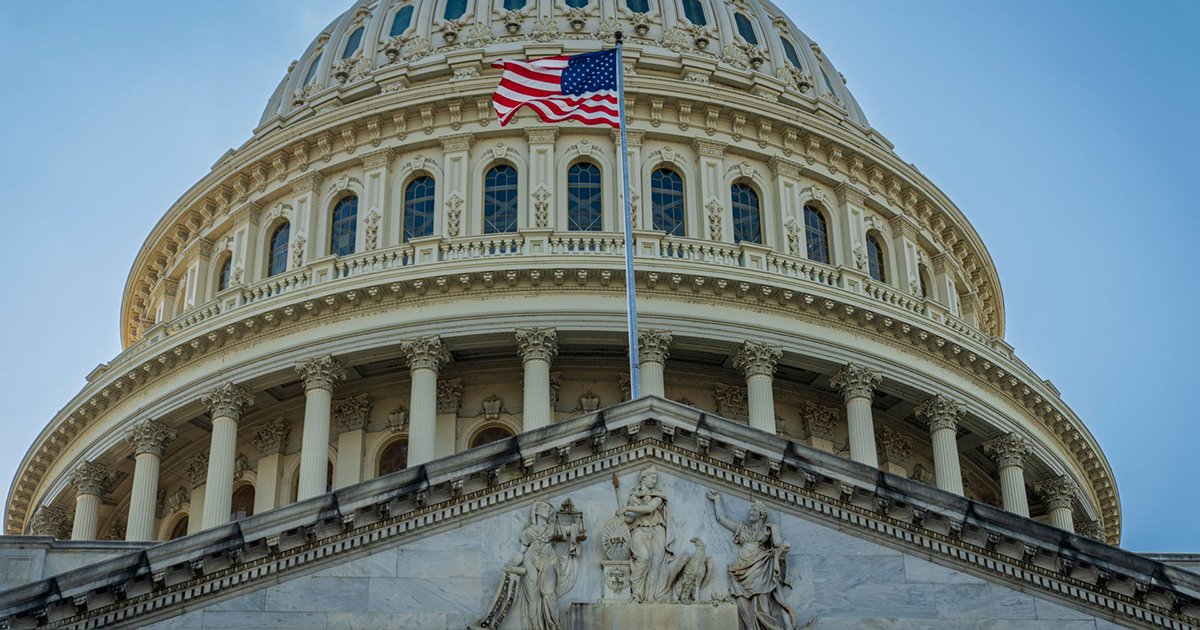

Senator Bernie Sanders and Representative Alexandria Ocasio-Cortez announced legislation on March 25, 2026 to pause all new data center construction nationwide until AI safeguards are in place. The vehicle for that pause is formally titled the Artificial Intelligence Data Center Moratorium Act – a 13-page bill introduced in the Senate by Sanders and matched by a companion House bill from Ocasio-Cortez. The Senate bill carries the designation S. 4214.
The Act would impose a nationwide halt on constructing or upgrading new or existing data centers with a power demand of 20 megawatts or more until “strong national safeguards” are in place. Twenty megawatts is a substantial threshold – roughly the power consumption of 15,000 average American homes – but it captures the overwhelming majority of commercial AI infrastructure now being built or planned across the country.
Under the legislation, the ban on new construction could only be lifted after the passage of federal AI legislation that would establish protections for workers and consumers, prevent harm to the environment, and defend civil rights. The bill does not specify a fixed end date; the moratorium would remain in effect indefinitely until those legislative conditions are satisfied. The moratorium proposed in Sanders’s Senate bill would go into effect immediately if passed, and remain in place until laws are enacted to curb data centers’ harmful effects – including quelling their climate and environmental impacts, ensuring they do not push up utility costs, preventing job displacement, and ensuring the wealth generated by AI companies is shared with the American people.
The Hardware Export Provision
One element of the bill that has received less attention than the construction freeze is a significant export control provision. The bill would also impose a ban on the export of computing hardware, such as AI chips, to any country without equivalent protections on the books, including China. This provision directly addresses the geopolitical dimension of AI development, effectively tying America’s semiconductor and chip export policy to the state of domestic AI regulation – a linkage that critics argue conflates two distinct policy questions, but that supporters say is essential to preventing regulatory arbitrage at a global scale.
The Federal Register Process
Beginning on the date of enactment, the construction or upgrading of new or existing AI data centers may not commence or proceed until the federal government can review and approve AI products before release, ensure the economic gains of AI benefit workers and not just the wealthy owners of Big Tech companies, and ensure that the wealth generated by AI companies is shared with the people of the United States. The bill also stipulates that any data center built after the moratorium ends must certify that it has not utilized any federal, state, or local subsidies – a provision that could upend the tax-incentive-driven economics that currently underpin most large data center site selection decisions.
The Case for the Moratorium: Energy, Water, and Labor
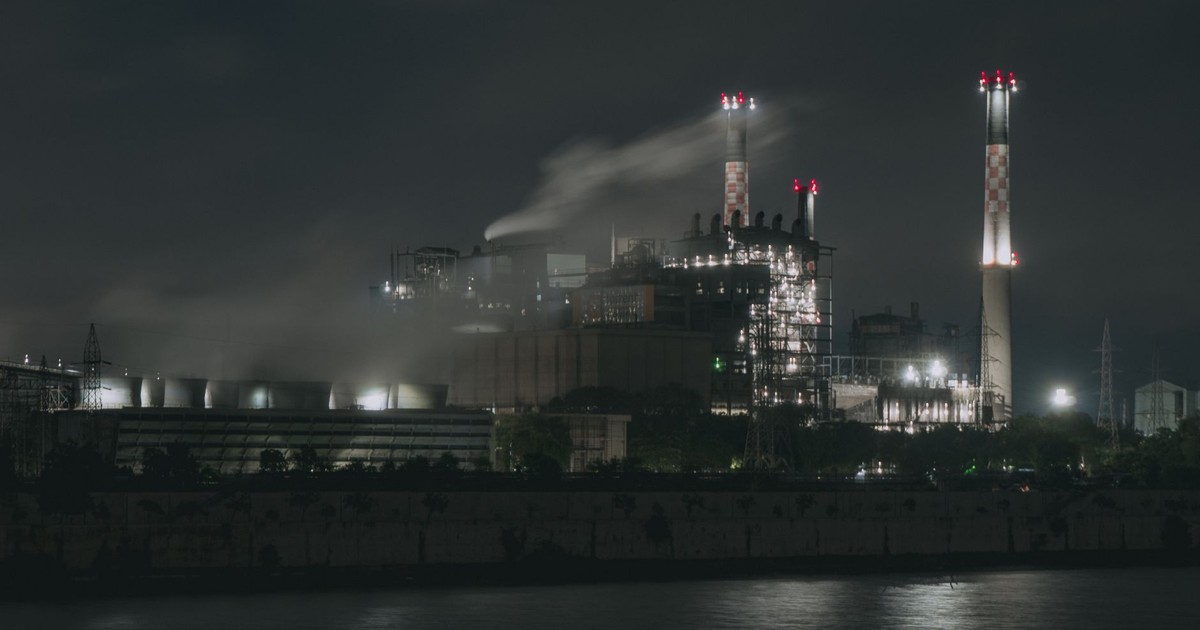
The environmental and infrastructure strain driving the legislation is real, and it is accelerating. By 2030, the global data centers powering artificial intelligence are projected to consume 945 terawatt-hours of electricity, while global data centers consumed an estimated 448 terawatt-hours of electricity in 2025. That near-doubling of demand within five years represents one of the fastest expansions of industrial energy consumption in the modern era.
Research published in late 2025 estimated that the carbon footprint of AI systems alone could be between 32.6 and 79.7 million tons of CO2 emissions in 2025. To place that in context, company-wide metrics from environmental disclosures of data center operators suggest that AI systems may have a carbon footprint equivalent to that of New York City in 2025.
Sanders highlighted on the Senate floor that Meta is building a data center in Louisiana, the size of Manhattan, that will use as much electricity as 1.6 million homes. That single facility illustrates the scale of infrastructure now being deployed – and the corresponding strain being placed on regional power grids and ratepayers who, in many cases, are not the intended beneficiaries of that investment.
The Water Emergency
The water consumption figures are equally stark. By 2030, data centers could consume 3 to 4 percent of global electricity and, by 2027, around 5 billion cubic metres of water annually. A 2026 study by the Houston Advanced Research Center found that data centers in Texas alone will use 49 billion gallons of water in 2025, and as much as 399 billion gallons in 2030.
These figures carry serious implications for communities already under water stress. Large facilities consume water primarily through evaporative cooling systems, and many of the states seeing the heaviest data center buildout – Texas, Arizona, Nevada – are also the states with the most constrained freshwater supplies. Data centers are frequently coming in with non-disclosure agreements, hiding information about water usage, energy usage, air quality impacts, and emissions, meaning communities often do not know what they are getting into before a project breaks ground.
Labor Displacement
According to Ocasio-Cortez, last year alone AI was responsible for over 54,000 layoffs nationwide. Sanders and Ocasio-Cortez have framed the moratorium as a direct response to the pace of workforce disruption – arguing that Congress cannot responsibly allow the infrastructure enabling mass job displacement to expand without limit while simultaneously failing to enact any legislation governing what that displacement looks like or how workers are compensated. The bill’s text cites Dario Amodei, CEO of Anthropic, who predicted that AI could displace half of all entry-level white-collar jobs in the next one to five years.
Congressional and Political Reactions
Fetterman wrote on X: “I refuse to help hand the lead in AI to China.” That framing – the moratorium as a concession to Beijing rather than a domestic consumer protection measure – became the dominant counter-narrative in the days after the bill’s introduction, and it cut across party lines with enough force to signal that the legislation faces opposition not just from Republicans but from a significant faction of the Democratic caucus as well.
The Trump Administration’s Counter-Framework
The effort marks a sharp contrast to the Trump administration’s AI policy framework released the previous week, which urged Congress to streamline permitting for data centers and avoid creating “open-ended” liability for AI firms, while curtailing state regulatory authority.
The Trump administration has pushed to accelerate federal AI data center policy through executive orders that streamline permitting and environmental review, though these directives do not override state authority on land use, zoning, or utility regulations. On March 4, 2026, several major data center developers signed the White House-backed Ratepayer Protection Pledge, committing to cover the full cost of new electric generation resources needed to meet their energy demands. Ocasio-Cortez dismissed that voluntary pledge at the March 25 press conference, noting that consumers are not yet feeling any relief in their energy bills and that commitments without legal enforcement are worth exactly as much as the companies choose to honor them on any given quarter.
Industry and Think-Tank Criticism
The Center for Data Innovation criticized the bill, arguing that it justifies a moratorium based on several well-worn anxieties – that AI is an existential threat, that data centers burden the pocketbooks of American families, and that they undermine jobs – but that none of these concerns, pursued in good faith, logically lead to halting data center construction.
Critics at the Center argue that if AI safety were a genuine animating concern, the policy would focus on model evaluations, red-teaming, and transparency requirements; if rising utility bills were the true target, the bill would address the market design flaws and cost-allocation models that actually drive rates; and if jobs were the priority, Congress would be working to ensure that the tens of billions in investment data centers represent become high-capital anchors of local industrial bases, rather than legislating them out of existence.
The Grassroots Movement Behind the Bill
The federal legislation did not emerge in a vacuum. It is, in important respects, a codification of a revolt that has been building at the local level for the better part of two years.
One report estimates that between May 2024 and March 2025, local opposition helped halt or delay $64 billion worth of data center projects across the United States. That figure grew substantially over the following year. In 2025 alone, at least $156 billion across 48 projects with publicly disclosed values were blocked or delayed amid local opposition.
Over 500 organizations representing millions of people across the United States wrote to Congress in June 2026 to call for “a national moratorium on the approval and construction of new data centers,” warning that the rapid, largely unregulated rise of such projects already threatens Americans’ economic, environmental, climate, and water security.
At least 69 local government units have enacted bans as of May 2026, with more joining the list since then; Seattle – the hometown of AI tech giants Microsoft and Amazon – is the biggest city to have passed a one-year pause on data center projects, affecting five proposed facilities.
The State-Level Picture
According to a tracker maintained by Good Jobs First, at least 63 local data-center moratorium actions have been introduced, considered, or adopted across dozens of towns and counties, with some 54 already passed. At the state level, Good Jobs First counted at least 12 in-session states with filed data center moratorium bills this cycle.
Legislation has been introduced in Minnesota, Michigan, Oklahoma, Georgia, South Carolina, Maryland, Pennsylvania, New York, Vermont, and Maine, though not all of these proposals remain under active consideration.
In New York, the state legislature went further than most. The New York State Senate and Assembly passed the Responsible Data Center Development Act and put a one-year moratorium on AI data centers. The bill now awaits the governor’s signature. At the federal level, GovTrack estimates the Artificial Intelligence Data Center Moratorium Act has a 5 percent chance of getting past committee and a 2 percent chance of being enacted into law.
Critically, these efforts are not driven by a single political persuasion. Local resistance to data center development has emerged in both heavily Democratic and Republican-leaning jurisdictions. The issue has found a kind of accidental bipartisanship – not because the left and right agree on policy solutions, but because the immediate, tangible impacts on electricity prices and community character cut across ideological lines in ways that more abstract regulatory debates rarely do.
The Broader Political Context

Sanders previewed the legislation’s themes months before introducing the bill. Sanders first voiced support for a moratorium in December 2025, and in the intervening months the political environment shifted meaningfully. A June 2025 poll found that half of US adults are more concerned than excited about the increasing use of AI in daily life, while a December poll found 60 percent of Americans believe the sector should be better regulated to limit its potential negative effects on society.
A February poll found that when participants were asked to select the more concerning issue in randomized contests against data center-related issues, they selected utility costs 64 percent of the time and energy consumption 59 percent of the time.
Sanders also pointed to an emerging consensus among some of the technology sector’s most influential voices. In 2023, more than 1,000 industry leaders and scientists, including Elon Musk, Yoshua Bengio, and Stuart Russell, called for AI labs to “immediately pause for at least 6 months” and, if such a pause were not enacted, called on governments to “step in and institute a moratorium.” In January 2026, Demis Hassabis, the head of Google’s DeepMind, said he would support an AI pause if he knew other countries and companies also paused development; in February 2026, Dario Amodei, the head of Anthropic, said he was “absolutely in favor of trying” to slow down AI development if other countries also slowed down.
AOC has been active on AI-related legislation beyond the moratorium. Ocasio-Cortez has continued to fight for passage of her DEFIANCE Act, which provides civilian recourse for survivors of deepfake AI abuse. The moratorium bill is part of a broader legislative strategy by progressive members to establish a regulatory framework for AI development from multiple angles simultaneously, addressing infrastructure, consumer protection, and civil liberties in parallel.
The intersection of AI expansion and domestic energy policy has also become a significant issue for working families across income levels. Earthjustice noted that 1 in 4 New Yorkers already cannot afford their energy bills – and that is before the rapid buildout of AI data centers. If the moratorium proposals become law, they may also encourage voters to back pro-AI-regulation candidates and policies during the 2026 midterms, signaling broader public resistance to the industry’s unchecked expansion.
What This Fight Is Really About
The Artificial Intelligence Data Center Moratorium Act is best understood not as a piece of legislation likely to become law in the near term, but as a calculated political instrument – a bill designed to put the cost and consequence of AI infrastructure expansion on the congressional record, give advocacy groups and communities a rallying point, and frame the 2026 midterm debate around which party is willing to use regulatory power on behalf of ordinary ratepayers and workers.
Leading progressives unveiled the legislation highlighting an issue where voters are concerned and the Trump administration plans to back industry – a contrast that Sanders and Ocasio-Cortez clearly intend to press through the election cycle. Whether the bill advances or not, the infrastructure debate it has catalyzed is no longer a fringe concern. With more than $156 billion in projects blocked or delayed by local opposition in a single year, with New York’s legislature passing a statewide moratorium, and with hundreds of civil society organizations formally demanding federal action, the AI data centers freeze question has migrated from activist circles into mainstream American politics.
The technology industry, which spent the past decade treating data center siting as a logistical problem rather than a political one, is now operating in a fundamentally different environment. No executive order, voluntary pledge, or lobbying campaign has yet found a way to reverse that. What’s notable about the moratorium movement is that it did not start with Sanders or Ocasio-Cortez – it started in city council chambers in places like Denver and Seattle, driven by residents watching their electricity bills climb while construction crews broke ground on facilities the size of shopping malls nearby. The federal bill arrived after the local revolt was already well underway. That sequence matters: it means the political pressure behind this legislation is not manufactured from the top down. It is being sustained from the bottom up, and that is considerably harder to wait out.
AI Disclaimer: This article was created with the assistance of AI tools and reviewed by a human editor.