

The America of 2050 will still have amber waves of grain and traffic jams and arguments about baseball, but underneath all of that, the country is being reshaped by forces already well underway: demographic, environmental, technological, and economic pressures that don’t wait for anyone to finish debating them.
The projections below come from federal agencies, peer-reviewed research, and nonpartisan institutions tracking long-term trends. Some of these America 2050 changes are genuinely hopeful. Some are clarifying in the way that a difficult diagnosis is clarifying. All of them are worth understanding now, because the decisions being made in the next decade will determine how hard or how manageable each of these transitions turns out to be.
1. America Will Be a Majority-Minority Nation

By 2050, according to USAFacts, the non-Hispanic white population will make up less than half of the total U.S. population. The Census Bureau projects the number of non-Hispanic whites will be falling, while the number of African Americans will have grown by roughly 30 percent, the Hispanic population will have grown substantially, and Asian Americans will have more than doubled.
The institutions that have historically been built around a white majority will be under ongoing pressure to adapt or become irrelevant. The transition is already happening in cities and school districts across the country; 2050 is when it becomes the undeniable national baseline.
This demographic trajectory depends heavily on immigration policy. The Census Bureau expects immigration to drive population growth through the remainder of the century, with the number of people moving into the U.S. projected to exceed the population change from births and deaths alone in every projected year. Pull that immigration thread out, and the projections look very different.
2. The Population Will Be Older Than It Has Ever Been

The share of Americans aged 65 and over was about 17 percent in 2022 and is projected to grow substantially by 2050, with the older population expanding from approximately 58 to 82 million people. Roughly one in four Americans will be a senior citizen when your current elementary schooler is finishing graduate school.
Healthcare systems, housing stock, and transportation infrastructure have all been designed around a younger population. Eldercare, which is already one of the most strained and underpaid sectors of the American economy, will face demand it is nowhere near currently equipped to meet. The sandwich generation will become less of a stressed demographic and more of the statistical norm.
The old-age dependency ratio, which tracks the number of elderly people relative to working-age adults, has been driven from 19 percent in 1990 to 25 percent in 2020, with a projected ratio of 36 percent by 2050. Every working adult in 2050 will effectively be carrying a heavier financial load for retirees than any previous generation has.
3. The Workforce Will Be Shrinking

The Cooper Center’s national population projections show the share of Americans aged 65 and older reaching 21.2 percent by 2050, representing about 78 million people, while the share of the population under 45 is projected to decrease. The near-term picture from Indeed Hiring Lab’s 2026 report is even sharper: the U.S. labor force is projected to decline by roughly 3.7 percent, or 5.9 million workers, between 2025 and 2032, driven largely by the accelerating retirement of baby boomers.
There simply will not be enough workers to fill many roles, particularly in caregiving, construction, and skilled trades. The labor market segments expected to see the biggest employment declines are also the ones where AI tools are least likely to compensate for the shortages, since AI’s labor-market impact is expected to be concentrated almost entirely in high-wage, white-collar sectors.
The labor shortage and the automation story are often told as though they’re the same story. They’re not. One affects the knowledge economy. The other affects the people who build things, fix things, and care for other people.
4. Artificial Intelligence Will Restructure White-Collar Work

U.S. private investment in AI reached about $286 billion in 2025, and generative AI attained majority adoption within three years of release, diffusing faster than personal computers or the internet, according to the Stanford HAI 2025 AI Index. The pace at which these tools are being embedded into professional work is without historical precedent.
McKinsey & Company research has suggested that as many as half of the tasks performed in current jobs could be automated between 2030 and 2060, with the midpoint around 2045. The jobs that survive will increasingly be the ones requiring judgment, relationship, and irreducibly human context, but the transition period between here and there will involve significant disruption for workers in fields that are currently considered stable.
For younger people entering the workforce today, the career you train for at 22 may not resemble the career you’re actually doing at 42. The ability to adapt, retrain, and move between industries will matter more than any single credential.
5. Social Security Will Face a Structural Crisis

The Social Security trust fund that pays retirement and survivors benefits is projected to be depleted by 2033, according to the latest annual report from the program’s trustees. The program would still pay out reduced benefits using ongoing payroll tax revenue, but it will not be able to deliver the full benefits currently promised to future retirees without significant legislative action.
The options are well known: raise the retirement age, increase the payroll tax cap, means-test benefits, or some combination. The menu has been on the table for decades. The difficulty is that every option has a constituency that opposes it, and the people most likely to be affected by inaction have historically been less politically mobilized than the retirees whose current benefits are easier to protect. By 2050, the math will have forced some version of a resolution.
6. Coastal Communities Will Permanently Change

A NOAA-led federal Sea Level Rise Technical Report projects that sea levels along U.S. coastlines will rise an additional 10 to 12 inches by 2050, with the specific amount varying regionally. On average, the U.S. will see as much sea level rise by 2050 as it saw across the entire last century.
The Gulf Coast is especially vulnerable, with parts of Louisiana, Texas, and Florida facing compounding risks from both rising seas and land that is literally sinking due to groundwater and resource extraction. The sea level rise expected by 2050 will create a profound increase in the frequency of coastal flooding, even in the absence of storms or heavy rainfall. Floods that once marked a generation will occur multiple times within one.
The decisions about which coastal infrastructure to defend, which neighborhoods to retreat from, and who bears the financial cost of relocation are already being argued about in city council meetings from Miami to Virginia Beach. By 2050, those arguments will have produced some answers.
7. Internal Migration Will Redraw the Political Map
The combination of climate risk, remote work, and housing costs is accelerating internal migration in patterns that will have significant political consequences by 2050. Sun Belt states that have already seen dramatic population growth will continue to gain congressional representation, while Rust Belt and Northeastern states face stagnation or decline.
The overall U.S. population is expected to increase from 331 million in 2020 to 371 million by 2050, but that growth will not be evenly distributed across states. States like Texas, Florida, Arizona, and Nevada are expected to absorb large shares of new residents, while states with colder climates, higher taxes, and older industries face continued out-migration of working-age residents.
Remote work has also decoupled population growth from job growth in ways that could prove durable. A family that can work from anywhere is now making a genuine lifestyle choice about where to live, not just following an employer.
8. The Housing Crisis Will Force a Reckoning

The housing affordability problem that has defined the 2020s for younger Americans is structural, not cyclical. Zoning laws that were written to preserve the character of single-family neighborhoods will increasingly collide with the basic arithmetic of population growth and household formation.
By 2050, the pressure will have produced one of two outcomes: either sustained policy reform that allowed meaningful increases in housing supply, or a deepening crisis of affordability that permanently altered who can afford to own property and where. The evidence from cities that have experimented with zoning reform suggests that supply does respond when restrictions are eased, but the political will to make those changes at scale has historically been limited by the preferences of existing homeowners.
For families currently locked out of ownership, this is the difference between building intergenerational wealth and not.
Read More: 8 European Cities Where Expats Are The Happiest
9. Renewable Energy Will Power the Majority of the Country
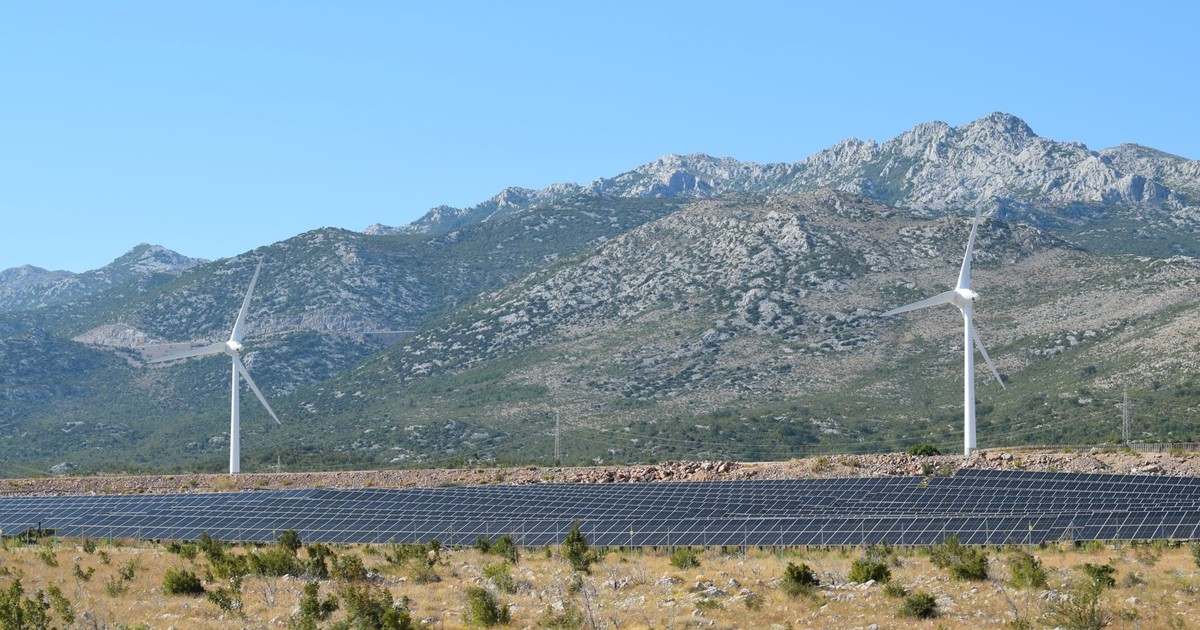
The energy transition that was treated as aspirational in 2010 is now well underway, driven by a combination of falling costs, federal investment, and corporate sustainability commitments. Solar and wind energy have gone from expensive alternatives to the cheapest sources of new electricity generation in most of the country. By 2050, credible projections from the Department of Energy and independent analysts suggest that renewables will supply the majority of U.S. electricity.
Communities that built their economies around coal, oil, and natural gas face genuine displacement, and the geography of energy production is changing in ways that create winners and losers at the state level. The Midwest and Great Plains, with their vast wind resources, are emerging as energy exporters in a way they haven’t been since the oil discoveries of the last century.
Natural gas in particular is likely to retain a significant role, especially as a backup for intermittent renewables. But its dominance is ending, and the pace at which that ending happens will be one of the central economic stories of the next 25 years.
10. Healthcare Will Be Both Better and More Expensive

Medical technology will look almost unrecognizable by 2050. The advances already underway in genomic medicine, AI-assisted diagnostics, and personalized drug therapies are likely to make the treatment of diseases that currently kill millions of Americans far more effective. Cancer, Alzheimer’s, and Type 2 diabetes are all targets of research trajectories that have genuine reason for optimism.
The paradox is that better medicine tends to cost more, not less. Precision therapies are expensive to develop and expensive to administer. An older population will require more healthcare, not less. And the American healthcare funding system will be under enormous pressure to either reform or collapse under its own weight. The conversations happening right now about Medicare eligibility ages, drug pricing, and insurance regulation are early chapters of a story that 2050 will have forced to a conclusion.
11. American Democracy Will Have Navigated Genuine Tests

The political institutions of the United States were designed for a country very different from the one that will exist in 2050. The Senate’s equal representation of states will give increasingly disproportionate power to states with shrinking populations. The Electoral College will face ongoing pressure from the demographic changes described above. Voting rights, court composition, and the basic mechanics of how elections are administered will all have been contested in ways that the framers did not anticipate.
Whether American democracy emerges from those tests stronger or weaker will depend on choices made not in 2050 but in the years immediately preceding it. Institutional resilience is not self-executing. The degree to which the rules, norms, and practices that hold democratic systems together are actively maintained determines whether they’re still there when you need them.
12. The Definition of Family Will Continue to Evolve

The American household of 2050 will bear only a passing resemblance to the mid-century norm of married parents and their biological children under one roof. Multigenerational living, which has already been rising steadily, will accelerate as housing costs and elder care needs make it pragmatic in a way it hasn’t been since the early twentieth century. Single-person households will remain the fastest-growing household type. Chosen family will continue to gain cultural and, increasingly, legal recognition.
The U.S. total fertility rate fell to a record low of 1.62 in 2023, well below the replacement level of 2.1, according to the National Center for Health Statistics. That number has significant implications not just for population growth but for how families are structured: fewer siblings, fewer cousins, and a heavier caregiving load falling on a smaller number of adult children when parents age.
What to Do With All of This

None of these projections are destiny. Projections describe where trends lead if nothing significant changes; they do not account for the policy decisions, technological breakthroughs, or cultural upheavals that alter trajectories. The America 2050 changes outlined above will all be shaped by choices made in the next decade.
The scale of simultaneous transition here is the thing to hold onto. This is not one big change. It is twelve overlapping ones, each of which intersects with the others in ways that make simple solutions unlikely. An older, more diverse workforce managing AI disruption while paying for a retirement system built for different demographics while also managing climate-driven infrastructure costs is a lot for any society to absorb at once.
The countries that manage it best tend to be the ones that identified the changes early, told their citizens the truth about what was coming, and made decisions through institutions with enough legitimacy to hold. The ones that struggled tended to be the ones that looked away until looking away was no longer possible.
The choice belongs to the present, not to some future version of the country that hasn’t been built yet.
Disclaimer: This information is not intended to be a substitute for professional medical advice, diagnosis, or treatment and is for information only. Always seek the advice of your physician or another qualified health provider with any questions about your medical condition and/or current medication. Do not disregard professional medical advice or delay seeking advice or treatment because of something you have read here.
AI Disclaimer: This article was created with the assistance of AI tools and reviewed by a human editor.