
As the United States prepares to blow out 250 candles, three major surveys conducted in the weeks ahead of July 4, 2026, found that patriotic sentiment has reached levels not seen in a quarter-century of tracking. The numbers are striking not because they reveal a nation that has stopped caring about itself, but because they reveal a nation that is deeply uncertain about what it is caring about.
A new survey finds the number of Americans expressing extreme pride in their country has never been lower in 25 years of polling as the nation approaches its semiquincentennial this July 4. Multiple independent surveys conducted by different organizations, using different methodologies and different sample populations, arrived at essentially the same conclusion: American pride, as measured by the polling instruments used consistently since the early 2000s, has dropped sharply, quickly, and across nearly every demographic category.
People around the nation are gearing up for America’s 250th anniversary, which will be marked on July 4, 2026, commemorating the signing of the Declaration of Independence. Official festivities include commemorative coinage, UFC Freedom 250 at the White House, the Great American State Fair on the National Mall, Sail250, a Times Square Ball drop event, the largest-ever fireworks display, and the Freedom 250 Grand Prix around the National Mall. Against that celebratory backdrop, the polling data presents a counternarrative that pollsters, historians, and political analysts are now working to understand.
The Headline Numbers: A 25-Year Low
Gallup’s June 2026 survey found that just 33 percent of American adults describe themselves as “extremely proud” to be American, the lowest reading in the poll’s 25-year history. Extreme pride fell 8 percentage points from 41% in 2025 to 33% in 2026, tying the biggest year-over-year change in the trend’s history. When Gallup broadens the measure to include both “extremely proud” and “very proud” responses combined, only 53% of U.S. adults are “extremely” or “very” proud to be an American, the lowest reading in the trend dating back to 2001.
When Gallup first asked this question in 2001, 55% of U.S. adults were extremely proud to be American. Pride surged after 9/11, with 65% to 70% of Americans expressing extreme pride through 2004. Extreme pride declined after that but held at majority levels through 2017. Since Gallup began collecting data on patriotism in 2001, the “extremely proud” group held the majority until 2018, when it dropped and remained below the 50% line.
The NPR/PBS News/Marist Poll found that 65% of Americans nationally say they are either very proud or proud to be an American, while 35% report they are either not very proud or not proud at all. This NPR/PBS News/Marist Poll national survey of 1,340 adults was conducted June 8 through 11, 2026, by the Marist Poll in partnership with NPR and PBS News.
As Gallup Senior Editor Megan Brenan wrote in the report: “Pride has been falling for two decades, but the pace has quickened in recent years.” That acceleration is one of the most significant findings across all three surveys. A long, slow decline is one kind of story. A sharp drop in a single year, in the context of a milestone anniversary, is another.
The Partisan Divide: A 56-Point Gap
Currently, 70% of Republicans, 28% of independents, and 14% of Democrats say they are extremely proud to be American. The current 56-point gap between Republicans’ and Democrats’ reported extreme pride is similar to last year’s 57-point difference, the highest on record.
This drop among Democrats is similar to their shift during Trump’s first administration. The percentage of Democrats who are extremely proud to be American is lower in Trump’s second term than it was at any point during his first.
When combining “extremely proud” and “very proud” responses, 93% of Republicans express high levels of pride, compared with 51% of independents and 27% of Democrats, both record lows for their respective groups.
The Marist poll captures the emotional texture of this divide in a different way. Pluralities of Democrats (42%) and independents (37%) report they are worried as the nation approaches its 250th anniversary, while a plurality of Republicans (42%) say they are proud. The word “proud” itself has become a partisan signal. When Americans of different parties are asked to name their emotional state heading into the semiquincentennial, they are not simply describing feelings about the country in the abstract. They are sorting themselves into teams.
Nearly one in three Americans (32%) say they are worried as the nation approaches its 250th anniversary. 22% are frustrated while 23% are hopeful, and 22% are proud.
Pride by Institution: Military, Democracy, and History
The picture becomes more granular when surveys ask not about national pride in the abstract, but about specific American institutions and attributes. The findings from the AP-NORC Center for Public Affairs Research, which surveyed 2,596 adults April 16–20, 2026, are particularly detailed on this front.
Compared to a 2017 AP-NORC poll during Trump’s first term, adults are feeling less pride in several aspects of the country. Pride in America’s armed forces (78% vs. 59%), history (58% vs. 44%), democracy (42% vs. 28%), and political influence on the world (34% vs. 24%) have all dropped over the past decade.
The decline in pride about American democracy is particularly notable. Only 28% have a lot of pride in how U.S. democracy works, down from 42% in 2017. That 14-point drop over less than a decade, in the foundational process of American self-governance, represents a significant finding for historians and political scientists watching long-term democratic health indicators.
Compared to 2017, Republicans’ pride in the armed forces has remained consistent while Democrats’ pride in the military has dropped substantially, from 74% to 42%. Democrats are now the only major political group that does not rank the military among their top sources of national pride, according to the poll.
By contrast, Democrats’ pride in American pop culture has stayed relatively stable and is now roughly equal to Republicans’ pride in the same category. The AP-NORC poll notes that “Democratic and Republican pride in American popular culture is about the same,” making it one of the few cultural areas where the parties align.
When it comes to overall perceptions of the nation, 2 in 10 adults (18%) describe America in one word as “great, prosperous, or powerful.” The next most common descriptors are “struggling or declining” (14%) and “free or freedom” (13%).
The Gender and Generational Divide

Beyond partisanship, the Gallup data reveals significant drops in pride among women and younger Americans, two demographic groups whose engagement with civic and cultural institutions researchers have been tracking closely.
Extreme pride has fallen sharply among women since last year, down 13 points to 26%, while men are essentially unchanged at 42%. Significant declines are also seen among Americans aged 18 to 34, down 10 points to 14%, and those aged 35 to 54, dropping 12 points to 30%, but not among those aged 55 and older, who are similar to last year, down four points to 48%.
Forty-five percent of young adults from 18 to 34 said they were “only a little” or “not at all proud” to be American. There are clear generational differences in American pride, with each new generation significantly less likely than the previous one to say they are extremely or very proud to be an American, based on the average level of pride expressed by the various generational groups across five-year periods since 2001.
From 2021 to 2025, less than half (41%) of adults who belong to Generation Z have been extremely or very proud to be Americans, compared with 58% of millennials. The rate increases to 71% of Generation X, 75% of the baby boom generation, and 83% of the Silent Generation.
The AP-NORC data adds a layer of complexity to the racial and ethnic dimensions of the question. The AP-NORC survey found that the vast majority of Black Americans, 73%, say their race or ethnicity is “extremely” or “very” important to how they see themselves, higher than the share that say that about being an American. About half of Hispanic Americans say their race or ethnicity is highly important to them, compared with 22% of white Americans. Black and Hispanic adults are also more likely than white adults to say their family’s ancestry or country of origin is highly important to their personal identity.
Feelings of pride are also lower this year among people of color, down 10 points to 20%, and those who do not have a college degree, down 10 points to 35%. More than twice as many, 41%, of white respondents reported extreme pride in their American identity compared to people of color, at 20%.
The Founding Principles Question
Eighty-three percent of U.S. adults feel America has strayed from the ideals the country was founded on two-and-a-half centuries ago. Among them, close to half of Americans, 47%, say the U.S. has “moved far away” from these principles, joined by 36% who said America has “moved somewhat away” from them. Another 16% said the country “pretty much still represents” those principles.
About 83% of Americans believe the country has moved away from its “founding principles,” which is higher than it was when the country marked its bicentennial in 1976. Then, the nation was recovering from the Vietnam War and the Watergate scandal. At the time, a poll conducted by the Roper Organization, now called the Roper Center, found 30% of respondents thought Americans had moved far away from its founding principles; 46% of Americans thought the U.S. had moved somewhat away from them; and 18% said America still stood on its founding principles.
Fifty years ago, at the bicentennial, the nation was processing two of its deepest political traumas. Today, the number of Americans who believe the country has moved “far away” from its founding ideals has grown from 30 percent to 47 percent, even as the country marks its greatest anniversary milestone. That comparison tells a more layered story about the current American moment than any single polling number.
Breaking the results down by political party, when poll participants were asked about where the nation stood on its founding principles, Democrats were much more likely than Republicans to say it has moved away. Only 13% of Democrats said the nation hasn’t veered from the founding principles, while 20% of Republicans believe the nation still reflects them.
53% of Americans, including 65% of Republicans and 52% of independents, think the nation’s best days are ahead of it. 45% of Americans say they are behind us.
A majority of Americans believe the country’s best days have not arrived yet, even as a majority simultaneously feel the country has moved away from its own founding principles. That is not pessimism so much as it is ambivalence, an attachment to a future promise alongside a skepticism about the present-day version of it.
What Americans Are Actually Proud Of
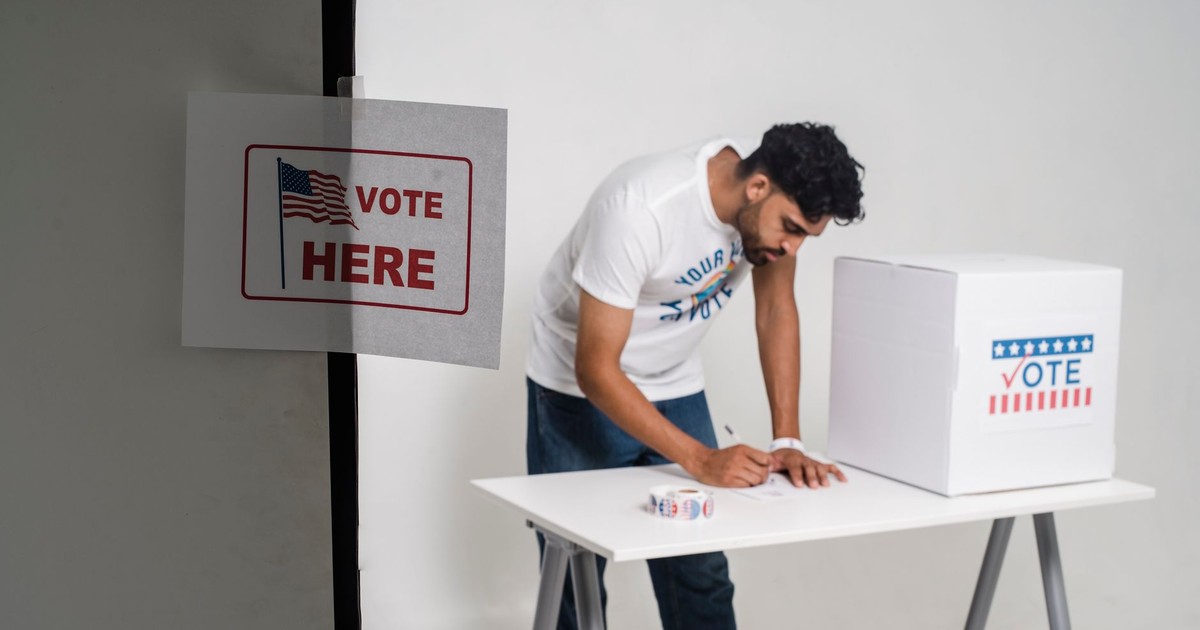
When asked to provide a single word or phrase that captures what best defines what it means to be an American, a plurality of Americans (36%) offered “freedom/liberty.” 14% said “patriotism” or “national pride.” Other definitions of American identity, including “rights/constitutional rights/constitution” (8%) and “diversity/inclusivity/tolerance” (6%), received single digits.
Americans are among the most likely globally to emphasize freedom as a source of pride. They are also more likely than people in many other surveyed nations to offer a negative sentiment when asked what makes them proud. In a 25-nation survey conducted by Pew Research Center in 2025, Americans stood out not only for their emphasis on liberty but for the frequency with which they expressed a negative response when asked to articulate a source of national pride.
Republicans and Democrats tend to highlight different sources of pride, a partisan divide that is not as pronounced in most other countries. Few Americans, just 3%, mention U.S. history as something that makes them proud of their country. By comparison, far more people mention this as a source of pride in Greece (37%), France (22%), Hungary (21%), and Poland (20%).
This reluctance to draw on history as a source of pride, even in the year of the nation’s 250th anniversary, represents a significant contrast with comparable democracies. The AP-NORC data, drawn from its April 16–20, 2026 survey of 2,596 adults, similarly found that pride in American history has dropped 14 percentage points since 2017. Americans are celebrating 250 years, but they are not, by and large, celebrating those 250 years through a lens of historical pride.
The Flag, Democracy, and National Identity
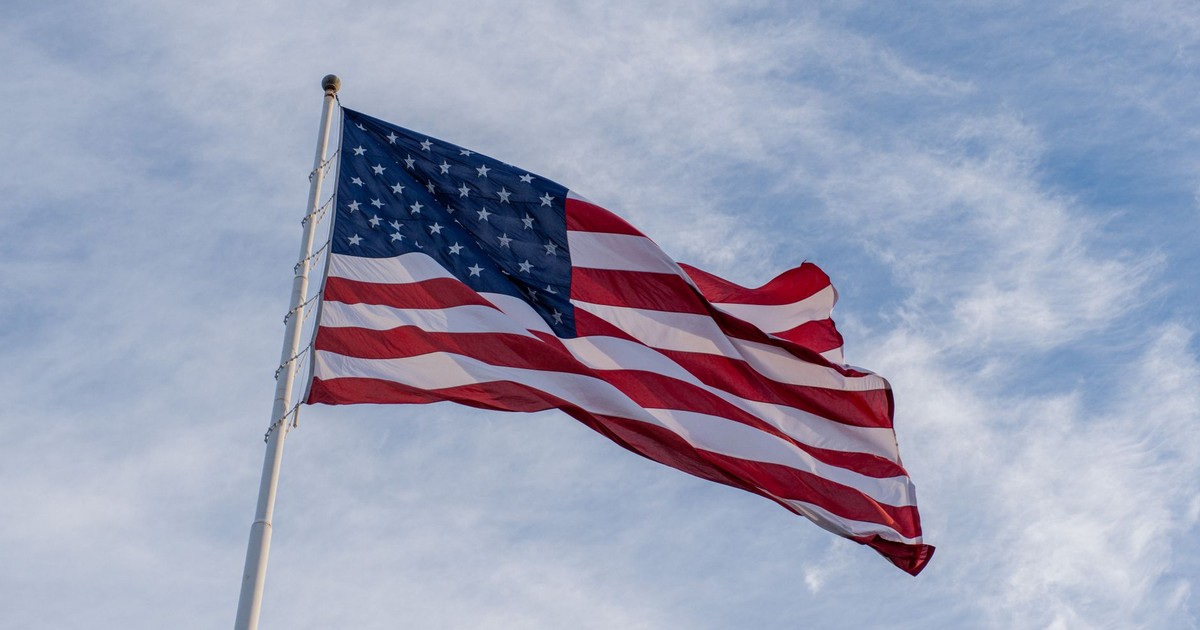
Less than half, 43%, of respondents said they fly the American flag outside their homes during national holidays or other days, the same share as in 1986. Broken down by party, nearly 7 in 10 Republicans, 69%, report flying the flag this year, compared to 42% of independents and about one-quarter, 26%, of Democrats.
Gallup found that Americans who reported higher levels of patriotism were more likely to display the American flag: nearly 7 in 10, or 69%, of those with extreme pride also said they fly the flag. The flag itself has become an increasingly partisan symbol, tracking party affiliation more closely than the kind of broadly shared civic gesture it once represented.
When thinking about an increasingly polarized and divided nation, 82% of Americans think a serious threat to democracy exists. More than 1 in 10, or 12%, strongly agree that Americans may have to resort to violence to course-correct. Another 25% agree with that.
While freedom or liberty is the most common response when asked what unites Americans, political interests or values is most frequently cited when asked what divides Americans. Still, the American flag is regarded as a symbol of the country’s unity. That pairing, a shared symbol, a fractured sense of unifying values, runs through virtually every survey conducted this year. Americans can still agree on the flag. They increasingly cannot agree on what flying it means. The ongoing effort to denaturalize citizens at record scale has added another layer to the national conversation about what American identity actually confers.
The 250th Anniversary Context
“This casts some uncertainty over how Americans will engage with the country’s 250th anniversary festivities,” Gallup Senior Editor Megan Brenan wrote in the report.
Official planning for the semiquincentennial celebrations began in 2016 with the congressional, non-partisan United States Semiquincentennial Commission, known as America250. The scale of planned activity is extraordinary. The Smithsonian Institution’s “Our Shared Future: 250” initiative spans 21 museums, 14 education and research centers, the National Zoo, and over 200 Smithsonian Affiliates. Across the country, from Philadelphia’s year of special events to Washington’s Grand Prix around the National Mall, the infrastructure of celebration is visibly in place.
Infrastructure and sentiment are different things. These changes in pride have occurred mostly over the past decade, amid greater pessimism about the economic prospects for young people, widespread dissatisfaction with the state of the nation, greater ideological divides between the parties, unfavorable images of both parties, and intense partisan rancor during the Trump and Biden administrations. The causes of the decline are not obscure. They are visible, named, and widely acknowledged in the data itself.
Lee Miringoff, director of the Marist Institute for Public Opinion, said: “Americans are not ready to toss in the towel.” 53% of Americans, including 65% of Republicans and 52% of independents, think the nation’s best days are still ahead. Even among Democrats, who report the lowest levels of pride in Gallup’s tracking history, Democrats divide with 50% saying the nation’s best days are behind us and 48% saying they are ahead of us, a result that reads less like despair and more like a country genuinely unsure which direction it is moving.
Key Takeaways

The summer 2026 American pride poll cycle, taken together, presents a portrait of a nation that is neither apathetic nor uniformly celebratory. The pride is there, but it is contingent, partisan, generational, and in several categories in measurable retreat from where it stood just five or ten years ago.
The most critical finding may be the one that is easiest to overlook: the broad-based agreement, across parties, across generations, and across racial and ethnic groups, that the country has drifted from its founding principles. That 83 percent figure from the Marist poll is not a Democratic reading or a Republican reading. It is close to a consensus. Where Americans diverge sharply is in what they believe should follow from that diagnosis: whether the drift represents failure, progress, or something requiring remedy by extraordinary means. The 37 percent of Americans who told the Marist poll they agree that violence may be necessary to course-correct the country is a figure that no anniversary celebration can simply absorb.
What the data does not support is the conclusion that Americans have stopped caring about their country. The levels of engagement with these questions, the intensity of the partisan differences, the precision with which different groups identify different sources of pride and concern, all of it reflects a population that is paying close attention. Pride has fallen to a 25-year low. That is not the same as indifference.
The Argument Is the Patriotism

The most honest thing the 2026 polling reveals is not a country that has given up on itself, but a country that is fighting, loudly and by every available measure, over what it actually is. The debate about what America means, who it belongs to, and whether it still lives up to what it claimed to be at the start is not a symptom of national failure. It is one of the oldest American activities there is.
The pride numbers are real, and the declines are real. But so is the fact that 83 percent of Americans cared enough to form an opinion about the founding principles, that millions are planning to mark the anniversary in some form, and that the argument about America’s identity is as active as it has ever been. That argument, and not the bunting or the fireworks, may be the most patriotic thing about America at 250. A country that has stopped arguing about itself is a country that has stopped caring. Whatever else the polls say, they do not say that.
AI Disclaimer: This article was created with the assistance of AI tools and reviewed by a human editor.