

The Amish population across North America reached an estimated 410,955 as of June 2025, an increase of roughly 10,045 in a single year. Communities now span 32 states and three Canadian provinces, with nearly 61 percent of the population concentrated in Ohio, Pennsylvania, and Indiana. That growth is almost entirely internal – outsiders rarely join and remain in the Amish church. A community expanding at that rate, bound together not by law but by a shared code of conduct known as the Ordnung, governs everything from the color of a dress to whether a man may grow a mustache, from how a phone may be used to how a young person chooses, or declines, to stay in the community forever.
The Ordnung is a set of guiding principles that shape nearly every aspect of daily living, and it is largely not written down. What follows are the major Amish rules and restrictions that define the community, where they come from, and why they persist.
The Ordnung Governs Everything – and It Differs by Community

As part of their Ordnung, Old Order Amish forbid owning automobiles, tapping electricity from public utility lines, owning televisions, radios, or personal computers, attending high school or college, joining the military, and initiating divorce. Each item carries real social consequence if violated.
The Ordnung is not a single, uniform document handed down from one central authority. Each Amish settlement may have its own interpretation of these principles. A congregation in Lancaster County, Pennsylvania, and one in rural Montana may hold to very different specifics while both calling themselves Amish. Some churches prohibit indoor plumbing, linoleum flooring, and even riding in vehicles, while in other Amish churches, interiors look like non-Amish homes and members use tractors as vehicles.
Church leaders update the regulations as new issues arise, usually with input from district members. Controversial issues – the use of cell phones, computers, fancy furniture, or immodest dress – receive attention at members’ meetings. Members of each congregation affirm their district’s Ordnung twice a year, before the spring and fall communion services.
No Grid Electricity – but Batteries and Propane Are Often Permitted
The Amish are not opposed to light, refrigeration, or power tools. They are opposed to the connection. The restriction traces in part to an interpretation of II Corinthians 6:14 – “Be ye not unequally yoked with unbelievers” – which is taken to mean that electric power lines or telephone lines would join an Amish home with their non-Amish neighbors. The grid is the problem, not electricity itself.
Oil lamps, camping lanterns, and battery-operated lights are among the methods used to light Amish homes. Propane powers stoves and refrigerators in many communities. The distinction is not about technology being sinful – it is about where that technology comes from and what it connects a family to.
A battery-powered lantern used in the barn keeps the family self-sufficient. A line running from the municipal grid runs directly into the world the Ordnung is designed to keep at arm’s length.
No Owning a Car – but Riding in One Is Usually Allowed
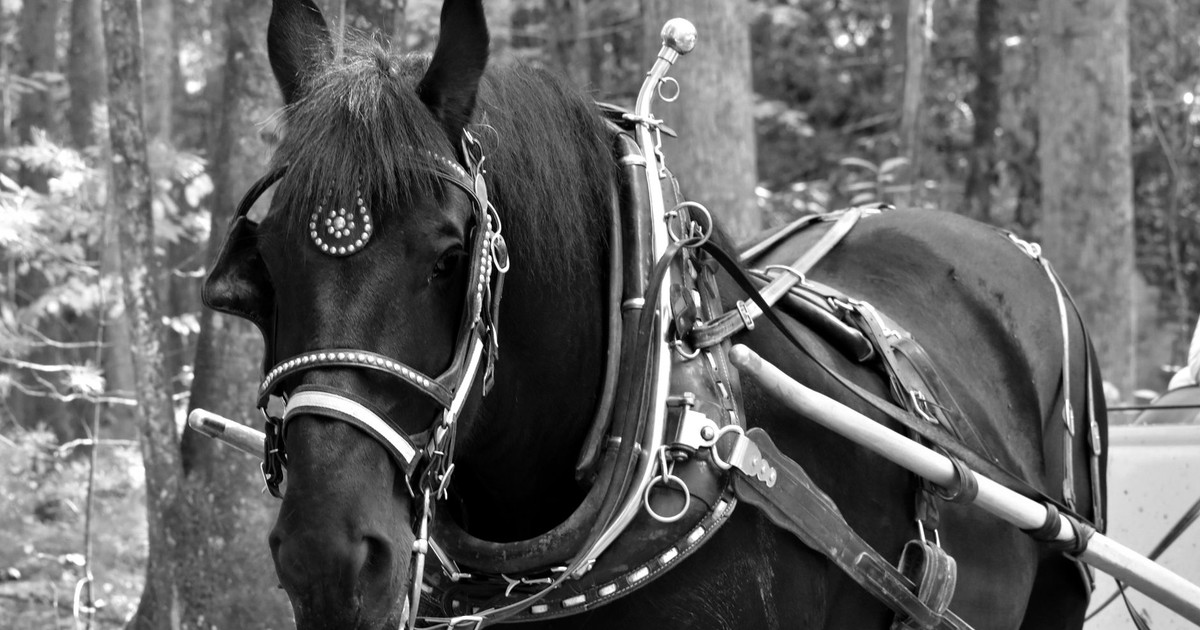
A traditional marker in determining who is and is not Old Order Amish is whether a church permits the regular driving of motor vehicles. Those churches which have accepted the motor vehicle in this way are no longer considered to be Old Order Amish.
When a family owns motor vehicles, mobility is much easier. Family members may spend extended periods away from home, affecting family ties. Easy transportation can bring one to cities and other areas which Amish tend to view as places of worldly temptation. The horse and buggy keeps the community close to itself.
Riding in a car driven by someone else is generally permitted. Amish frequently hire “English” drivers for transportation – arrangements known as “Amish taxis” – which allow them to travel long distances without directly breaking rules. A medical appointment two counties over, a wholesale supply run, a family visit: all of these can happen by hired car. The rule is about ownership and what it represents, not about the object itself.
Plain Dress Is Mandatory – and Every Detail Is Deliberate

All Amish groups expect men and women to wear prescribed clothing. Married men are expected to grow a beard but not a mustache, and to wear an Amish-style hat and vest. Women are expected to wear a head covering and, usually, a three-piece dress that includes a cape and an apron.
The beard without a mustache is not arbitrary. Historically, the mustache was associated with European military officers, and the Amish rejection of military service extended to rejecting the symbol. The beard itself, worn after marriage, is a visible marker of a man’s status in the community.
Dress among the Amish signals submission to the collective order and serves as a public symbol of group identity. Restrictions on color of clothing and style of buggy help prevent pride and envy, though individual dictates on these issues are not necessarily found in Scripture. Distinctiveness from the broader world is built into the fabric, literally.
Formal Education Ends at Eighth Grade

Old Order Amish forbid attending high school or college as part of their Ordnung. Amish children typically attend one-room schoolhouses through the eighth grade, learning reading, writing, arithmetic, and Pennsylvania Dutch. After that, formal schooling ends: girls learn to cook, sew, and manage a household; boys learn farming, carpentry, or whatever trade their family practices.
In the 1972 case Wisconsin v. Yoder, the U.S. Supreme Court ruled that the state could not compel Amish children to attend school past eighth grade, finding that the free exercise of religion outweighed compulsory education requirements. It remains one of the most significant legal recognitions of religious exemption in American history.
A teenager who spends four years in a public high school is exposed to values, relationships, and ideas that make staying in the community harder. The Ordnung treats that exposure as a risk, not an opportunity.
Technology Is Managed, Not Banned
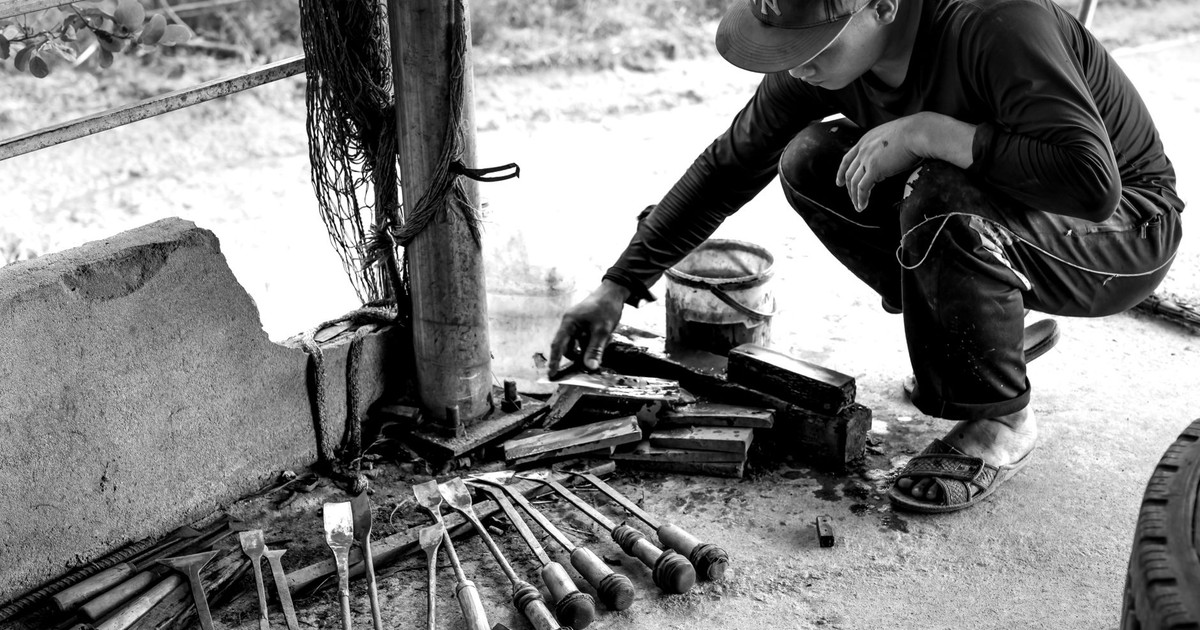
The Amish do not reject technology from a belief that modern innovations are evil. They are cautious about what a given device can bring into a community. Every technology the Ordnung addresses has been evaluated – sometimes debated for years – on the question of what it does to family structure and community cohesion.
When a new innovation comes along, an Amish community will scrutinize it, weighing its benefits and drawbacks and its potential effect on their values and lifestyle. Sometimes they ban a certain technology outright; other times, they ban its unlimited use but permit it with certain limitations. Cell phones are a perfect example. Officially, cell phones are discouraged because they connect Amish life too closely to the outside world. Yet many Amish quietly keep phones for business or emergencies, hiding them in barns or workshops and using them discreetly when necessary.
New Order Amish communities, which are more permissive than Old Order, typically permit battery-operated lights and radios in their homes, and may also permit telephones, although these are generally restricted to a separate structure outside the house or inside the barn. The phone shanty – a small shared booth at the edge of a property, used communally for necessary calls – is one of the more elegant solutions. The technology is allowed in; it just doesn’t get to live inside the home.
Rumspringa Gives Young People a Choice – but It’s Not What TV Suggests

Rumspringa (from the Pennsylvania Dutch for “running around”) is the period during which Amish teenagers, generally from age 16 onward, are given more latitude to experience the world before deciding whether to be baptized into the church. Popular culture has turned this into a story of wild experimentation, but the reality is far more varied and far less dramatic for most young people who go through it.
During Rumspringa, the Ordnung is technically not yet binding on the young person – they have not yet been baptized and therefore have not formally committed to its rules. Some do use this period to try things their upbringing prohibited: English-style clothing, cars, smartphones, parties. Many do not stray far at all, spending Rumspringa attending youth singings and socializing with peers from neighboring Amish communities. The range of experience is enormous and almost entirely community-dependent.
Rumspringa guarantees that the decision to be baptized is, in principle, voluntary. The community does not want members who are bound by inertia. It wants members who have chosen to be there. The catch is that choosing to leave means leaving everything – family relationships, community support, and the only way of life a person has ever known.
Baptism and Church Membership Are Binding and Enforced
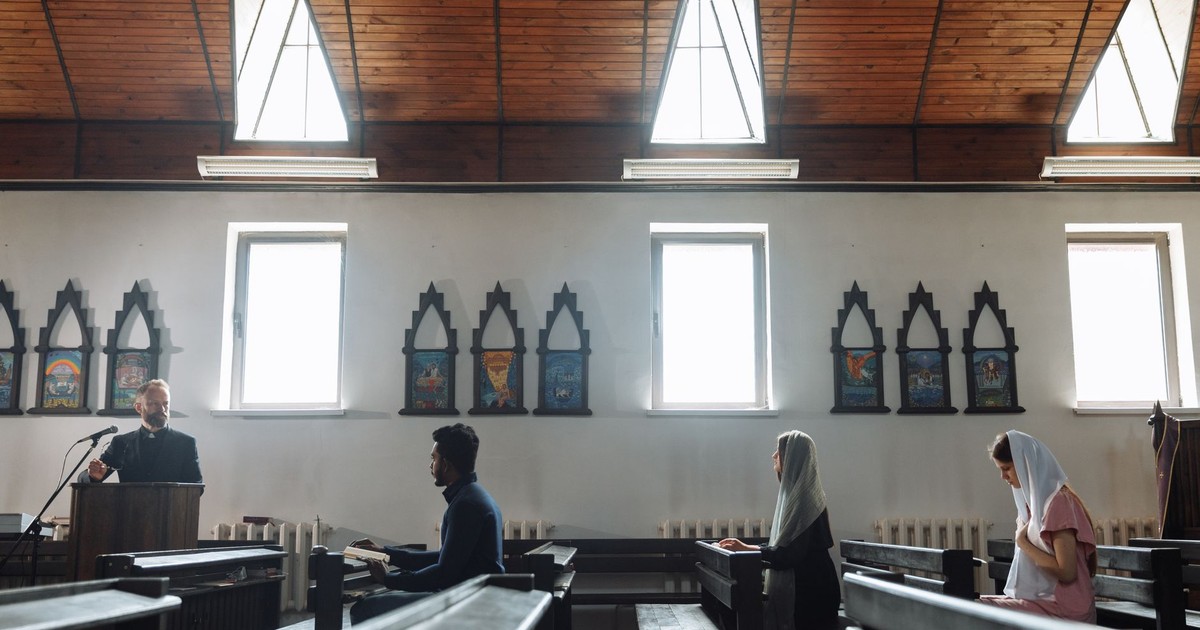
Once a person is baptized into the Amish church, the Ordnung becomes fully binding. Violations are handled through a structured accountability process that can escalate, in serious cases, to shunning – the practice of social avoidance known in German as Meidung.
Shunning is not merely social awkwardness. It means that family members who remain in the church are expected to limit their interaction with the shunned person – they may not eat at the same table, conduct business with them, or accept gifts from them. For someone who has lived their entire life inside a tight-knit community, the practical and emotional consequences are severe.
The purpose, from the community’s perspective, is restoration, not punishment. The hope is that the discomfort of being outside will bring the person back into compliance and back into full fellowship. What is certain is that the process works as designed: it makes the cost of leaving extremely high and makes maintaining membership the path of least resistance for most people.
Marriage Rules Protect the Community’s Boundaries

Amish people are expected to marry within the faith. Marriage to a non-Amish person is not simply frowned upon – it effectively means leaving the community, because the non-Amish spouse cannot easily live within the Ordnung’s constraints, and the Amish spouse who marries outside the church will typically face the same discipline applied to other serious violations.
Initiating divorce is also forbidden under the Old Order Ordnung. Legal divorce is not available as a solution the community will support. Couples who cannot reconcile may live separately in practice, but the formal dissolution of a marriage through civil courts is considered a breach of the Ordnung.
Amish weddings are community events, typically held at the bride’s family home, without the ornate dress or commercial trappings that mark many American weddings. The simplicity reflects the same principle that governs the dress code: nothing that draws attention to the individual above the community, and nothing that introduces envy.
The Community, Not the Individual, Is the Basic Unit
Every specific rule in the Amish rules and restrictions framework points back to a single underlying principle: the community comes before the individual. The Amish would argue that setting and respecting limits on almost everything is one of the foundations of wisdom. Limits, for the Amish, are a requirement for happiness. Without limits, they believe, individuals become arrogant, conceited, and self-destructive.
The Ordnung also discourages members from joining public organizations or service clubs in their communities, though some are members of local volunteer fire companies and emergency medical units. The logic is consistent: participation in outside organizations builds loyalty to something other than the church district, which diffuses the bonds that hold the community together.
On a deeper level, the Amish believe that submitting oneself to an Ordnung is a way to demonstrate a humble spirit – an important, Christlike trait. One must subvert individualism and arrogance for the good of the community. The hat, the beard, the buggy, the phone in the barn – they are all expressions of the same commitment: I am part of something larger than myself, and I am willing to let that fact be visible.
Read More: The Meaning Behind “Barn Stars”
What This All Actually Means
The Amish are not a relic or a novelty. They are a community that made a deliberate decision about what kind of life is worth living, and has kept making that decision, collectively and repeatedly, for more than three centuries. The rules are not a cage someone built around them – they are the architecture the community chose, revised, and continues to choose.
None of this means the system is without tension or without cost. The pressure that comes with shunning is real. The limits on formal education narrow options. The expectation of endogamy – marrying within the faith – forecloses relationships. For some people who grow up Amish and eventually leave, those costs were too high. For the majority who stay, and the numbers suggest most do stay, the Ordnung represents something that is genuinely hard to find anywhere else: a community where neighbors arrive within hours when a barn burns down, where elderly parents will not spend their last years alone, and where the question “what are we here for” has a shared, practiced answer. Whether that trade-off sounds like freedom or constraint depends almost entirely on what you think the alternative offers.
Disclaimer: This information is not intended to be a substitute for professional medical advice, diagnosis, or treatment and is for information only. Always seek the advice of your physician or another qualified health provider with any questions about your medical condition and/or current medication. Do not disregard professional medical advice or delay seeking advice or treatment because of something you have read here.
AI Disclaimer: This article was created with the assistance of AI tools and reviewed by a human editor.