Vaccine cards used to live in kitchen junk drawers, tucked behind takeout menus and dead batteries, because nobody expected to need them again. The diseases they documented had been so thoroughly defeated by routine childhood immunization that the cards themselves were almost ceremonial: proof of a public health infrastructure that worked so well it had become invisible. That is the context in which the current debate over vaccine policy is unfolding. Not in a vacuum, and not as a matter of theoretical disagreement between people of good faith.
What is happening right now, at the level of federal health policy, is not a scientific controversy. It is something more specific: a campaign to treat settled evidence as though it were live debate, conducted by officials with the power to rewrite the government’s own public health guidance. Bill Nye’s phone contains an unusually direct window into exactly how that campaign operates.
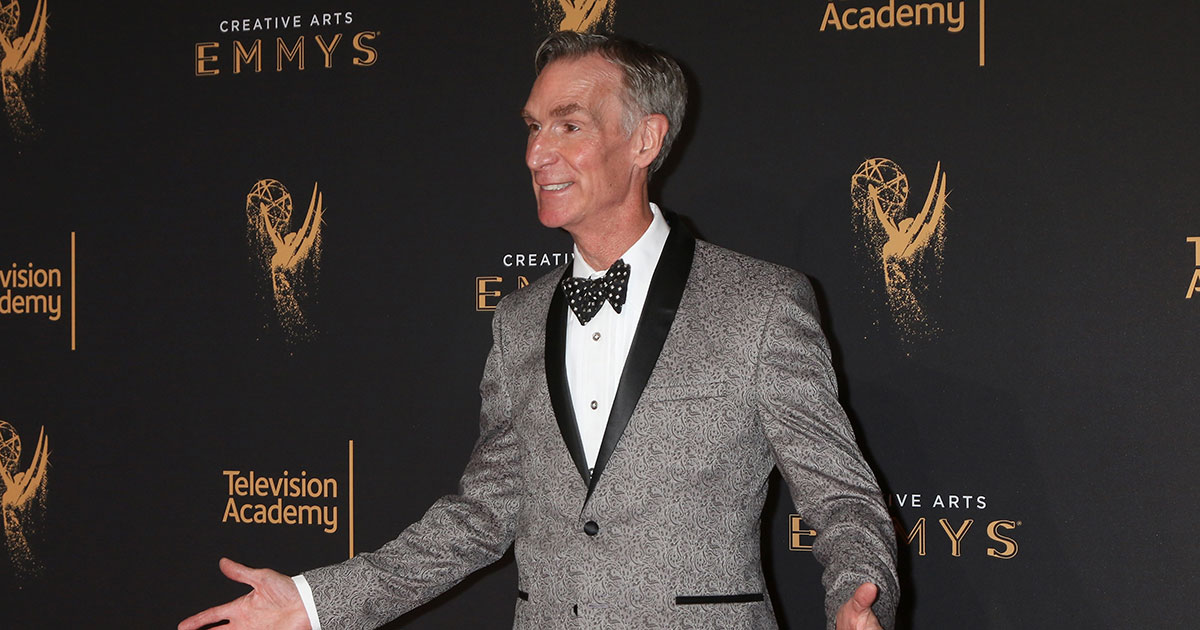
That is exactly what Bill Nye did. In an interview with Men’s Health in June 2025, the celebrity scientist and longtime science communicator held up his iPhone to show the journalist sitting across from him: screen after screen of unsolicited text messages from Robert F. Kennedy Jr., wall-to-wall paragraphs pushing debunked claims about vaccines and autism. Nye, known as “Bill Nye the Science Guy” after his popular 1990s educational show of the same name, told the magazine that he and Kennedy met through a mutual friend several years ago when Kennedy was an environmental activist. That meeting, as it turned out, came with a cost.
The Texts: “Miles and Miles” of Debunked Science
Nye said Kennedy had “just no self-awareness” during their text exchange, which Men’s Health described as producing “miles and miles” of long messages from Kennedy, with little response from Nye. The content of those messages followed a familiar pattern. According to Nye, “if you read these articles he sent, they’re all this speculation about autism and just cause-and-effect, and mercury in vaccines, that maybe there’s a connection.”
Nye did not simply ignore the messages. He engaged – once, directly, and with characteristic precision. He wrote back: “Okay, I’ll read your book. I think you’ve confused causation with correlation. Your friend, Bill.” And then Kennedy sent more.
So Nye wrote, “Okay, no more texts.” Kennedy started again. So Nye cut him off.
Nye also suggested that President Donald Trump deliberately chose a controversial figure like Kennedy to lead HHS. “Respectfully, the president likes things to be chaotic,” Nye said. “So he hires people who are controversial on purpose and here we are.”
The causation-versus-correlation point that Nye raised in those texts is not a rhetorical flourish – it is the precise scientific error at the heart of the vaccine-autism myth. As Nye explained: “I just told him he confused causation with correlation. Just because somebody got a vaccination and then somebody else got autism doesn’t mean one caused the other. This is science.”
The Science Is Not in Dispute
The scientific record on vaccines and autism is not a matter of ongoing debate among researchers. Dr. Susan J. Kressly, president of the American Academy of Pediatrics, stated: “The Centers for Disease Control and Prevention website has been changed to promote false information suggesting vaccines cause autism. Since 1998, independent researchers across seven countries have conducted more than 40 high-quality studies involving over 5.6 million people. The conclusion is clear and unambiguous: There’s no link between vaccines and autism.”
The specific claim about mercury in vaccines – thimerosal, a preservative that Kennedy has cited repeatedly – has also been exhaustively reviewed. The Institute of Medicine, now the National Academy of Medicine, reviewed more than 200 studies and found that the evidence favored rejection of a causal relationship between thimerosal-containing vaccines and autism. Large epidemiological studies in the United States and internationally reached the same conclusion. When thimerosal was removed from nearly all routine childhood vaccines in the United States more than two decades ago as a precautionary step, autism rates did not decline.
That last fact is particularly important. If thimerosal were genuinely driving autism diagnoses, its removal from vaccines should have produced a measurable drop. It did not. The percentage of children with autism spectrum disorders is the same in vaccinated and non-vaccinated populations.
Kennedy’s record with this specific claim stretches back decades. In 2005, he wrote “Deadly Immunity,” an article published in Rolling Stone and on Salon that argued thimerosal was linked to autism. Both publications later distanced themselves from the piece because the data were inaccurate, selectively presented, or taken out of context. In 2014, he published a book advancing similar claims, which drew similarly sharp criticism from scientists and physicians for misstating evidence and exaggerating risk.
Kennedy’s Confirmation and the Promises He Made
In his second day of confirmation hearings before the Senate Committee on Health, Education, Labor and Pensions, Kennedy refused to say that vaccines do not cause autism, despite a large body of evidence showing that there is no link. He pointed to a flawed paper to suggest there was credible evidence to claim that vaccines cause autism.
Republican Senator Bill Cassidy of Louisiana – a physician – had expressed serious reservations about Kennedy during the confirmation process but ultimately voted to install him, saying he had received explicit assurances about Kennedy’s conduct in office. Kennedy had previously claimed he would not touch the CDC’s vaccine advisory committee. In February, Cassidy said Kennedy had promised him no changes would be made to ACIP. “If confirmed, he will maintain the Centers for Disease Control and Prevention’s Advisory Committee on Immunization Practices without changes,” Cassidy said on the Senate floor.
That promise did not hold.
Dismantling the Advisory Infrastructure
In June 2025, Kennedy abruptly removed all 17 sitting members of the CDC’s Advisory Committee on Immunization Practices, known as ACIP. ACIP holds public meetings to review the latest scientific evidence on vaccine safety and effectiveness and makes clinical recommendations. Its decisions determine immunization schedules and directly affect insurance coverage for vaccines across the country.
Kennedy said in an op-ed published in the Wall Street Journal that “a clean sweep is needed to re-establish public confidence in vaccine science.” The medical community rejected that framing.
The American Medical Association president Dr. Bruce A. Scott said in a statement: “For generations, the Advisory Committee on Immunization Practices has been a trusted national source of science- and data-driven advice and guidance on the use of vaccines to prevent and control disease. Today’s action to remove the 17 sitting members of ACIP undermines that trust and upends a transparent process that has saved countless lives.”
Kennedy’s stated justification – that the committee was compromised by industry conflicts of interest – was also challenged by independent research. A study published in JAMA in August 2025 found that while conflicts of interest had been high in the early 2000s, “there has been substantial progress since.” Lead author Genevieve Kanter, a senior scholar at the USC Schaeffer Center, concluded that “conflicts of interest on vaccine advisory committees have been at historically low levels for quite some time.”
Dr. Jonathan Temte, who served as ACIP chair from 2012 to 2015, told NPR that “across the entire world, ACIP has been the paragon of solid, well thought out, evidence-based vaccine policy.” He added: “I hate to say this, but we are heading in the direction of U.S. vaccine policy becoming the laughing stock of the globe.”
Rewriting the CDC’s Own Website
The dismantling of the advisory panel was not an isolated act. In November 2025, the Centers for Disease Control and Prevention publicly reversed its stance that vaccines do not cause autism, over the objections of career staff and counter to years of scientific evidence.
The agency’s webpage on vaccines and autism, updated in November, now says the statement that vaccines don’t cause autism “is not an evidence-based claim because studies have not ruled out the possibility that infant vaccines cause autism.” “Studies supporting a link have been ignored by health authorities,” the website continues.
HHS in September released plans to contract with Rensselaer Polytechnic Institute to research connections between vaccines and autism. Career scientists at the agency were not consulted about the changes and were caught off guard by them, according to the Washington Post.
The language now appearing on the CDC’swebsite directly mirrors the claims Kennedy was sending to Bill Nye in those private text messages. What began as one-sided texts to a television personality has, in the space of about a year, become official government health guidance for the entire country.
The Measles Resurgence: A Measurable Consequence
The debate over vaccine policy is not theoretical. Its consequences are being counted in hospital admissions and death certificates.
The final 2025 tally released by the CDC showed 2,144 confirmed measles cases in the United States – the worst year for measles in over three decades, with 49 outbreaks recorded across the country.
About 93 percent of those cases were confirmed in people who were unvaccinated or did not know their vaccination status. The CDC confirmed three deaths associated with the outbreak: two children in Texas who tested positive for measles and were not vaccinated, and an unvaccinated adult in New Mexico who tested positive after dying.
As of May 14, 2026, 1,893 confirmed measles cases had already been reported in the United States in 2026 alone. The crisis is not receding.
Decreased measles vaccination rates are a key driver. The MMR vaccination rate among kindergarten students in the United States was 92.5 percent in the 2024-25 school year, down from the pre-pandemic rate of 95 percent. That gap, small as it may appear in percentage terms, is large enough to create the pockets of low community immunity where measles can find purchase and spread.
Kennedy has long sown doubt in the safety and effectiveness of the MMR vaccine. Despite the vaccine being required in all states to attend public school, rates have been steadily decreasing over the last decade. Vaccine exemptions have risen sharply, with at least 138,000 kindergartners exempt from one or more vaccines during the most recent school year, according to CDC data.
Nye’s Broader Stance: Polio as the Reference Point
Nye has not limited his criticism to private text threads. During a summit hosted by STAT News in March 2025, Nye unloaded on Kennedy’s anti-vaccine stance. “He’s a guy who doesn’t believe in vaccines!” Nye said during the event.
His sharpest argument draws from personal memory rather than epidemiology. Nye attended elementary school with a classmate who had polio. “You do not want polio! And the reason you don’t get polio is because of a vaccine that was discovered that keeps you from getting polio! What is wrong with you, man?” he said.
In his Men’s Health interview, Nye also expressed frustration at people who argue they have the right not to be vaccinated. “No, you don’t!” he said. “Unvaccinated people can, and usually do, spread a disease. And that’s why we have these rules, for public health! It’s not arbitrary. It’s not about your rights.”
Who Is Bill Nye in 2026?
The exchange between Nye and Kennedy is not simply a celebrity anecdote. Nye occupies a specific and consequential position in American public life – he is one of the few science communicators who commands both mainstream name recognition and genuine scientific credibility.
As President Biden presented the Presidential Medal of Freedom to Nye on January 4, 2025, the White House announcer noted that Nye, “earning 19 Emmy Awards for his energetic experiments on television as Bill Nye the Science Guy, also earned the trust of millions of children and families.” The White House citation noted: “Bill Nye has inspired and influenced generations of American students as ‘Bill Nye the Science Guy.’ His dedication to science education continues through his work as CEO of the Planetary Society and as a vocal advocate for space exploration and environmental stewardship.”
Nye’s role has evolved significantly: his shift from TV show host to science policy advocate tracks a broader moment in which scientific communicators are increasingly stepping into direct advocacy as research funding and scientific consensus face political headwinds. Blocking the HHS Secretary from his phone is, in that context, as much a policy statement as a personal one.
Read More: This Pediatric Office Shared a Clear Message About Vaccines, and It Still Holds True
What the Texts Actually Tell Us
The Bill Nye – RFK Jr. text exchange, which might read at first as an amusing piece of celebrity news, is a precise and documented illustration of how vaccine misinformation moves through public life in 2025 and 2026. A set of claims that independent researchers across seven countries have studied in more than 40 high-quality studies, involving over 5.6 million people, and found to be without merit – those same claims are now being texted between private contacts, inserted into congressional testimony, and published on the official website of the Centers for Disease Control and Prevention.
Nye’s response, characterized by a single reasoned rebuttal followed by a clear withdrawal of engagement, reflects a judgment that has become increasingly common among scientists dealing with deliberate misinformation: continued engagement on bad-faith terms does not produce understanding, it produces the appearance of live controversy where none exists. Kennedy has faced criticism for spreading vaccine misinformation – views that have been thoroughly debunked by public health experts and researchers worldwide. The measles data, the CDC website changes, the firing of the ACIP committee, and the text messages Nye still carries on his phone all point in the same direction. The gap between scientific consensus and federal health policy is not a miscommunication. It is a choice, made at the highest levels of the US government, with consequences that are now being counted in confirmed cases and reported deaths.
AI Disclaimer: This article was created with the assistance of AI tools and reviewed by a human editor.