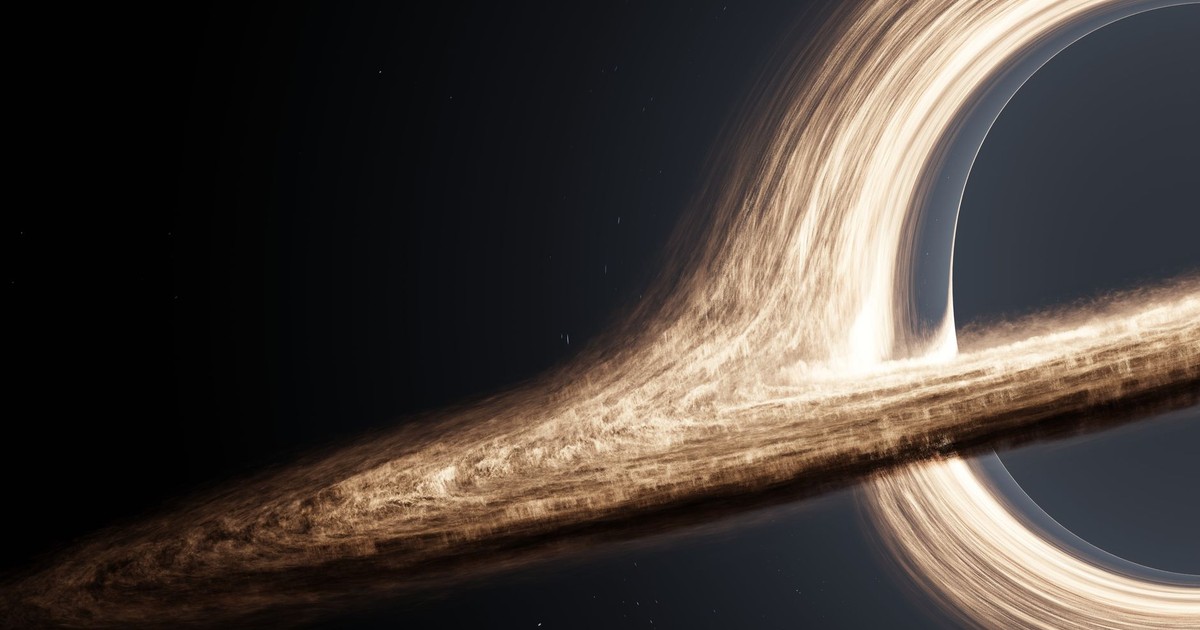

Something happened 750 million light-years away in the constellation Cetus last November that most of us will never hear about, and yet it is one of the most arresting things astronomers have ever watched unfold. A star, presumably minding its own business at the edge of a galaxy, drifted too close to a black hole hiding in the dark. In seconds, cosmically speaking, it was gone, stretched and shredded by gravitational forces so extreme that the resulting explosion outshone the entire surrounding galaxy for months.
The black hole responsible was not sitting at the center of its galaxy, where supermassive black holes are supposed to live. It was found wandering more than 30,000 light-years from its galactic core, alone in the relative emptiness of a galaxy’s outskirts, completely invisible until a star came close enough to betray it.
NASA’s Neil Gehrels Swift Observatory observed the resulting flare and helped characterize the event’s temperature and ultraviolet brightness. The event has a name, a paper, and a set of implications that astronomers are still working through.
What a Black Hole Tidal Disruption Actually Is
Researchers observed an ultrabright flare unleashed by a star being torn apart by extreme gravitational forces after it drifted too close to a monster black hole, a phenomenon called a tidal disruption event. The process has a nickname among astronomers: spaghettification. The black hole’s gravity does not pull on the near side of the star and the far side equally. It yanks the near side with so much more force that the star gets stretched, lengthwise, into a long ribbon of gas.
Crumbs of the splintering star heat up as they swirl around the black hole, creating a glow astronomers can see from far across the cosmos. Swift’s Ultraviolet/Optical Telescope measured the flare’s temperature at about 54,000 degrees Fahrenheit, or 30,000 degrees Celsius. For context, the surface of our own Sun sits at roughly 10,000 degrees Fahrenheit. The stellar debris circling this particular black hole was running about five times hotter than that, and it was doing so for months, across a distance that light itself takes 750 million years to cross.
Astronomical surveys typically spot one to two dozen tidal disruption events each year, and scientists had only ever seen them taking place in galaxy cores, until now. Supermassive black holes live at the centers of large galaxies. So that is where anyone thought to look. Theorists had predicted that wandering black holes would roam the outskirts of galaxies as galaxies collide and merge, but because many of these black holes are quiescent, meaning they aren’t swallowing material or emitting light, they tiptoe around undetected by earthly sensors.
The Orphan at the Edge of the Galaxy
NASA’s Neil Gehrels Swift Observatory observed a rare supermassive black hole far from the center of a distant galaxy as it tore apart and consumed a star. Astronomers describe it as an apparent “orphan” because it sits unusually far from the galactic core, where supermassive black holes are normally found.
The host galaxy in question is designated WISEA J014656.04-152214.7. The newly discovered event, dubbed TDE 2025abcr, was detected approximately 30,000 light-years from the center of that galaxy, some 750 million light-years away in the constellation Cetus. The black hole behind the blast weighs in at about a million times the Sun’s mass, roughly the same mass as the black hole anchoring the center of our own Milky Way, just apparently unanchored from anything.
“If you’d looked, you never would have guessed there was a supermassive black hole hiding there, and it’s only because it happened to eat the star that we were able to figure out where it was,” said Robert Stein, lead author of the study and an astrophysicist at the University of Maryland and NASA’s Goddard Space Flight Center.
How does a supermassive black hole end up so far from home? Most large galaxies have gone through multiple mergers across cosmic history, absorbing smaller satellite galaxies. When two or more galaxies merge, their respective central black holes enter a gravitational dance that can eject the lightest participant via what physicists call the three-body slingshot, the same basic dynamic that allows spacecraft to steal velocity from planets during gravitational flybys. The ejected black hole retains its mass but loses its orbital position, drifting for billions of years through the outskirts of the merged galaxy.
How an AI Found What Human Eyes Missed
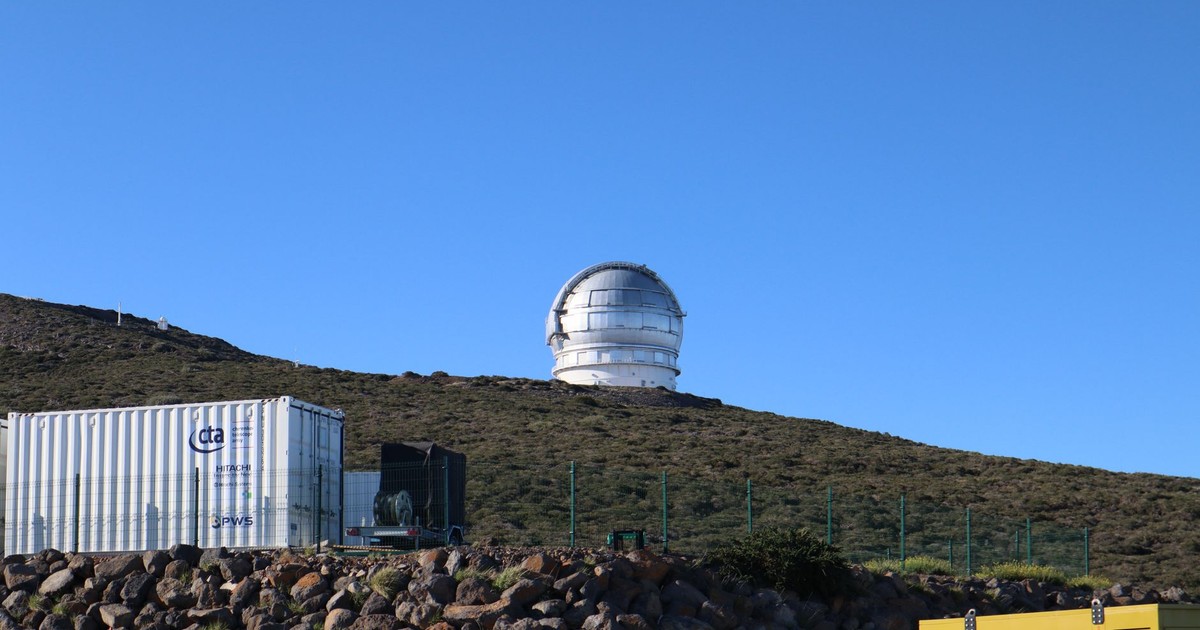
The event’s existence was first flagged in November 2025 as an unusual brightening in a galaxy about 750 million light-years away by ZTF (Zwicky Transient Facility), a survey conducted at Palomar Observatory in Southern California. ZTF scans the northern sky every two to three nights. The volume of data it produces each night is staggering.
Every evening, the survey generates around one million transient alerts, making it impossible for astronomers to inspect each one manually. To overcome this challenge, researchers employed an advanced artificial intelligence system capable of recognizing patterns associated with rare astrophysical phenomena. The AI in question was a custom version of a classifier called tdescore, retrained to search not just for tidal disruption events at galaxy centers but for any flare that looked like one regardless of where in a galaxy it appeared.
“Out of the roughly one million flashes ZTF detects each night, our new artificial intelligence algorithm automatically recognized a flare that looked a lot like a tidal disruption event, despite its unusual location in the outskirts of a galaxy,” Stein said.
Confirming TDE 2025abcr’s identity required ruling out every more common explanation for a sudden brightening: supernovae, active galactic nuclei, variable stars, and dozens of other transient phenomena the survey detects far more often. The SOAR telescope (Southern Astrophysical Research) in Chile provided the first optical spectra. The spectra revealed broad hydrogen and helium emission lines, the spectral fingerprint of a TDE classified as TDE-H+He, inconsistent with supernovae, which produce different elemental signatures, and with AGN flares, which typically display narrower and differently distributed emission features.
The research was published in July 2026 in The Astrophysical Journal Letters, representing the formal confirmation of what had been suspected for months.
The Light of 10 Billion Suns
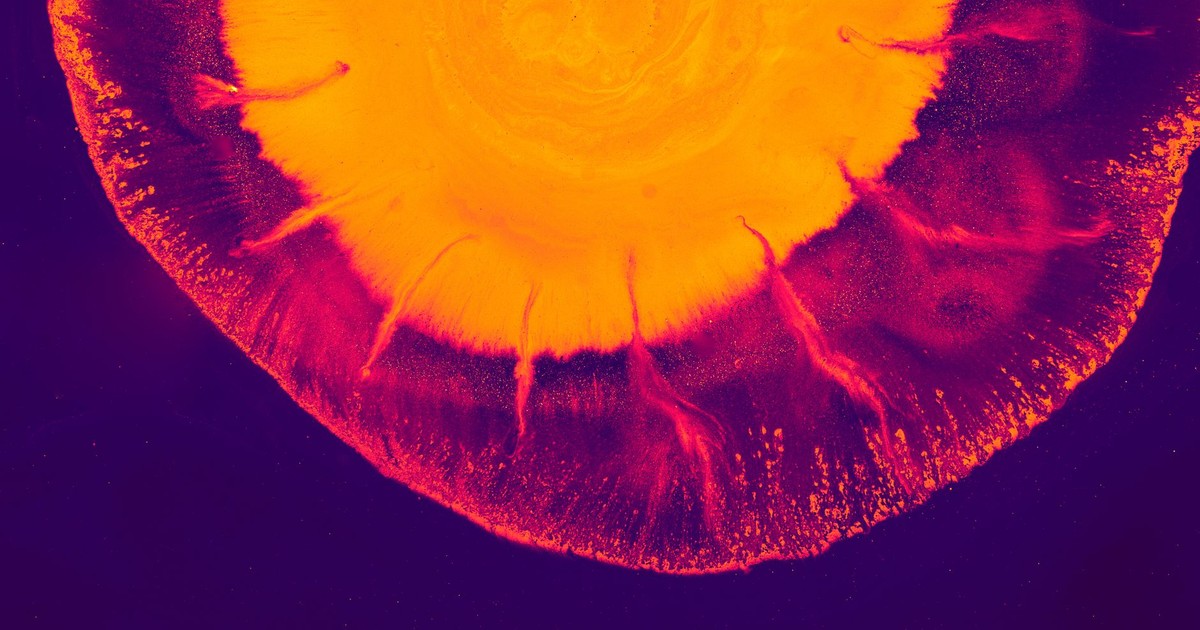
At peak brightness, TDE 2025abcr briefly outshone its entire host galaxy in ultraviolet wavelengths, radiating with the luminosity equivalent of roughly 10 billion suns. The host galaxy itself contains hundreds of billions of stars, each one burning. For months, this single event drowned all of them out in ultraviolet light.
The brightness was also what made the multi-telescope confirmation possible. The bright flaring lasted for months, allowing other observatories to study the event. That extended window gave researchers at Swift, SOAR, and other facilities time to look, compare notes, and eliminate competing explanations one by one.
“What’s new is that, until now, we’ve started with the assumption that supermassive black holes reside in the centers of massive galaxies,” said Dr. Suvi Gezari, an astronomer at the University of Maryland. “This discovery will have a huge impact. It means that we’re going to find many more examples of wandering black holes, and we can understand how galaxies and their black holes merge and build up as the universe ages.”
What Comes Next
The adjusted AI classifier is now a template. Every future sky survey can be configured to search the outskirts of galaxies the way this one learned to, rather than limiting the search to galactic nuclei by default.
Researchers expect the number of discovered wandering black holes to grow quickly once the Vera C. Rubin Observatory in Chile ramps up its surveys. “Rubin’s wide, deep surveys will reveal a much larger sample of tidal disruption events than current observatories are capable of collecting, including ones that are off-center,” said doctoral student Jonathan Carney. The Nancy Grace Roman Space Telescope, scheduled to launch August 30, 2026, is an infrared observatory with a field of view 100 times wider than Hubble’s, another instrument that could, in principle, catch a wandering black hole mid-meal.
Finding more of these objects would let scientists test the two competing explanations for how black holes end up adrift, refining models of how galaxies merge and accumulate mass across cosmic history. It would also help astronomers estimate how many dormant, invisible black holes are drifting through galaxies across the universe, including possibly our own.
The Milky Way is itself a product of billions of years of galactic mergers. The same slingshot dynamics that apparently sent this particular black hole drifting into the outer reaches of its galaxy could, by the same physics, have scattered wanderers through ours. Most would be entirely invisible. The only way to find them is to wait for a star to get too close.
What a Single Star’s Death Revealed
Astronomers have struggled to answer questions about nomadic black holes because these objects are practically invisible in the outskirts of galaxies. They emit no light as they move through mostly empty space, unless they get a rare stellar meal passing by. One star, in one moment of bad cosmic luck, became the evidence for an entirely new class of observable phenomenon. A black hole that had been invisible for potentially billions of years announced itself by destroying something else.
“We were looking for these star-shredding events as a way to find otherwise invisible supermassive black holes wandering away from the galactic cores where they usually reside,” said Robert Stein. The method worked, once. The question now is how many more are out there, drifting in the dark, waiting for a star to cross the wrong patch of space.
Disclaimer: This information is not intended to be a substitute for professional medical advice, diagnosis, or treatment and is for information only. Always seek the advice of your physician or another qualified health provider with any questions about your medical condition and/or current medication. Do not disregard professional medical advice or delay seeking advice or treatment because of something you have read here.
AI Disclaimer: This article was created with the assistance of AI tools and reviewed by a human editor.