

Every generation gets a caricature, and Boomers – those born between 1946 and 1964 – have ended up with one of the most stubborn ones. Depending on who’s talking, they’re either the lucky generation who bought houses for the price of a decent used car and never looked back, or they’re technologically helpless relatives who need a fifteen-minute tutorial every time a software update happens. Both versions are vivid. Neither one is particularly accurate.
The Boomer stereotypes misconceptions that cycle through social media, workplace conversations, and family dinner tables tend to stick because they contain just enough recognizable truth to feel plausible. But the actual data on how this generation lives, spends, volunteers, works, and thinks tells a considerably more complicated story. Some of what younger generations assume about Boomers reflects genuine generational differences. A lot of it reflects something else entirely: the human tendency to reduce eighty million people to a single, tidy image.
What follows isn’t a defense of any generation or an attempt to paper over real economic inequalities between cohorts. This is about the specific, verifiable ways the Boomer caricature has drifted from the reality.
1. They Can’t Use Technology

Recent data suggests that Baby Boomers, often stereotyped as technologically challenged, are instead simply more selective in the digital media they consume. Around 70 percent of adults ages 57 to 75 describe themselves as curious about new tech, devices, and apps, according to a December 2023 Razorfish survey. Curious is not the word you’d use to describe someone who has given up.
Boomer internet users rank financial management, obtaining news in a timely manner, and securing their homes as more important digital pursuits than entertainment. They’re using technology – they’re just using it for different things than younger generations. The practical over the performative.
2. They’re All Sitting on Easy Money

Some of the narrative about Boomer wealth is rooted in real structural advantages. But “all Boomers are financially secure” is a sweeping overgeneralization that erases an enormous amount of economic diversity within the generation.
The Boomer generation spans nearly two decades of births, crossing enormous differences in race, class, education, geography, and occupation. Plenty of Boomers worked in industries that hollowed out in the 1980s and 1990s. Plenty of Boomer women spent significant stretches of their careers in underpaid or part-time work. Plenty of Boomers hit their peak earning years during recessions, and plenty don’t have the retirement savings the stereotype assumes.
Generational wealth disparities are real and worth addressing, but they’re not evenly distributed within the Boomer cohort any more than they are within any other generation.
3. They Don’t Care About the Environment

The first Earth Day was held in 1970 – organized largely by and for a generation that was, at the time, in their late teens and twenties. Many of the environmental activists and policymakers who established the regulatory frameworks that govern pollution, clean water, and wildlife protection in the United States were Boomers, doing that work before it was a social media cause.
Younger generations have grown up with climate anxiety as a defining feature of their lives, and they communicate environmental values in ways shaped by that experience. Boomers who care about the environment may do so through different channels – voting patterns, consumer choices, local activism, charitable giving – that are less visible on the platforms where generational comparisons tend to happen.
This doesn’t mean every Boomer holds progressive environmental views, any more than every Millennial does. But the wholesale claim that this generation doesn’t care is one of the less defensible Boomer stereotypes misconceptions floating around.
4. They’ve Stopped Learning New Things

According to a 2025 report from 55places.com, adults over 55 have adopted streaming platforms such as Hulu, Apple TV, Amazon Prime Video, and Netflix at a growing rate in recent years. Adopting a new media platform requires navigating unfamiliar interfaces, managing account settings, understanding content libraries, and troubleshooting when things go sideways.
Beyond entertainment technology, Boomers are taking online courses, picking up new hobbies, launching businesses, and staying actively engaged in professional development well into their sixties. What looks like resistance to learning is often something else: the confidence to be selective about what’s worth learning.
5. They’re Out of the Workforce and Out of Ideas

Retirement is real, and yes, generational changes in the workforce are reshaping who holds what jobs. But the image of Boomers as a generation collectively retreating to the porch is overdrawn. Many are still working – either by choice or necessity – and a significant number are channeling decades of professional experience into new ventures.
Baby Boomers who start new businesses continue to lean on autonomy and income growth as their primary motivations, at 52 percent and 21 percent respectively, according to Gusto’s 2026 New Business Formation Report. Forty-two percent of Boomer founders used AI to help launch their businesses.
Some Boomers are retiring. Some are scaling back. And some are building something new with the experience and professional networks that took them forty years to accumulate.
6. They Don’t Volunteer or Give Back
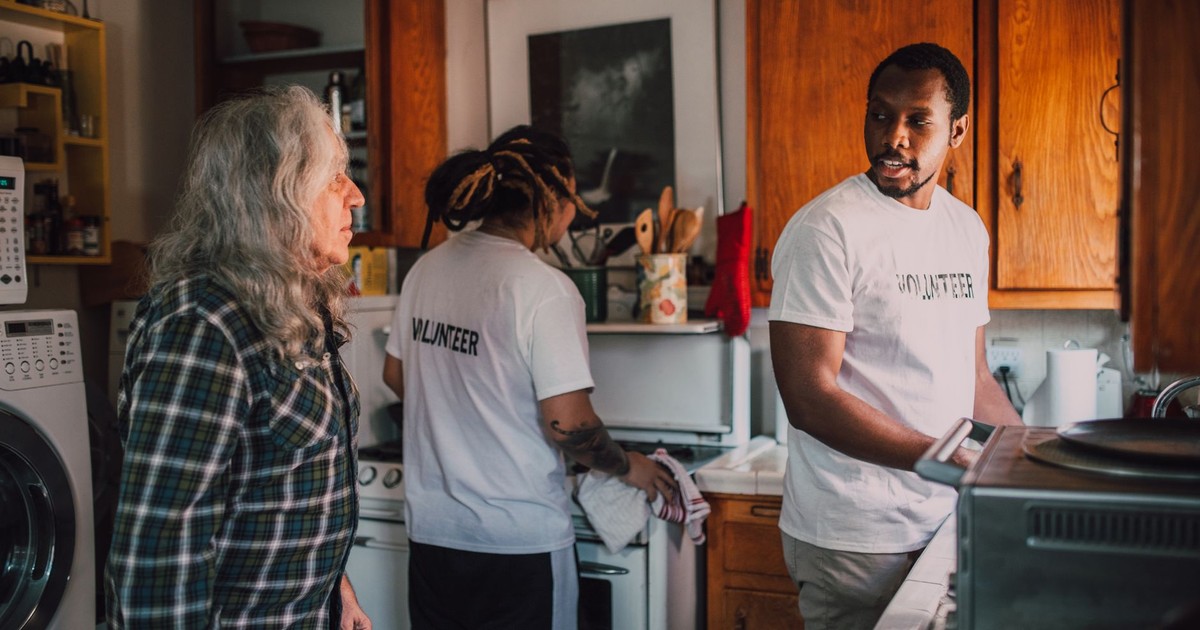
According to AmeriCorps volunteering data, Baby Boomers had the highest rate of informal volunteering of any generation, at 59 percent. Informal volunteering – helping neighbors, checking on elderly friends, driving someone to an appointment, providing childcare for a family in crisis – is the kind of community work that rarely makes it into a social media post. It happens consistently and in enormous volume.
Younger generations may be more likely to share their volunteering on Instagram or organize through an app. Boomers are more likely to arrive on someone’s doorstep with a meal. Both matter. One just photographs better.
Boomers remain among the most significant donors to nonprofits and community organizations in the country, and they tend to give through sustained, long-term relationships with organizations rather than one-time viral campaigns.
7. They’re Resistant to Every Kind of Change

Boomers lived through and participated in some of the most significant social changes of the twentieth century: the civil rights movement, second-wave feminism, the sexual revolution, the environmental movement, the collapse of the Soviet Union, and the birth of the personal computer industry, among others.
The generation that is now stereotyped as change-resistant is the same one that, in its youth, was stereotyped as dangerously radical. Every generation gets accused of holding the wrong values by the generation that comes after it. The content of the accusation changes. The pattern doesn’t.
What Boomers are often actually resisting isn’t change per se but the specific pace, framing, or values attached to a particular kind of change. Younger generations resist change too – they’re just resisting different changes, ones that don’t get labeled as resistance because they align with current progressive orthodoxy.
8. They’re Financially Irresponsible or Reckless

This one runs in an interesting tension with the “sitting on easy money” stereotype. Depending on the conversation, Boomers are simultaneously accused of hoarding wealth and of spending recklessly. In reality, as a generation, they tend to be among the more financially conservative cohorts in terms of savings behavior and long-term planning.
On average, each Boomer spends approximately $6,600 yearly on travel – an amount that is about 20 to 50 percent more than a Gen X’er or Millennial spends on the same category. What this actually reflects is a generation that is in the life stage where travel is a priority, has the disposable income to support it, and isn’t spending those dollars on, say, rent in a city they can’t afford or debt service on graduate school loans. The spending patterns look different because the life circumstances are different.
9. They’re All Exactly the Same

Born between 1946 and 1964, the Boomer cohort spans eighteen years – which means the oldest Boomers were finishing high school when the youngest were being born. Their formative cultural experiences are radically different: early Boomers remember JFK’s assassination as a live event; the youngest Boomers were in grade school when it happened.
Race, class, region, religion, immigration status, and gender all shaped Boomer experience in ways that make any single generational narrative inadequate. A Black Boomer woman who came of age in Birmingham in the 1960s and a white Boomer man who grew up in suburban Connecticut in the same decade lived through the same era in ways that were almost incomparably different. Collapsing all of that into one set of traits and behaviors doesn’t describe a generation. It describes a cartoon.
10. They’re Not Entrepreneurial

Boomers currently own 30 percent of U.S. small businesses, and the businesses they’ve built tend to be established, revenue-generating operations with real employees – not pitch decks. With an estimated 12 million Boomer-owned businesses currently on the market, the transition of those enterprises represents one of the most significant economic events of the decade.
Yes, Gen Z has now surpassed Boomers in new business starts for the first time, according to Gusto’s 2026 report. But that milestone has a context: Gen Z accounted for 9 percent of new businesses started in 2025, compared to just 5 percent started by Baby Boomers. The Boomer numbers are lower partly because a generation that is in its sixties and seventies is, logically, tilted more toward selling and exiting businesses than starting them from scratch.
Read More: The ‘Gen Z Gaze’: Why Young Workers Are Ignoring Customers
The Thing About Generational Labels

Generational thinking is useful until it isn’t. As a rough tool for spotting broad cohort patterns – how shared historical events shape economic behavior, how formative technology affects communication styles – it has some value. As a substitute for actually understanding the people in front of you, it fails almost every time.
The Boomer stereotypes misconceptions that keep circulating aren’t really about Boomers. They’re about the human preference for a tidy story over a complicated one. Eighty million people do not share the same politics, the same financial situation, the same relationship to technology, or the same approach to community. The ones in your life – the parent who finally figured out video calls, the colleague who launched a consulting business at sixty-two, the neighbor who reliably arrives with soup when someone’s sick – are already telling you the more accurate story, one specific person at a time.
The caricature is easier to carry than the full picture. But the full picture is more interesting, and it’s considerably more true. Every time a single data point about Boomers goes viral, it flattens something that took eighty million individual lives to build. The generation that marched, built, restructured, reinvented, and is now volunteering at the highest informal rate of any cohort in the country probably deserves more than a meme. So does every generation that comes after them.
AI Disclaimer: This article was created with the assistance of AI tools and reviewed by a human editor.