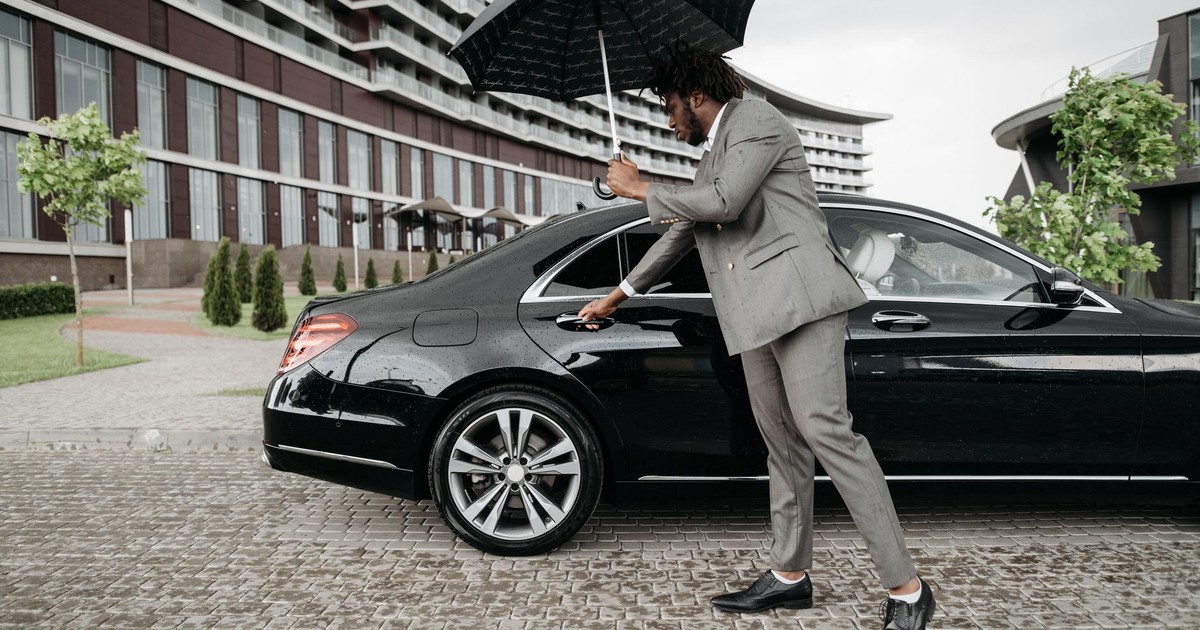

You’ve probably been around a man like this at least once. He wasn’t the loudest in the room. He didn’t need to be. He opened the door, remembered what you mentioned in passing three weeks ago, and said sorry the one time he got it wrong – without a ten-minute preamble about how stressed he’d been. He was just..decent. Old-fashioned decent, in the best possible way.
Chivalrous men traits aren’t a relic. They’re rarer than they used to be, which is part of why they register so clearly when you encounter them. The word “chivalry” traces back to the medieval knightly code – loyalty, honor, service – but what it has come to mean in practice is something much more everyday: a man who moves through the world with consideration for the people in it. The modern definition of chivalry is less about pretense and more about substance. It’s less about pulling out chairs and more about whether he’s a person you can actually count on when it matters.
The thirteen traits below aren’t a fantasy checklist. They’re observable behaviors – things a genuinely chivalrous man does consistently, not just when he’s trying to make a first impression. Some are dramatic. Most aren’t. People often assume chivalry requires dramatic gestures, but it’s the small, consistent moments that actually build trust – sending a “text when you get home,” remembering their favorite snack, adjusting your pace when you walk together.
According to a 2025 Forbes report, emotionally intelligent men are increasingly recognized as choosing better partners and sustaining more satisfying relationships – which maps almost exactly onto what chivalry, properly understood, has always been about. Research on modern chivalry traits confirms that the core behaviors haven’t changed much, even as the social context around them has. If you want to know what you’re actually looking for in a partner, men who make great husbands tend to share most of these traits in common.
1. He Respects Everyone, Not Just Who He’s Trying to Impress
The first place to look isn’t how he treats you on a first date. It’s how he treats the server who brought the wrong order, the parking attendant, the stranger who bumped into him at the door. A true gentleman does not show respect selectively. He is equally respectful towards the woman in his life as well as to any stranger or salesperson.
This matters because selective respect isn’t actually respect – it’s strategy. A man who turns on charm for the people he wants to impress and turns it off for everyone else has revealed exactly who he is. The chivalrous man doesn’t have a “performing” register and an “off” register. His baseline is consideration. Watch who he is when nothing is on the line, and you’ll know who he’ll be when everything is.
A lot of people were raised to think kindness makes you seem soft, but in reality, it signals strength and emotional security. Someone who treats others well – servers, strangers, kids, parents – demonstrates how they’ll treat you when life gets complicated.
2. He Follows Through on What He Says He’ll Do
He said he’d call. He called. He said he’d be there at 7. He was there at 7. This sounds so basic it almost doesn’t deserve a place on the list, but reliability has become genuinely rare, and a chivalrous man understands that his word is the foundation of everything else. Making a promise and keeping it isn’t impressive to him – it’s just what you do.
The thing about consistency is that it compounds. One followed-through commitment creates a small deposit of trust. Two hundred of them, accumulated across months and years, create the kind of security that most people spend their whole lives trying to find and can’t quite name. Chivalrous actions are trust-building behaviors. When someone demonstrates consideration and respect consistently, it fosters trust between two people, a critical component of any healthy relationship.
It also goes the other way. Every dropped commitment, every “I’ll do it later” that quietly becomes never, erodes that same foundation. The chivalrous man understands this intuitively. He doesn’t over-promise because he takes his word seriously. And when life genuinely gets in the way, he tells you. That’s the other half of reliability: communication when plans change, not silence.
3. He Listens Without Waiting for His Turn to Talk
There’s a particular experience of talking to someone and feeling like you’re filling in time until they can make their point. You can feel it happening – the person across from you isn’t registering what you’re saying, they’re composing their response. A chivalrous man does the opposite. He actually listens, which sounds obvious until you’ve been around men who don’t.
Being a gentleman without sounding outdated is all about developing exceptional communication skills that are marked by emotional presence, self-assessment, and mutual respect. A true man understands how essential good communication skills are to uphold their relationships and make them durable. Active listening is a large part of what makes those skills real rather than performed.
Practically, this looks like: he doesn’t interrupt. He asks questions that follow from what you said, not questions that pivot back to his own experience. He remembers details from earlier in the conversation. He doesn’t need you to wrap up quickly so he can weigh in. That last one is arguably the hardest, and also the most telling.
4. He’s Emotionally Available, Not Just Physically Present
Being in the same room as someone and being present with them are two entirely different things. A chivalrous man understands this. He can sit with you in a difficult feeling without immediately trying to fix it, solve it, or explain why it probably isn’t as bad as you think. He doesn’t need to perform comfort. He can just be there.
A 2025 study in the Journal of Social and Personal Relationships found that couples in which male partners exhibit high emotional intelligence experience greater satisfaction, deeper trust, and more resilient conflict resolution. Emotional availability isn’t a soft skill. It’s a cornerstone of how relationships hold up under pressure. The men who have it aren’t necessarily the most expressive people in the room – some of them are quite reserved – but when it matters, they’re fully there.
When a chivalrous man enters a relationship with a partner, he manifests his most chivalrous trait in all his efforts: emotional presence and the ability to connect with others at an emotional level. That connection isn’t reserved for crisis moments. It’s the default register, the way he moves through the relationship on an ordinary Tuesday.
5. He Apologizes Without Making It About Himself
The anatomy of a bad apology goes something like this: “I’m sorry you felt that way.” Or: “I’m sorry, but you have to understand I was really stressed.” Or the extended theatrical version, where by the end of the apology you somehow feel worse than before it started and vaguely responsible for his having had a hard week. A chivalrous man doesn’t do any of that.
A man with a strong sense of morality always values sincere apologies. He does not shy away from apologizing when he makes a mistake or hurts anyone – he self-reflects and tries to amend the things where he can. A true gentleman can say sorry to anyone without shame.
The short version: he apologizes because he did something wrong, not because he wants to make the discomfort stop. He doesn’t weaponize vulnerability to make the apology about how difficult it was to give. He says what he did, acknowledges why it was a problem, and asks what he can do differently. Then he actually does it differently. The apology and the changed behavior are the same thing, not two separate events.
6. He Notices What Needs Doing Without Being Asked
He refills your glass before it’s empty. He carries the heavy bag without announcing that he’s carrying the heavy bag. He notices that you’ve had a long day before you’ve said anything about it. He doesn’t need a task list to act like a considerate person, because consideration isn’t a task for him – it’s a way of paying attention.
This one can be difficult to spot early in a relationship when everyone is on their best behavior. The place to look is the un-showy moments: does he help clean up without being prompted, or does he wait to be asked? Does he notice when something around him needs doing and just do it, or does he require an assignment? Daily small acts of kindness are modern chivalry – they communicate that you see and value someone, and they deepen closeness more reliably than any grand gesture.
There’s also the version of this that applies specifically in emotional territory. He doesn’t wait for you to say “I need support right now” before he offers it. He reads the room. The men who score high on this trait aren’t psychic – they’ve just made a habit of paying attention to the people around them rather than moving through the world with their eyes on their own experience.
7. He Expresses Gratitude Genuinely and Often
Not in a performative way. Not the kind of gratitude that sounds like it was recommended by a podcast. Genuine, specific, unprompted acknowledgment of the things you do – and of you as a person. He says thank you and means it. He notices when you’ve put effort into something and says so.
Saying “please” and “thank you” and showing appreciation for acts of kindness is an essential aspect of chivalry. It sounds simple, but the absence of it is one of the quietest ways a relationship deteriorates. When effort goes unacknowledged long enough, the person making that effort stops feeling seen. A chivalrous man understands this before it becomes a problem.
The specificity of gratitude is what separates the genuine article from the rote kind. “Thank you for dinner” is polite. “Thank you for remembering I hate cilantro and picking it out of the whole dish” is something else. It tells you that he paid attention, that he noticed, and that he thought your preferences mattered enough to act on. That combination is what gratitude actually is.
8. He’s Punctual, Because Time Is a Form of Respect
Chronic lateness has a thousand explanations and exactly one meaning: I didn’t prioritize this enough to leave on time. A chivalrous man doesn’t make you wait. He plans for traffic, builds in a buffer, and if something genuinely unavoidable comes up, he communicates ahead of time rather than sending a “running late, five mins!” text from the car.
Being on time for appointments, dates, or social gatherings demonstrates respect for other people’s time and commitment to the event or meeting. Punctuality isn’t an old-fashioned virtue that no longer applies in an era of flexible schedules. It’s a direct statement about what you value and who you think is worth your preparation.
There’s also a less obvious dimension to this: a man who is consistently punctual has the kind of self-organization that extends into the rest of his life. He isn’t routinely scrambling. He’s not perpetually late because he’s overcommitted to the point of chaos and dragging you along for the ride. Punctuality is often a proxy for the broader quality of being someone who has his life together enough to be reliable.
9. He Holds His Temper – Not Out of Passivity, But Discipline
There’s an important distinction between a man who doesn’t get angry and a man who gets angry but doesn’t detonate. Chivalrous men traits almost always include the latter. He has a temper – most people do – but he doesn’t use you as the place to put it. He doesn’t escalate when a conversation gets difficult. He doesn’t say things designed to cause maximum damage in a moment of frustration.
A 2024 study in Evolutionary Psychology found that anger and the perception of partners’ intelligence affected relationship satisfaction. Angrier men were less satisfied in their romantic relationships, and their partners were also less satisfied. The men who manage their anger well aren’t suppressing it – they’re processing it and choosing what to do with it, which is a different and healthier thing entirely.
The practical expression of this in a relationship is that arguments don’t turn into something you’re still recovering from three days later. He can be upset and say so without it becoming a scene. He doesn’t punish you with silence or stomp around the house making the air unbreathable. When something bothers him, he says what it is and stays in the conversation. That is, it turns out, a significant thing to ask of someone – and the chivalrous man delivers it.
10. He’s Genuinely Curious About the World
He reads. He asks questions. He has opinions that aren’t just reflexive, but come from having actually thought about something. He’s interested in ideas that exist outside his own experience, and he’s interested in you as a person – not as a reflection of himself or a role you play in his life, but as someone with a full interior world worth understanding.
A true gentleman is curious about the world and the people around him. This allows him to pay attention to the smallest details and be in a constant process of learning. He holds the belief that learning is a lifelong process that accords him the chance to grow as an individual.
The connection between curiosity and kindness is underappreciated. A man who is genuinely curious about other people finds it natural to ask how you’re doing and actually want the answer. He finds the specifics of your life interesting rather than incidental. That curiosity is what makes a long-term relationship feel alive rather than settled. You can have a real conversation with him about something neither of you knew an hour ago, and that stays interesting for decades.
11. He Treats Strangers with the Same Warmth
He’s gracious to the flight attendant on a delayed flight. He’s patient with the cashier who is clearly having a rough shift. He acknowledges people who are paid to be invisible in most social settings – the parking valet, the coat check, the person holding the door to the restaurant. This isn’t performance. It’s how he actually moves through the world.
Such a man is generally kind – not to impress others, but out of genuine respect for fellow humans. He would intentionally hold the door open for others, pull out the chair for his date, and show respect towards the elderly. He graciously spreads kindness through his words and deeds, without even being asked.
The reason this matters in a relationship specifically is that how he treats people who can do nothing for him is the truest read you’ll get on his character. When you’re the person he’s trying to impress, you’re seeing his curated self. When you’re watching him interact with a stranger at a grocery store, you’re seeing who he actually is. Those two people should be the same person. With a chivalrous man, they are.
12. He’s Honest Even When It Costs Him Something
Easy honesty – telling you something flattering, agreeing with your read of a situation – costs nothing. The honesty that chivalrous men actually demonstrate is the harder kind: telling you when he thinks you’ve got something wrong, acknowledging his own mistake before you’ve brought it up, giving you a real answer when you ask how he’s feeling instead of “fine.”
His honesty doesn’t come with a side of cruelty. He’s not brutally honest in the way that’s really just brutal with a small amount of honesty attached. He tells the truth because he respects you enough to think you can handle it and deserve to have it. Men who make great husbands and partners share this quality across the board – they understand that honesty applies to the small moments as much as the large ones, and that a relationship built on comfortable half-truths is a much less stable structure than it appears.
He also holds himself to the same standard. He doesn’t expect honesty from you while giving himself a pass on awkward truths he’d rather not face. When he’s wrong, he says he’s wrong – and that’s a different thing from the performative apology covered in trait five. It’s the unsolicited admission, before it’s been brought to his attention. That’s the high bar, and the genuinely chivalrous man clears it more often than you’d expect.
13. He Makes You Feel Safe, Not Managed
The last trait is the one all the others are in service of. A chivalrous man creates safety – the kind where you don’t have to moderate yourself, anticipate his reactions, or brace for impact when you disagree. You can be honest because he can handle honesty. You can be vulnerable because he won’t file that away and use it against you later. You can have a bad day without it requiring careful management of his feelings about your bad day.
Respecting boundaries is one of the clearest ways to express modern chivalry. Whether it’s giving someone space after a long day, asking before touching, or listening when they say “not right now,” boundaries build trust, not distance. Safety in a relationship comes from accumulated evidence that the person across from you is consistent, honest, and on your side.
Managed is when someone makes all the right gestures but there’s an architecture of control underneath them – when the kindness is conditional, when the warmth is a tool, when you find yourself quietly editing yourself around him. Safe is entirely different. It’s when his consistency and honesty are so reliable that you’ve stopped bracing for them to change. The chivalrous man earns that. Not in a single evening, not with a grand gesture, but across hundreds of small interactions that add up to the same answer every time.
What These Traits Actually Tell You
The word “old-fashioned” gets complicated fast. Some of what passed for chivalry in previous generations was paternalism in a well-tailored coat – protection that came with conditions, kindness that expected something in return. That version deserves to stay in the past. What the thirteen traits above describe is something different: a man whose care for the people around him is genuinely unconditional, whose good manners come from the inside out, and whose respect doesn’t require an audience.
None of these traits are about grand gestures, social performance, or the theater of gentlemanliness. They’re about what a person does consistently when nobody is grading them. The current definition of chivalry is less about keeping up appearances and more about being a gentleman through and through – visible in the conduct, in the mannerisms, and especially when nobody is looking.
You won’t find all thirteen in one person at full intensity all the time. Nobody is a complete specimen of virtue on every Tuesday. What you’re looking for isn’t perfection – it’s the general direction of travel. A man who is genuinely working on most of these, who understands why they matter, and who doesn’t need you to explain the basics of consideration to him on a recurring basis: that’s the one. The old-fashioned kind, in the best possible sense of the phrase. Some of these patterns take years to recognize in a person, and some you’ll clock in the first twenty minutes. Either way, once you know what you’re actually looking for, you don’t mistake the performance for the real thing again.
AI Disclaimer: This article was created with the assistance of AI tools and reviewed by a human editor.
Disclaimer: This information is not intended to be a substitute for professional medical advice, diagnosis, or treatment and is for information only. Always seek the advice of your physician or another qualified health provider with any questions about your medical condition and/or current medication. Do not disregard professional medical advice or delay seeking advice or treatment because of something you have read here.
AI Disclaimer: This article was created with the assistance of AI tools and reviewed by a human editor.