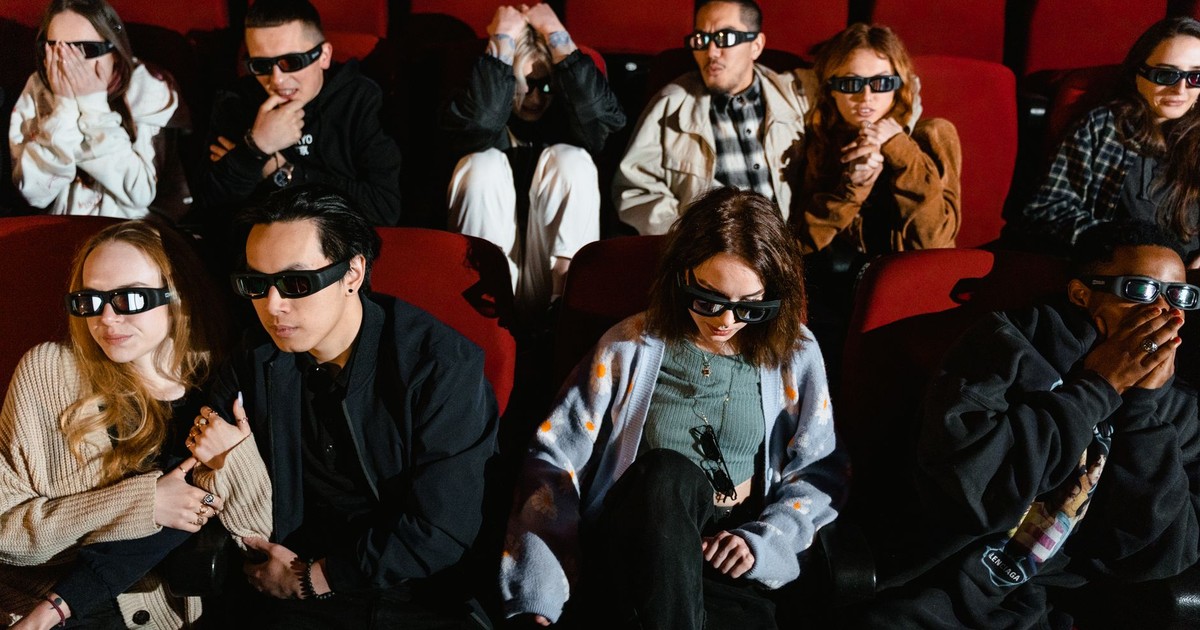

Christopher Nolan has spent the better part of three years asking audiences to trust him with Homer. And for the most part, they have. But trust and silence are two different things, and viewers of The Odyssey have had quite a lot to say since the film landed in theaters on July 17, 2026 – starting with the fact that it nearly blew out their eardrums.
The noise complaint is real, specific, and almost universal. Audience members across North America and the UK filed out of screenings reporting the same thing: that Nolan’s adaptation of one of the oldest stories in human history is, volume-wise, one of the most aggressive cinematic experiences they have ever sat through. “The loudest movie I have ever experienced,” ran one post circulating on social media. Another person admitted to loving the film while also reporting that they felt they had permanently surrendered some portion of their hearing. The sound isn’t a bug in a traditional sense. It is, by most accounts, exactly what Nolan intended. That’s the part that makes a Christopher Nolan movie complaint so strange. You’re not complaining about a mistake. You’re complaining about a choice.
The complaints don’t end with the volume. Since before the film opened – dating back to the casting announcements and through the pre-release press circus – The Odyssey accumulated more talking points than a presidential debate. Some of them are legitimate artistic critiques. Some of them are the kind of culture-war pile-on that says far more about the people posting than about anything Nolan put on screen. And some of them are just viewers grappling with what happens when a famously uncompromising filmmaker goes entirely all-in on a format that most of the country can’t actually access.
The Volume Problem (and Why It’s Not Accidental)
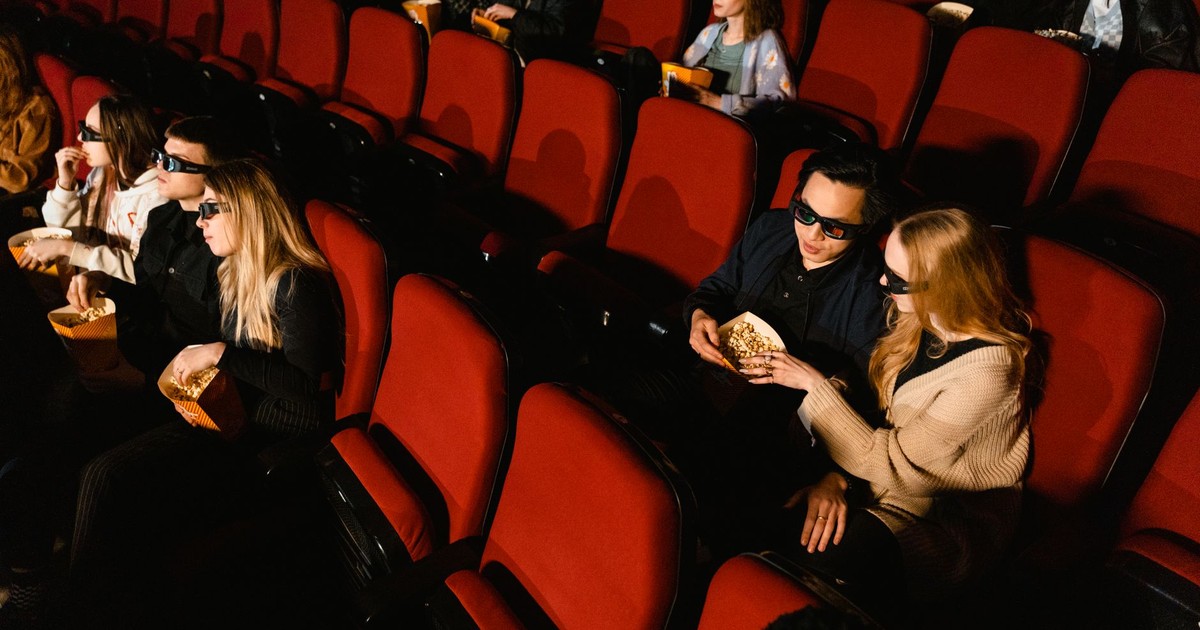
The Odyssey marks the first film to be shot entirely on IMAX cameras – every single scene, including the dialogue-heavy ones. That decision has direct consequences for what you hear in the theater. IMAX 70mm cameras weigh over 50 pounds and run incredibly loud, making intimate dialogue scenes a notorious technical nightmare to shoot. According to Forbes, Nolan acknowledged as much in interviews leading up to the release, recalling the journey from The Dark Knight, where IMAX cameras could only be used for action sequences because the cameras were “very, very loud” – too disruptive for actors delivering quiet performances. His solution with The Odyssey was to shoot the entire thing on those cameras anyway, commit fully to the format, and deal with the audio trade-offs as they came.
This is consistent with a pattern that has followed Nolan’s films for over a decade. Interstellar drew similar complaints about a deafening score and submerged dialogue. Tenet prompted years of running jokes about John David Washington’s inaudible delivery. Nolan’s position has always been that the mix is intentional and that the problem isn’t the volume – it’s that audiences have grown conservative in what they expect from cinema sound. The Ludwig Göransson score for The Odyssey is, by all accounts, extraordinary. The cyclops sequences reportedly rattle seats with their audio design. But when you’ve paid a premium for an IMAX ticket and you miss three lines of Matt Damon dialogue in a row, the extraordinary score stops feeling like a feature.
The IMAX Exclusivity Issue
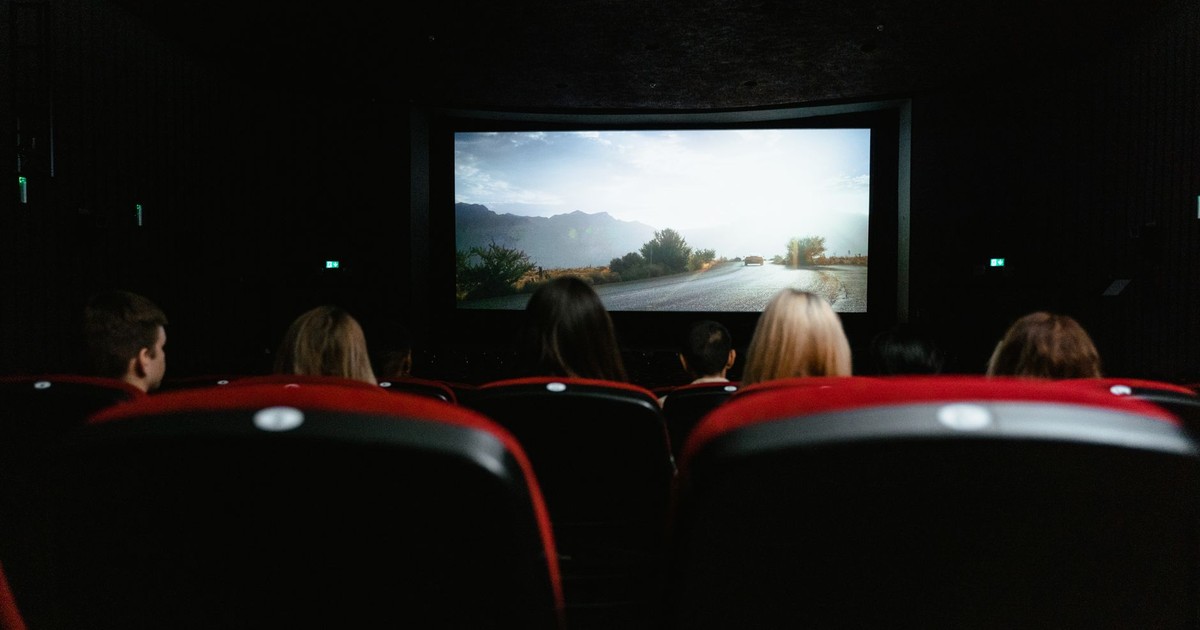
As of July 18, 2026, The Odyssey is available in theaters in multiple formats, including IMAX 70mm film presentations at 41 locations worldwide. Cinephiles have been planning trips, comparing cities, booking travel. Everyone else has been watching the discourse from outside.
The exclusivity has generated its own wave of frustration, and not without justification. IMAX tickets for The Odyssey are pricey, and for a lot of families, that’s not a casual Tuesday night out. It’s an event budget decision. And the knowledge that viewers outside a specific list of 41 venues are not seeing the full image – that the picture outside those locations is presented in a cropped aspect ratio rather than the full 1.43:1 it was designed for, and isn’t what it was intended to be – adds a layer of genuine irritation on top of the ticket price. Nolan has been admirably candid about this being a deliberate artistic choice rather than a studio imposition. He told The Independent he went to IMAX and said, “If ever we’re gonna do a whole film on IMAX, this is the movie to do it with.” That conviction is legible on screen. It is also, for the significant majority of audiences who can’t get to one of those 41 theaters, a little hard to swallow.
The Casting Controversy That Started Before Anyone Saw a Frame
Long before the first sound complaint hit social media, The Odyssey had already become a cultural flashpoint over casting. Al Jazeera reported that Nolan’s adaptation of the epic poem composed nearly 2,800 years ago drew a flood of criticism – starting even before audiences had seen a single frame – with the controversy centering largely on casting, but also reflecting broader debates about historical authenticity, identity, and who gets to retell one of humanity’s oldest stories.
When Nolan announced that Helen of Troy – described by Homer as “white-armed” and “godlike” – would be played by Oscar-winning Lupita Nyong’o, it triggered a torrent of criticism, with some feeling that casting a Black woman for the role was evidence of over-the-top “wokeness.” The backlash moved quickly into politics. On January 31, 2026, Elon Musk publicly criticized Nolan on X, writing “Chris Nolan has lost his integrity,” following a user’s claim that the casting was “an insult to the author.”
The Odyssey received hate from people who had not yet seen the film – which is its own category of film discourse, the pre-judgment pile-on that accelerates through social media before a single audience member has sat down in a theater. Some viewers questioned Nolan’s decision to cast rapper Travis Scott as a bard, though Nolan explained the decision as a “nod towards the idea that this story has been handed down as oral poetry, which is analogous to rap.” There were costume complaints, too. Some viewers pointed out that the armor worn by Agamemnon resembled Batman’s costume, and that Odysseus’s boat looked like a “Viking ship.” And then there was the dialogue – specifically, when the main character’s son, played by Tom Holland, said “My dad is coming home,” some users objected that the tone was too casual and the words too modern for an epic conversation.
Nolan addressed these criticisms ahead of release. He acknowledged the complaints about costume design and modern dialogue in an interview with Channel 4, noting: “When you look at this world, when you look at the ancient world, people tend to view it in weird ways.”
What the Critics and Audiences Actually Said
Once people got inside the theater – past the ticket price, past the discourse, past the pre-formed opinions – the response changed considerably. Critics gave The Odyssey 94% approval on the Tomatometer, the highest of Nolan’s career and the sixth film to reach 90% or higher, joining Memento, Insomnia, The Dark Knight, Dunkirk, and Oppenheimer. Audience scores ran even higher. While the critics’ score eroded slightly from a near-perfect start, it still stood as a career best, and audiences gave it a 97% verified score on the Popcornmeter – a new record for the director.
The Hollywood Reporter‘s chief film critic described it as “a meditative action movie both immense and intimate,” though he noted the flow was “impeded by the inherently episodic nature of the nonlinear source material and some questionable casting choices.” The Rotten Tomatoes consensus called it “reinvigorating an ancient adventure with majestic sweep and sterling work by its colossal ensemble.” Bill Irwin’s portrayal of the 60-foot cyclops drew particular praise.
The Box Office Tells a Different Story Than the Complaints
Whatever people were saying online, they were also buying tickets. The Odyssey landed 2026’s biggest live-action opening weekend, bringing home $123.5 million domestically with a global launch of $263.7 million – Nolan’s highest-grossing worldwide opening ever. The film then set records through the week. It set a new record for the year’s highest Monday gross, pulling in $18.6 million the day after opening weekend. By the second weekend, Nolan had set a new personal record with an $87 million second weekend – his best sophomore frame ever, blowing past The Dark Knight‘s previous high of $75.1 million.
The global haul made this both the biggest R-rated debut of 2026 and Universal’s largest R-rated launch in history. The CinemaScore was an “A.” The audience demographic data from Variety showed that half of audience members were between the ages of 18 and 34, confirming that the film reached well beyond the existing Nolan fanbase and into a generation that came to him through Oppenheimer and stayed for whatever he did next.
Nolan Knew What Was Coming
In an interview with the Guardian ahead of the release, Nolan said he was “petrified” by the idea of a negative audience response – a quote Salon also covered: “It never gets any easier, because I make films for audiences and the audience tells me what it likes.” For someone with a reputation as one of Hollywood’s most exacting and uncompromising directors – a man who, incidentally, does not own a smartphone and gets his social media intel secondhand – that admission is more revealing than it sounds.
He told the Guardian that filming with cumbersome IMAX cameras on location had left him entirely exhausted, but he wasn’t trying to be “difficult” – he knew that adapting a story of this scale required “things that you haven’t seen before.” The production shot across Morocco, Greece, Italy, Scotland, Iceland, Western Sahara, and Malta, with principal photography running from February to August 2025. The Odyssey is Nolan’s first film since Oppenheimer, which won seven Academy Awards including best actor, best director, and best picture.
The Complaint That Wasn’t Really About the Movie

The loudness complaint is a legitimate critique about an artistic choice with real-world sensory consequences. The IMAX-exclusivity frustration is a reasonable objection to a distribution decision that prices out or geographically excludes a large portion of the audience. These are fair. These are things you’re allowed to say.
The casting backlash is something different. It began before anyone saw a frame, it was amplified by people who had no intention of buying a ticket regardless of who was cast, and it collapsed the space between genuine artistic criticism and something much uglier. That Lupita Nyong’o’s presence in the film was treated as a political act rather than a casting decision – and that Elliot Page’s role prompted people to claim incorrectly that he was playing Achilles – tells you a lot about what happens when a 2,800-year-old story collides with 2026’s internet. The film hasn’t changed. The poem hasn’t changed. The audience, and the noise it generates before it even takes its seat, is what’s new.
Read More: Ray Anthony at 103: Still One of Hollywood’s Most Beloved Musicians
Nolan Has Been Here Before
The Dark Knight was too loud. Interstellar was too loud. Tenet was incomprehensible. These are now considered among the best films of their respective decades. The Christopher Nolan movie complaint has its own genre at this point, complete with reliable beats: the initial outcry, the defensive viewing, the eventual reassessment somewhere around year three when people are watching it for the fourth time and swearing it was always their favorite.
Whether The Odyssey follows that arc is still being decided. The box office is not in doubt, and the 97% verified Popcornmeter score suggests that the people complaining loudest are mostly doing it from outside the theater. But the more interesting question isn’t whether the complaints will age poorly – it’s why we keep needing to have them. Nolan makes films that are genuinely difficult to sit with: loud, demanding, uninterested in making the experience comfortable. He keeps doing it. Audiences keep coming. And at some point the complaint stops being about the movie and starts being about what we actually want from cinema, which is apparently something that rattles the seats and still lets us hear the dialogue. He has never figured out how to give us both, and he probably doesn’t plan to start now.
Disclaimer: This information is not intended to be a substitute for professional medical advice, diagnosis, or treatment and is for information only. Always seek the advice of your physician or another qualified health provider with any questions about your medical condition and/or current medication. Do not disregard professional medical advice or delay seeking advice or treatment because of something you have read here.
AI Disclaimer: This article was created with the assistance of AI tools and reviewed by a human editor.