

Church is one of the oldest institutions in many people’s lives, and that is precisely why the things it gets wrong can cut so deep. For millions of Americans, faith communities have been the backdrop for everything from childhood memories to wedding days to grief. A congregation offers a kind of belonging that nothing else quite replicates. Which is also why, when a church repeatedly does something harmful or alienating, the loss of leaving feels enormous, and the frustration of staying can feel just as bad.
About 40 million Americans have left churches and other religious institutions in the last 25 years. The reasons are more complicated than any single headline can capture, but a good number of them trace back to practices that never served people well and that churches have simply failed to examine. Most of the people raising these concerns are believers themselves, people who love the church enough to want it to be better.
These are 11 church practices to stop – not suggestions, not gentle nudges, but real patterns that push people away, cause real harm, and, more often than not, have no solid theological footing to stand on anyway.
1. Publicly Shaming Members Over Money

Nothing poisons a congregation faster than turning the offering plate into an instrument of control. Reports of pastors publicly naming members who fail to pay tithes — whether from the pulpit or on social media — circulate regularly, and Christians across the theological spectrum consistently condemn the behavior as public shaming rather than biblical shepherding.
A church housekeeper was reportedly fired by a pastor for not paying enough in tithes from her $18,000-a-year salary, and for not chipping in for gifts for church leaders. When someone working for $18,000 a year is fired over tithing compliance, the church has stopped being a community and started being an employer demanding a kickback.
Giving should come from conviction, not coercion. Nowhere do the Gospels suggest that generosity should be extracted through humiliation, intimidation, or public embarrassment. Churches that weaponize donation records, call out non-givers from the pulpit, or tie full membership status to verified financial contributions are not practicing stewardship. They are practicing pressure.
2. Treating Wealthy Members as First-Class Congregants
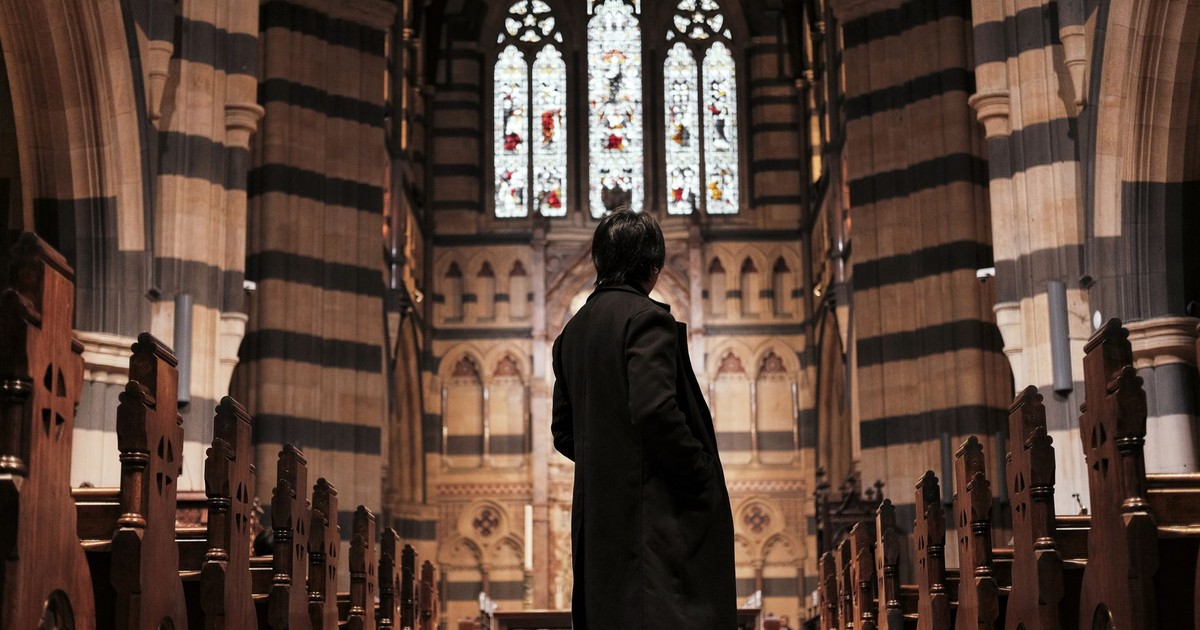
Every church has a power structure, and in too many congregations, that structure follows the money. The family who donated the new wing gets the pastor’s personal cell number. The single mother struggling to pay rent sits in a pew nobody notices. The dynamics are rarely written down anywhere – they don’t need to be. Everyone feels them.
This two-tiered approach to pastoral care is one of the quiet drivers behind people walking out the door without a word. Research consistently identifies abuse and trauma, belief misalignment, cultural misalignment, and disillusionment with institutional leadership as primary reasons people leave their congregations. Feeling invisible in your own church — while watching others receive preferential treatment based on the size of their check — feeds directly into that disillusionment.
The irony is that Scripture is relentlessly specific about this. The early church attracted people precisely because it upended the social hierarchies of its day. Churches that recreate those hierarchies in miniature are not just alienating their congregations; they are contradicting the text they preach from on Sunday morning.
3. Charging Admission for Worship Events

A Christmas concert should not require a ticket. A women’s conference where people are coming to encounter God should not come with a price tag that quietly filters out anyone who cannot afford it. Yet charging for worship-adjacent events has become a normalized revenue stream for many congregations, and few people feel comfortable naming it as the problem it is.
When a church monetizes access to its own programming, the people most likely to be priced out are the ones most likely to need community: young families, single adults, recent immigrants, people in financial hardship. The message sent, whether intended or not, is that belonging here has a cost. Churches should be actively dismantling that message, not encoding it into their event calendars.
In the outgoing model of the church, giving and serving were the goals of discipleship – that’s how leaders knew people were engaged. With millennials and Gen Z, giving and serving are not the goal; they are the by-product of an intense faith that has taken over their lives. Charging admission for spiritual formation opportunities gets this relationship exactly backwards.
4. Policing Worship Styles

Hands raised or hands folded. Traditional hymns or contemporary praise music. Silence or spontaneous prayer. Churches have been fighting these battles for decades, and the damage they do is real and specific. A person who claps during a hymn should not feel the cold stare of disapproval from three rows back. A person who prefers silence over singing choruses should not be made to feel less spiritual for it.
The next era of the church will likely be less produced, more personal, less performance-based, more authentic, and less head-driven and more heart-driven. That shift matters because it reflects what people who are still searching for a church home are actually looking for. Congregations that enforce a single acceptable expression of worship are not protecting the tradition; they are contracting it.
Worship style policing also concentrates power in whoever gets to define “correct” expression, which is almost always whoever has been in the building longest. A congregation that looks and sounds exactly the same as it did thirty years ago happens because anyone different never felt welcome enough to stay.
5. Overloading the Church Calendar

Sunday morning service. Sunday evening service. Wednesday Bible study. Friday youth group. Saturday men’s breakfast. Committee meetings on alternating Tuesdays. A church calendar packed to the point of exhaustion is not a sign of a healthy, thriving community. It is often a sign of a leadership culture that equates busyness with faithfulness and measures commitment by attendance frequency.
The people most likely to burn out on an overloaded church calendar are the ones the church most needs to keep: parents of young children, people in demanding jobs, caregivers, and anyone who actually takes the programming seriously enough to attend all of it. Treating every scheduling gap as an opportunity to add another event eventually produces a congregation of the exhausted, the guilty, and the ones who quietly stopped coming.
Christianity’s share of the American population declined significantly over the two decades prior to the mid-2020s, though Pew Research Center’s 2023-24 Religious Landscape Study found the decline has since slowed and may have leveled off. Churches asking why they lost so many people over that period should examine honestly whether their programming schedules drew people in or wore them down. Fewer, better gatherings beat a packed calendar that nobody has the energy to honor.
6. Dismissing or Minimizing Mental Health

For years, mental health struggles in many churches were either ignored or spiritualized into problems with faith, prayer, or obedience. Depression meant you weren’t trusting God enough. Anxiety was a lack of surrender. Seeking therapy was framed as going outside the faith community for something the community itself should provide.
This approach has caused genuine, documented harm. People in serious psychological distress were told to pray harder instead of being encouraged toward professional help. Pastoral care and mental health treatment are not competing offers, but when churches present them as mutually exclusive, the people who need clinical support most often delay it longest – and sometimes never get it at all.
A church that genuinely wants to care for its congregation will build relationships with mental health professionals, normalize conversations about depression and anxiety from the pulpit, and stop framing every emotional struggle as a spiritual deficiency. Faith and therapy can and do coexist. Pretending otherwise does not protect the congregation; it leaves it more vulnerable.
7. Covering Up or Minimizing Abuse

This is the practice with the heaviest consequences and the longest, most documented trail of harm. Abuse – whether financial, emotional, or physical – has been covered up, minimized, or internally “handled” in congregations of every denomination and every size. The instinct to protect the institution, the pastor, or the reputation of the church has, in too many cases, overridden the most basic duty of care to the person who was harmed.
Abuse of a sacred trust that people put in their spiritual leadership should be stopped. People who are hurting, or even just seeking, are especially vulnerable to hearing rules put forth by their spiritual leader and accepting them as gospel. That vulnerability is exactly why the responsibility on church leadership is so high, and why failing it is so catastrophic.
No amount of institutional reputation is worth protecting at the cost of a congregant’s safety. Churches that have not developed clear, transparent reporting structures, that have not trained their staff in mandatory reporting obligations, and that handle abuse allegations primarily through internal pastoral councils are not protecting anyone. They are protecting themselves.
8. Treating Doubt as Disloyalty
A person who asks hard questions about their faith is not an enemy of the church. They are often the most engaged person in the room. But too many congregations have cultivated a culture where doubt is treated as weakness, faithlessness, or even spiritual danger – a thing to be corrected rather than accompanied.
Church membership has been in decline for decades, and along with it a similar downward trend in church attendance. America is increasingly becoming a post-Christian culture. According to Pew Research Center, the share of Americans who identify as religiously unaffiliated — atheists, agnostics, or “nothing in particular” — stood at 16% in 2007 and has grown to 29% in the 2023-24 Religious Landscape Study, though that growth has slowed in recent years. Some of that shift reflects genuine changes in belief. But some of it reflects people who had questions, found no safe place to ask them, and eventually concluded the door was closed.
Congregations that create space for honest doubt – that treat “I’m not sure I believe this anymore” as a beginning rather than an ending – tend to be the ones people stay in. The faith that can hold a hard question is a more robust faith than one that demands certainty as the price of admission.
9. Ignoring Racial Justice and Equality
In most cities now, there are multiple churches doing variations of the same thing. What separates them, increasingly, is whether they are willing to have difficult conversations about race, equity, and the history of the church’s own role in systems that caused harm. For many congregations, the answer is still a studied silence.
Racial homogeneity in a congregation is not automatically a problem. But when that homogeneity is the result of implicit exclusion, when the music, the imagery, the pastoral team, the sermon illustrations, and the social culture all signal who the default congregant is – that is something worth examining. Churches that have never grappled with their own history on matters of race are carrying a weight they have not yet acknowledged.
The conversations are uncomfortable. They require leaders who are willing to learn in public, to sit with criticism, and to change things that have been the same way for a long time. Churches that do this work, imperfectly, tend to become more honest communities. Churches that avoid it tend to become smaller ones.
10. Gatekeeping Roles Based on Gender

Women leading Bible studies but not congregations. Women organizing events but not delivering sermons. The specific lines vary by tradition and theology, but the pattern in many churches is consistent: women bear a disproportionate share of the labor and receive a narrower slice of the authority.
This is one of the church practices to stop that generates the most internal disagreement, because it intersects directly with deeply held theological convictions about scriptural interpretation. But even within traditions that hold complementarian views, the application is often inconsistent and driven more by institutional habit than careful exegesis. A woman’s perspective on leadership, pastoral care, and community formation is not a supplement to what the church offers. In many congregations, it is already doing most of the work.
The oldest millennial turns 43 in 2024, and it is critical to treat millennials, Gen X, and older Gen Z as the new core of the church. That generation of women has grown up with different expectations about participation, voice, and leadership. Churches that want to retain them will need to take that seriously.
11. Refusing Financial Transparency

A congregation is asked to give generously and regularly, often with the explicit promise that the money will be used for ministry, mission, and community. When churches refuse to publish their financial accounts, when salaries and expenditures are known only to a small leadership council, and when congregants who ask direct questions about budget allocation are met with vague reassurances or outright deflection, trust erodes.
Bible sales are up 41.6 percent since 2022 and spiritual app downloads have risen 79.5 percent since 2019. According to Barna, the number of Americans who say they have a personal commitment to Jesus that is still meaningful in their lives rose 12 percentage points between 2022 and 2025. People are still seeking. They are not, however, still extending automatic institutional trust. A generation that grew up watching major institutions fail to self-regulate is not going to simply assume that their church’s finances are being handled well. They want to see the books.
Financial transparency is not a concession to cynicism. It is a form of accountability that healthy institutions practice as a matter of course. A church that handles its finances well should have no reluctance to show that work.
What the Church Loses When It Won’t Change
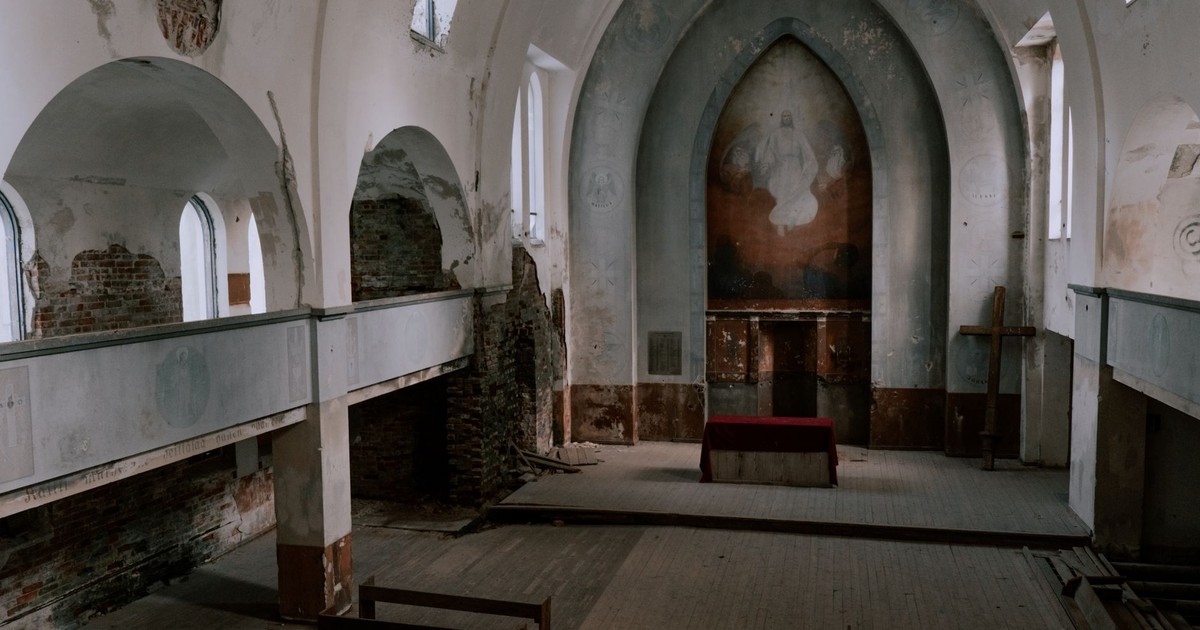
The churches getting this right are not perfect. They make mistakes, they carry their own histories, they have weeks where the sermon misses and the music is flat and the coffee is cold. But they are places where people feel genuinely seen, genuinely accompanied, and genuinely free to bring the complicated version of themselves, not just the version that makes everyone comfortable.
As Michael Graham, co-author of “The Great Dechurching,” put it: “Most people have left for really pedestrian reasons – I moved; attendance was inconvenient; or, say, family change.” That finding deserves more attention than it usually gets. It means the exit door in most cases was not a dramatic break from faith. It was a gradual conclusion that the belonging on offer wasn’t worth the cost of whatever the church was asking in return.
None of the practices on this list are hardwired into Christian faith. They are institutional habits – some of them old, some of them increasingly common, and most of them solvable if the people inside a congregation are willing to name them honestly. The question is not whether the church can change. Churches have changed, repeatedly, over two thousand years of existence. The harder question is whether the people who love the institution most are willing to say, out loud and clearly, what needs to stop – before the people who might have loved it never get the chance.
Disclaimer: This information is not intended to be a substitute for professional medical advice, diagnosis, or treatment and is for information only. Always seek the advice of your physician or another qualified health provider with any questions about your medical condition and/or current medication. Do not disregard professional medical advice or delay seeking advice or treatment because of something you have read here.
AI Disclaimer: This article was created with the assistance of AI tools and reviewed by a human editor.