

You already know the feeling. You sit down to answer a simple email, and twenty minutes later you’ve reread the same sentence four times, opened three browser tabs, and forgotten what you originally needed to type. The words won’t come. The thought dissolves before you can catch it. You blame the bad night of sleep, the second cup of coffee you skipped, the general weight of being a person with a full life and too many things to remember.
The air sitting in the room where you work and live and try to think may be working against you. Not in a dramatic, industrial-pollution way, but in the specific, unglamorous way of a bedroom with the window closed, a home office that shares airflow with the kitchen, or a living room that was last opened to the outside world sometime last Tuesday. The air you breathe in enclosed spaces accumulates invisible passengers: fine particles, carbon dioxide from your own exhalation, volatile organic compounds released by everything from furniture to cleaning products. None of them smell like much. None of them announce themselves. They just make your brain feel like it’s trying to run in wet sand.
The household gadget researchers have been studying in relation to brain fog is not a special light, a grounding mat, or a supplement-adjacent device you found on a wellness influencer’s shopping page. It is a HEPA air purifier. Yes, the boxy, moderately expensive thing you may already own for allergies and have never once thought of as a cognitive tool.
What Brain Fog Actually Is

Brain fog is not a medical diagnosis. It is an umbrella description for a cluster of symptoms: the inability to focus, slow recall, difficulty stringing thoughts together, a persistent sense of mental cloudiness that doesn’t lift after coffee or a short walk. The experience is real and widely reported. It turns up in perimenopause, after illness, in people under chronic stress, and in plenty of people who are technically healthy and just can’t figure out why their thinking feels like it’s been wrapped in cotton.
The causes are genuinely varied: sleep debt, hormones, inflammation, stress, blood sugar swings. But one contributor that rarely gets mentioned is the air quality of the room you spend most of your waking hours inside. Indoor air quality has a significant impact on how people think and feel, and the EPA identifies indoor pollution sources that release gases or particles into the air as the primary cause of indoor air quality problems, made worse by inadequate ventilation. When the air where we live and work isn’t fresh, it can lead to brain fog, sluggishness, and even mood swings.
That connection starts to make sense when you consider what accumulates in indoor air and what the brain actually needs to do its job.
The Air in Your Home Is Not as Clean as You Think

The brain uses over 20 percent of the body’s oxygen, which means it is acutely sensitive to the quality of what you’re breathing, not just the quantity. The three main indoor air culprits behind cognitive sluggishness are fine particulate matter (PM2.5, particles so small they can enter the bloodstream through the lungs), carbon dioxide (which builds up whenever people breathe in a closed space), and volatile organic compounds, or VOCs (chemicals released by paint, synthetic fabrics, cleaning products, and certain types of furniture).
You don’t need to be living next to a factory for these to be a problem. A bedroom with poor ventilation accumulates CO₂ quickly just from the breath of the people sleeping in it. A home office in a converted room with no window that opens is a particularly efficient CO₂ trap.
The research on CO₂ specifically is striking. Studies found statistically significant declines in cognitive function scores when CO₂ concentrations were increased to levels that are common in indoor spaces, approximately 950 parts per million. In crowded or confined indoor spaces, CO₂ concentrations may exceed 2,000 parts per million due to insufficient ventilation. A closed bedroom first thing in the morning can easily clear 1,000 ppm. A home office where you’ve been on video calls for three hours without opening a window almost certainly has. These are not extreme conditions. They are ordinary Tuesdays.
Office workers performed significantly better on cognitive tests when tested in rooms with lower VOC and CO₂ levels, and scores improved even further when ventilation rates were increased. The implication is that the air in your home could be the reason you cannot think straight by mid-afternoon.
The HEPA Purifier Study That Changed the Conversation

For a long time, air purifiers were a conversation about allergies and asthma. The cognitive angle drew little research attention until a 2026 study published in Scientific Reports moved the needle considerably.
Using a HEPA air purifier for one month may modestly improve cognitive performance in adults over 40, particularly in areas like mental flexibility and executive function. The study was conducted in a high-traffic urban area, which is worth noting, but the purifiers were used in participants’ homes, not in controlled lab settings, which makes the findings considerably more applicable to actual daily life.
Participants 40 years and older completed the section testing mental flexibility and executive function 12 percent faster after using the HEPA purifier than after using a sham purifier. This held true even after accounting for how much time participants spent indoors. The researchers noted that this improvement is similar to the cognitive benefits people experience from increasing daily exercise, and while it may not feel like a dramatic gain, preventing cognitive decline is meaningful for long-term wellbeing.
HEPA stands for high-efficiency particulate air. HEPA purifiers remove particulate matter from the air, and exposure to particulate matter has been connected not only to respiratory and cardiovascular illness but to neurological diseases including Alzheimer’s and Parkinson’s. Researchers acknowledge it is still unclear exactly how air purifiers improve cognition, though some studies suggest that exposure to particulate matter reduces the amount of the brain’s white matter, which helps brain cells conduct electrical signals. What they do know is that the effect is measurable, it appears in healthy people, and it emerges within a month of using the device.
The study found that cognitive effects were significant only in participants 40 and older, and the researchers note these effects may become increasingly prominent as people age. For women navigating perimenopause, where brain fog during hormonal changes is already a documented and frustrating reality, the overlap is something worth paying attention to.
What a HEPA Purifier Actually Does (and Doesn’t Do)

A HEPA filter captures particles, PM2.5, dust, pollen, pet dander, certain mold spores, by forcing air through a fine mesh that traps them. The best models also include activated carbon filters, which handle VOCs and odors that a HEPA filter alone would miss. What a standard HEPA purifier does not directly address is CO₂ levels, because CO₂ is a gas, not a particle. Reducing CO₂ requires ventilation, which means opening a window or running a powered ventilation system, not just recirculating existing air.
This distinction matters because CO₂ buildup is one of the more consistently documented indoor cognitive impairments. The fix for that specific problem is airflow, not filtration. A useful approach is both: run a HEPA purifier continuously for particle and VOC reduction, and make a genuine habit of opening windows for 10 to 15 minutes a few times a day, particularly in rooms where multiple people spend extended time. The combination addresses the full range of indoor air problems rather than just one category of them.
Benefits on cognitive function from reducing exposures to PM2.5 and CO₂ indoors, either by filtration or higher ventilation rates, may positively affect productivity and many other activities where cognitive performance is important. Filtration and ventilation are not competing strategies. They handle different things, and together they cover considerably more ground than either one does alone.
Placement, Sizing, and What to Look For
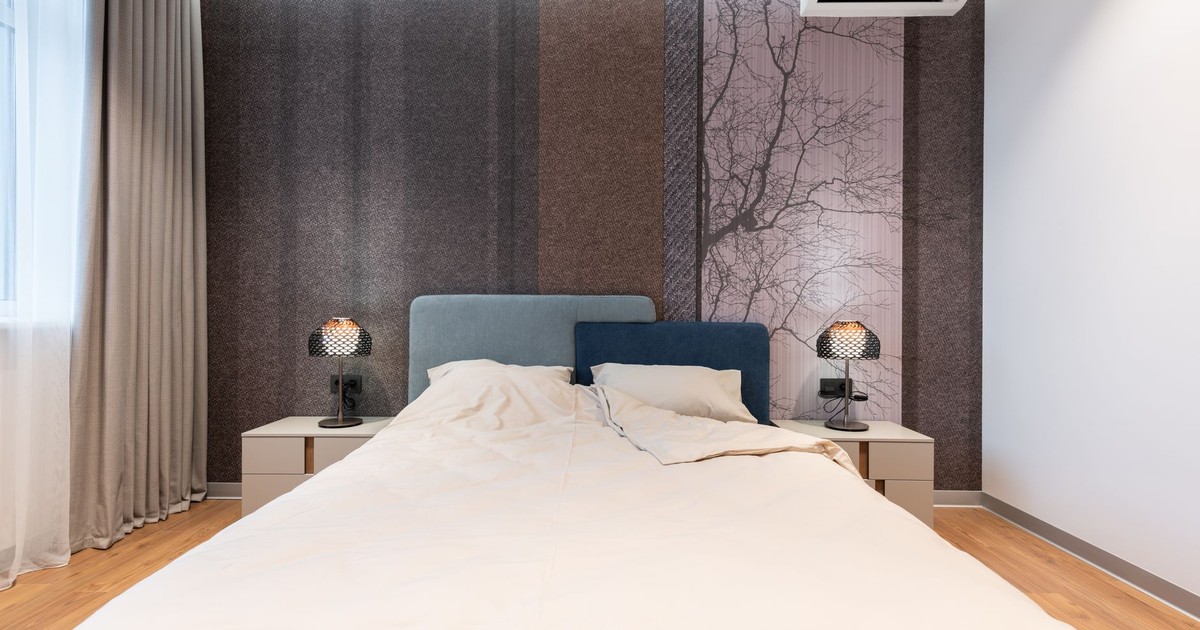
A HEPA purifier sitting in a guest room you never use is, respectfully, not doing much for the way you feel at 2pm on a workday. Placement matters more than most people realize. The living space where you spend the most concentrated time (bedroom, home office, main living area) is where the device earns its keep. Most manufacturers provide a CADR rating (clean air delivery rate), which tells you how much air the unit can clean per hour, and a recommended room size. Running an underpowered unit in a large room is only marginally better than running nothing.
For cognitive benefits specifically, the bedroom is arguably the highest-value placement. You spend roughly a third of your life in that room, often with the door closed, and CO₂ and particulate levels both rise as you sleep. A HEPA purifier running overnight in the bedroom, combined with cracking the window when weather allows, addresses the environment where your brain is doing its consolidation work, processing the day, filing memories, preparing for tomorrow’s thinking.
Home offices are the second strong candidate, especially the kind that are poorly ventilated. Especially common since the pandemic, many people now work in converted garages, basements, or small bedrooms with limited ventilation, and these rooms trap CO₂ and moisture, making them a hub for brain fog. If your afternoon productivity drop feels like it has a location, like it consistently happens in your home office but not when you work from a coffee shop with the door swinging open, you may have just found your answer.
The Other Pieces of the Puzzle

A HEPA purifier is not a cure for every kind of mental fatigue. Sleep debt makes you foggy in ways that no filtration system addresses. Chronic stress keeps cortisol elevated in ways that impair memory and focus regardless of what you’re breathing. Hormonal changes, nutrient deficiencies, thyroid function – all of these can generate cognitive symptoms that clean air alone won’t resolve.
What the air quality research adds is a piece that most people are not thinking about. When you have eliminated the obvious culprits and the brain fog persists, the room itself becomes worth examining. Indoor pollution sources that release gases or particles into the air are the primary cause of indoor air quality problems, and inadequate ventilation makes them worse, precisely because modern homes are sealed well against the outside and have limited natural ventilation.
The HEPA purifier is not a wellness ritual. It is not about feeling optimized or bio-hacking your way to peak performance. It is a practical intervention in a real physical environment, based on a straightforward principle: your brain requires good air to do its job, and the air in most enclosed spaces has more obstacles in it than you’d assume.
What to Do With This

The research does not suggest you need an expensive, elaborate setup. A properly sized HEPA purifier in the room where you work or sleep, run consistently, not just when allergies are bad, is the actual recommendation. Add activated carbon if you have synthetic materials, candles, or cleaning products in the space. Open a window for genuine fresh air exchange, even briefly, rather than relying entirely on recirculation.
None of this will feel dramatic. When environmental factors work against you, you don’t feel poisoned, you just feel dull. And when you address them, you don’t feel like a superhuman, you just feel like yourself, which, after months of unexplained fog, can feel like quite a lot. The answer to why you can’t think straight might not be something you need to work through emotionally, adjust hormonally, or overhaul nutritionally. It might just be the air in the room.
Disclaimer: This information is not intended to be a substitute for professional medical advice, diagnosis, or treatment and is for information only. Always seek the advice of your physician or another qualified health provider with any questions about your medical condition and/or current medication. Do not disregard professional medical advice or delay seeking advice or treatment because of something you have read here.
AI Disclaimer: This article was created with the assistance of AI tools and reviewed by a human editor.