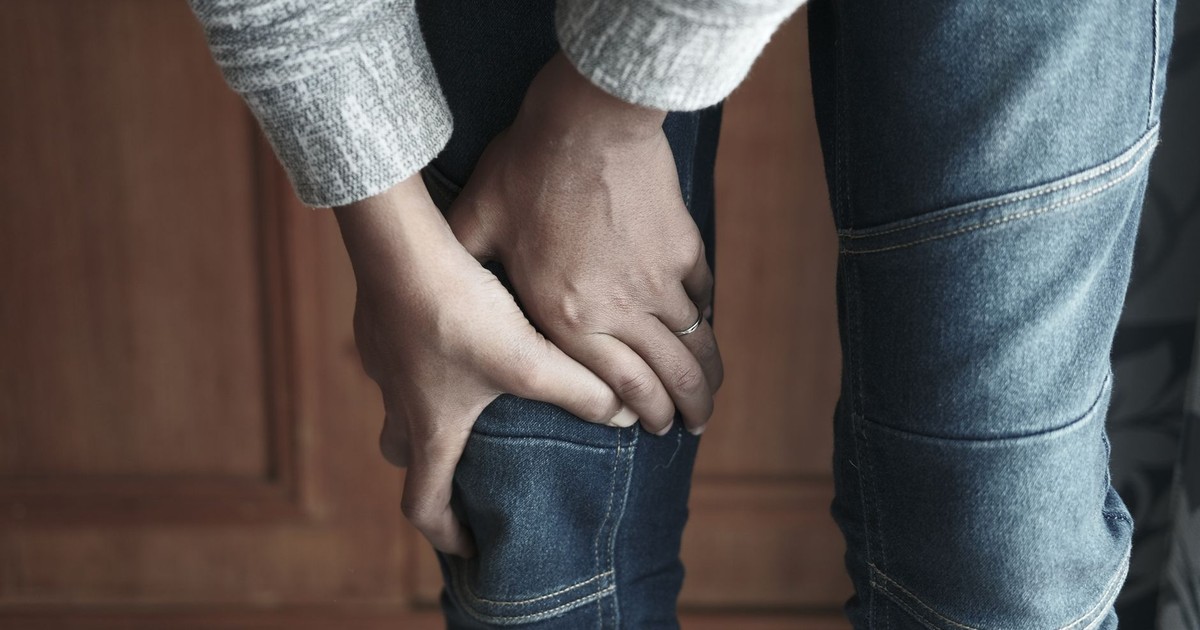

Your knees have been narrating every step you take for a while now, and somewhere between the stairs and the morning squat, the sound got loud enough that you started Googling it at 11pm. That pop on the way up, that crunch on the way down. You’re not imagining it, and you’re almost certainly not falling apart.
Knee crepitus refers to the audible crackling, popping, or grinding noise that occurs during knee movement, and it is remarkably common. A 2025 systematic review and meta-analysis published in the British Journal of Sports Medicine found that knee crepitus is present in approximately 41% of the general population. So nearly half the people on your street are walking around with the same soundtrack you are. The difference is that most of them haven’t started worrying about it yet.
What actually matters is whether the sound comes with pain, swelling, or instability. If it does, that’s a conversation for your doctor. But if your knees crack freely and comfortably, the most useful thing you can do isn’t to stop moving. It’s to move better, and more strategically. These three cracking knees exercises are where that starts.
Why Your Knees Crack in the First Place
Knee crepitus is the sound of popping, crackling, crunching, or grinding that occurs when moving the joint. It can affect people at any age, but it becomes more common as you get older.
Changes in joint pressure can cause tiny bubbles of gas to slowly form in the synovial fluid, the thick liquid that lubricates your joints. Hinge Health physical therapists note that “it’s the same thing that happens when you crack your knuckles.” Most people don’t crack their knees as a deliberate repetitive motion, so they assume something is wrong even when the sound is fairly benign.
Gas bubbles are only one explanation. Sometimes crepitus may signal something more serious – what’s called “pathological noise” – particularly if the sound is accompanied by sharp pain, swelling, or structural changes like the knee locking or giving out. When the cracking is painless, though, it’s almost always a reflection of how the joint surfaces are interacting, rather than evidence that anything is tearing or degenerating.
A 2024 cross-sectional study found that more severe knee crepitus is associated with thinner quadriceps muscles, particularly the rectus femoris, suggesting that muscle atrophy may worsen crepitus by disrupting normal patellar movement and increasing joint stress. The muscles around your knee aren’t just passengers. They’re load-bearing contributors to how your knee tracks, how loudly it announces itself, and how much wear your cartilage accumulates over the years.
1. Straight Leg Raises
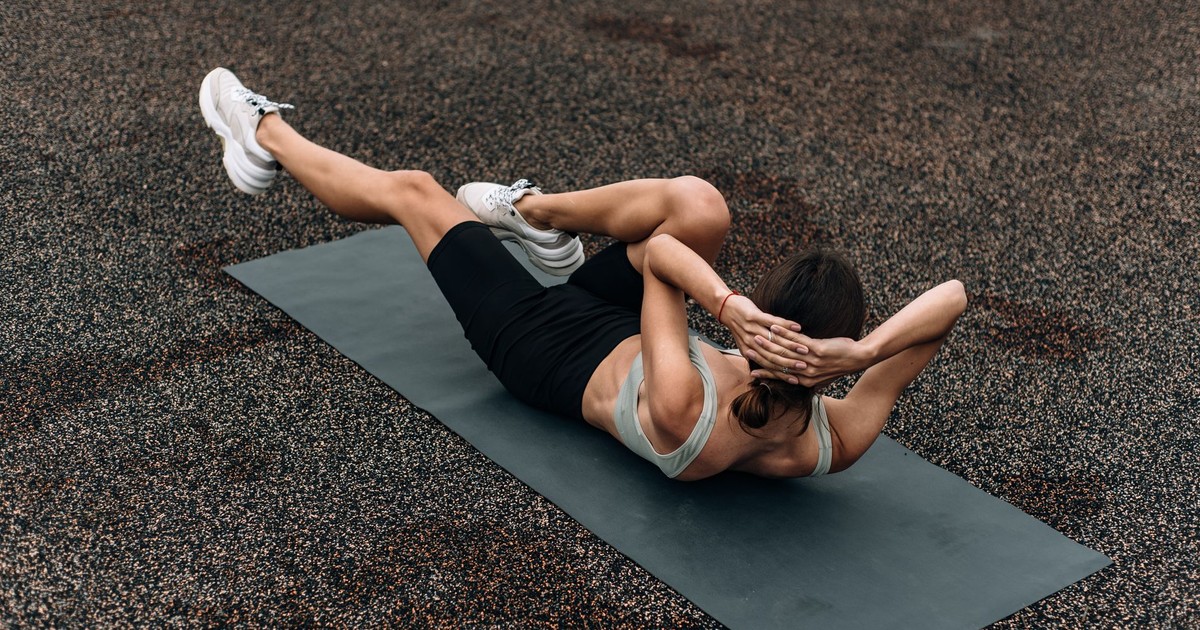
The straight leg raise is the exercise that sounds almost too simple to do anything, and yet it’s one of the first things a physical therapist will prescribe for knee problems at any stage. The reason is elegant: it strengthens the quadriceps without requiring the knee joint to bend under load. There’s no compression, no grinding of surfaces, no asking the joint to do the thing it’s struggling with. You’re building the support structure from the outside in.
To perform it, lie flat on your back on a firm surface. Bend one knee so the foot is flat on the floor, and keep the other leg straight. Tighten the thigh muscles of the straight leg – you should feel the quadriceps engage before the leg moves anywhere. Then lift the straight leg to the height of the bent knee, pause for a two count, and lower it slowly. The slowness on the way down is not optional. That controlled descent is where a significant portion of the strengthening happens. Aim for two to three sets of ten to fifteen repetitions per leg.
Quadriceps strengthening as part of lower extremity strengthening is effective in reducing pain in knee osteoarthritis and should be prioritized in patient-specific programs, according to a 2025 systematized review in Musculoskeletal Care. For people whose knees crack without a diagnosable condition, the logic still holds: a stronger quad means the kneecap tracks more cleanly in its groove, which reduces the friction and irregular contact that create noise. Over weeks of consistent practice, many people notice that the cracking frequency drops alongside the muscle gains.
If the standard version feels too easy, add an ankle weight of one to two pounds. If it causes any discomfort in the lower back, check that your core is engaged throughout the movement. The leg should travel in a straight line, not drift to the side, which pulls the knee slightly out of alignment and defeats the purpose of the exercise.
2. Static Lunges
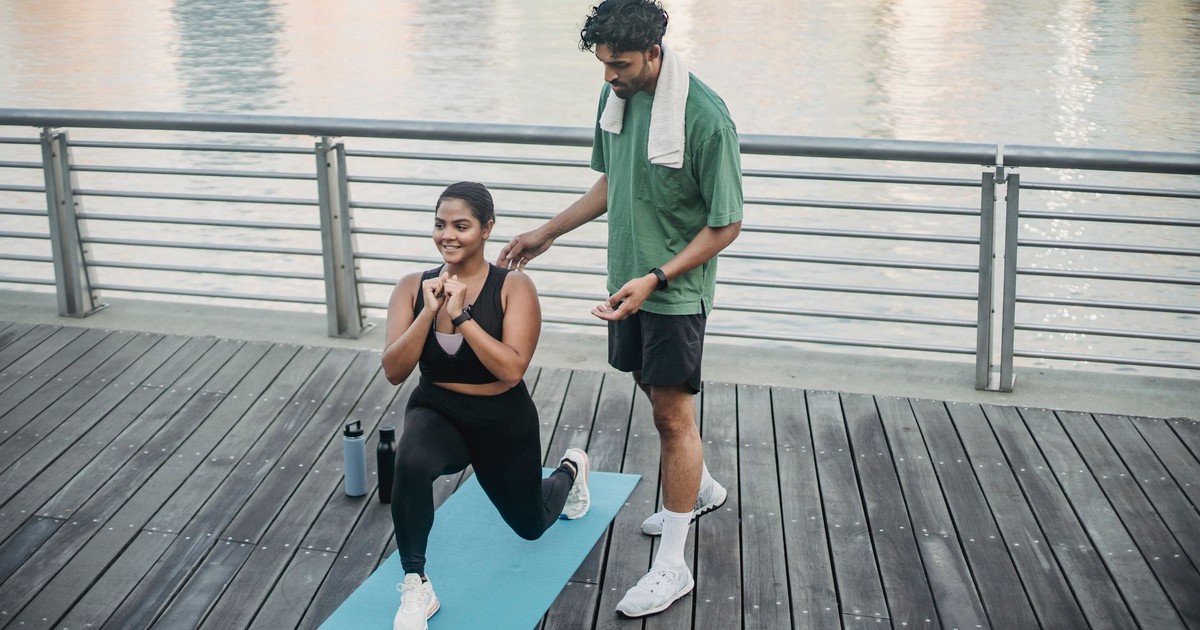
The static lunge addresses something the straight leg raise doesn’t: the tightness in the front of the thigh that often contributes to how forcefully the knee cracks. When the quadriceps and hip flexors are chronically shortened from prolonged sitting, they pull the kneecap upward and forward, increasing pressure between the kneecap and the femur (the long bone of the thigh) beneath it. A static lunge creates a deep stretch through that entire chain while simultaneously asking the muscles to work in a lengthened position.
Start by standing with both feet together. Step one foot forward about two to three feet and lower your back knee toward the floor, stopping before it touches. The front shin should stay as vertical as you can manage, and most of your weight should be felt in the front heel rather than the front toes. Hold the position for three to five seconds, then push through the front heel to return to standing. Repeat on both sides for two to three sets of eight to ten repetitions.
The static lunge differs from a walking lunge because of the controlled hold at the bottom. That pause is a hip flexor stretch. Every second you hold it, you’re working against the tightness that has been, for however long you’ve been sitting at a desk, quietly changing the mechanics of your knee. The lunge also recruits the gluteal muscles, and stronger glutes mean better alignment all the way down the chain from hip to knee to ankle. Poor alignment at the hip is one of the more overlooked drivers of knee cracking, particularly in women, whose wider pelvic angle can create more inward pull on the kneecap.
If the position hurts the back knee on the floor, place a folded towel or yoga mat under it. If balance is an issue, perform the movement near a wall and use it for light support without leaning into it. The goal is stability through the muscles, not through the wall.
3. Quad Stretch (Standing or Prone)
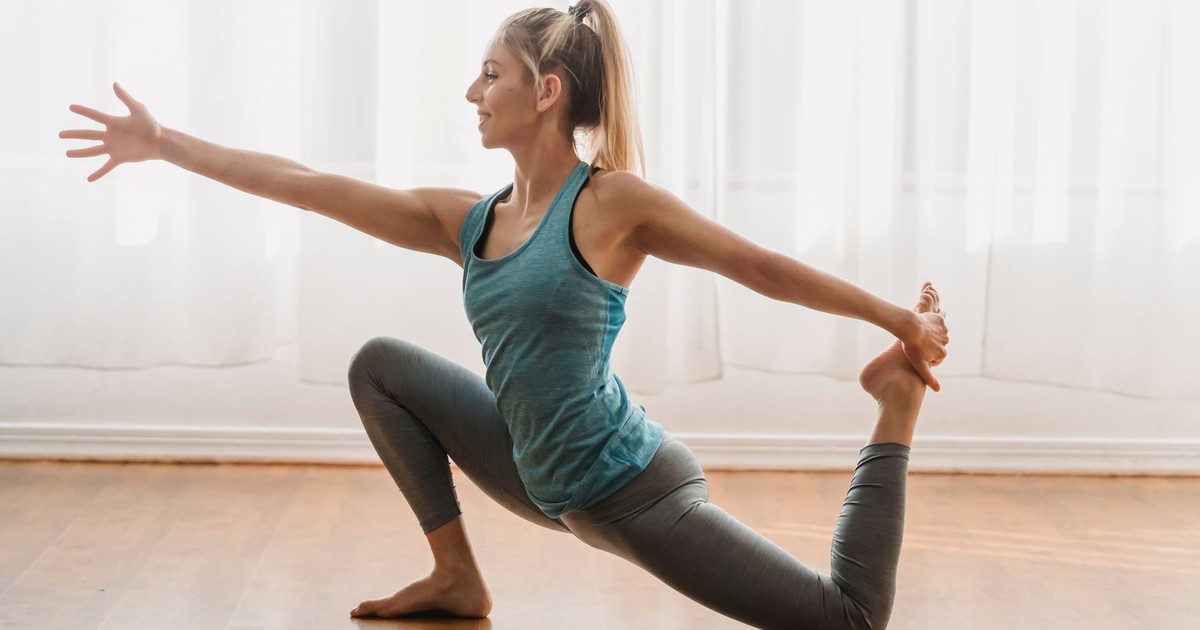
Strengthening gets the headlines, but flexibility work is what allows the strengthening to do its job properly. A quad stretch targets the rectus femoris directly – the same muscle that the 2024 research identified as a key factor in crepitus severity. When that muscle is tight, it shortens the distance between the hip and the knee, compresses the patella against the femur, and sets the conditions for a noisier, less comfortable joint. Stretching it does not fix everything, but it removes a significant amount of unnecessary physical pressure.
For the standing version, hold a wall or sturdy chair with one hand for balance. Bend the knee you’re stretching and bring your heel toward your buttock, grasping the ankle with the opposite hand. Stand tall rather than leaning forward – the common mistake is to tip the torso forward to compensate for tight hip flexors, which reduces the stretch to almost nothing. You should feel the stretch running along the front of the thigh, not in the knee itself. If you feel it in the knee, ease off the range. Hold for thirty to forty-five seconds per side, repeat twice.
For the prone (lying face-down) version, lie flat on your stomach and bend one knee, bringing your heel toward your buttock. Reach back and grasp the ankle. This version removes the balance challenge entirely and often allows a deeper stretch because the hip stays in extension naturally, which draws more tension through the rectus femoris than the standing position typically can. Hold for thirty seconds, switch sides, and complete two rounds.
Not moving a painful or stiff knee can cause it to stiffen further, worsening the overall condition. The quad stretch is the antidote to that dynamic – it keeps the tissue around the knee mobile so that movement itself stays lower in resistance and lower in noise. Done consistently after exercise or even after a long period of sitting, it’s one of the most efficient investments of ninety seconds you can make for your knees.
What to Do With All of This

Three exercises are not a complex program. That’s intentional. The research on knee crepitus keeps returning to the same fundamental finding: the muscles that support the joint matter more than almost anything else you can control without a prescription. Straight leg raises build the quad without stressing the joint. Static lunges stretch and strengthen the full front-of-leg chain. Quad stretches release the compression that makes everything louder. Together, they address the problem from three angles: weakness, tightness, and poor tracking.
None of these require equipment, a gym membership, or twenty minutes of warming up. They require consistency, which is the harder ask. Doing all three, four or five times a week, takes about fifteen minutes. The results tend to appear gradually, which makes them easy to underestimate until you notice, six weeks in, that the stairs have gotten noticeably quieter. If the cracking gets louder, comes with new pain, or you develop swelling at any point, stop the exercises and see a doctor. Some knee noise is a quirk of anatomy. Some of it is the joint asking for help it can’t get from a stretch alone. Knowing the difference is worth more than any exercise list.
Disclaimer: This information is not intended to be a substitute for professional medical advice, diagnosis, or treatment and is for information only. Always seek the advice of your physician or another qualified health provider with any questions about your medical condition and/or current medication. Do not disregard professional medical advice or delay seeking advice or treatment because of something you have read here.
AI Disclaimer: This article was created with the assistance of AI tools and reviewed by a human editor.