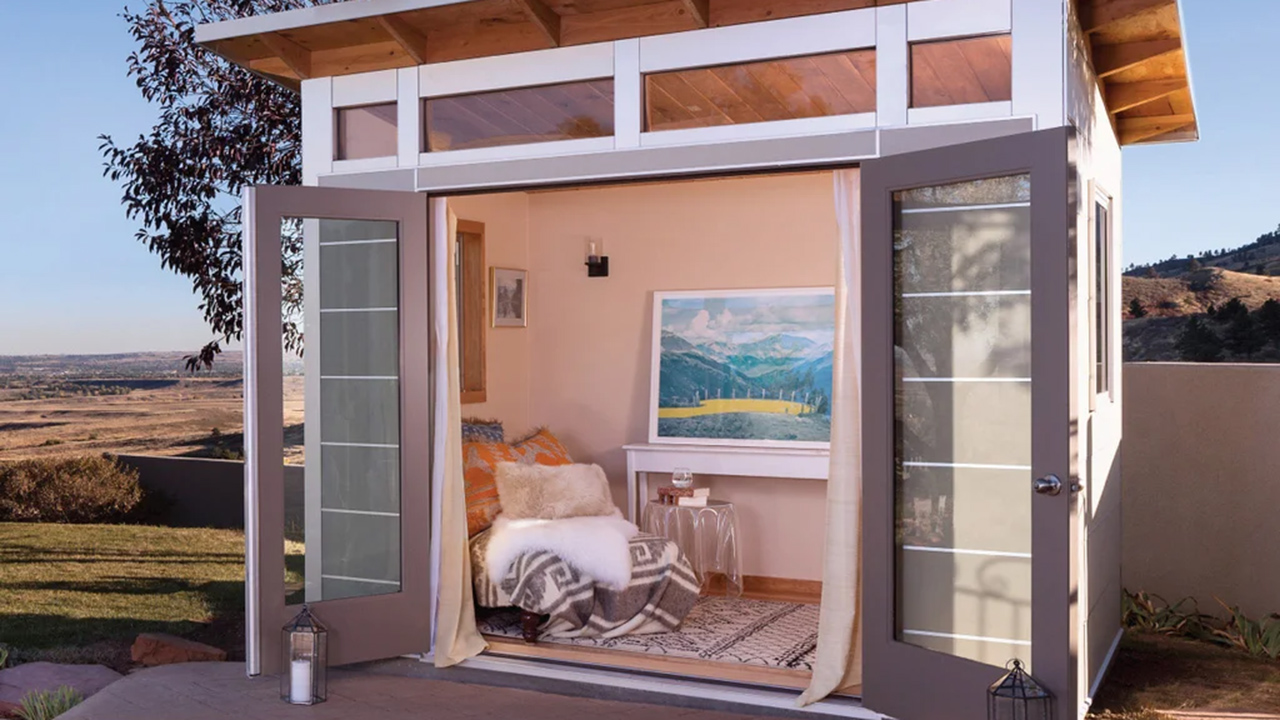

Costco has always had a talent for making you reconsider your entire life plan. You’re there for paper towels, and somehow you end up standing in the aisle reconsidering your entire approach to living – staring at a kayak, a cashmere sweater, or a new set of luggage you didn’t know you needed. The warehouse is a marvel of making the impractical feel completely reasonable, which is probably why nobody blinked particularly hard when Costco quietly added a structure to its inventory that looks, depending on who you ask, significantly less like a storage shed and significantly more like the kind of backyard guesthouse you’ve been adding to a saved folder for three years.
The structure has been circling the internet with the persistence of something people actually want – not the novelty-viral kind of want, but the genuine, quietly-building-a-case-in-the-back-of-your-mind kind of want. And the reason isn’t hard to trace: it looks like a real building. Not a garden shed. Not a plastic bin with a roof. A building, with French doors and proper windows and siding that belongs on a house.
The conversation around backyard studios has been gaining momentum for a few years now, ever since working from home went from an occasional privilege to a permanent negotiation with your dining room table. The desire for a separate space, one that isn’t the corner of a bedroom or a kitchen island cleared of permission slips, has moved from luxury to something closer to necessity. Costco, being Costco, has found a way to make that fantasy feel almost attainable.
The Designer Guesthouse Shed That Lives in Your Cart
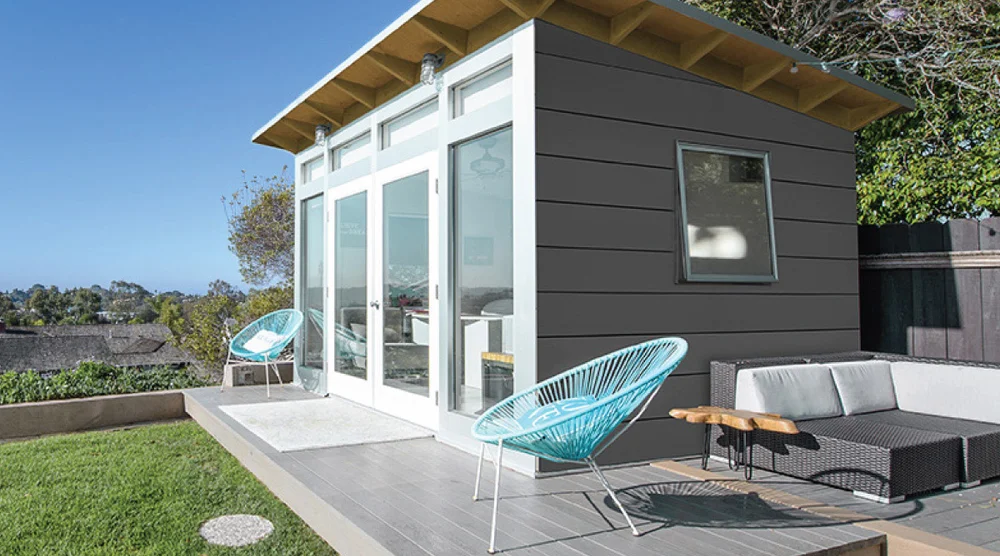
The Medano Studio Shed is a 10’x12′ structure listed at $16,999.99 on Costco’s product page, which is the kind of price that stops you mid-scroll. Yes, it’s a serious amount of money. But before you close the tab, consider what that price actually covers. According to the Globe and Mail, the structure includes high-efficiency glass windows, French doors with brushed trim, and primed James Hardie siding ready for whatever color your backyard calls for. James Hardie is the same fiber cement siding brand you’d find on a high-end residential build, not a pressure-treated garden shed. That primed finish means you’re choosing the color, not inheriting one.
The shed arrives with pre-hung operable windows, a heavy-duty Galvalume roof system specifically designed to shield the structure from corrosion and heat, trim, hardware, fasteners, fully panelized wall sections, and 3D assembly instructions. That last detail matters more than it might seem. Fully panelized walls mean you’re not building from the studs up. The bones arrive ready to stand. You’re assembling, not constructing, and on a Saturday morning that distinction does a lot of work.
The footprint is just over 100 square feet. That’s not a sprawling studio, but it’s enough to be a real room rather than a very expensive closet. The way this structure is built, and what it’s built with, is what separates it from the generic shed market entirely.
What It Actually Is (and Where It Comes From)
Studio Shed was founded in 2008 in Boulder, Colorado, when two pro mountain bikers couldn’t find a well-designed backyard storage option and decided to build one themselves. That origin story is charming, but the company that exists now is something considerably more serious: a national leader in prefab backyard studios and accessory dwelling units, with a 46,000-square-foot production facility in Louisville, Colorado that ships up to 2,000 square feet of product a day to all 50 states.
The brand’s materials are the same across their lineup. Every Studio Home is manufactured with high-end residential quality materials in a controlled factory environment, with James Hardie siding and Zip System weatherproof wall panels as standard. Factory production ensures tighter material tolerances, lower field labor costs, and a more consistent build quality than site construction. When a company has been doing this since 2008, you’re not betting on someone who figured out how to make a viral product. You’re buying from people who’ve been solving this specific problem long enough to get the details consistently right.
Compared to purchasing a similarly specced Studio Shed through Lowe’s, the Costco price represents a saving of approximately $7,600. For a structure at this level, that’s the kind of number that earns your attention.
The Honest Part: What It Doesn’t Come With
The Medano works best for someone who has dreamed of a sleek, modern backyard studio and has the time and skills to put it together. The final result is a versatile, aesthetically pleasing space, but it is not a turnkey solution.
A few things to understand before you hit buy. The floor system is not included in the base price – it’s an add-on you’ll need to sort separately, either as part of your foundation plan or as a kit purchase. Adding insulation and electrical outlets runs an extra $2,880 through the Lifestyle Interior Package, which includes R15 wall insulation and R30 roof insulation. If you want the space to be comfortable year-round and usable as anything other than a very attractive storage room, that package isn’t really optional.
The bigger caveat, if you’re picturing guests sleeping in there: there is no plumbing included. Running water requires permits, a licensed plumber, and almost certainly a conversation with your local building department that takes longer than you’d expect. That’s not a Costco add-to-cart situation.
The assembly itself is not a solo weekend project. If hauling pallets and spending weekends playing contractor doesn’t appeal to you, the appeal of this shed fades somewhat. The structure is beautiful, but it’s a real DIY project that requires genuine effort and possibly extra supplies you didn’t anticipate. Bring help. Recruit the person in your life who gets genuinely excited about 3D instruction manuals.
What You Can Actually Do With It
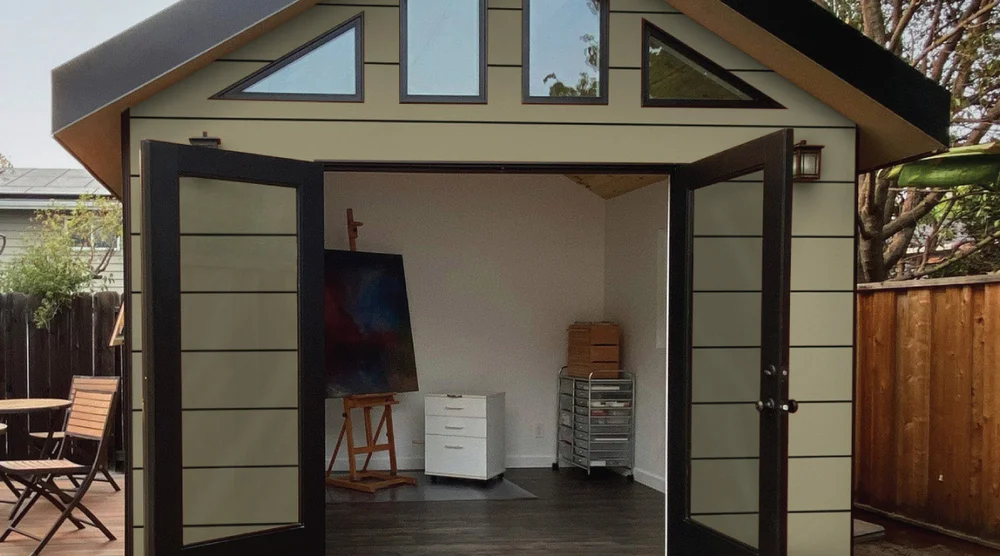
This is where the designer guesthouse shed concept earns its name. The appeal of the Medano isn’t just the French doors, although the French doors are doing considerable work. It’s what the footprint and the finish level make possible.
A home office is the obvious answer, and a good one. The structure is flat-packed for efficient shipping and designed for rapid installation, taking the concept from idea to completion in a fraction of the time traditional construction would require. That means a functional, separate workspace in your backyard without a six-month renovation occupying your house and your sanity simultaneously.
But the space also works as a guesthouse for visitors who need their own door, a creative studio for painting or music or writing that finally has a room of its own, or a yoga space, game room, or art room – anywhere a dedicated purpose benefits from a dedicated structure. One hundred-plus square feet with full-lite French doors and proper windows is not a small gesture. Designed thoughtfully, it reads as a room, not an afterthought.
The Property Value Conversation
If you’re doing the mental math on whether $17,000 – plus insulation, plus a floor, plus potentially plumbing – makes any financial sense, there’s a reasonable argument to be made. According to research from prefab.com, appraisers and buyers respond most strongly to backyard structures that are fully legal, connected to utilities, and clearly usable as living space. A partially finished or unpermitted structure does almost nothing for your resale price and can actually hurt it. So pulling permits isn’t bureaucratic box-checking. It’s what separates a design feature from a liability.
Prefab structures also carry built-in advantages from a resale standpoint. Because they’re manufactured in controlled factory environments, material tolerances are tighter, insulation is more uniform, and finish quality tends to be more predictable than site-built construction. That consistency is what buyers can see and appraisers can value. The prefab.com research also notes that homes with properly finished, permitted backyard structures see meaningful value premiums in competitive markets – and that the gap between a finished structure and an unfinished one is significant in how buyers and lenders assess the property.
Permitted, insulated, and finished properly, what you have is not a shed. What you have is a finished room on your property that happens to sit twelve feet from your back door.
What to Know Before You Buy
The Costco Medano Studio Shed is not for everyone, and it is not trying to be. It’s for the person who has a backyard with room for a 10-by-12-foot footprint, a tolerance for an assembly project that genuinely requires more than one set of hands, and a clear vision for what the space will become. It’s also for the person who has been pricing out contractor-built studios and feels a particular kind of vertigo when the quote comes in north of $50,000.
At $16,999.99 for a structure with real siding, real windows, and real French doors, the math isn’t embarrassing. Add $2,880 for the insulation and electrical package and you’re still looking at something that costs a fraction of a traditional room addition and takes up zero square footage inside your house. The floor and the foundation are the remaining unknowns, and those costs will vary depending on where you live and what your soil situation looks like.
Read More: 10+ Home Appliance Trends Set to Dominate 2026
What Costco has done here, with typical Costco energy, is make a genuinely good product available at a price that makes people stop and think. The structure itself is respectable. The brand behind it has been building these for nearly two decades. The French doors are exactly as charming in photographs as they appear to be.
The Part Nobody Wants to Think About
Here’s the thing about the designer guesthouse shed that nobody quite says out loud: it’s a starting point, not a finished product. The primed siding is waiting for a color decision you will probably agonize over for longer than the assembly takes. The empty square footage is waiting for flooring and furniture and a reason to exist. If you’re picturing guests sleeping in it, you’re also picturing a bathroom situation that requires a licensed plumber and a visit to your local permit office.
None of that means it isn’t worth it. It means the Medano is a structure that gives back exactly as much as you put into it. Buy it with a plan, not just a mood. Know what the footprint will become before the pallets arrive on your driveway. Pull the permits, insulate the walls, and think honestly about whether the space needs running water or whether a nearby bathroom will cover whatever you have in mind.
And if you’ve already been dreaming about a backyard space that doesn’t look like a hardware store clearance section, the Medano is one of the more honest answers to that dream that $17,000 can currently buy. Home decor gets away with a lot, and so do backyard structures. This one, at least, is genuinely trying to earn it.
AI Disclaimer: This article was created with the assistance of AI tools and reviewed by a human editor.