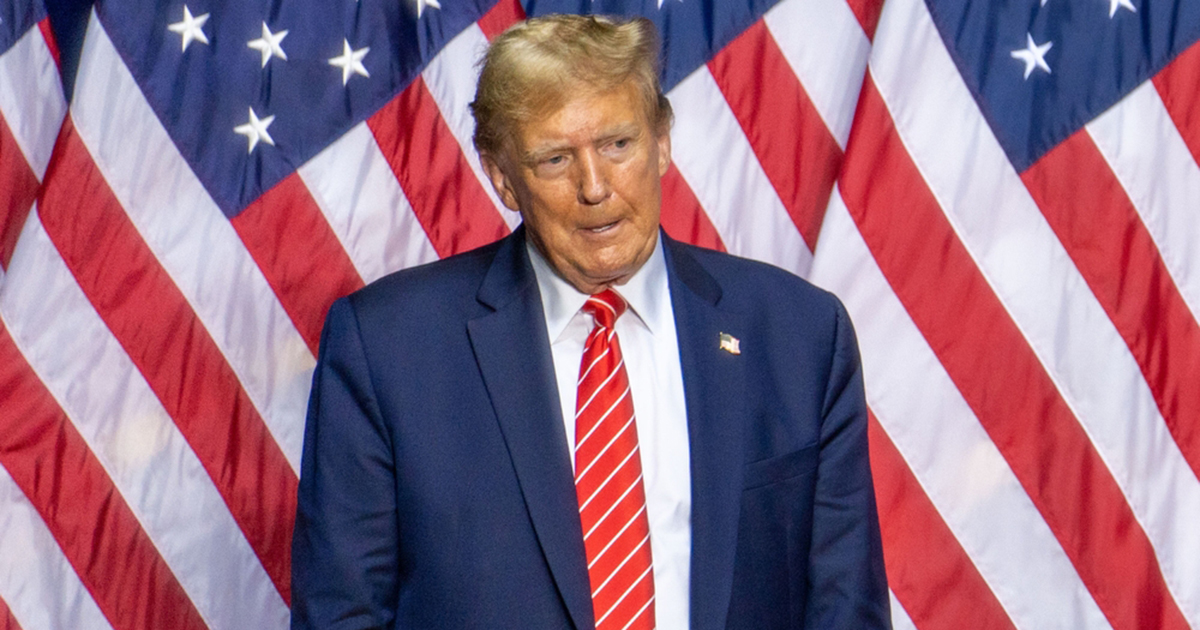

The relationship between Donald Trump and his niece, Dr. Mary Trump, has never been one of quiet family disagreement. It has been a sustained, public, and at times scorching dissection – conducted by a clinical psychologist who grew up watching the subject of her analysis from across the dinner table. And in late June 2026, that dissection entered a new, more urgent phase. Speaking in a conversation with journalist Steven Beschloss published through his newsletter, Mary Trump issued what amounted to her most pointed assessment yet: that her 80-year-old uncle is in a “downward spiral,” that his grip on coherence is loosening, and that the one thing that terrifies him above all else is the very thing he keeps doing to himself.
In the exchange, published on Sunday, June 22, 2026, Mary Trump – herself a clinical psychologist – was asked by Beschloss whether the president looks “unusually diminished.” Her response was unsparing: “I think this is simply the direction things are heading.” She went further, asserting that “psychically he’s in a downward spiral.”
What has made her commentary impossible for even the White House to entirely dismiss is the combination of credentials and proximity. She is not a commentator speculating from a distance. She is someone who has studied the psychology of personality for decades, and who spent formative years inside the family that, in her view, produced the man now holding the most powerful office in the world. Whether one accepts her conclusions or disputes them, her framework for understanding Donald Trump is specific, consistent, and rooted in years of stated observation. That framework was on full display again this week – and the picture she drew was not flattering.
The Fear at the Center of It All
At the core of Mary Trump’s latest assessment is an argument about what drives her uncle’s behavior. “He’s experiencing constant narcissistic injuries,” she said, adding that “nothing terrifies Donald more than humiliation.” The sting in the observation came in the follow-up: “The problem for him is that nobody humiliates Donald more effectively than Donald humiliates himself.”
This is not a new argument from Mary Trump – it is the culmination of one she has been building for years, most publicly in her 2020 book Too Much and Never Enough. Writing about the family dynamics that shaped her uncle, she argued that Trump’s mother was self-focused and absent, while his father lacked emotion and empathy, leaving Trump with no model for vulnerability or reciprocity. The fear of humiliation, in her telling, is not incidental to his character – it is the engine of it.
In the June 2026 newsletter conversation, Mary Trump connected this psychological argument directly to recent events, tying Trump’s demeanor at the G7 summit to the lavish UFC spectacle he had staged at the White House days earlier. Everything he does now, she argued, is in service of “protecting his fragile ego” and trying to fill what she has long called “the black hole of need within him.”
The morning after the White House spectacle, she said, Trump discovered the familiar truth that none of it had worked. “He’s still an empty, unloved man,” she said, “and maintaining that illusion has become psychologically exhausting.”
The G7 Appearance That Sparked the Assessment
Mary Trump’s comments were prompted in part by a discussion of Donald Trump’s appearance at the recent G7 summit in France, held in Évian-les-Bains in mid-June 2026. She argued in the conversation that what the world witnessed at the summit was not an aberration but the trajectory, describing Trump as being in a steep psychological slide. Beschloss had described Trump as appearing “bloated and wandering in a daze” at the summit.
Reports from the summit described Trump as appearing disconnected, treated by other world leaders as if he had the plague and, during group photos, “staring straight ahead as if in a deluded trance” while the other leaders chatted animatedly.
The diplomatic picture at Évian-les-Bains was, however, more complicated than a simple portrait of isolation. The tone coming out of the summit from media and leaders alike was described by observers as “giddy,” with Trump refraining from walking out or lecturing colleagues – aberrations from his previous G7 behavior. On Ukraine, he not only agreed to a unified front but suggested perhaps renewing American sanctions on Russia. French President Emmanuel Macron invited Trump to Versailles for a dinner to celebrate America’s 250th anniversary, and Trump appeared to appreciate the gesture considerably, saying “I’m a fan of beautiful places, and I was actually planning to leave in the afternoon, but then the French president invited me.”
Mary Trump’s interpretation – that beneath the diplomatic surface lay a man in psychological freefall – stands in marked contrast to those more optimistic diplomatic readings. The gap between those two assessments is itself part of what makes the current moment so contested.
The White House UFC Spectacle: Birthday or Ego Event?
The event that immediately preceded the G7 summit – and that Mary Trump explicitly cited as evidence of her uncle’s compulsive need for validation – was UFC Freedom 250, a mixed martial arts event staged on the South Lawn of the White House on June 14, 2026, which also happened to be Trump’s 80th birthday.
The UFC event, officially dubbed “UFC Freedom 250” and framed by the Trump administration as part of celebrations for America’s 250th anniversary, cost more than $60 million according to a court filing. It was staged as part of a broader lineup of events promoted by the administration.
A Reuters/Ipsos poll released ahead of the event found that only 16 percent of Americans supported the fights being held on the White House grounds, while 46 percent said they considered it inappropriate.
The event took place as the United States had been at war with Iran, with inflation passing 4 percent and Trump’s approval sinking – Russia’s war in Ukraine, which Trump once vowed to end, continued, and he had largely stopped talking about a healthcare overhaul, with midterms approaching.
A lawsuit filed by the Public Integrity Project described the event as a “deeply corrupt…private, for-profit sports event,” challenging the transformation of White House grounds without congressional approval and the financial benefits flowing to the UFC and its allies.
For Mary Trump, the spectacle was not a celebratory anomaly. It was exactly what she would have predicted: a man desperate for adulation staging an event calibrated to produce it, only to discover – as she put it – that none of it fills the void.
A Medical Record That Raises More Questions Than It Answers

The debate over Trump’s psychological state does not exist in isolation from questions about his physical health. At 80 years old, Donald Trump became the oldest person in American history to serve as president.
White House physician Dr. Sean Barbabella declared Trump in “excellent health” and “fully fit” to serve as commander in chief following a medical examination at Walter Reed National Military Medical Center in late May 2026, conducted by 22 specialists over three hours.
Trump was again administered the Montreal Cognitive Assessment – a screening tool used to detect mild cognitive impairment and early dementia – and his doctors reported a perfect score of 30 out of 30, consistent with his reported scores in previous years.
Critics have pointed out, however, that the Montreal Cognitive Assessment has significant limitations. The test, which Trump first took in 2018, is a screening tool rather than a diagnostic instrument. “Any adolescent could easily pass it,” argued emeritus political scientist Denis Lacorne, who has followed U.S. presidents since the 1960s. “Constantly invoking it is anything but reassuring.”
The use of 22 specialists during the May 2026 exam, a figure reported by the Washington Post, was itself without precedent – nearly double the 14 specialists who had examined Trump the previous year, and almost double the 12 who assessed George W. Bush during his first presidential checkup in 2001. The White House declined to identify which medical disciplines those specialists represented or to explain the unprecedented number.
The state of Trump’s physical health has been a major talking point throughout his second term, with the 80-year-old having been diagnosed with chronic venous insufficiency – a condition causing blood to pool in the legs – after being spotted with bruised hands and swollen legs.
White House physician Barbabella’s letter noted that Trump takes aspirin but did not specify the dosage. Trump told the Wall Street Journal in January 2026 that he takes 325 milligrams daily – roughly four times the standard preventive dose – explaining: “They say aspirin is good for thinning out the blood, and I don’t want thick blood pouring through my heart.”
Beginning in 2025, concerns grew over Trump’s stamina after he appeared to fall asleep during multiple meetings. By May 2026, multiple polls showed a majority of Americans did not believe Trump was mentally fit to be president.
The White House Fires Back
The Trump administration’s response to Mary Trump’s assessment was swift and characteristically unambiguous. White House Communications Director Steven Cheung called her a “stone cold loser” who “doesn’t have a clue about anything,” adding: “Her entire worth as a human being is predicated on spewing lies about President Trump in a sad attempt to stay relevant.”
The White House has fiercely pushed back against speculation over the president’s health more broadly. Back in May, Trump’s physician revealed the president was in overall “excellent health” following the results of a recent medical, with Dr. Sean Barbabella saying Trump scored 30 out of 30 on a cognitive impairment test.
Trump himself has long made a point of dismissing health concerns with theatrical confidence. He has repeatedly boasted that he “aced” several cognitive exams, claiming “perfect” scores not just as proof of his fitness for office but as evidence of exceptional sharpness, saying “I got the highest score possible” at rallies and on Truth Social, and claiming that no other president had been willing to take such tests.
The tension between the official White House position and what observers report seeing is not new, but it has sharpened considerably in 2026. Coverage of Trump’s mental acuity has generated discussion of whether the media has been “sanewashing” Trump by selecting more coherent clips or quotes from his speeches that give a false impression of his condition.
The Goldwater Rule and the Limits of Remote Assessment
Any serious engagement with Mary Trump’s assessments must also grapple with the professional ethics governing what mental health practitioners can and cannot responsibly claim. The Goldwater Rule states that psychiatrists should not diagnose a public figure unless they have personally examined that figure or have received consent to discuss the figure’s mental health. The rule was established by the American Psychiatric Association in 1973 as a response to the 1964 presidential campaign between Barry Goldwater and Lyndon Johnson.
Mary Trump’s commentary, it should be noted, is explicitly framed as behavioral observation informed by personal knowledge – not formal clinical diagnosis. She has never claimed to have conducted a formal psychological evaluation of her uncle. Her argument is that she has observed him over a lifetime, and that what she sees matches patterns she recognizes professionally. That is a meaningful distinction, and one she has consistently maintained.
The broader community of mental health professionals has been divided on how far public commentary should go. The Duty to Warn petition, which ran from 2017 through 2024, was signed by tens of thousands of mental health professionals who issued statements asserting Trump’s psychological dangerousness and urging mental health evaluations prior to continuation in office. That petition represents one end of the spectrum; those who have adhered strictly to the Goldwater Rule represent the other.
What is not in dispute is that the debate is real, consequential, and nowhere close to settled – and that Mary Trump, by virtue of her unique combination of family access and professional training, occupies a position in that debate that no one else does.
A Pattern, Not an Episode
What Mary Trump is describing in June 2026 is not a new concern – it is the culmination of an argument she has been making for years, now converging with a set of observable events that have given it renewed weight. The G7 appearance. The $60 million birthday spectacle on the White House lawn. The unprecedented 22-specialist medical exam whose scope the White House refused to explain. The bruised hands, the swollen legs, the aspirin in doses four times the standard recommendation, the polling showing a majority of Americans doubting the president’s mental fitness. None of these individual data points constitute proof of what she is alleging. Together, they form a picture that a significant portion of the American public, and apparently a growing number within Washington’s own orbit, are finding harder to ignore.
Concerns have continued throughout Trump’s second presidency, with both insiders and outside critics directly discussing supposed health risks and their future impacts, up to and including a presidential succession by Vice President JD Vance.
Presidential historian Barbara Perry put it plainly: “Let’s be clear: we have no idea what his health condition is. All we can really assess is what we see. And what we witness is an almost octogenarian man who keeps nodding off at public events, and whose speeches can be…quite strange.”
What the Record Can’t Settle

The central claim Mary Trump made in late June 2026 – that her uncle is in a “downward spiral” and that his greatest terror is humiliation – is not a clinical diagnosis. It is an informed behavioral observation from someone with unusual access to both the man and the psychological frameworks used to understand him. The White House’s rebuttal, sharp as it was, did not engage with the substance of her argument.
What the full picture reveals is a confluence of claims that will not resolve neatly. The official medical record declares Trump in excellent health, with a perfect cognitive assessment score. Independent observers, Democratic lawmakers, historians, and a statistically significant portion of the American public see something different when they watch him in public. Mary Trump’s argument is that both things can be true simultaneously: that the tests can return the numbers they return, and that the man behind those numbers is nonetheless in a psychological decline that no standardized screening tool was designed to capture.
That gap – between what the paperwork says and what people report seeing – is exactly where the Donald Trump niece fears debate will remain lodged, unresolved, for the foreseeable future. The Donald Trump niece fears story is not really a story about one family’s estrangement. It is a story about what happens when the distance between official record and public perception grows wide enough that no press release can bridge it. Whether that gap ever closes may depend less on any future medical report than on what the cameras keep showing the world, week after week, in real time. Mary Trump will keep watching. And she will keep talking about what she sees.
AI Disclaimer: This article was created with the assistance of AI tools and reviewed by a human editor.