

Expat life abroad has a way of sounding like a fantasy until enough people around you actually do it and come back changed, not just tan. The move from America to somewhere else entirely, whether that’s a narrow street in Lisbon or a suburban neighborhood in the Netherlands, is the kind of decision that was once the province of diplomats and retirees with restless energy. Now it’s couples in their thirties pulling their kids out of elementary school, families with remote jobs and a growing suspicion that there has to be a less exhausting version of daily life somewhere on the other side of the Atlantic, or the Pacific, or the border they’ve crossed a hundred times on vacation.
The numbers back up what increasingly feels like a cultural conversation. The Association of Americans Resident Overseas estimated that 5.5 million Americans lived abroad as of October 2024, up from 5.4 million in 2023. And by November 2025, one in five Americans told Gallup they would like to move abroad permanently. Those are not fringe numbers. That is a very large group of people sitting with a very real idea.
None of this is to say it’s easy. Moving abroad is stressful for anyone, but especially for a family with children, since many of the usual challenges are heightened when kids are involved. Visa paperwork, tax complications, culture shock, and the particular grief of being far from people who knew you before you became whoever you’re becoming abroad – these are real costs. But for the families who land and stay, the life they describe on the other side is often nothing like the life they left. Here are thirteen reasons they say expat life abroad improved their lives, drawn from what the data and the people living it actually report.
1. Healthcare Became Affordable

This one comes up in nearly every expat survey, and the frustration behind it is worth naming plainly. Americans spend the most on healthcare of any country in the world, and in 2025, a family health insurance plan averaged $26,993, a 6% increase from 2024. That is not a typo, and it is not a number most families can absorb without sacrifice somewhere else in their budget.
Abroad, the arithmetic changes. Expat health insurance costs vary based on age, location, and coverage level, but according to Pacific Prime’s 2024 Cost of International Health Insurance Report, average annual premiums for individual plans ranged from $3,900 in Poland to $15,296 in the United States. In countries like Sweden, Norway, and the Netherlands, residents who contribute to the local social system often access public healthcare that caps annual out-of-pocket costs well below what a single emergency room visit runs in the U.S.
For families, the psychological relief of not dreading a doctor’s appointment because of the bill that follows can be profound. The anxiety around healthcare is so deeply baked into American life that most people don’t notice how much mental energy it consumes until it’s gone. Expats who relocate to countries with universal or near-universal coverage often describe the experience less as “getting healthcare” and more as “not thinking about healthcare constantly,” which, after years in the American system, can feel like an entirely different way of existing.
2. The Cost of Living Dropped Significantly
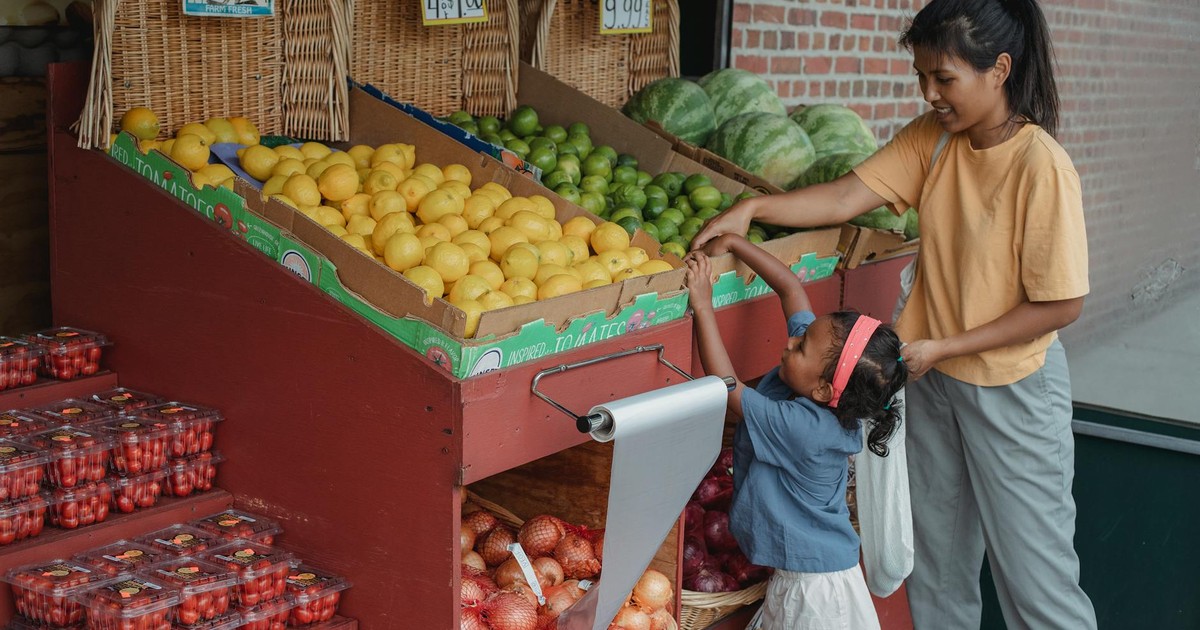
Among Americans considering relocation, a lower cost of living was cited as a top motivator by 48% of respondents in the 2025 Greenback Expat Trends Survey. That figure makes sense when you map it against what daily life actually costs in many popular expat destinations versus an average American city.
In parts of Portugal, Mexico, Colombia, and Southeast Asia, a family can rent a spacious apartment in a walkable neighborhood for a fraction of what a studio costs in Austin or Seattle. Groceries tend to be fresher, more local, and cheaper. Childcare, when it exists as a public service rather than a private market, does not require a second income just to cover the cost. The financial math of expat life in lower-cost countries does not require families to be rich. It often requires them simply to be earning in dollars while spending in pesos, euros, or another currency where the exchange rate works in their favor.
Portugal, for example, is one of the more affordable places in Western Europe for families, with lower prices for rent and groceries, warm summers and mild winters, generous parental leave, free or low-cost public education, and affordable, well-rated public healthcare. That combination is difficult to find in the United States without either significant income or significant debt.
3. Work-Life Balance Actually Improved

An improved work-life balance was cited by 49% of Americans who relocated abroad as one of their primary motivators, and the families who made the move tend to confirm that the change was real rather than aspirational.
The difference is structural, not personal. Many European countries build mandatory paid leave, shorter working hours, and extended lunch breaks directly into labor law. In France, the 35-hour work week is not a suggestion. In Scandinavian countries, it is common for employees to leave the office at 4 p.m. without apology and without a laptop under their arm. The culture around productivity looks different when the society around you has decided, collectively, that rest is not a failure of ambition.
For families, this means parents who are actually home at dinner, kids who have a parent available for pickup, and weekends that do not get eaten by email. It is a different relationship with time than most American families have been offered. Some expats describe the first few months abroad as disorienting in exactly this way – not because life is harder, but because they can’t quite figure out what to do with all the room.
4. Children Became Fluent in a Second Language

Children who grow up in immersive multilingual environments acquire second languages at a rate and depth that classroom instruction simply cannot replicate. A kid enrolled in a local French school who hears the language on the playground, in the market, and from the family next door is not learning French so much as absorbing it, the way all children absorb their first language, before they’re old enough to find it effortful.
Educational pursuits were a key motivator for 55% of Gen Z Americans who moved abroad, with access to diverse academic programs and language acquisition opportunities cited as significant draws. For families with younger children, the language acquisition piece often exceeds every other educational benefit. Children who are fluent in two languages before age ten carry that advantage for the rest of their lives – cognitively, professionally, and in ways that are harder to quantify but just as real.
Parents who make this move often describe watching their children code-switch between languages with an ease that produces something between pride and mild jealousy. The children are not trying to be bilingual. They just are. That is the particular gift of timing a move when the brain is still building the infrastructure to receive it.
5. They Found More Time to Slow Down

This is related to work-life balance but distinct from it. Work-life balance is a structural reality about hours. Slowing down is a cultural reorientation about how time feels.
In many of the countries American families relocate to, the pace of daily life is organized around presence rather than productivity. Lunch is a meal, not a task completed at a desk. A walk to the market is an event with neighbors, not an errand to dispatch. The afternoon in Spain still contains the concept of rest as a legitimate midday option rather than something to feel guilty about. None of this is universal across every neighborhood in every destination country, but the cultural orientation toward rest and presence is measurably different in much of Europe, Latin America, and parts of Asia compared with the relentless forward motion that American professional culture tends to demand.
A significant 69% of surveyed U.S. expatriates cited the pursuit of a better quality of life as a primary reason for moving abroad, with factors including improved work-life balance, enhanced healthcare access, and superior education systems contributing to that sense of improvement. Quality of life is a phrase that covers everything and nothing, but what families usually mean when they use it is this: they stopped feeling like they were constantly behind.
6. Housing Was More Spacious and More Affordable

American cities have made the calculus of family housing increasingly brutal. A three-bedroom home in a safe neighborhood with decent schools in most major metros now requires either a high dual income, significant family wealth, or the willingness to spend more than a third of a household budget on the mortgage, month after month, for thirty years.
In many expat destinations, that same budget rents a generous apartment in a city center, with architecture that has been standing for two hundred years and a courtyard that gets afternoon light. In Portugal, Mexico, Colombia, and large parts of Eastern Europe, families report living in more space than they could have afforded at home, in neighborhoods that are genuinely walkable, for a fraction of their previous rent or mortgage payment.
The implication is not that housing abroad is without complications. Lease laws differ, tenant protections vary, and finding the right neighborhood in an unfamiliar city takes time and a lot of Google Translate. But for families who were stretching to afford a starter home in their American city of origin, the discovery that they could rent a four-bedroom apartment in Lisbon for less than their Boston one-bedroom was often the financial argument that settled the question.
7. They Felt Safer
Safety and quality of life were cited as motivators by 46% of Americans considering relocation in the Greenback 2025 Expat Trends Survey. The safety issue is not abstract for American families. It is something parents think about at school drop-off, at grocery stores, at movie theaters, and at community events in a way that their counterparts in many other developed countries simply do not.
Gun violence in particular is a driver that expats often mention with a kind of quiet exhaustion, the exhaustion of having performed a mental safety calculation in every public space for so long that they stopped noticing they were doing it. Families with school-age children who relocate to Western Europe, Canada, New Zealand, or Japan often report that this background hum of threat simply disappears. Not because those places have no crime, but because the specific arithmetic of mass shootings is not something their children’s schools are running active drills to address.
The gain is not merely statistical. It is the experience of attending a public event without the part of your brain that is mapping exits. It is, for parents especially, something closer to the unclenching of a fist that had been clenched for so long they’d stopped knowing it was a fist.
8. Parental Leave and Family Policies Were Genuinely Generous

American families who relocate to countries with robust parental leave policies often describe the experience as a form of culture shock in reverse – an encounter with what is possible when a society has decided that new parents should not have to choose between income and time with a newborn.
Canada’s education system is considered among the best globally, and expat families there enjoy child benefits, paid parental leave, and tax credits for families. Across Western Europe, parental leave policies that guarantee months or even a year of paid leave for both parents are not perks for the privileged few but baseline legal entitlements. In Sweden, taxes and government funding cover 97% of the cost of the public healthcare system, with out-of-pocket fees for patients over 20 capping at about 1,000 SEK (roughly $94) per year.
For a family that has spent years navigating the American patchwork of unpaid FMLA leave, negotiated flexibility, and childcare costs that rival a mortgage, landing in a country where the social infrastructure actually supports the existence of children can feel like an entirely different theory of what family life is supposed to cost, financially and emotionally.
9. The Food Was Better and Cheaper

This sounds trivial. It is not. The quality of everyday food in many expat destinations – the bread, the produce, the olive oil, the neighborhood market that has been operating for three generations – is meaningfully different from what a family encounters in a standard American suburb. The difference is not just palatial. Families who relocated to France, Italy, Spain, Portugal, or Mexico consistently report that eating well became less expensive, not more.
The local market model that still structures daily shopping in much of Europe and Latin America means that seasonal produce is abundant, cheap, and eaten the week it was picked rather than the month it was shipped. The cultural emphasis on real meals, eaten together, at a table, at a reasonable hour, reinforces the slowdown that expat families describe across every other dimension of their life abroad. Food becomes part of how you live rather than a logistics problem to solve between school pickup and a 7 p.m. work call.
For families with children who were raised on the beige convenience food of American suburb logistics, the discovery that a child will happily eat an entire plate of roasted vegetables from a Portuguese market because the vegetables actually taste like something is its own small, unrepeatable reward.
10. Community Felt More Intact

Something the U.S. has struggled with for years is what sociologists call social cohesion – the sense that neighbors know each other, that public space is genuinely shared, that community is a real thing rather than a Facebook group for people who happen to live near each other.
Many expat families describe landing in neighborhoods where people actually interact in shared spaces, where the café owner knows your name by the second week, where children play outside in the afternoon in ways that feel more relaxed and less supervised-to-within-an-inch-of-their-lives than American suburban childhood tends to be. Despite living abroad, 63% of American expats travel back to the U.S. at least once a year, and most built their community in their new home through local friends and colleagues (75%), family connections (45%), and expat social groups (34%).
The irony, not lost on families who make this move, is that they often feel more socially connected abroad than they did at home, even while speaking a second language imperfectly and not entirely understanding the rules of the neighborhood WhatsApp group.
11. Their Kids Became More Adaptable

A child who has had to navigate a new school, a new language, a new set of social codes, and a new way of doing everything has developed a set of skills that the American education system does not formally teach and does not easily replicate. Adaptability, tolerance for ambiguity, genuine cross-cultural fluency: these are not soft skills in the abstract sense. They are the result of having to actually do hard things.
Expat parents whose children attend international schools often believe their children are more open to new experiences and cultures as a result of the family’s move abroad, likely because they are learning how to immerse themselves in another culture. The children themselves don’t always frame it in those terms. They tend to describe it as knowing how to figure things out, having friends in more than one country, and being less fazed by new situations than their peers back home.
The adjustment is real, and not always smooth. There are hard weeks, especially early on. But families who stay report that the children who struggled most in the first six months often become the ones most visibly changed for the better by year two, carrying a kind of confidence that is hard to manufacture and impossible to fake.
12. They Stopped Being Defined by Productivity

American professional culture has made busyness a status symbol, a signal of worth, an identity. The answer to “how are you?” is “so busy” in a way that has become so automatic most people don’t notice they’re doing it. Expat families who relocate to cultures with a different relationship to productivity often describe the first year abroad as a process of unlearning this, discovering that they don’t need to be optimizing something at all times to feel like worthwhile people.
Over a third of Americans surveyed are considering a move abroad, with top motivators including cost of living, travel, safety, and lifestyle upgrades. The lifestyle upgrade piece, often dismissed as vague, is frequently shorthand for this specific thing: the chance to live in a culture that does not define a person entirely by how productive they’ve been today.
For parents especially, this reorientation can be significant. The pressure on American mothers in particular – to be visibly engaged, constantly available, and professionally ambitious while also running a household that looks effortless – does not export cleanly to cultures where leisure is a legitimate activity, not a reward for having completed everything else first.
13. They Rediscovered What They Actually Valued

This one takes longer to articulate, which is why it tends to land last in conversations with families who have made the move. The practical benefits – healthcare, housing, food, safety, language, education – are all real and measurable. But under all of it, what many families describe is a process of rediscovering priorities that American life had buried under decades of accumulation, obligation, and ambient noise.
Four in ten Americans (42%) have considered or plan to relocate outside the U.S., believing it could improve their quality of life and financial stability, according to a Harris Poll survey of over 6,300 Americans. The word “quality” in that sentence is doing a lot of work. What families who actually make the move describe is not so much an upgrade as a clarification – the discovery, usually sometime in the first year, of what matters when stripped of the scaffolding that American life had been providing.
Distance has a way of making the essential visible. Families abroad report that they talk more, that they know their children differently, that they make choices from want rather than obligation in ways that feel new and slightly surprising. None of them will tell you it’s perfect. The tax paperwork alone could fill a memoir. But when asked whether they’d go back, most of them pause in a way that answers the question before they do.
What Nobody Tells You Before You Go

The families who describe expat life abroad as genuinely improving their lives are not saying America is bad and everywhere else is good. They’re saying that the particular arrangement of pressures, costs, expectations, and cultural defaults that makes up daily life in the U.S. was not working for them, and that stepping outside of it gave them enough perspective to build something that did. That is a specific and honest thing. It is not an indictment, and it is not a universal recommendation.
Some families go abroad for a year and come home certain they never want to leave again. Others build an entirely new life and become people their pre-departure selves wouldn’t quite recognize. Most land somewhere in the middle – changed in some ways, homesick in others, holding both at once. The archive of your life doesn’t reset because you crossed a border. It just gets a new chapter, written in a different light, sometimes in a language you’re still learning. And that, for most of the families who stay, turns out to be enough.
AI Disclaimer: This article was created with the assistance of AI tools and reviewed by a human editor.