
When a loved one passes, their epitaph usually includes a sentimental and sometimes humorous inscription about the deceased. Epitaphs may also contain inside jokes or a ‘secret message’ to convey a part of the deceased’s personality, even in death. However, while some tombstone inscriptions have quirky or funny descriptors, not everyone might catch the joke, even if it’s not for them.
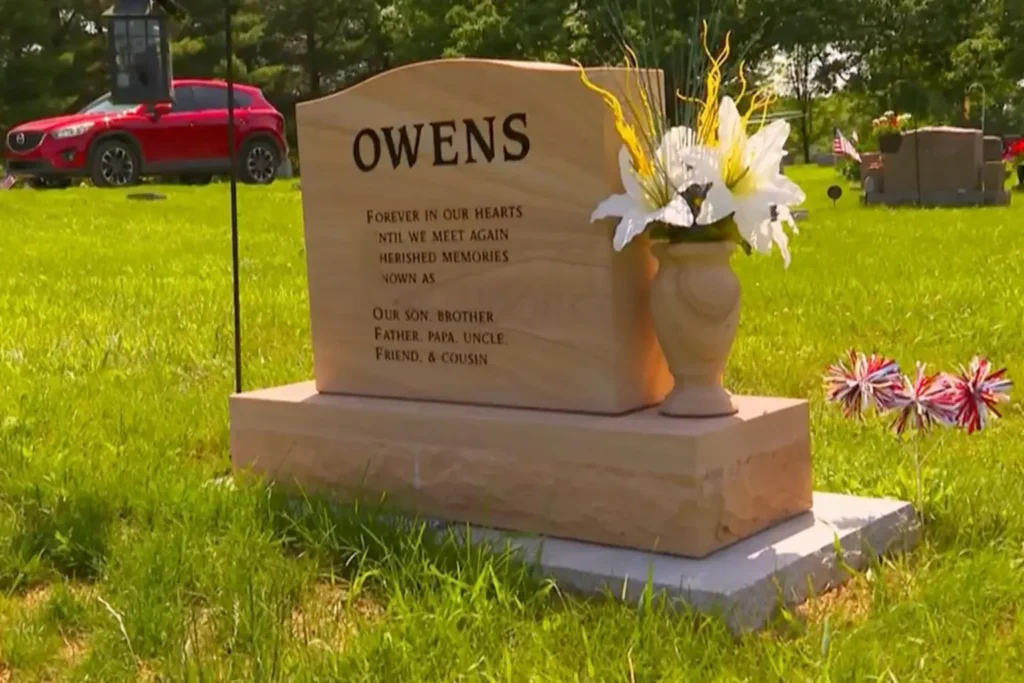
In some cases, others, particularly those with loved ones buried at the same cemetery, might find certain epitaphs offensive. This was the case for the family and the gravestone of Steven Paul Owens. Owens was buried at Warren-Powers Cemetery in Polk County, Iowa. At first, nothing out of the ordinary appears on his headstone. Owen’s name is clearly etched and visible on the tombstone, along with a sentimental message that could be overlooked without suspicion. However, upon further scrutiny, the ‘secret message’ caused controversy among Polk County’s community.
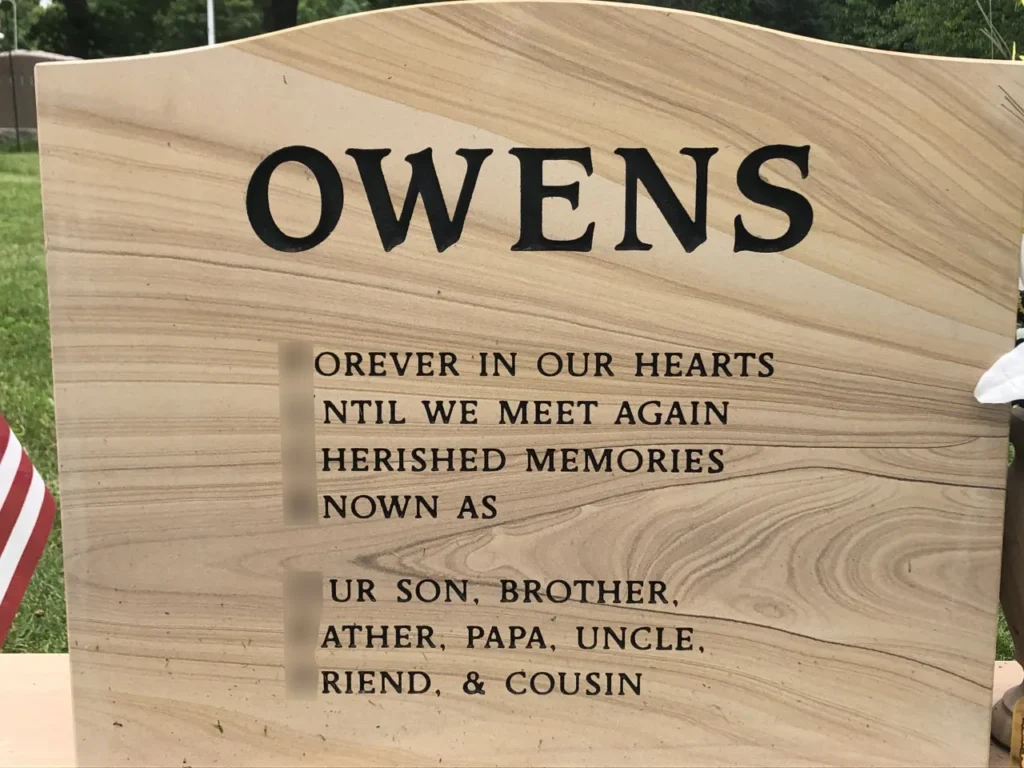
The first line of the inscription reads: “Forever in our hearts” in plain letters. The second line continues with the phrase “until we meet again.” The third line offers “cherished memories” to those who pause. The fourth line lists his family relationships, identifying him as “our son, brother, father, papa, uncle, friend & cousin.” To the casual reader, these words seem sincere, loving, and harmless, suggesting a man deeply connected to his family and community.
However, the secret message appears when you read the inscription vertically down the left margin. The first letters of each line form a clear profanity. They spell out “F*** OFF” to anyone who takes the time to decode the arrangement. This hidden acrostic has transformed a private family joke into a public dispute. Camp Township Trustees now want the stone removed immediately.
From Private Joke To Public Scandal
According to his obituary, Owens passed “to go play Yahtzee in Heaven with his mom,” passing away on September 2, 2021. To those who knew him, he is remembered for his love of fishing, playing flag football, and slow-pitch softball. He was also a devoted and involved grandfather to his grandchildren, coaching and attending their events. Owens had retired from the printing industry and worked at Highland Memory Gardens and Pine Hill Cemeteries. However, according to his family, a distinctive, defining trait of Owen was his sharp, dry humor, which could catch someone off guard.
Owen’s headstone was installed in late 2021 because his family wanted to honor his memory in a way that felt genuine to them. His family chose the inscription that they felt best reflected his personality and sense of humor. The family assumed their inside joke would go unnoticed by the community and the public, but little did they know it would spark a controversy in Polk County.
The Township Discovers The Stone
The Camp Township Trustees, who oversee the cemetery, informed the family just a few days before the headstone was set to be installed that they were concerned about allowing profanity in the cemetery and ultimately denied permission for its installation. Despite the objections, the memorial company that created the headstone installed it.
Citing the family’s contractual rights and the fact that the Owens family had fully paid for the work, the company challenged the trustees’ authority to stop the installation. Consequently, the gravestone was placed in the ground as originally intended. However, the trustees continued to exert pressure to have the headstone removed. “We do not want it there. It really needs to be removed,” the representative stated.
Community Reaction Divides Neighbors
Residents had filed numerous complaints about the headstone, according to a trustee representative who chose to remain anonymous for fear of retaliation. However, some people have expressed their support for the Owens family. Those who support the gravestone view it as a harmless, personal tribute that reflects the deceased man’s character. They contend that families should have the autonomy to decide how they commemorate their loved ones, suggesting that the township’s reaction is an instance of bureaucratic overreach into a private matter of grief.
The representative argues that “If we allow profanity of that sort in the cemetery, and that’s okay for that, how are we ever gonna draw a line on anything else?” The trustees firmly believe that cemeteries should maintain standards of respectability, arguing that hidden profanity is still profanity regardless of witty design. They also worry that children seeing the stone and decoding the message will be exposed to profanities unwillingly.
The Camp Township trustees’ representative believes all people buried and their loved ones deserve dignity and decency. They argue that sacred spaces should be a decent space not only for a singular family but for everyone. Others have asked for sympathy for the family of the deceased, saying that in this case, grace should win out over strict adherence to rules.
The Man Behind The Stone
Steven Paul Owens spent his life in central Iowa. He was born and raised in the Des Moines metropolitan area. He attended local schools and made lifelong friends in the community. Not only that, but he developed a reputation for loyalty and straight talk early on. Owens was a fan of various sports and played flag football since he was a teenager.
Owens entered the workforce after completing his education, with his first job being at Highland Memory Gardens cemetery. Later, he also worked at Pine Hill Cemeteries in the area, eventually being employed and retiring from the printing industry.
A Career In Printing And Details
After his cemetery work, Owens moved into the printing industry. His printing background would later influence his headstone design. The family considered his knowledge of text and layout. They knew he would appreciate a clever typographical trick. The acrostic design reflected his professional understanding of how letters work. It honored his career while memorializing his personality.
After he retired, Owens planned to enjoy the rest of his life. He had made a good life for himself in the community he loved, and he was excited to keep doing the things he loved, like fishing and watching sports, and to spend more time with his grandchildren.
Family Man And Sports Enthusiast
Owens was a loving and attentive father who made his home in the Des Moines area, where he raised his family. His dedication was evident in his consistent presence at his children’s school events and, later in life, in his continued commitment to coaching his grandchildren’s sports teams.
He was a constant, supportive presence in his children’s lives, always encouraging their interests and celebrating their achievements. He not only taught them essential life skills, such as the value of hard work, but also practical lessons like how to fish and play sports properly.
His death notice talks about how much he loved his family and how involved he was in their lives. He liked to play games with other people and especially liked Yahtzee. These specifics show that he was a devoted family man, which is why his children wanted to make a very personal tribute.
The Humor That Defined Him
Owens was known for his sharp, dry wit and ability to deliver cutting remarks with perfect timing, often catching people off guard. He was famously blunt, speaking his mind directly without any filter, and he “did not suffer fools gladly.”
Those close to him insisted this bluntness was not mean-spirited but simply his authentic style of communication. In fact, his affection was often expressed through teasing and sarcasm, and he reserved his harshest jokes for the people he liked best. Conversely, silence was a sign of genuine dislike in his personal code.
His daughter, Lindsay, clarified this dynamic to reporters: receiving the phrase “f*** off” meant he liked you, considering it a term of endearment that indicated you had earned his respect and attention. Being thoroughly ignored, however, meant he truly disliked you. His son, Zachary, confirmed this, noting that getting that response was almost a “game” among friends, who would deliberately try to provoke him. Achieving the insult was considered a small victory, proving they had managed to break through his gruff exterior.
Remembering The Real Steven Owens
The family’s goal was to create a headstone that genuinely reflected the deceased’s personality, avoiding a conventional, overly formal tribute. They believed he would have enjoyed the joke and appreciated the hidden message, viewing it as a truthful way to keep his spirit alive.
This playful attitude was also evident in the obituary from Hamilton’s Funeral Home, which stated he went to “play Yahtzee in Heaven with his mom,” showing the family used humor to cope with their loss and desired the memorial to express the same spirit.
Furthermore, the acrostic was a particularly fitting tribute because of Owens’s background in the printing industry. He would have recognized and appreciated the technical ingenuity of the vertically aligned letters, making the design a layered homage to both his profession and his character.
A Family’s Tribute Becomes Public Controversy
The concept of a concealed message originated with a family member. It was a cousin who proposed the acrostic design during the planning stages. This cousin, possessing a profound understanding of Owens’ personality and sense of humor, suggested embedding the phrase within a longer, more traditional epitaph. The family readily adopted this idea.
Lindsay and Zachary Owens led the final decision-making, seeking input from relatives regarding the exact wording. The family unanimously agreed that the phrase perfectly captured their father’s essence, viewing it as a private, honoring inside joke. They did not anticipate the public’s reaction.
They commissioned a memorial company, providing clear and specific design instructions for the stone. The company agreed to the carving without objection to the order. After paying the deposit, the family awaited completion of the project.
The family considered the gravestone a private affair, believing the message was subtle enough to escape detection. Furthermore, they assumed only those privy to the code would understand its meaning, expecting most visitors to merely read the superficial text. They completely underestimated the public’s curiosity.
Installing Against Warnings
Despite an objection from the Camp Township Trustees, who learned of the planned inscription and asked the memorial company to stop, the gravestone was completed in late 2021 and installed at Warren-Powers Cemetery.
Having been paid for the work and believing the Owens family had the right to their chosen memorial, the company honored its contract and proceeded with the installation.
The family held a small ceremony where they found humor in the ‘secret’ message, feeling they had appropriately honored their father. However, they were unaware of the major controversy that was about to erupt. Within days, the story and the stone’s hidden profanity spread through the community. Residents flocked to the cemetery, with reactions split between amusement and offense.
Read More: Internet Tries to Discover The Secret Behind This Grave’s Unusual Design
The Family Defends Their Choice
Lindsay and Zachary Owens, the children of the deceased, have strongly defended their choice of gravestone inscription, despite the public controversy. Lindsay Owens, acting as the family’s main spokesperson, has repeatedly told media outlets, including CNN, that the phrase was a term of deep personal endearment used by her father with people he genuinely liked. She stressed that the family never intended to offend anyone, noting that her father considered “silence” to be the true insult, and the headstone perfectly captured his authentic personality. She remains firm in standing by their decision and has appealed to the community for understanding.
Zachary Owens has fully supported his sister’s position, describing how the phrase was part of a “game” where friends would deliberately try to provoke their father, and receiving that specific response signified acceptance. He maintains that the memorial is an appropriate and heartfelt tribute.
Both siblings feel deeply hurt and attacked by the township’s reaction and the subsequent demand for the headstone’s removal, viewing it as insensitive interference during their grieving process. They believe the cemetery is overstepping its authority and simply wish to be left alone to mourn and remember their father.
Addressing The Broader Audience
The Owens family has acknowledged the offense caused by the gravestone’s inscription, admitting that the humor is not universally appreciated. Their suggestion to those who are upset is simply to refrain from looking at the stone, emphasizing that viewing it is entirely optional and that the matter should not be taken personally.
In a CNN interview, Zachary Owens directly addressed the controversy. He stressed that no one was compelled to visit the grave and noted that those who are offended actively choose to examine the inscription in detail. Zachary maintained that the family’s intent was never malicious and pleaded for respect for their ongoing grieving process.
The family has categorically rejected any request to modify the stone, whether by altering the inscription, adding a covering, or installing a plaque. They firmly stand by the inscription as perfect and have stated their readiness to take legal action to fight any attempts at its removal, bracing themselves for a protracted legal conflict.
Read More: 5 Things to Consider Before Living Near a Cemetery