

Richard Bookstaber spent years inside the machine. He worked risk management desks at Morgan Stanley and Bridgewater, then moved into roles at the U.S. Treasury and the Securities and Exchange Commission after the 2008 collapse to help pick up the pieces. Before any of that wreckage, he wrote a book in 2007 called A Demon of Our Own Design that mapped, in uncomfortable detail, exactly how a financial system could unravel from within. A year later, it did. He told colleagues to remember what they were witnessing because they would never see anything like it again. He no longer believes that.
Writing in a New York Times op-ed, Bookstaber said he went from telling his younger colleagues they would never see anything like the 2008 recession again, to worrying the next crisis could be more damaging. His track record is not built on alarmism. It is built on understanding how interconnected systems fail, and on spending two decades watching the conditions for that failure quietly reassemble.
He is not alone. Across Wall Street and beyond, the people who called 2008 correctly are raising their hands again, and what they are pointing at is bigger, more diffuse, and harder to contain than anything a subprime mortgage portfolio could produce. The specific word that keeps appearing in their analysis is not “recession.” It is “cascade.”
What Bookstaber Is Actually Warning About

Stock market concentration, private credit, and AI fears are among the key stressors Bookstaber flagged. In his assessment, those stressors are interconnected — a shock to any one of them can ripple across the others in ways that are difficult to contain.
Writing in the New York Times, Bookstaber outlined: “We have returned to a period of risk, one rife with the sort of pressures that have led to major financial crises. This time, the risks are spread across industries, markets, and nations: artificial intelligence, the roughly $2 trillion private credit industry, stock markets, Taiwan, and now Iran.”
Bookstaber is not just worried about a tech bubble or a credit crunch in isolation. He is worried about what happens when an energy shock, a geopolitical crisis, a collapsing AI investment thesis, and a fragile private credit market all get hit at the same time. Today’s financial system is tightly interconnected, linking markets, artificial intelligence, supply chains, and geopolitics. A shock in one area – conflict involving Iran or tensions around Taiwan – could spread quickly across the entire economy.
Bookstaber said there are compounding stressors in the financial market that are not only reminiscent of the Great Recession but suggest the next crisis could be worse. The collapse process he fears is the same one that made 2008 so catastrophic. “Our current financial system fails not because any one thing goes wrong. It fails because different shocks propagate through the same structure and in ways that are hard to anticipate. When something eventually goes wrong, it spreads faster than it can be contained.”
The AI Concentration Problem
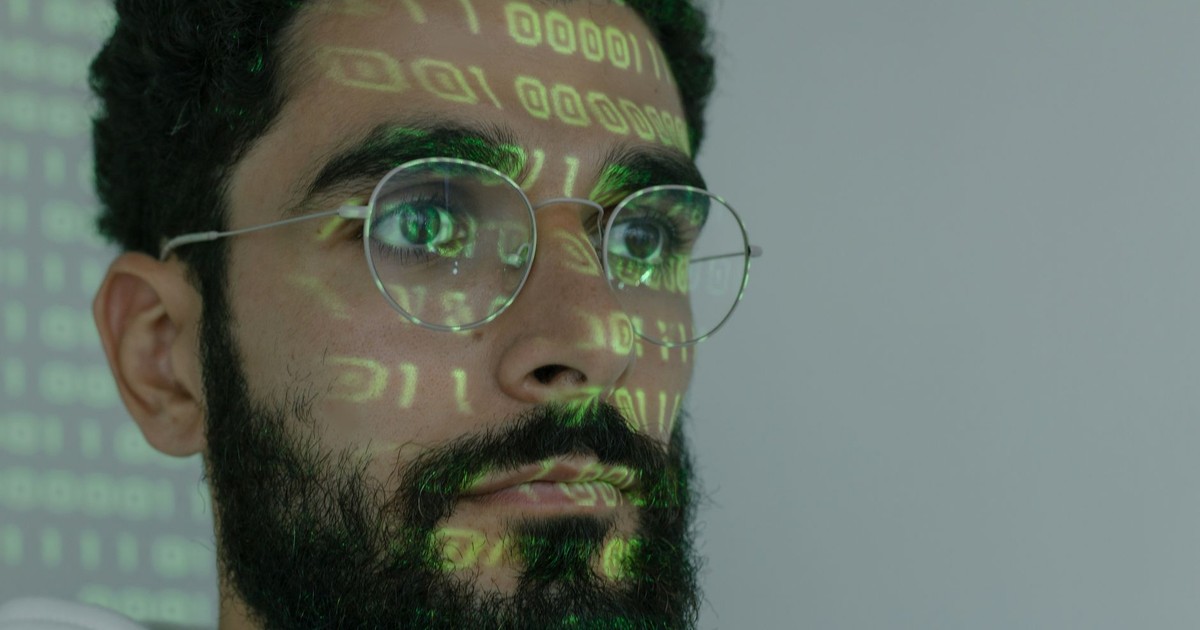
One of Bookstaber’s four warning signs is the one that gets the least attention in mainstream financial commentary, probably because it requires sitting with an uncomfortable contradiction. AI is supposed to be the engine of the next economic expansion. It is also, in his reading, one of the primary vulnerabilities of the current market structure.
Bookstaber explained that the S&P 500 was increasingly being taken over by companies riding the AI boom. The 10 largest companies in the index now account for more than 40 percent of its total weight — a level of concentration that has more than doubled in a decade. In a market designed to absorb individual shocks through diversification, heavy concentration in a single thematic trade achieves the opposite. He warned: “That level of concentration is unprecedented – and dangerous, because it means a shock to any one of these companies can ripple across the entire market rather than be absorbed by it.”
The private credit side of the picture is equally uncomfortable. Despite many businesses struggling to find a way to effectively use AI, Bookstaber warned that many of the companies borrowing money from private creditors are ones whose services might be replaced by the technology altogether. Money lent to fund AI’s competition is flowing toward the very companies AI is about to make obsolete.
Ray Dalio’s “Capital War” Warning

Ray Dalio is not someone who traffics in hyperbole. The founder of Bridgewater Associates spent decades turning macro-pattern recognition into the world’s most successful hedge fund, building a reputation on identifying large-scale structural risks in the global economy before they became visible to mainstream markets.
Dalio has issued a stark warning that the global systems that keep money flowing freely are breaking down, and that the world is on the brink of what he calls a “capital war” that would have major ramifications for the stock market. A capital war, in his analysis, is what happens when geopolitical tensions cause nations to weaponize financial flows – restricting where money can go, which currencies get trusted, and who can access global credit markets.
Dalio, founder of Bridgewater Associates, wrote in a 2025 retrospective on X that “obviously the AI boom that is now in the early stages of a bubble had a big effect on everything.” It is not a prediction that AI will fail. It is a warning that the investment cycle around AI has characteristics he has seen before, and that the last time he saw them, the hangover was severe.
The core of his thesis is that the U.S. government has borrowed an enormous amount of money with no signs of slowing down, and that the AI build-out will require an estimated $3 trillion by 2030, much of it relying on debt financing that could become scarce or expensive if his warning plays out. If the capital war he describes materializes and borrowing costs surge, projects and companies that only make sense at low interest rates stop making sense very fast.
Peter Schiff’s Dollar Thesis
Peter Schiff has been predicting financial collapse with the consistency of a man who believes he is the only one reading the map correctly. That reputation for persistence can make it easy to dismiss him, until you notice that the specific signals he pointed to ahead of 2008 are reappearing in his current analysis.
Veteran economist Peter Schiff is sounding one of his starkest warnings yet: the U.S. may be heading toward an economic crisis in 2026 that could rival or even exceed the 2008 financial meltdown. Unlike the last crisis, which was rooted in housing leverage and banking fragility, Schiff argues the next shock will be driven by a collapsing dollar, unsustainable public debt, and rising borrowing costs that directly hit U.S. consumers.
While precious metals surged sharply in 2025, the dollar suffered its worst year in nearly a decade, a pattern that, to Schiff, resembles the early stages of the subprime crisis in 2007, visible to those watching the right indicators but largely dismissed by mainstream markets. His argument has always been that the dollar would not serve as a safe haven in the next downturn the way it did in 2008. As he put it: “Inflation is going to be much more pernicious over the next few years. That’s what gold and silver are telling you – they are a warning.”
The more pointed version of his argument appeared in a February 2026 Fox Business interview, when he said the coming crisis would make 2008 look like “a Sunday school picnic,” specifically because, he argued, the next one would be centered in the American economy itself rather than spreading outward from a contained sector.
Michael Burry and the Signals the Market Keeps Ignoring

Michael Burry became famous for being right when everyone else thought he was wrong. The hedge fund manager behind the trade depicted in The Big Short bet against the U.S. housing market in 2006 and 2007, watched the ridicule accumulate, and then collected when the whole structure fell.
Burry has raised alarms about an artificial intelligence bubble, warning that the AI trade is feeding on itself — chip stocks rise because big tech spends heavily on AI, equipment makers follow, and investors treat every new spending plan as proof that demand will keep growing. The employment angle is underreported. Most crash discussions focus on investment valuations and credit markets. Burry’s concern extends to the structural disruption that AI represents for labor markets: when the disruption to employment outpaces the creation of new roles, the consumer base that underpins corporate earnings erodes in ways that do not register cleanly in quarterly reports until they do, all at once.
These warnings have not only triggered volatility and adjustments in major markets like the U.S. stock exchange but have also sparked concern and anxiety regarding global economic stability. The convergence of multiple credible analysts independently arriving at similar conclusions is, historically, worth paying attention to.
The Private Credit Time Bomb
One piece of Bookstaber’s analysis that deserves its own section is the private credit market, simply because most people do not know it exists at the scale it currently does. Writing in the New York Times, Bookstaber outlined a landscape where risks are spread across industries, markets, and nations, including the roughly $2 trillion private credit industry.
Private credit refers to loans made by non-bank lenders – asset managers and hedge funds – to companies that cannot or choose not to access public bond markets. The sector has expanded rapidly since 2010, partly as a consequence of bank regulation tightened after 2008. Those regulations, designed to make banks safer, pushed risk into a part of the financial system that has far less oversight, far less liquidity, and far less transparency.
Private credit fears have ramped up in recent months, with major asset managers including Blue Owl, BlackRock, and Morgan Stanley limiting redemptions for some funds. When asset managers start restricting how quickly investors can get their money back, that is not a technical adjustment. It is a signal that the underlying assets are not as liquid as the investors who bought them were led to believe. That gap – between assumed and actual liquidity – is precisely how 2008 began.
What None of Them Are Saying

Every name in this conversation – Dalio, Bookstaber, Schiff, Burry – is making a prediction, not a guarantee. The honest read of their analysis is not “the market will crash next month.” It is that the structural conditions for a severe financial event are present, and that the system’s complexity makes the timing and trigger genuinely unknowable until it is not.
Bookstaber said there were several issues plaguing the global economy that were being looked at in isolation, but putting them together was really dangerous, and something going wrong with one could have far-reaching consequences. Not a single identifiable threat that can be neutralized, but an interconnected web where the weak point could be anywhere.
The counterargument – and it is worth naming – is that some version of this analysis has been available since 2010. Debt has been unsustainable for years. The dollar has been under pressure before. AI hype will likely produce real productivity gains that justify at least some of the investment. Even Nouriel Roubini, who earned the nickname “Dr. Doom” for predicting the 2008 crisis and has regularly sounded alarms about debt spirals, has recently broken with his usual pessimism to dismiss concerns about the U.S. economy as misplaced. Reasonable people with similar data are arriving at very different conclusions.
The Pattern Underneath the Predictions

The people with the most credibility on financial crash prediction all earned that credibility by being wrong in the same direction first. They warned earlier than anyone else wanted to hear it, watched their warnings get dismissed, and were eventually proved right. The timing was always off. The direction was not.
What unites the current warnings from Dalio, Bookstaber, Schiff, and Burry is not a shared prediction of a specific event in a specific month. It is a shared assessment that the architecture of the global financial system is carrying more weight than it was designed for – AI debt, private credit opacity, geopolitical disruption, dollar vulnerability, and a stock market with its entire center of gravity resting on a handful of technology companies – and that the failure modes of complex systems are, by design, the ones you do not see coming.
Bookstaber said it most plainly. He spent his career studying how financial systems break. He watched the last major one break from the inside. Nearly two decades later, he is telling anyone who will listen that the conditions he spent years learning to recognize have returned, and that this time he is not sure a single sector will be able to contain the damage. Whether that warning is heard before or after the fact is the part no one, including him, can tell you.
The Part That Doesn’t Resolve

What makes this moment different from the prior decade of perpetual crash warnings is not the volume of voices or the urgency of their tone. It is the specificity of the conditions they are pointing at: a private credit market with $2 trillion in assets and limited transparency, a stock market where the top 10 companies carry more than 40 percent of the index’s total weight, an AI investment cycle that requires $3 trillion in build-out spending by 2030, and a geopolitical environment where the financial plumbing that moves money across borders is being rerouted in real time.
None of those conditions guarantee a crash. Complex systems can carry weight longer than anyone expects, and they can also shed that weight in ways nobody predicted. What Bookstaber’s career, and the careers of everyone else named here, actually demonstrates is that the warning arrives before the event does, and that the warning is almost always dismissed as premature right up until the moment it isn’t. The honest answer to what happens next is that nobody knows. The less honest, but more useful, answer is: pay attention to the structure, not the prediction.
Disclaimer: This information is not intended to be a substitute for professional medical advice, diagnosis, or treatment and is for information only. Always seek the advice of your physician or another qualified health provider with any questions about your medical condition and/or current medication. Do not disregard professional medical advice or delay seeking advice or treatment because of something you have read here.
AI Disclaimer: This article was created with the assistance of AI tools and reviewed by a human editor.