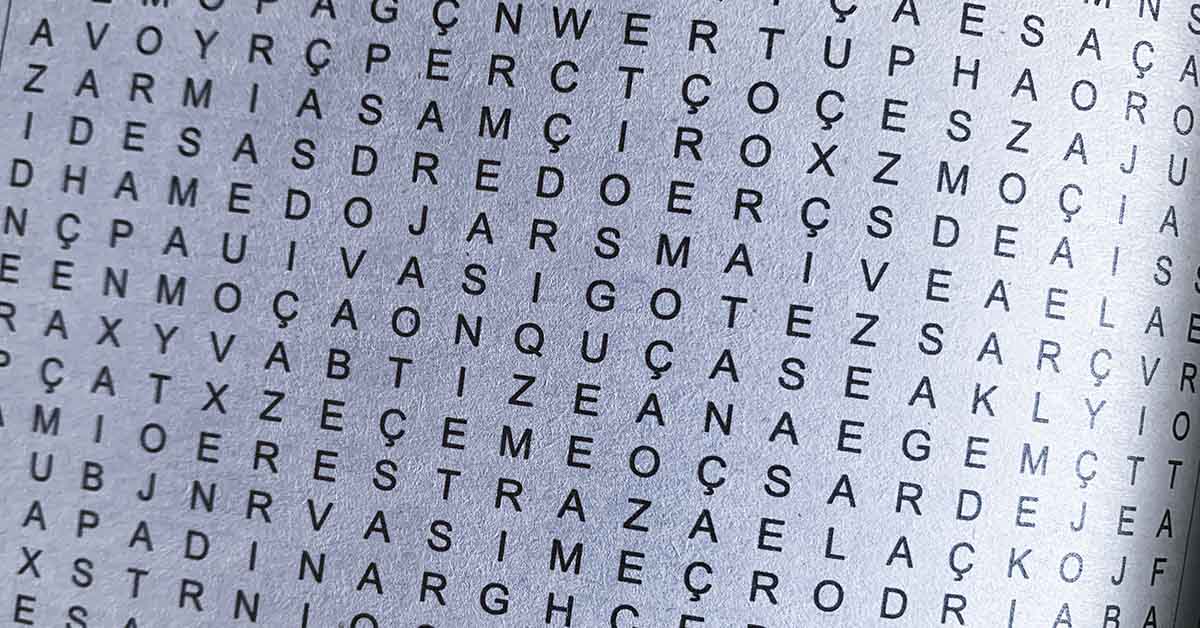

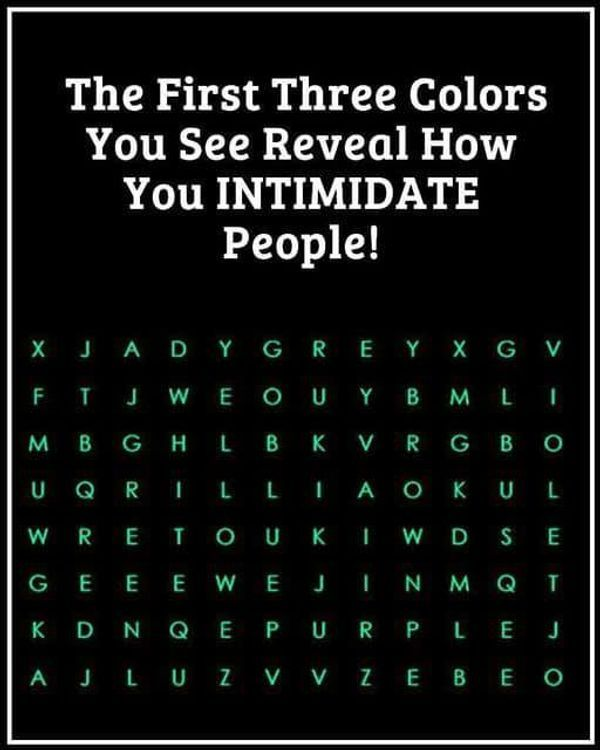
The internet has a long history of viral personality tests. Some ask how many animals you can see in a picture. Others challenge viewers to count triangles or choose which glass fills first in a puzzle. Recently, another version has been circulating widely online. It shows a grid of letters and asks a simple question: Which color word do you notice first?
The puzzle appears straightforward. Viewers scan the image, and suddenly a color name emerges from the letters. One person might spot “blue” immediately. Another might notice “purple,” “green,” or “grey.” The puzzle often claims that the first color you see reveals hidden personality traits or even explains how you influence other people.
These claims are appealing because people naturally enjoy learning about themselves. A puzzle that promises insight into personality feels entertaining and harmless. Yet the science behind what actually happens when you look at images like this is far more interesting than the personality predictions.
When someone studies a grid of letters to find hidden words, several mental processes begin to work together. Visual attention scans the image, pattern recognition searches for familiar shapes, and memory helps identify meaningful letter combinations. The first color word that appears is usually the result of these cognitive processes rather than a window into personality.
Understanding why these puzzles work can reveal something much more fascinating. They offer a look into how the human brain organizes information, searches for patterns, and transforms visual chaos into meaning.
Why the Human Brain Is Built to Detect Patterns
Humans are remarkably skilled at finding patterns. The ability to recognize shapes, symbols, and repeating structures is one of the brain’s most important survival tools. Long before written language existed, early humans relied on pattern recognition to interpret their surroundings.
Recognizing footprints in soil could signal the presence of animals. Identifying seasonal changes in the landscape helped communities prepare for migration or harvest. Over time, the brain evolved to process patterns quickly and efficiently.
That same ability plays a major role when people look at visual puzzles. When faced with a grid of random letters, the brain immediately begins organizing those letters into groups. Rather than recognizing dozens of individual characters, the mind searches for familiar sequences. Once the brain detects a recognizable pattern, such as a word, the letters suddenly stand out from the surrounding. What initially appears chaotic ultimately conveys a clear message.
This moment can feel surprising, almost like the word suddenly appeared out of nowhere. In reality, the brain has been quietly analyzing the image the entire time, scanning combinations of letters until something meaningful emerges.

Different people may notice different words first because everyone’s brain processes patterns slightly differently. Factors such as reading habits, attention patterns, and visual focus all influence what stands out. The puzzle, therefore, highlights the brain’s powerful ability to convert visual complexity into organized information.
How Attention Shapes What You Notice First
Another key factor in puzzles like this is attention. Attention determines which parts of an image the brain focuses on and which details it temporarily ignores. Every moment, the brain receives far more sensory information than it can process fully. To manage this overload, attention acts like a spotlight, directing mental resources toward specific areas.
When someone looks at a grid of letters, their attention moves quickly across the image. The eyes rarely remain still. Instead, they jump from one point to another in rapid movements called saccades.
These movements create scanning patterns. Researchers studying visual behavior have found that people often scan images using predictable paths. One common pattern resembles the shape of the letter F. The eyes move across the top of the image, then down along the left side, and finally across the middle.
Because of this scanning pattern, words located near the top rows of a puzzle often appear first. However, scanning habits vary between individuals. Some people explore the entire image quickly, while others examine small sections more carefully before moving on.
Lighting conditions and screen brightness can also influence perception. High contrast between letters and background improves visibility, allowing certain patterns to stand out more easily.

Image credit: Shutterstock.
Another powerful influence is expectation. When viewers are told to search for colors, the brain begins looking specifically for familiar color names. This process is known as cognitive priming. Expectations prepare the mind to detect particular patterns, increasing the chances of spotting them quickly.
As a result, the first color word someone notices often reflects how their attention moved across the image rather than any hidden personality characteristic.
The Stroop Effect and the Brain’s Automatic Reading System
A fascinating psychological concept known as the Stroop effect helps explain why puzzles involving color words are especially engaging. The Stroop effect was discovered by psychologist John Ridley Stroop in the 1930s. In his experiments, participants were asked to identify the color of ink used to print certain words. The challenge was that the words themselves spelled different color names.
For example, the word “red” might appear in blue ink. Even though participants were instructed to name the ink color, their brains automatically read the word first. This created a delay as the brain struggled to suppress the automatic reading response. The experiment demonstrated the brain’s strong preference for reading. Once people learn to read, recognizing words becomes almost automatic.
Puzzles containing hidden color names take advantage of this automatic process. Even when surrounded by random letters, familiar sequences quickly attract attention. The brain recognizes the word and immediately highlights it within the visual field. This is why many people experience the sudden moment when a word “pops out” from the puzzle. The letters were present all along, but the brain needed time to assemble them into a meaningful pattern.
The puzzle, therefore, works less as a color perception test and more as a demonstration of how quickly the brain recognizes language.
Why Personality Quizzes Feel Surprisingly Accurate
Despite relying on perception and pattern recognition, puzzles like this are often presented as personality tests. They typically assign personality descriptions based on the first color word someone notices.
For example, someone who spots “blue” might be described as calm or trustworthy. A person who notices “green” might be labeled balanced or thoughtful. Another who sees “purple” might be called creative or imaginative. These interpretations often feel convincing, even though they lack scientific support. One explanation for this reaction is the Barnum effect.
The Barnum effect describes the tendency for people to accept vague personality descriptions as uniquely accurate. Statements such as “you value honesty but sometimes question people’s motives” can apply to many individuals. Because the description feels relatable, readers often assume the test understands them personally.
Confirmation bias also contributes to this illusion. When people read a personality result, they tend to remember experiences that support the description while overlooking moments that contradict it.
For instance, if a puzzle claims that someone who notices green is thoughtful, that person might recall times they carefully considered decisions. Those memories reinforce the impression that the test is accurate. Together, these psychological tendencies create a strong sense of personal insight even when the connection between the puzzle and personality is weak.
The Real Science Behind Color Psychology
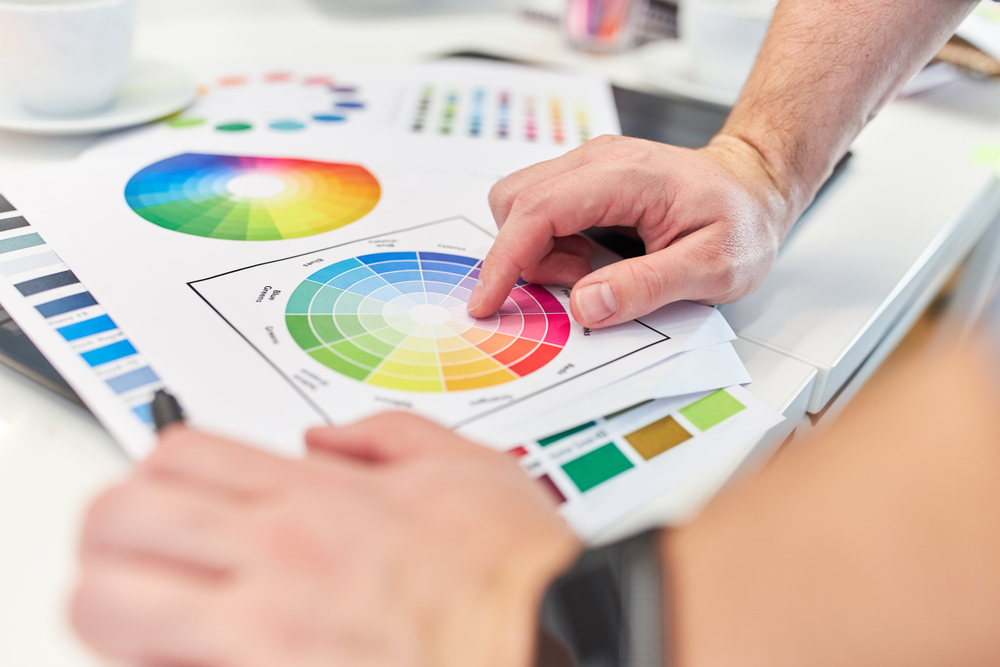
Although viral puzzles exaggerate their claims, color psychology is a genuine field of research. Scientists have long studied how colors influence emotions, attention, and behavior. Certain color associations appear frequently across cultures. Blue is often linked with calmness and stability. Red tends to evoke excitement, urgency, or passion. Green is commonly associated with nature, growth, and balance.
One well-known attempt to connect color choices with personality was the Lüscher Color Test, developed in the mid-20th century. The test asked participants to select colors from a series of cards in order of preference. According to its creator, these choices could reveal emotional states, stress levels, and underlying personality tendencies. The theory suggested that people gravitate toward certain colors based on their psychological needs at a given moment.
These associations influence design and marketing. Businesses often choose colors strategically when creating logos or advertising materials. Financial institutions frequently use blue tones to communicate reliability and trust. Environmental organizations favor green to suggest sustainability and harmony.
However, color associations are not universal. Cultural traditions and personal experiences can change how individuals interpret colors. In some cultures, white represents purity and celebration, while in others it is associated with mourning.
Because of these differences, color preference alone cannot reliably reveal personality traits. While colors can influence mood and perception, they do not function as psychological fingerprints. In other words, color psychology can shape impressions, but it cannot diagnose personality.
Why These Puzzles Spread So Easily Online
Beyond psychology, the popularity of perception puzzles is closely tied to the way social media platforms operate. Content that sparks curiosity and encourages interaction tends to spread quickly across digital networks.
Visual puzzles fit this model perfectly. They capture attention within seconds and invite viewers to participate. When a puzzle asks which color you saw first, readers feel compelled to test themselves. Once someone discovers a hidden word, they often share the puzzle with friends or family. The conversation then continues in comments and messages as people compare results.
This interaction increases engagement, which social media algorithms often reward by showing the post to a wider audience. As more people participate, the puzzle spreads rapidly across platforms. Another reason for their popularity is simplicity. Unlike complex articles or debates, puzzles require no special knowledge. Anyone can join the challenge immediately.
In a digital environment filled with constant information, short interactive content offers a quick moment of curiosity and entertainment.
What Your First Choice May Actually Reflect
If the first color someone notices does not reveal personality, what might it indicate instead? In most cases, the answer lies in momentary perception.
Visual salience plays an important role. Salience refers to how strongly an element stands out within a scene. Objects with distinct shapes or recognizable structures are easier to detect. Placement within the image also matters. Words located near common scanning paths, such as the top rows or center, are more likely to attract attention.
Reading habits influence perception as well. People who read from left to right often scan images using similar directional movements. This scanning pattern increases the likelihood of noticing words along those paths.
Mental readiness is another factor. If viewers expect to find color words, their brains become primed to detect those patterns more quickly. Even temporary factors such as mood or fatigue can influence attention. A person who feels alert may scan the image broadly, while someone who feels tired may focus on smaller sections. These variables demonstrate that perception is dynamic. The first word someone notices reflects how their brain processed the image in that particular moment.
Why Humans Love Hidden Patterns
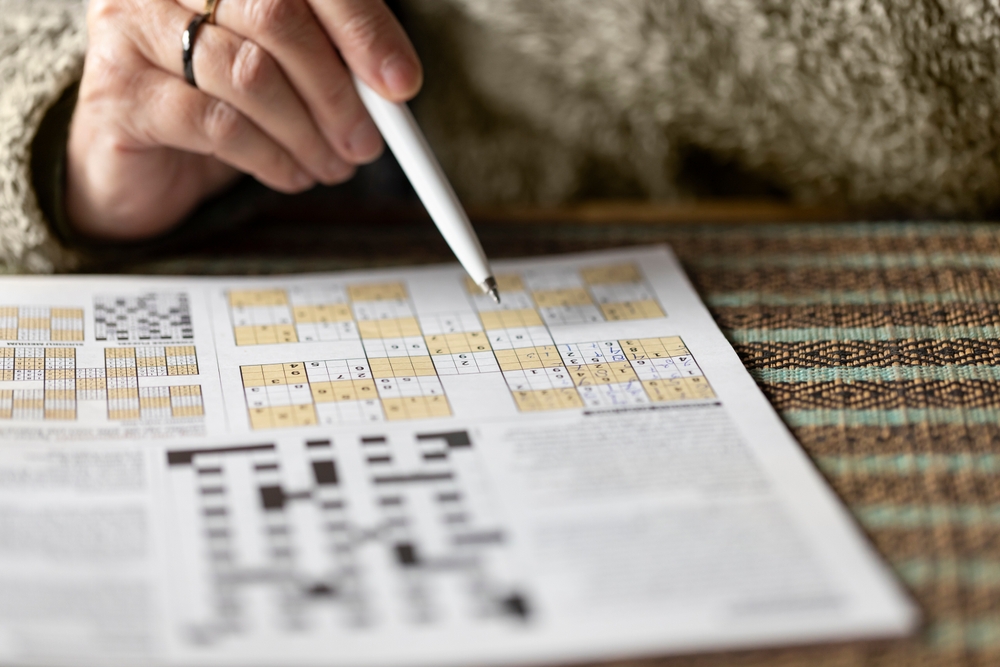
Although personality claims may be exaggerated, puzzles remain popular because humans naturally enjoy solving patterns. From word searches to crossword puzzles, pattern discovery activates the brain’s reward system. Each time someone identifies a hidden word, the brain releases small amounts of dopamine, a chemical associated with motivation and pleasure.
This reward encourages people to continue searching for additional patterns. The puzzle becomes a miniature challenge that transforms passive viewing into active exploration. The same instinct drives interest in riddles, mysteries, and brain teasers. For this reason, puzzles often hold attention longer than simple images. They invite curiosity and reward persistence, making them ideal for sharing online.
Read More: The First Thing You See Uncovers Surprising Facts About You
What the Puzzle Really Reveals
The viral puzzle asking which color you notice first may promise insights into personality, but its true value lies in something more fundamental. It reveals how the human brain interprets visual information.
Every time we look at an image, our brains search for patterns, organize details, and assign meaning. Attention moves across the scene, highlighting certain elements while ignoring others. The moment a familiar pattern appears, the brain locks onto it. Rather than revealing hidden personality traits, the puzzle demonstrates the remarkable efficiency of human perception. It shows how quickly the mind transforms scattered letters into recognizable words.
In the end, what you see first says less about who you are and more about how your brain works in that moment. And perhaps that insight into perception is even more fascinating than the personality predictions the puzzle promises.
Disclaimer : This content is intended for entertainment purposes only. Any quizzes, tests, or activities are not based on scientific evidence and should not be considered professional advice. Results are for fun and personal reflection only.
A.I. Disclaimer: This article was created with AI assistance and edited by a human for accuracy and clarity.
Read More: Which Glass Will Fill First? Your Choice Reveals A Personality Trait