

You can learn a lot about someone’s childhood from the way they react when the check arrives at dinner. Whether they immediately calculate their exact share down to the cent, quietly insist on paying the whole thing before anyone can argue, or subtly panic when the total is higher than expected, money has a way of dragging old blueprints out of storage, no matter how far you’ve traveled from where you started.
Growing up without much money doesn’t just shape the years you’re in it. It shapes decades of behavior that follow, often in ways that look completely ordinary on the surface: the way someone keeps every receipt, refuses to throw away leftovers, feels vaguely guilty about buying something full-price, or gets irrationally anxious about a car that’s making a new sound. The connection to a leaner childhood isn’t always obvious, but it’s almost always there.
None of these are flaws. They are adaptations, things the nervous system and the decision-making brain learned to do when resources were unpredictable and financial safety felt like a privilege that could disappear. They worked once. Many of them still do. And plenty of people carry several of the following grew up poor signs well into adulthood while never once connecting the habit to the house they grew up in.
1. They Have a Complicated Relationship With Spending

The spending patterns of adults who grew up in financial hardship rarely land in simple territory. Some become intensely frugal, unable to justify a purchase that isn’t absolutely necessary. Others swing the other way entirely, spending freely when money comes in because their nervous system learned early that money doesn’t stay, so you’d better use it while it’s here.
Research published by the American Psychological Association found that growing up poor can influence people’s sense of control and may lead them to more impulsive decision-making in uncertain situations. When money feels unstable, the brain can interpret a windfall as a narrow window rather than a foundation, which produces a spend-it-now logic that has nothing to do with self-discipline and everything to do with what felt true in childhood.
Adults who grew up in lower-income households often carry deep-seated beliefs formed in childhood and hardwired in adulthood, ideas like “my family has always been poor” or “I’m not good with finances,” that shape their financial behavior even when their actual circumstances have improved. The spending pattern, whatever form it takes, is usually less about the money in the account right now and more about the story they absorbed about money a long time ago.
2. They Keep Food Long Past What Any Reasonable Person Would

There is a genre of person who checks the expiration date on something, sees that it expired two days ago, and eats it anyway. There is also a person who keeps three boxes of cereal in a pantry that already has four, just in case. Both of them often grew up in households where food running out wasn’t a hypothetical.
Children who’ve experienced food insecurity can develop a preoccupation with food and exhibit behaviors such as hoarding food or obsessing over it, even when they have enough to eat. That pattern doesn’t automatically resolve when the food insecurity ends. The behavior gets encoded early and runs in the background for years, often without the person understanding why they’re reluctant to throw away the last third of a loaf of bread.
A longitudinal study published in NIH/PMC found that participants at increased risk of food insecurity in childhood up to adolescence later reported less healthy dietary habits in young adulthood. For those who grew up in those conditions, food insecurity becomes deeply ingrained in adult behavior, from avoiding shortages to hoarding accessible food. The adult who finishes everything on their plate even when they’re full, or who experiences genuine distress at the thought of throwing away leftovers, is usually operating from a very old instruction.
3. They Fix Things Instead of Replacing Them

When the heel of a shoe starts to come loose, most people start thinking about new shoes. Someone who grew up without much money usually starts looking for glue. The ability to repair, improvise, and extend the life of an object is something learned out of necessity, and it becomes second nature in a way that doesn’t easily go away just because circumstances improve.
Adults raised in homes that experienced financial hardship pay close attention to how they’re spending money and focus on how well-made a product is, only putting money toward items that last. The grown adult who goes to three different stores to find the best price, who researches a $40 appliance for two weeks before buying it, who tapes the spine of a book instead of buying a new copy, is running the same instinct. Frugality isn’t cheap. It’s a deeply trained sense of what things actually cost.
When you grow up in a household where calling a plumber was a luxury and new shoes appeared only at the beginning of the school year, learning to be resourceful becomes a point of pride. The habit carries into adulthood as competence, not deprivation.
4. They Feel Uncomfortable Accepting Help or Money From Others

Ask someone who grew up in a financially stretched household to split the bill at dinner, and they’ll insist on paying their half with a level of determination that borders on concerning. Ask them to let a friend cover them this one time, and they become visibly uncomfortable. The independence isn’t stubbornness. It’s self-protection that was built very early and is very hard to dismantle.
A 2016 Cornell University study published in PNAS found that childhood poverty is linked to greater psychological distress, including behavioral markers of helplessness, and elevated levels of chronic physiological stress. Financial dependence, even temporary and totally reasonable, can trigger that fear in a very visceral way. Accepting money from someone can feel like a debt that might not be repayable, or a vulnerability that might be used against you later.
The pattern runs through relationships, work, and how people handle kindness in general. The person who insists on bringing something to every gathering because they cannot arrive empty-handed, who declines gifts with a level of resistance that makes the gift-giver feel slightly rejected, usually traces that behavior back to having learned, in childhood, that needing things was a problem to be managed privately.
5. They Monitor Utility Usage With Unsettling Precision
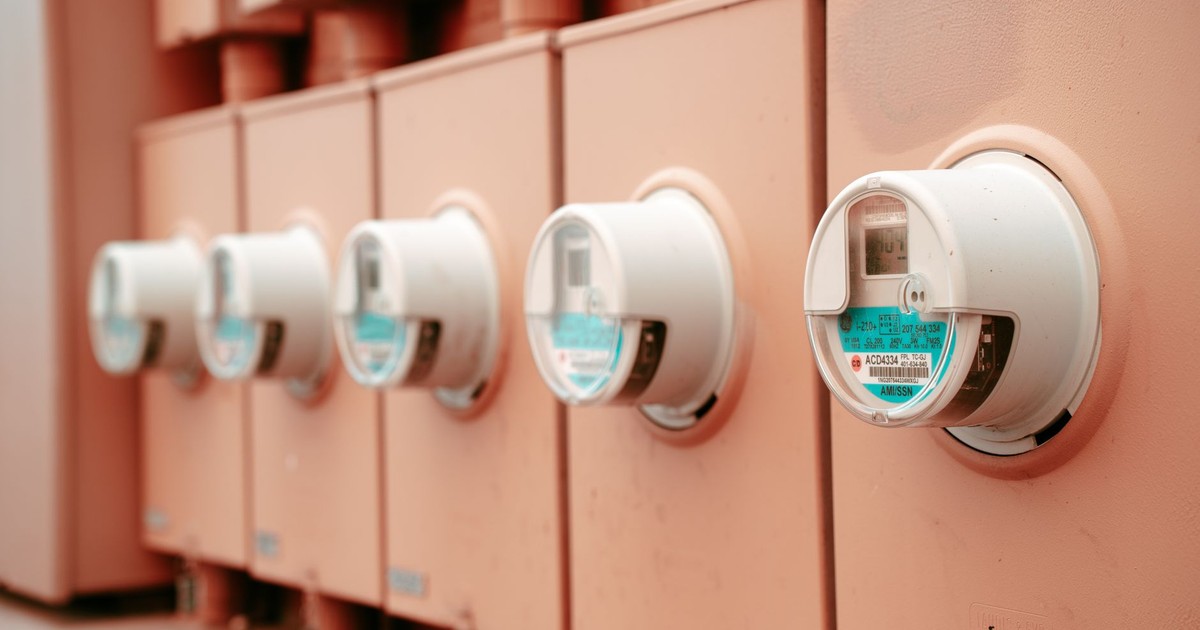
Someone who grew up in a house where the electricity was sometimes turned off knows exactly what a light left on in an empty room costs. They know which appliances are the energy hogs. They know that a five-minute shower and a ten-minute shower are genuinely different, and the difference is not nothing. These are not people who read an article about sustainability and changed their behavior. These are people who absorbed the information through genuine consequence.
The habit of turning off lights, keeping the thermostat lower than is comfortable, taking short showers, and not running the dishwasher unless it’s completely full often baffles partners and housemates who did not grow up with these rules baked in. What looks like mild obsessiveness from the outside is usually a deeply automatic response to the memory of a parent checking the meter, or of the moment the heat stopped working in January because the bill hadn’t been paid.
It is one of the most recognizable of all the signs, precisely because it survives changing income brackets with almost no modification. You can earn three times what your parents did and still feel a physical unease about leaving a ceiling fan running in a room nobody’s sitting in.
6. They Struggle to Spend Money on Themselves Specifically

This isn’t general frugality. It’s the very specific inability to spend money on themselves as opposed to spending it on other people or on practical necessities. The groceries are fine, the kids’ school supplies are fine, the household thing that needed fixing got fixed. But a new coat for themselves, a restaurant meal just because they felt like it, a haircut at a place that costs a little more, those purchases come with a layer of guilt that can be genuinely difficult to work through.
The messaging people receive about money directly affects their spending habits, and it usually traces back to childhood. When the formative message was that money was always scarce and your own comfort was the last thing to be funded, spending on yourself can feel uncomfortably close to waste.
This pattern often flies under the radar for years because it doesn’t look like a problem from the outside. The person isn’t struggling financially. They just haven’t updated the internal rule that says their needs are last in the budget, a rule that was practical once and now just costs them in quality of life.
7. They Have a Deep Aversion to Debt

The person who pays off their credit card in full every month, who refuses to finance anything they can pay cash for, who feels a low-level physical discomfort at carrying any amount of balance, usually grew up watching what debt does to a household. Debt wasn’t an abstract concept or a financial strategy in the homes they came from. It was the reason certain conversations happened in hushed voices, or the reason a bill arrived that nobody could pay, or the reason the car disappeared one day.
The fear of debt is, in part, a rational response to having watched how quickly financial instability can compound. For someone whose childhood home had no financial buffer, debt wasn’t a tool. It was a trap.
The refusal to carry debt can become its own kind of limitation when it prevents reasonable financial decisions, like a low-interest mortgage or a business investment with strong fundamentals. But it comes from an entirely rational place. Growing up with the constant awareness that money owed was money you might never actually have teaches lessons that no finance seminar is going to override quickly.
8. They Feel a Chronic Low-Level Anxiety About Financial Security

Even after years of stable income, the free-floating financial anxiety doesn’t always disappear. It might look like checking the bank balance more often than necessary, recalculating whether you can “really” afford something you’ve bought a hundred times before, or lying awake running numbers that are fine, numbers you know are fine, but the calculation happens anyway.
Research on adults from different childhood backgrounds found that two people with different upbringings are likely to respond to uncertainty in different ways, even if as adults they have a similar economic status. Adults who grew up poor were more inclined to view difficult and uncertain living conditions as beyond their control. That sense of things being outside your control doesn’t evaporate when the income stabilizes. It becomes the baseline through which all financial situations are filtered, including the ones that are actually fine.
The vigilance that was once a strength keeps running even after the threat that created it is long gone. Chronic exposure to uncontrollable environmental demands creates a diminished sense of mastery, and children and adolescents from disadvantaged backgrounds carry more helplessness into adulthood than their peers.
9. They Find It Hard to Throw Anything Away
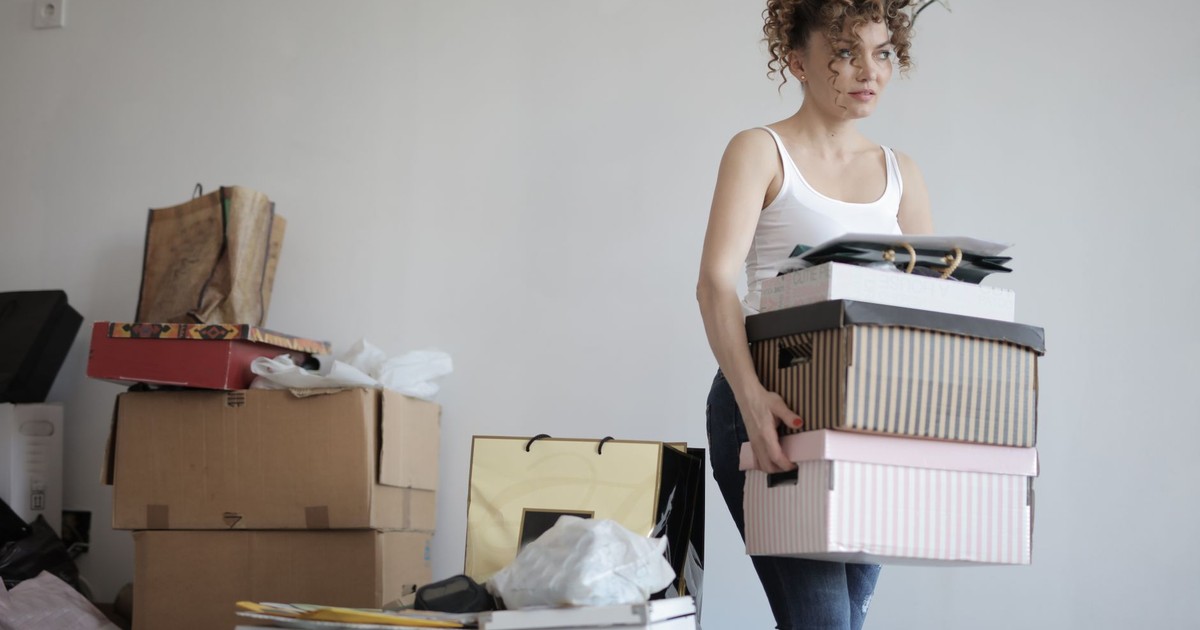
The drawer full of rubber bands, twist ties, and empty containers that might be useful someday. The shelf of mismatched Tupperware, the collection of plastic bags folded neatly inside a larger plastic bag, the stack of cardboard boxes in the garage because you never know. This is not hoarding in a clinical sense. It’s the residue of growing up in a household where everything that still had a potential use was kept, because buying a new one wasn’t always possible.
If you grew up poor, the idea of throwing away something that still technically functions can feel genuinely wrong, like a small act of recklessness. The butter container that becomes a leftover dish, the paper bag from the grocery store that becomes a trash liner, the worn-down pencil that gets sharpened one more time, these habits have real practical value, and many people who grew up more comfortably have had to be deliberately taught versions of them as adult virtues.
The difficulty comes when the behavior extends to things that genuinely cannot be used, or when it creates stress in shared living spaces. But the instinct itself is not irrational. It’s the adult expression of a childhood where nothing was wasted because nothing could be.
10. They Over-Explain or Apologize for Their Lifestyle

Someone who grew up in a financially comfortable home tends not to feel the need to explain why they live the way they do. Someone who grew up poor often does, even after years of financial stability, even when nobody asked. The explanation comes out when they’re talking about the car they drive, the neighborhood they live in, or the vacation they didn’t take. It’s a quiet but consistent habit of pre-emptively justifying choices before anyone has raised an eyebrow.
Research on poverty and shame found a complex web of emotions around financial circumstances. Feeling ashamed while growing up in a low-income household tends to ingrain an inherent sense of embarrassment in many children’s psyches. That internalized sense of having less, of not being on the right side of an unspoken standard, doesn’t automatically leave when the actual financial circumstances change. It goes underground and surfaces in the form of over-explaining.
This can also flip in the other direction: the person who becomes fiercely private about money, who refuses to discuss salaries or share financial information with anyone, and who finds the whole topic charged in a way that people around them don’t quite understand. Both the over-explainer and the extremely private person are often managing the same original experience, just in opposite directions.
11. They Are Hyper-Aware of Social Class Signals
Whether it’s the label inside a coat, the neighborhood someone lives in, the school their children attend, or the brand of olive oil on the counter, someone who grew up without much money usually has a finely tuned awareness of the signals people use to communicate class. They notice things that people who grew up more comfortable genuinely don’t register, because they spent their formative years reading these signals carefully and understanding what they meant.
Research published in a 2015 NIH study found that childhood poverty, independent of adult income, was associated with higher amygdala responses to threat cues and decreased connectivity between the amygdala and prefrontal cortex. Growing up in a financially stressful environment can calibrate the brain to be more alert to potential social threats, including the threat of being placed or displaced in a social hierarchy. Adults who grew up poor appear more sensitive to social threat cues and less sensitive to positive social cues.
This awareness can be an asset. It often makes people genuinely perceptive and socially intelligent in ways that are hard to teach. It can also be exhausting, the constant cataloguing of signals in every room, the automatic calculation of where you stand. Both things are true.
12. They Feel Personally Responsible for Everyone Else’s Financial Wellbeing

The adult child who sends money home, who quietly pays the family phone bill, who lends to a sibling and doesn’t chase repayment, who absorbs other people’s financial anxiety as though it were their own, often grew up in a household where money stress was a shared family experience and where the weight of it landed on everyone in the house, including the kids.
The person who cannot watch someone in their family struggle financially without doing something about it isn’t being naive. They’re operating on a very old instruction that told them financial distress is a shared emergency, not an individual one.
This habit can be genuinely generous and community-minded. It can also drain the person living it, particularly when the giving doesn’t flow back in their direction. The hardest version of this pattern to recognize is the one where helping everyone else financially is also a way of avoiding the discomfort of keeping the money for yourself.
What These Habits Are Actually Saying

None of the behaviors on this list are mistakes. They are the predictable outputs of a childhood in which certain conditions were true, and in which the nervous system, still developing, found ways to adapt. The frugality, the food anxiety, the inability to spend on yourself, the hypervigilance about financial signals, every single one of these made complete sense at some point. They were correct responses to the environment that produced them.
The more useful question isn’t whether you recognize yourself in this list. It’s which of these habits are still serving you and which have outlived the original conditions that created them. Some of them, the resourcefulness, the empathy, the acute awareness of what things actually cost, are worth carrying forward. Others are running on old code from a time that’s genuinely passed, costing you comfort or peace or connection that you no longer need to pay for.
Knowing where a habit came from usually changes your relationship with it, even when it doesn’t change the habit itself. Some of these patterns go back further than any single memory. Recognizing them is not a solution. It is, however, usually the beginning of a more honest conversation with yourself about what you actually want your life to look like now.
AI Disclaimer: This article was created with the assistance of AI tools and reviewed by a human editor.