

Every parent has had the moment where they wonder if they’re doing it right. Not in a dramatic, middle-of-the-night spiral kind of way, though those happen too. Just the ordinary Tuesday version: you held a limit, your kid fell apart, and somewhere in the space between their tears and your resolve, the doubt crept in. Was that the right call? Am I being too strict? Not strict enough?
Psychology has been trying to answer that question for more than sixty years. The answer it keeps arriving at is more specific than most parents expect. The combination of how warm you are and how much structure you hold simultaneously, without sacrificing one for the other, is what the evidence keeps returning to. That combination has a name, and there is a significant volume of research behind it.
The framework most researchers use traces back to developmental psychologist Diana Baumrind, who in the 1960s began categorizing parenting into distinct styles based on two dimensions: how responsive parents are to their children’s emotional needs, and how demanding they are in terms of expectations and rules. The four styles her work eventually produced, along with refinements from researchers Maccoby and Martin in the 1980s, are authoritative, authoritarian, permissive, and uninvolved. Each one describes a real pattern, and each one has a measurably different effect on children as they grow.
The Four Styles, Plainly Described
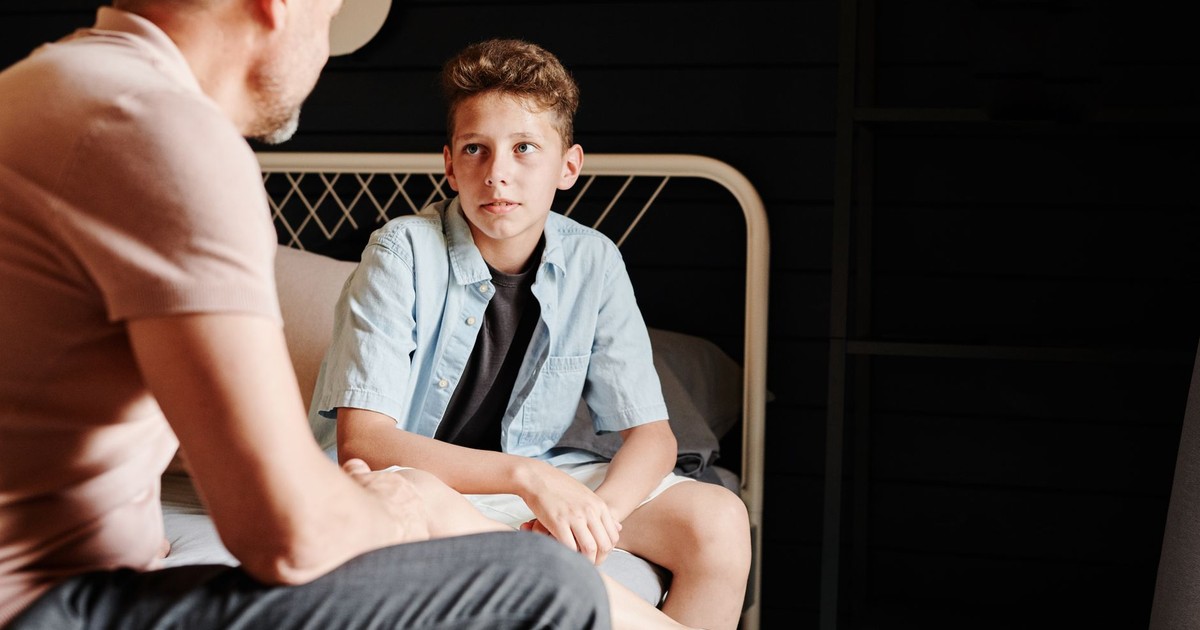
Authoritarian parents enforce strict rules with low emotional support. Permissive parents provide emotional warmth but minimal structure. Authoritative parents balance high expectations with support. Uninvolved parents demonstrate both low responsiveness and low demandingness.
If you want to picture these as actual people at a school pickup line, it goes something like this. The authoritarian parent is the one whose child knows every rule in the house but probably couldn’t tell you why any of them exist. The permissive parent is the one whose kid is genuinely a delight to be around until someone tries to tell them no. The uninvolved parent is rarely at pickup at all, and when they are, they’re somewhere else in their head. The authoritative parent is warm and engaged and also completely willing to hold a rule when the kid pushes back on it, even when holding it is exhausting.
Why Authoritative Parenting Keeps Winning

Decades of research are clear: authoritative parenting produces the healthiest, most resilient kids. That finding has been replicated across a wide range of methodologies and study designs.
A 2025 critical review published in Premier Science found that parenting styles significantly influence various dimensions of child development, encompassing emotional, cognitive, and social outcomes. The review drew on diverse methodologies to examine how authoritative, authoritarian, permissive, and neglectful parenting shapes children’s self-esteem, academic achievement, and emotional regulation.
What makes authoritative parenting work isn’t some mysterious alchemy. An authoritative parenting style is distinguished by high care and high control, setting clear expectations and boundaries while being responsive to the child’s needs. The key is that neither element is optional. You can’t have the warmth without the structure and call it authoritative, and you can’t have the structure without the warmth. Both have to be present, and both have to be genuine.
Children raised by authoritative parents tend to exhibit higher levels of self-reliance, self-control, and social competence compared to their peers. Children guided by the authoritative style also demonstrated lower scores in emotional vulnerability and better physical and mental health, including fewer depressive symptoms and increased cognitive functioning.
What the Mental Health Data Actually Shows

The relationship between parenting style and mental health outcomes is where the research gets particularly stark. A December 2025 study published in PLOS ONE found that authoritative parenting was significantly associated with lower rates of depression and anxiety, while authoritarian parenting was associated with higher rates of depression.
Authoritative responsiveness encourages secure attachment and better emotional regulation because parental warmth combined with consistent limits teaches children how to regulate their own feelings appropriately. The effects carry well past childhood. A child who grows up in a home where their emotions were acknowledged rather than dismissed, and where expectations were consistent rather than arbitrary, develops internal tools for managing difficulty. That scaffolding doesn’t disappear when they leave home.
The contrast with authoritarian parenting is direct. Authoritarian parenting, marked by high control and low warmth, is consistently linked to negative outcomes. Research has associated it with increased behavioral problems, emotional distress, and rebelliousness, as well as lower self-esteem. Authoritarian parenting patterns that promote strict control without making room for two-way communication or emotional support often cause psychological pressure that leads to stress and anxiety in children. Children who are told what to do without ever being told why tend to be compliant when watched and unstable when they’re not.
The Problem with Permissive Parenting

Permissive parenting is the one people are most reluctant to criticize, because it comes from a genuinely loving place. The warmth is real. The intention is good. The problem is that warmth without structure isn’t actually what children need, even though it can look like what they want.
Parents who set no limits often raise kids who make unhealthy choices and struggle when the real world eventually says no. The world – school, friendships, workplaces, relationships – runs on expectations and delayed gratification. A child who has never been asked to tolerate disappointment at home arrives there underprepared.
Some parents lean permissive not out of philosophy but out of exhaustion, or because they’re actively trying to repair what felt too strict in their own upbringing. That’s understandable. But research on families without rules suggests that even when no-rules parenting works in individual cases, it tends to depend heavily on specific child temperament and family circumstances, rather than being broadly replicable. The absence of structure isn’t the same as freedom. It’s just the absence of structure.
Does Authoritative Look the Same in Every Family?

The research supporting authoritative parenting has historically been conducted with predominantly Western, middle-class samples. Cross-cultural researchers have pushed back on whether the findings translate uniformly across all backgrounds.
While numerous Western studies have shown that authoritative parenting is more effective in promoting academic performance, maturity, and fewer behavioral problems, parenting styles have different effects on children in different cultural and geographic contexts. The emotional climate that authoritative parenting creates appears to be consistently beneficial. But what “high responsiveness” looks like, and what counts as appropriate “demandingness,” can differ significantly between cultures, socioeconomic conditions, and family structures.
A parent raising a child in a high-crime neighborhood may have safety-based rules that look strict in isolation but make complete sense in context. A parent drawing on collectivist cultural values may define autonomy-support differently than a Western psychological framework does. The research isn’t saying there’s one script to follow. It’s identifying two underlying qualities – warmth and structure – and noting that the combination of both consistently produces better outcomes than either one alone, or neither.
A 2025 longitudinal study published in Frontiers in Psychiatry tracked 1,709 adolescents across three data waves and found that parenting style patterns have measurable long-term impacts on adolescent mental health. The study followed the same families through multiple school years rather than collecting a single snapshot, which makes those findings harder to dismiss. The effects of how you parent don’t stay in early childhood. They trail your child into adolescence and beyond.
The Qualities That Actually Matter Day-to-Day
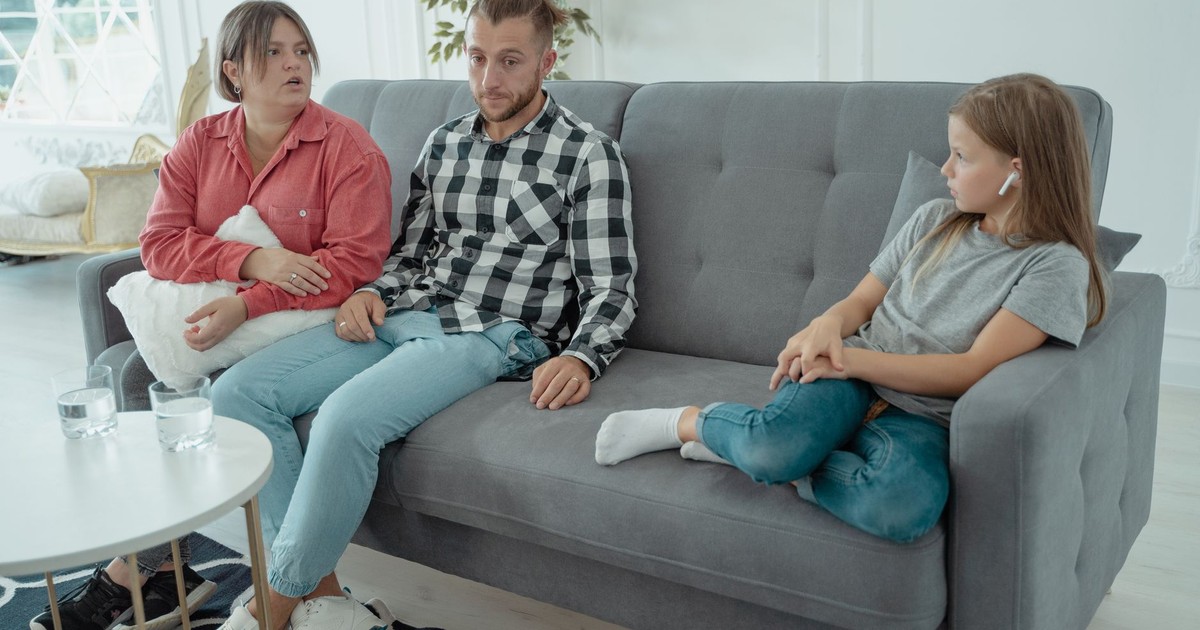
In practice, authoritative parenting comes down to a handful of consistent behaviors that can feel deceptively ordinary. Explaining reasons behind rules rather than just issuing them. Acknowledging when a child is upset without immediately abandoning the rule that made them upset. Following through when you say you will, whether the follow-through is a consequence or a promise. Being willing to hear your child push back and respond to the actual argument rather than just reasserting your authority.
Authoritative parents combine structure with empathy. They validate feelings while holding limits. The “validating feelings” part is not optional softness. The “holding limits” part is not optional harshness. Both are load-bearing.
Doing this consistently is genuinely hard. Explaining your reasoning to a seven-year-old who is not in a mood to receive it, while also not backing down from the rule, while also making sure your tone stays regulated enough that you’re not modeling the very emotional dysregulation you’re trying to prevent – that is a lot to hold at once. Most parents do it imperfectly, most of the time. That’s normal, not a failure.
Read More: These Are the Countries Now Banning Social Media for Kids Under 16
What This Means in the Actual Moments

When reading research like this, the temptation is to run it as a performance review of your own parenting – tallying where you’re warm enough, where your structure slips, where last Wednesday’s meltdown fits in the developmental taxonomy. That’s not what the evidence is for. The research on parenting styles is describing patterns and their average effects across large populations. It is not a verdict on any individual family, any individual child, or any individual Tuesday when you lost your patience and said something you’d take back if you could.
What the research does offer is steadier than a verdict: a set of orienting principles. Warmth is consequential. Structure is consequential. The combination of both, held consistently enough that your child experiences it as reliable, produces stronger outcomes than any specific rule or consequence or parenting trend cycling through your social media feed. The healthiest parenting style is less a style in the sense of a look to pull off and more a relationship quality to keep returning to, even when you fall short of it.
Which you will. Which all parents do. The question the research can’t answer, and the one that stays with every parent anyway, is whether the trying counts. It probably does. Not because the effort is enough to cancel out the hard days, but because a child raised by someone who keeps caring about how they’re doing it tends to know the difference between a parent who is strict and a parent who is paying attention. Those are not the same thing, and kids, even very young ones, are not confused about which one they have.
Disclaimer: This information is not intended to be a substitute for professional medical advice, diagnosis, or treatment and is for information only. Always seek the advice of your physician or another qualified health provider with any questions about your medical condition and/or current medication. Do not disregard professional medical advice or delay seeking advice or treatment because of something you have read here.
AI Disclaimer: This article was created with the assistance of AI tools and reviewed by a human editor.