

The gap between a home that looks lived-in and one that looks considered is almost never about money. Most homes that read as expensive have exactly the same square footage, the same builder-grade bones, and roughly the same furnishings as homes that don’t. The difference is a handful of specific decisions that most people never make – not because they’re difficult or expensive, but because nobody spelled them out clearly. A kitchen renovation can run thirty thousand dollars. The changes on this list will not.
Home budget-friendly upgrades have been the subject of countless homeowner forums and renovation roundups, and the recurring conclusion across all of them points in the same direction: your home already has everything it needs. It just needs the right version of itself.
The collective wisdom on this comes from exactly where you’d expect – homeowners comparing notes, testing what actually works, and sharing what moved the needle without moving the budget. What follows are the changes that keep coming up, the ones people point to when they say the house suddenly felt different, and they’re not entirely sure why.
The Light Is Doing More Than You Think
Start with the bulbs before you spend a dollar on anything else. This is the most consistently overlooked piece of advice in every home improvement conversation, probably because it feels too simple to actually work.
Lighting experts at Rackora consistently recommend bulbs in the 2700K to 3000K Kelvin range for living spaces. That warm, yellowish-white light creates a cozy, inviting atmosphere and promotes relaxation by encouraging the body to release melatonin after a long day. The overhead lights that came with most builder-grade homes sit around 4000K or higher – cool, flat, and about as welcoming as a parking garage. Swapping them out costs roughly ten dollars a bulb.
The bigger move is layering. A ceiling fixture alone creates a flat, institutional feeling no matter what temperature the bulb is. Add a floor lamp in one corner and a table lamp on another surface and you get depth. The room stops reading as a lit room and starts reading as a room with atmosphere. Designers charge a premium to explain this – the warm overhead versus the layered glow and why only one of them makes a room feel inhabited. Now you have it for free.
Warm, layered lighting adds depth and creates a more inviting atmosphere, and matching finishes throughout the home helps create a cohesive, high-end appearance. Three different metal finishes across your lamps and fixtures is the decorating equivalent of wearing three different shades of black. Each one is fine on its own. Together, they just look like a decision you didn’t make.
The Hardware Nobody Notices Until It’s Right
Cabinet pulls and drawer handles are the earrings of a room. Nobody walks in and announces that they love your hardware. But change it and suddenly the kitchen looks updated, the bathroom looks intentional, and guests start using words like “clean” and “put-together” without being able to say why.
Swapping outdated knobs and pulls for modern alternatives is one of the most affordable updates available. According to 2024 data, cabinet hardware starts at about $2 per piece, with black matte, brushed brass, and chrome finishes ranking as top choices – and minor kitchen updates like cabinet painting and hardware replacement show a 96% return on investment, delivering more value than many major renovations at a fraction of the cost. An entire kitchen of new pulls can run under $100 if you shop around.
The catch is that you have to measure your existing hardware’s hole spacing before you buy anything, because mismatched holes require spackling, and spackling requires painting, and suddenly you’re in a whole project when you just wanted new handles. That is a number worth writing on a sticky note and putting on your bathroom mirror the next time you’re tempted to talk yourself into a full kitchen remodel.
The same logic applies to faucets, switch plates, and outlet covers. A faucet in an outdated finish can make a genuinely nice bathroom vanity look cheap. Switch plates are the wallpaper of 2026 – home decor gets away with a lot, and ugly switch plates are dragging down more rooms than anyone admits. They cost three dollars to replace.
Curtains That Actually Fit the Room
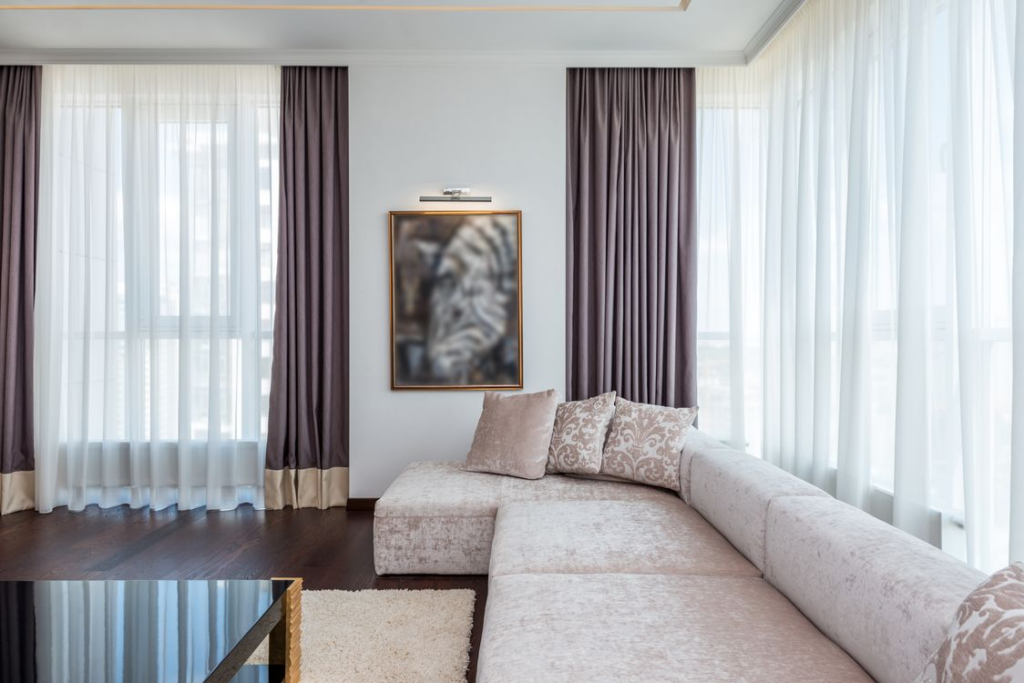
The curtain rod is in the wrong place. In almost every home where curtains look like an afterthought, the rod is mounted just above the window frame, which turns the window into a window and nothing more. Move it up. Install the rod as close to the ceiling as your curtains allow, and the window becomes an architectural feature. Installing curtain rods higher than the window frame creates the illusion of taller ceilings, making the room feel larger. A room that feels taller also tends to feel more expensive, even when nothing else has changed.
The curtains themselves need to be long enough to touch the floor, or close enough that the gap isn’t visible unless you’re looking for it. The half-height curtain that hovers several inches above the baseboard is one of the most common and most fixable problems in home decorating, and it costs nothing to fix if you already have the curtains – you just move the rod. If you need new panels, budget-friendly options start at about $25 per panel and come in a wide range of materials and patterns to suit different styles.
One other thing: fabric weight matters more than the pattern. A lightweight, flimsy curtain in a beautiful print looks cheap. A heavy, textured linen in a plain color looks considered. If you’re choosing between them, choose weight.
The Surfaces You’ve Stopped Seeing
There is a specific kind of clutter that accumulates on every flat surface in a home, and it is not the dramatic disaster clutter of a bad day. It is the quiet creep of things that live somewhere because they needed somewhere to go: the charging cables, the random candle, the stack of things that will definitely be sorted through next weekend. Individually, each item is defensible. Collectively, they make your home look like it is between moments rather than settled in one.
Decluttering a surface is not a cleaning task. It is a design task. When a countertop has three things on it instead of eleven, the countertop itself becomes part of the room’s aesthetic. The material starts to read. The space between objects starts to do something. This is the logic behind every open-concept kitchen spread in a magazine, where nothing is sitting on the counter except one beautiful bowl of lemons. You don’t need the lemons. You need less of everything else.
The rule that works: if something lives on a surface because it doesn’t have a real home, find it a real home. A basket, a drawer, a shelf with a door in front of it. The surface reclaims itself the moment you do.
Paint Is Not a Renovation
A fresh coat of paint in the right color does something that almost nothing else in home upgrading can claim: it makes every other item in the room look better. Fresh paint is one of the most effective ways to transform a home, with neutral tones helping spaces feel larger, brighter, and more updated. The grayed-out white on walls that have never been repainted, or the slightly-off-beige that was neutral once but now just looks tired, is dragging the room down in ways that are hard to articulate but immediately obvious once it’s gone.
The specific color matters less than people think. What matters is the undertone. A true warm white with a yellow undertone will make a north-facing room feel warmer. A cool white with a blue or green undertone will make a bright room feel cleaner and fresher. Pull a chip from a paint store, hold it against your existing furnishings in the actual light of the room, and trust what you see rather than what the name on the chip says. “Agreeable Gray” and “Accessible Beige” look nothing like each other by 3pm in afternoon light.
Trim and ceiling paint are the part people skip. Freshening up the trim alone, without touching the walls at all, can make a room look as if it was recently renovated. Clean white trim against almost any wall color reads as “someone cares about this house.”
Textiles Are the Fastest Renovation
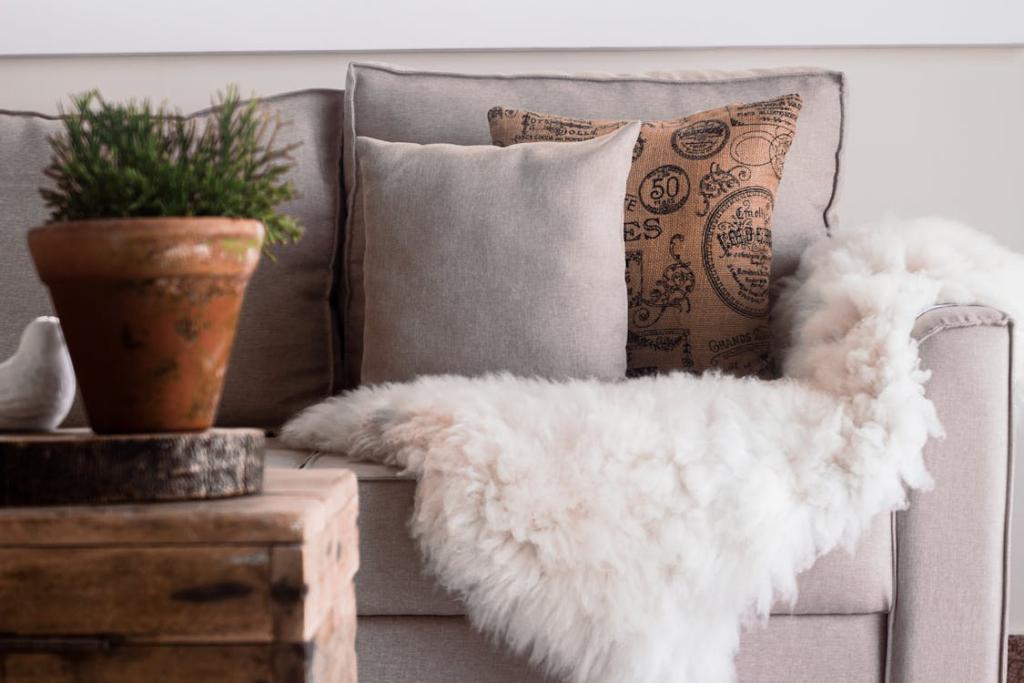
Bedding, throw pillows, rugs, bath towels – these are the things you look at every day and stop registering after about three weeks. They are also the things that, when replaced, make visitors say “did you renovate?” when you absolutely did not renovate.
The logic here is the same as the curtain weight argument. Texture and material communicate quality in a way that color and pattern alone cannot. A linen duvet cover in the most unassuming oatmeal shade looks more expensive than a printed cotton one at twice the price, because the material has weight and drape and a quality you can see from across the room. Layering with decorative pillows and throws adds texture and depth, and coordinating the bedding with the room’s color palette brings the whole design together without effort. You don’t need to match everything. You need to have chosen everything from the same color family, even loosely.
An area rug is worth its own conversation. If the rug is too small for the room, the room will look smaller, not bigger. The front legs of the sofa should sit on the rug. The rug should extend at least two feet past the sides of the bed. A rug that floats in the middle of a seating area like a postage stamp on an envelope is one of the most common decorating missteps in American homes, and it’s entirely fixable – sometimes just by moving the existing rug two feet in any direction.
The Finishing Touch Nobody Thinks About
Cohesion is the thing that separates a home that looks expensive from a home that looks like it has expensive things in it. A single beautiful lamp in a room full of mismatched finishes and conflicting styles just looks lonely. Everything in a room should be able to share the same sentence: warm and relaxed, or clean and modern, or layered and collected. The moment two contradictory design philosophies are both fighting for the same wall, neither one wins.
This doesn’t require a redesign. It usually requires subtraction. Take out the piece that doesn’t belong, and the pieces that do belong suddenly look like a choice. The archive of accumulated furniture and decor that every home gathers over years is full of things that were fine at the time they arrived but have since become the thing that’s making everything else look less considered.
What It Actually Comes Down To
The reason these home upgrades on a budget work as well as they do is not that the changes are decorating tricks. It’s that most homes are not failing because of what they have. They’re failing because of what nobody got around to addressing: the lights that are technically fine but functionally bleak, the hardware that came with the house and was never questioned, the curtains doing the bare minimum two inches above the window they’re supposed to be framing.
None of these fixes are about making your home look like someone else’s home. A room styled to look like a hotel lobby gets old fast, because nobody actually lives in a hotel lobby and your home needs to survive a Tuesday morning. What these changes do instead is make your home look like you meant it – like the details were attended to, like the space was thought about, like someone decided things here rather than just letting them accumulate. That feeling is the expensive thing. The individual changes that create it cost less than a single dinner out.
Start with the bulbs. That’s the rule. Everything else can follow, but the bulbs first. If you walk into a room after swapping them and feel like nothing changed, you can return them for ten dollars and move on with your life. Most people don’t return them.
AI Disclaimer: This article was created with the assistance of AI tools and reviewed by a human editor.