

Twenty years is a long time to carry a question you’re not sure you want answered. Long enough for it to stop being an argument and start being part of the furniture – something you walk past, glance at, and decide, again, to leave alone. For the woman at the center of a story that has been spreading across the internet this week, that question had a face. It was inked in portrait over her husband Richard’s heart, dark-eyed and serene, a woman he always insisted was nobody real. An artist’s invention. A stranger from imagination.
The story starts exactly where you expect it to go and ends somewhere else entirely. What looked like a husband’s hidden tattoo concealing a betrayal turned out to be something far stranger and, once understood, far more human than anyone who first heard it could have predicted.
The answer, when it finally came, reordered everything.
The Tattoo Nobody Could Explain
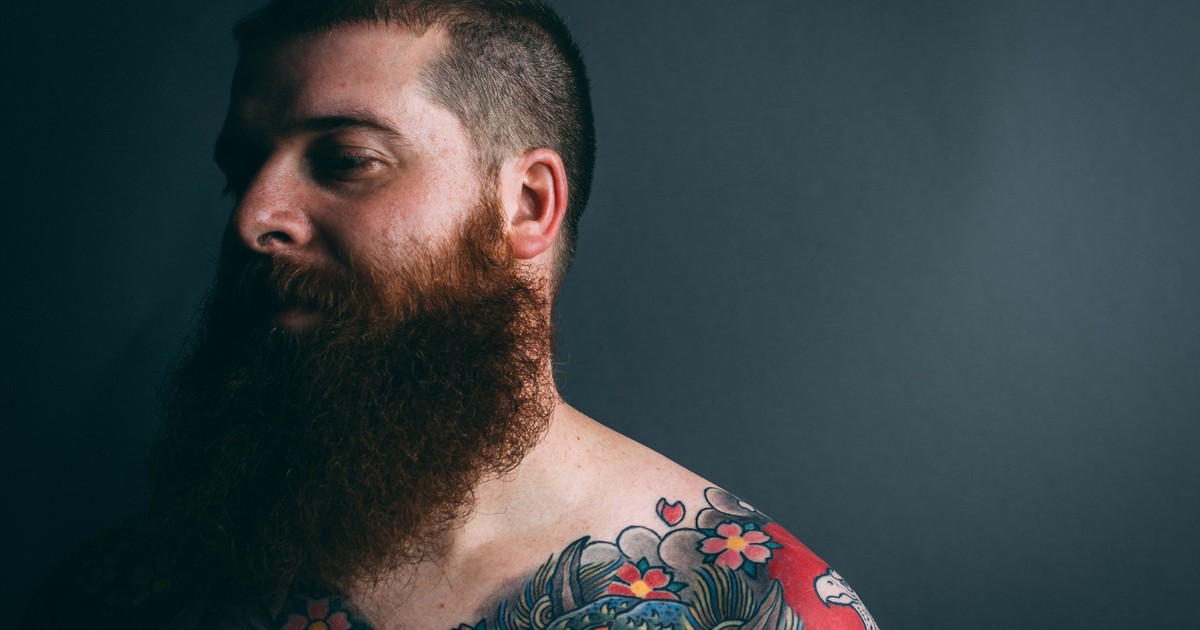
The portrait was not subtle. It sat on the left side of Richard’s chest, detailed and unmistakably real-looking, the kind of work that takes hours and costs real money. A young woman with dark eyes and a small rose tucked behind her ear. From the day she first saw it, his wife asked. And from the day she first asked, Richard answered the same way: the woman was imaginary, just a design, the artist’s own creation. He was calm about it. Patient. Slightly amused by the recurring question, the way people get when they’ve answered something so many times that a shadow of condescension starts to creep in.
She almost believed him. Not fully, not ever, but enough to stop pressing. In long marriages, you file the unanswered questions somewhere, not because you trust the answers you’ve been given but because you’ve made the calculation that asking again won’t produce anything different. The tattoo stayed. The question stayed with it, somewhere in the back of a drawer.
Then came the photograph.
What She Found in the Garage

Hidden beneath a loose panel in Richard’s toolbox – the kind of discovery you only make when you’re looking for something else entirely – was a photograph with yellowed, aging edges. The woman in it was younger than the portrait on Richard’s chest, but the eyes were identical. So was the rose behind her ear. She was holding a newborn infant in what was clearly a neonatal intensive care unit. The infant was wrapped in a cream-colored blanket decorated with small embroidered flowers. The same blanket Richard and his wife had brought their adopted daughter Claire home in, two decades ago.
Six words were written on the back of the photograph. They led her to look for a woman named Rose.
What she found, when she eventually sat across from Rose in a diner, reordered everything she thought she knew about her own family’s history. Twenty years earlier, Rose had been a neonatal nurse assigned to Claire’s overnight care during the months their daughter spent in the NICU following a premature birth. Research published in Frontiers in Pediatrics in 2024 found that a trusting bond between parents and nurses often becomes the lifeline to survive the NICU journey.
The Nurse Who Almost Kept Her
Rose had not just cared for Claire during those months. She had fallen in love with her. She had, at one point, explored the possibility of adopting Claire herself. For Rose, who worked overnight beside the incubator reading to Claire and celebrating every ounce she gained, that attachment had grown deep enough to consider a life built around her.
Preterm birth affects roughly one in ten pregnancies in the United States. The NICU experience — the monitors, the incubators, the nurses who become unlikely family — is far more common than most people realize until they’re living it.
Ultimately, Rose could not adopt. She lived alone, covered long hours at the hospital, and had no financial safety net. Adoption officials determined the level of care a premature infant might require was more than her circumstances could reliably support. So she stepped back. Richard and his wife brought Claire home. And Rose, who had cared for Claire through her most uncertain hours, handed her to parents she would never meet and walked away.
Before she left the hospital for the last time, she wrote Richard a note. He had it folded in his wallet when he walked into that diner two decades later, the edges worn nearly transparent from years of unfolding and refolding. The note asked him to promise that Claire would always know she was wanted. That she would never believe someone had simply given her away.
Richard had kept that promise the only way he knew how. He had her nurse’s face tattooed over his heart.
The Secret a Noble Impulse Creates
The part of this story that stays with you is that it isn’t tidy. What Richard did was, by any reasonable measure, an act of profound gratitude. He wanted to honor the woman who had held his daughter through the nights her parents couldn’t be there, who had loved Claire before he did, who had made a sacrifice quietly and without asking for anything in return. The tattoo was not a hidden romance. It was the most permanent thank-you he could think of.
It was also a secret he kept from his wife for twenty years.
For twenty years, Richard’s wife had been living with the low-grade discomfort of a symbol she couldn’t decode, filling in the blank with the worst available interpretation because no other explanation was offered. That is what secrets do, even the generous ones. They don’t stay neutral in the absence of information. They grow into whatever the person left outside them most fears. You can have the most honorable reason in the world for keeping something close, and it will still leave the people who love you constructing a story in the dark.
The story circulating online captures something real about marriage: the way a person can be simultaneously the most decent version of themselves and still, through silence, cause the person next to them a quiet, long-running harm. Richard understood this, eventually. He walked into that diner looking, according to his wife’s account, not guilty but tired – the way someone looks when a weight they’ve carried for a long time has finally gotten too heavy.
When the Story Goes Viral
The story has spread widely because it offers a resolution that actually changes the meaning of everything that came before it. The husband’s hidden tattoo wasn’t a betrayal. It was a tribute. The woman on his chest wasn’t a rival. She was the nurse who had cared for their daughter through her most fragile months.
Real-life cases where tattoos conceal relationship secrets do exist, and they don’t always end this way. The Mirror reported in 2024 on a case shared to Reddit, where a woman eventually connected the dots between her husband’s new floral tattoo and a colleague named Lily — a two-year affair that had produced a child. The tattoo was exactly what it appeared to be: a man encoding a secret life into permanent ink. The contrast makes Richard’s story land harder. The structure is the same. The discovery of the hidden meaning is the same. The ending is not.
Stories about adoption reunions carry this same quality – the sense that a relationship you thought you understood contains whole rooms you’ve never been allowed to enter, and that walking into them changes the floor plan of everything you thought was already mapped.
What Gratitude Looks Like When It Goes Underground

The note in Richard’s wallet is the detail that anchors this entire story. Not the tattoo. Not the meeting in the diner. The fact that a man had been carrying a piece of paper for twenty years, folding and unfolding it until it was nearly transparent, because a woman he barely knew had made him promise something that mattered more than he knew how to say out loud.
Humans seek symbols because they give shape to feelings that can’t always be put into words, and a permanent mark on the body is one way of saying “this matters so much it deserves to live on my skin.” Richard took that impulse seriously. He just didn’t account for what it would cost his wife to look at it every day without knowing what it meant.
That is the real tension in this story, and it’s a human one. Gratitude this large sometimes goes underground because people don’t know what to do with it – don’t know how to explain it without explaining everything, without reopening a story that was supposed to be closed. So it becomes a tattoo. A wallet note. A secret carried in the body instead of spoken in a sentence. Those things have a way of lasting longer than the sentence would have.
What This Story Is Really About
Claire grew up knowing she was adopted. She did not know, until her parents walked into that diner, that a woman named Rose had spent months beside her incubator before she ever came home. She did not know that her father had been carrying Rose’s face over his heart as a promise – a vow to never let Rose’s role in her story disappear.
The story has been shared as a tearjerker, and it earns that. But underneath the emotional resolution, there is a harder question that nobody in it – and nobody reading it – can fully escape. How many things are we carrying for the people we love that those people cannot see? How many of those things look, from the outside, like something else entirely?
The archive of a marriage is never complete. You can spend twenty years sleeping beside someone and still be introduced, at the end of a diner booth, to a part of their story you never knew existed. That isn’t necessarily a failure. Sometimes it’s just the size of a person – bigger than the life you’ve been sharing with them, with rooms that predate you and rooms that were never yours to enter.
Richard was wrong to keep the secret. He understood that, standing in his wife’s kitchen doorway, without asking to be forgiven. But what he was carrying wasn’t a betrayal. It was love – just not the kind anyone had thought to name.
Disclaimer: This information is not intended to be a substitute for professional medical advice, diagnosis, or treatment and is for information only. Always seek the advice of your physician or another qualified health provider with any questions about your medical condition and/or current medication. Do not disregard professional medical advice or delay seeking advice or treatment because of something you have read here.
AI Disclaimer: This article was created with the assistance of AI tools and reviewed by a human editor.