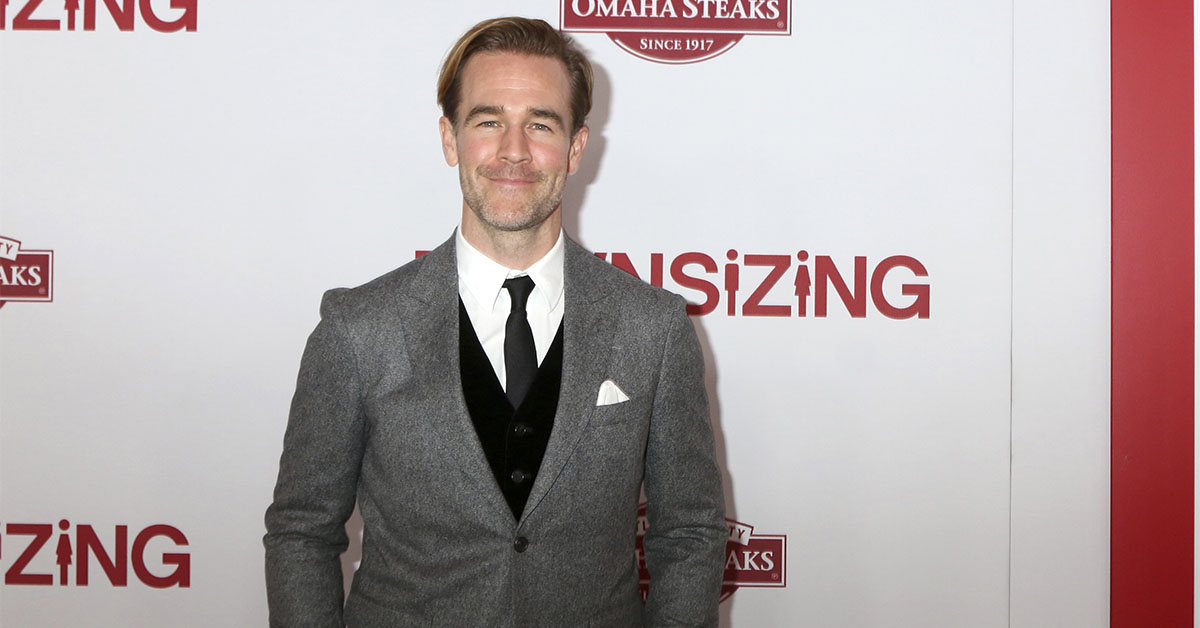

James Van Der Beek died of colorectal cancer on February 11, 2026. He was 48 years old and left behind his wife, Kimberly, and six children, ranging from Olivia at fifteen down to Jeremiah at four. Within hours, friends of the family launched a GoFundMe, describing how more than two years of cancer treatment had drained the family’s finances.
Then property records surfaced. Van Der Beek had purchased a multimillion-dollar Texas ranch roughly a month before he died, and the backlash was immediate. Donors felt misled, while critics questioned why a family sitting on that kind of real estate was asking strangers for money. People who knew the Van Der Beeks said the outrage was built on an incomplete understanding of the family’s finances. The family’s representative later clarified that friends had helped them buy it, and that the purchase was not what it appeared to be. But by the time that context arrived, the conversation had already outgrown one family’s finances, and almost none of it accounted for what two and a half years of fighting cancer had actually cost him.
A Two-Year Battle With Cancer
Van Der Beek was diagnosed with stage 3 colorectal cancer in August 2023. He kept it private for over a year, continuing to work and show up as a father while undergoing treatment that almost no one around him knew about. He went public in November 2024, and in the months that followed, he spoke openly about how the illness had changed even the smallest parts of his daily life.
In December 2025, he gave a long, candid interview to TODAY. He told the program that cancer was the best thing that had ever happened to him because it forced him to be fully present with his family. He said he used to move through good moments without really registering them, and that the diagnosis changed that. Now he noticed them individually, the way you notice something you know you are about to lose. The conversation had the warmth of a man talking honestly about what was coming and making his peace with it.
But even as he spoke with that kind of openness, the financial reality behind his family’s life was far less settled. His career had not generated the lasting wealth that a show like Dawson’s Creek might suggest. The series was one of the defining television programs of the late 1990s, and the name recognition it gave him created an assumption of financial security that followed him long after the paychecks stopped. In a 2012 interview with TODAY, he said bluntly that there had been no residual money from the show, and that he had signed a bad contract at 20 and saw almost nothing from it.
Dawson’s Creek aired on the Warner Bros. network, not one of the major broadcast networks. Under the terms of his deal, syndication and reruns paid him almost nothing. The show ran for six seasons, went worldwide, and he saw virtually none of it after the original run ended. Few people noticed the comment when he made it. But after his death, the public began questioning how a man from one of the most famous television shows of his era could be broke. Those old contract terms would become the first line of the explanation.
By late 2025, he was running out of options. In December, he auctioned personal memorabilia from Dawson’s Creek and Varsity Blues through the auction house Propstore, with all proceeds going toward treatment. The sale raised just over $47,000, as People reported at the time. Reporting from The Hollywood Reporter filled in the rest, describing how decades of screen work had not been enough to cover his medical costs. Especially the alternative therapies that insurance will not touch. The man who had once been the face of teen television was auctioning his old wardrobe to pay for medicine.
Among those items were props from Varsity Blues, a film he had shot in the Texas Hill Country as a young actor. He said the area had stayed with him. So, in 2020, he and Kimberly relocated the family from Los Angeles to a 36-acre ranch there. Renting a property just outside Austin. He told City Lifestyle in a profile of the family’s move that they wanted to give their kids space and let them grow up closer to nature.
The couple had five children when they made the move, and their sixth was born later in Texas. The ranch became the center of their lives. It was where the kids were homeschooled, where they learned to ride horses and wade into the Pedernales River, and where their father spent his final years. On January 9, 2026, a little over a month before he died, close friends pooled money through a trust to help Van Der Beek purchase the property. It was not a vacation home or an investment. It was the only home most of his children remembered, and he wanted to make sure they could stay.
The GoFundMe and Its Rapid Rise
Friends and associates of the family created the campaign within hours of his death. Kimberly shared the link on her Instagram Stories with a brief message about her gratitude and grief. But the campaign was not hers. Once the backlash began, that distinction would not matter to the people looking for someone to blame.
The page described a family that had been financially hollowed out by everything the previous two and a half years had cost them. It said the costs had left them “out of funds.” That they were “working hard to stay in their home.” It asked for help covering bills, keeping the children in school, and holding some kind of stability together while the family grieved. In the days that followed, those phrases would be read, screenshotted, and quoted back to the family thousands of times by people who felt they had been misled.
But that backlash came later. At first, the response was enormous and almost entirely sympathetic. The initial goal was $350,000. It was surpassed almost immediately. Organizers kept raising the target as donations blew past each new threshold, eventually settling on $1.5 million. The campaign crossed $1 million within hours and $2 million within roughly a day. By February 14, three days after Van Der Beek’s death, more than 48,000 people had donated a combined $2.5 million. And the number was still climbing. Every refresh of the page showed the total jumping by thousands of dollars.
The response came from Hollywood and from everywhere else. Variety reported that Steven Spielberg and Kate Capshaw gave $25,000. That Zoe Saldana pledged $2,500 a month for the foreseeable future, and that director Jon M. Chu contributed. But most of the money came from tens of thousands of ordinary people giving 10 or 25 dollars at a time. All arriving at the same page because a man they felt they knew had died and his family needed help. For a few days, that was the whole story. Then the property records caught up.
The Ranch Report and the Backlash
Within days of the campaign going live, Realtor.com published the property records for the January 9 purchase. The listing detailed a 5,149-square-foot main house with five bedrooms and three bathrooms, along with cabins, a pool, a barn, and views of the Pedernales River. It read like a luxury real estate advertisement, and for anyone who had just donated to help a family described as being “out of funds.” The details were hard to reconcile.
The campaign page says nothing about the ranch purchase. It offers no detail about insurance coverage and makes no mention of whether the family plans to sell or keep the property. That silence gave critics room to fill in their own explanations, and most of those explanations were not generous.
The Blast’s reporting on the Realtor.com records picked up traction across platforms, and Reddit threads filled with users describing the situation as gullible people subsidizing a celebrity family’s bad financial planning. Others framed it as a “reverse Robinhood” scenario in which ordinary working people were handing their money to a family that had just closed on a multimillion-dollar home. On X, some labeled the fundraiser an outright cash grab. The tone of the criticism varied, but the underlying logic was consistent. If you can close on a property worth nearly $5 million, you cannot also be out of funds. And if the GoFundMe described a family that was “out of funds.” While that same family had just put a down payment on a ranch, the page was leaving something out.
The money was not the only thing people came for. A separate strand of criticism targeted Kimberly Van Der Beek directly. Critics pointed to a Trump-related post she had liked in January 2025 and to vaccine-related claims she had shared on Instagram, claims Rolling Stone had reported on back in 2022. That combination of political and medical skepticism led some commenters to apply the label “MAHA mommy grifter.” A shorthand that collapsed her entire identity into a caricature. This strand was distinct from the financial questions. But it fed the overall hostility and made the backlash feel less like a policy argument and more like a pile-on. For some critics, the politics gave them permission to be cruel about the money, and the money gave them permission to be cruel about the politics.
The Clarification
A representative for the family was the first to respond. In a statement published by People magazine, the rep explained how the ranch purchase had been financed and why it was not what the headlines were making it seem.
Close friends had pooled resources through a trust, which is a legal arrangement that allows a group of people to hold and manage funds on someone’s behalf. That money gave Van Der Beek the down payment to convert years of renting into a mortgage on the same property. The family had been paying to live on the ranch since 2020. Buying it did not add a new expense so much as redirect an existing one toward ownership. What changed was not the cost of living there. But who would own the home after the man who lived there was gone? Without the purchase, Kimberly and her six children under 16 would have been renters subject to the decisions of a landlord, living in a home full of memories with no guarantee they could stay.
Several public figures came forward in the family’s defense. Broadway actress Donna Vivino posted on Instagram, emphasizing that the Van Der Beeks had been renters, not homeowners. That the outrage was built on a misreading of their financial reality.
Others spoke from personal experience. Braunwyn Windham-Burke, a former Real Housewives of Orange County cast member, told Parade about her own family’s experience with medical debt from a parent’s cancer treatment. Making the case that what the Van Der Beeks were going through was not a celebrity problem. But an American one.
The most vocal defender was Mehcad Brooks, an actor known for True Blood and Mortal Kombat and a close friend of Van Der Beek’s. In an Instagram post shortly after Van Der Beek’s death, Brooks wrote that his friend handled the transition from life to death like a king. That the honor of having known him was not something he could adequately put into words. He said he had been with Van Der Beek for the last four days of his life.
When the backlash began, that grief turned to anger. On Threads, Brooks described the negative coverage as “fake AF” and told one commenter directly that they had no idea what they were talking about. He called on people to stop seeking attention from other people’s suffering. His anger was personal and unfiltered. He had watched his friend die. And now he was watching strangers on the internet turn that death into a punchline.
The new information softened some of the public anger but did not end it. A segment of critics maintained that the family should sell the property and downsize before asking strangers for help. Regardless of how the purchase had been financed. The goalposts, it seemed, would keep moving.
The argument over James Van Der Beek’s GoFundMe was, by this point, no longer really about one family. It had become a stand-in for a set of much older questions about money, illness, and who Americans believe deserves help.
What This Case Laid Bare
The tension at the center of this story is one most people never think about until it lands on them. A family can own a valuable home and still have almost nothing in the bank. Especially when years of treatment have been eating through whatever savings existed before the diagnosis. This is what it means to be asset-rich and cash-poor, and it describes the Van Der Beeks precisely. Owning a house does not mean you can cover next month’s mortgage payment, let alone next month’s oncology bill. You cannot hand a hospital a bedroom.
And the bills never stop. Prolonged treatment can drain even high-earning families, and therapies that fall outside standard insurance coverage can accelerate that collapse. What a family’s life looks like from the outside and what their bank account looks like from the inside can be vastly different. That is where most of the anger in this story lives.
But the anger also had a second layer, one that had less to do with the Van Der Beeks specifically and more to do with who gets to ask for help. In a personal essay published by Slate on February 19, writer Rachel Chapman, whose own husband is battling cancer, argued that the backlash missed its target. She wrote that the real source of frustration should be the American healthcare system itself. Not a grieving widow. She says that the shame of asking for financial help is a barrier that keeps many non-famous families from seeking the support they need.
Chapman described her own internal conflict over whether to start a GoFundMe. She wrote about the fear of being judged for financial choices that had nothing to do with her husband’s diagnosis, and the discomfort of admitting that a household that looked stable from the outside was one medical emergency away from falling apart. She noted that even families with health insurance can face bills in the high five figures. Not counting lost income and the invisible costs of caregiving.
Her essay gave voice to something the social media arguments had been circling without quite saying. The anger was never really about one ranch or one GoFundMe. It was about the grinding knowledge that most families facing the same situation would never see a single dollar from strangers. Also paired with the discomfort of watching a famous family receive what felt like special treatment for a problem that is ruthlessly ordinary.
The James Van Der Beek GoFundMe was not the only case drawing this kind of scrutiny. Grey’s Anatomy actor Eric Dane died of ALS around the same period. He was 53. A GoFundMe for his family raised over $400,000 and faced similar questions, as The New Daily reported in a February 25 piece on celebrity crowdfunding. Friends of Dane’s said ALS had devastated his finances just as cancer had devastated Van Der Beek’s, and the fundraiser’s goal had to be raised as contributions exceeded expectations. A campaign connected to Alyssa Milano had drawn backlash in earlier years as well. This friction resurfaces every time a famous name appears on a crowdfunding page. This is because the conditions that produce it never change.
Read More: John Travolta’s Pulp Fiction Dance Lesson Is Still Going Viral, and We’re Here for It
Why This Keeps Happening
GoFundMe does not require financial disclosure. Donors give based on a page description and whatever they know, or think they know, about the person asking. When that person is famous, the assumptions fill in fast. People see a name they recognize and figure the money followed the fame. Even when it didn’t, even when the math never worked that way.
The American healthcare system makes this worse. It is entirely possible to do everything right. To carry insurance, to save responsibly, to work steadily for decades, and still end up unable to afford the treatments that might keep you alive. Cancer does not send a bill you can plan for. It sends hundreds of them, over months and years, and each one lands alongside the ordinary costs of keeping a family fed and housed and together. When those bills finally overwhelm a household, the choices left are bad ones. Sell the house your children grew up in. Ask strangers for money. Or do both and hope people understand why.
Every day in this country, families facing the same kind of medical debt set up their own GoFundMe pages and raise almost nothing. No one writes about them. No one questions whether they deserve help. The Van Der Beeks became a national argument because their suffering was visible. For most families, it never is.
Read More: James Van Der Beek’s Widow Raises Over $2M After Cancer Costs Revealed