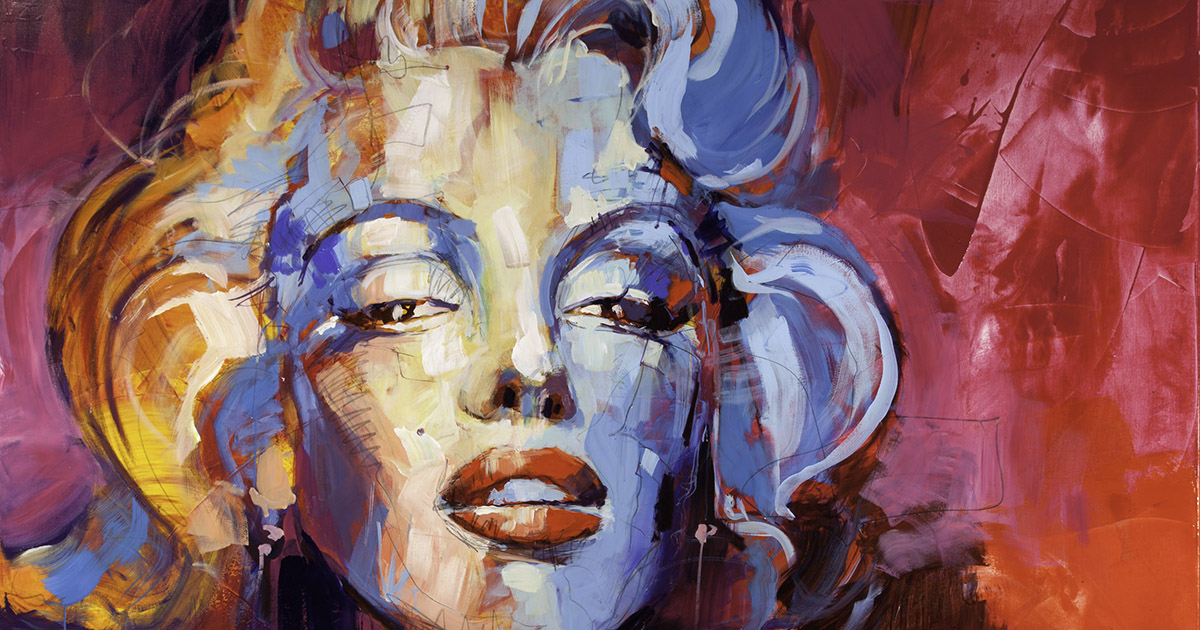

Marilyn Monroe died on August 4, 1962, at age 36. Her body was found the following morning at her Brentwood home. The pill bottles were on the nightstand. The official verdict was written up quickly. And for the man who actually performed the Marilyn Monroe autopsy, the questions about what was left unfinished would follow him for decades.
In the 2025 book L.A. Coroner by historian Anne Soon Choi, the man who performed Monroe’s autopsy, Dr. Thomas Noguchi, has broken his silence, casting doubt on the long-standing narrative. Noguchi, now 99, was a young deputy coroner at the time and was assigned the high-profile case. What he has finally said about what happened inside that examination room – and, more pointedly, what was prevented from happening – reopens questions that Los Angeles officially closed more than six decades ago.
This is not a conspiracy theory gaining new traction. It is the account of a trained professional who was handed an incomplete investigation, knew it was incomplete, and was powerless to fix it. The difference between what Noguchi wanted to do and what he was allowed to do has followed him across six decades of an extraordinary career, right up to the present day.
The Man Behind the Autopsy
L.A. Coroner is the first-ever biography of Dr. Thomas Noguchi, the Chief Medical Examiner-Coroner of Los Angeles County from 1967 to 1982, and the man who performed the autopsies of Marilyn Monroe, Robert F. Kennedy, and Natalie Wood. Noguchi was also the inspiration for the 1970s-80s television drama Quincy, M.E., starring Jack Klugman. He was the person who knew more about how famous people died in mid-century Hollywood than almost anyone alive. His account of Monroe’s death has never been fully told until now.
Noguchi was just 35 years old and one of the newest deputy coroners in Los Angeles County in August 1962 when he was tasked with examining the body of the world’s most famous actress. He had not sought the case. It came to him by assignment. And when the toxicology results arrived, what he found was not clean or simple.
What the Lab Results Actually Said
Noguchi ruled the cause of death as acute barbiturate poisoning, with extremely high levels of Nembutal (pentobarbital) and chloral hydrate in her blood and liver. Recalling the investigator’s report, Noguchi described the scene: Monroe was found lying face down in bed, with one arm stretched toward the telephone. Nearby, numerous pill bottles were scattered across her bedside table, including an empty bottle of Nembutal, a strong barbiturate used as a sleeping aid, and a partially empty bottle of chloral hydrate, a potent sedative.
On the surface, the toxicology told a straightforward story. Fatal drug levels. History of substance use. A woman who had been in visible psychological distress in the weeks before her death. Noguchi’s report revealed Monroe had been given a prescription for Nembutal just two days earlier, and she had spoken to her psychiatrist one day before her death. From a distance, this looked like a case that answered its own question.
Noguchi was not looking from a distance. He was the one with the body. And one detail in particular stopped him cold.
Although toxicology results revealed lethal levels of Nembutal and chloral hydrate in Monroe’s system, Noguchi did not find evidence of undigested pills in her stomach or intestines. This absence raised the possibility that the drugs may not have been ingested orally. If someone swallows fifty capsules, there should be a trace of that – residue, capsule material, some evidence of passage through the digestive system. There was none. That is the detail Noguchi wanted to investigate further. That is the detail that was taken away from him.
The Evidence That Disappeared
With many questions left unanswered, Noguchi wanted the stomach’s contents and organs tested. But the toxicologist disposed of them once the coroner’s report was issued. The head toxicologist, Raymond Abernathy, had determined that the fatal drug levels already identified were sufficient to conclude the death was a suicide. No further analysis was necessary, as far as he was concerned. The organs – the very specimens that could have told the fuller story – were discarded.
Without a complete analysis, it was impossible to rule out that Monroe had died by injection rather than by swallowing pills. That is not a conspiracy theory. That is a straightforward statement about what the evidence could and could not prove. Noguchi knew it. The book recounts a wave of anxiety washing over him: he knew that not running the additional tests would become a problem, that it left too many questions unanswered, and that as the pathologist who conducted the physical autopsy, he would be held responsible.
He began to question whether he was inadvertently involved in a possible cover-up. Not whether he was part of a deliberate scheme, but whether the institutional pressure to close the case had pulled him into something he didn’t fully understand at the time.
He was 35 years old, one of the most junior members of the office, and in no position to challenge Chief Coroner Theodore Curphey or the head toxicologist, as he would later explain. The evidence was destroyed, the ruling stood, and Noguchi carried the weight of it for the next six decades.
The Scene That Never Added Up
Noguchi was not the only forensic professional to identify problems. The case drew renewed attention when TMZ’s crime investigation program Celebrity Crime Scene: Marilyn Monroe premiered on FOX and brought a fresh set of expert eyes to the evidence that remains.
Retired cold case investigator Paul Holes, who spent more than two decades solving crimes in California and played a pivotal role in identifying the Golden State Killer, examined the physical evidence from Monroe’s case for the television special. His observations about the physical scene were pointed.
The first issue Holes identified was the lack of documentation of the death scene. Very few photographs exist. But even from the one photograph that does exist, Holes said his experience immediately flagged inconsistencies: the sheets were clean and perfect, and Monroe was arranged on the bed in a way that did not look like an overdose.
The pill bottles on the tiny nightstand beside her head were all perfectly arranged, with labels facing the same direction. Holes also questioned how Monroe could have swallowed approximately 50 capsules yet there was no drinking glass anywhere near her. These are the practical observations of someone who has processed hundreds of real death scenes and knows what an overdose looks like when no one has touched anything afterward.
The program also examined something that connects to Noguchi’s concerns in the book. Holes noted the existence of heavily redacted documents concerning the FBI’s monitoring of Marilyn Monroe. What those documents contain, and what they were monitoring her for, has never been fully disclosed.
The Kennedy Question
No account of Monroe’s death is complete without addressing the shadow of the Kennedys. The circumstantial evidence connecting her final weeks to powerful people with reasons for secrecy has never been cleanly dismissed.
Persistent theories allege that Monroe was involved with both John and Robert Kennedy and had shared concerns with friends about confidential information they allegedly disclosed to her. The claims include allegations that she was aware of secret government projects and had become frustrated after both relationships reportedly ended.
The FOX special added a specific claim to this history. Investigative journalist Kiki Monique alleged that the day before Monroe died, an anonymous source sent a letter to the CIA claiming that Monroe was going to reveal secrets about Project Moon Dust, a U.S. Air Force program that recovered space debris. Whether that letter is genuine and what it means for the broader case has not been established.
What has been established, for decades, is that Monroe’s home and activities were subjects of investigation in the period around her death. Former vice detective Fred Otash, a Hollywood figure known for his work with gossip magazines, claimed in the early 1990s that he had been hired to investigate Monroe and had obtained recordings from her home. According to Otash, those recordings captured a heated argument involving Attorney General Robert F. Kennedy and actor Peter Lawford, and he alleged that Monroe was heard screaming before RFK allegedly pressed a pillow over her to muffle the sound. Otash’s claims have never been independently verified and no recording has ever surfaced. They have also never been definitively debunked.
The history of formal investigations into the murder theories has produced its own inconclusive results. The Los Angeles County District Attorney reviewed the case in 1982 but found no evidence to support murder theories and did not disagree with the findings of the original investigation. The report conceded that “factual discrepancies” and “unanswered questions” remained in the case. Even the official review that closed the door left it slightly ajar.
The Coroner to the Stars

Noguchi is not a conspiracy theorist looking for a story. He is a scientist who was inside the room. Monroe’s case heavily relied on a psychological autopsy performed by another coroner to interpret Noguchi’s findings – meaning the official ruling of “probable suicide” came not purely from the physical evidence Noguchi gathered, but from a psychological assessment conducted by someone else, layered on top of incomplete toxicology.
Noguchi’s physical examination found no undigested pills in the stomach. The toxicology showed fatal drug levels but could not, without the organ samples that were destroyed, confirm how those drugs entered her body. A separate psychological assessment was then used to fill the interpretive space. The conclusion of suicide rested on a combination of incomplete physical evidence and a behavioral assessment of a dead woman’s state of mind. That is the foundation on which the case has stood for sixty-three years.
His larger career, which included autopsies of some of Hollywood’s most iconic figures across three remarkable decades in Los Angeles, was long marked by professional controversy. He was known for pursuing detail aggressively, sometimes to the irritation of the institutional structures above him. The Monroe case is the one where that instinct was overruled, and he has apparently not made peace with it.
Read More: From Stardom to Legacy: Anita Ekberg’s Life Before and After La Dolce Vita
Sixty Years Is a Long Time to Carry Something
No one knows for certain how Marilyn Monroe died. The official ruling has stood because no evidence has emerged to overturn it. But it stands on a forensic foundation that was compromised the moment those organ samples were disposed of before the examination was complete.
Noguchi’s account does not prove murder. It does not name a killer or confirm a plot. It identifies a specific moment when the investigation was foreclosed prematurely, by institutional inertia or by institutional pressure, and explains why a trained forensic professional who was present has never been able to fully believe the conclusion he was handed. “What could I do?” he said. The answer, at 35, working below the chief coroner in one of the most politically sensitive cases imaginable, was apparently nothing.
The case keeps resurfacing not because new evidence keeps appearing, but because the evidence that should have existed was destroyed, and that absence has never stopped meaning something. Monroe was a woman whose most intimate moments were surveilled by agencies and men with interests in controlling the story of her life. The story of her death was shaped by some of those same forces. Noguchi has spent sixty years knowing that. Now, at 99, he has finally said it plainly.
Disclaimer: This information is not intended to be a substitute for professional medical advice, diagnosis, or treatment and is for information only. Always seek the advice of your physician or another qualified health provider with any questions about your medical condition and/or current medication. Do not disregard professional medical advice or delay seeking advice or treatment because of something you have read here.
AI Disclaimer: This article was created with the assistance of AI tools and reviewed by a human editor.