

There is a particular kind of movie loyalty that men carry the way other people carry grudges: quietly, stubbornly, and across decades. Ask a man about his favorite film and you won’t get a considered pause and a thoughtful “it depends on the mood.” You will get a title. Fast. Often the same one his college roommate would give you, and the one his father gave before that. These films do not rotate in and out of the rotation. They are the rotation.
What makes a movie hit that hard for men specifically is not just genre or action or a particular kind of stoic protagonist, though those things all appear here in abundance. It is something closer to a moral framework delivered in the form of entertainment – stories about loyalty and betrayal, about what a man owes the world and what it owes him back, about whether being good is even possible and whether it matters if it isn’t. Heavy questions, wrapped in gunfire and quotable dialogue, served in the dark.
The 15 films below appear on men’s favorite movies lists with the kind of consistency that borders on statistical law. They have sat near the top of ranked lists for years, turning up just as reliably on community polls and “best movies for men” rankings compiled by thousands of voters as they do on aggregated critical lists. They are not all action films. Several will make you cry. At least one will make you question reality. Every single one has been quoted in a conversation you’ve witnessed, and probably started one.
1. The Shawshank Redemption (1994)
Released in 1994, this film was initially a box-office underperformer but found its audience on home video. Directed by Frank Darabont and based on a Stephen King novella, it tells a powerful story of hope and friendship. Starring Tim Robbins and Morgan Freeman, it follows Andy Dufresne, a banker wrongly convicted of murder, and his friendship with fellow inmate Red, focusing on hope, resilience, and quiet resistance against corruption and injustice.
Digital Trends notes that IMDb is one of the most trusted sources for movie fans around the world, aggregating user scores to determine the most beloved films from every genre, with its Top 250 collection placing fan favorites across categories in one long list – and Shawshank consistently claims the top spot. Andy Dufresne refuses to let an unjust system take his interior life. He keeps building, keeps planning, keeps carving out something private and indestructible inside a place designed to crush exactly that.
The film also offers something rare for its genre: a friendship between two men that is neither competitive nor performative, just genuine and sustained across years. The relationship between Andy and Red is the emotional engine of the whole thing, and it is handled with enough restraint that it never tips into sentimentality. That restraint is part of why the film endures. It earns every feeling it produces.
2. The Godfather (1972)
Francis Ford Coppola‘s masterpiece revolutionized crime cinema by presenting the Corleone family saga as an epic drama rather than typical gangster fare. Marlon Brando’s iconic portrayal of Don Vito Corleone earned him an Academy Award, while Al Pacino’s transformation from reluctant son to ruthless successor created one of cinema’s greatest character arcs.
With its iconic performances, masterful direction, and rich storytelling, The Godfather has become a cultural landmark. The film operates as something close to mythology – a story about what loyalty actually costs and whether the institution of family can survive the institution of power when the two are the same thing. Michael Corleone’s arc is one of the most studied in American cinema precisely because it offers no easy moral exit. He does not become a monster by accident. He chooses, step by step.
The film’s meticulous attention to detail, authentic representation of Italian-American culture, and complex moral themes set new standards for filmmaking excellence. Men quote this film at each other not as a party trick but as a shared language. “Leave the gun. Take the cannoli.” “I’m gonna make him an offer he can’t refuse.” These lines carry weight because the film behind them carries weight. It is not just a crime movie. It is a film about what men do with power when they finally get it.
3. The Dark Knight (2008)
Christopher Nolan‘s The Dark Knight is a superhero film that transcends the genre, earning critical acclaim and commercial success. Known for its dark and gritty tone, exceptional performances, and visually ambitious execution, it is a favorite among comic book fans and moviegoers alike – the film that proved the genre could carry real moral weight.
The film works as well as it does because Heath Ledger’s Joker is not just a villain but an argument. He does not want money or power. He wants to prove a thesis about human nature: that civilization is a thin layer of frost over chaos, and that any given person, pushed far enough, will confirm it. Christian Bale’s Batman spends the entire film refusing to concede that point, and the tension between those two positions is what gives the movie its real energy. The superhero framework is almost incidental.
The Dark Knight also marked a specific cultural moment where the superhero genre stopped apologizing for itself. Before this film, blockbuster superhero movies were broadly considered entertainment for children and enthusiasts. After it, they were taken seriously as a vehicle for genuine moral complexity. That shift shaped a decade of cinema, for better and occasionally for worse.
4. Pulp Fiction (1994)
Quentin Tarantino‘s non-linear storytelling and crackling dialogue earned Pulp Fiction a permanent place in cinema history. The film arrived in 1994 like a disruption to the entire existing order of American filmmaking – chopped up, profane, funny, violent, and constructed with a structural precision that revealed itself slowly on repeated viewings. Men watch it multiple times partly because the non-linear format rewards attention and partly because the dialogue is genuinely, inexplicably pleasurable to follow.
The conversations in Pulp Fiction – about what a Quarter Pounder is called in France, about the foot massage, about Ezekiel 25:17 – became the template for a certain kind of movie writing that flooded the following decade. None of the imitators quite matched it, because what Tarantino understood was that the conversations had to be doing work beneath the surface, not just decorating scenes. Every monologue in this film is a character study. Every exchange is a power negotiation.
Vincent Vega is cool, quotable, and irredeemably incompetent. Jules Winnfield is terrifying and thoughtful in the same breath. The film loves these characters without heroizing them, which is a specific kind of honesty that resonated immediately and has never quite gone out of fashion.
5. Goodfellas (1990)
Goodfellas is a quintessential crime drama that explores the intricate dynamics of loyalty, betrayal, and power. Martin Scorsese‘s adaptation of Henry Hill‘s story of life in the mob runs at a pace that feels almost physiologically stimulating – scenes pile onto scenes, the camera never stops moving, and the whole thing hums with a kind of dangerous pleasure that is almost impossible to look away from. The film makes the mob life look extraordinary right up until it absolutely doesn’t.
Henry Hill wants to be a gangster because being a gangster means being somebody in a world that otherwise would never notice him. That drive – toward belonging, toward significance, toward a place in the room where things happen – is not specific to organized crime. It is just presented here with unusual clarity.
Ray Liotta‘s performance is the fulcrum. He makes Henry charming and decent for long enough that you understand exactly what he loses, and when he loses it, the film earns its ending in a way that few mob stories manage. The helicopter scene is among the most sustained pieces of anxious filmmaking ever put on screen.
6. Fight Club (1999)
Fight Club arrived in 1999 and was received with genuine confusion by most critics and significant passion by its audience, a gap that has not entirely closed since. David Fincher‘s adaptation of Chuck Palahniuk‘s novel tells the story of a nameless narrator who constructs an alter ego and then loses control of what that alter ego builds. The film’s twist is one of the few in cinema history that actually changes the meaning of everything that came before it, rather than just reversing the plot.
The film’s critique of consumer culture and masculinity is sharper than it gets credit for, largely because the film gets credited primarily for its aesthetic. Brad Pitt‘s Tyler Durden is not a hero. He is a diagnosis. The film is not endorsing what he builds. It is showing you, in considerable detail, what happens when alienation and purposelessness go unaddressed long enough to become a philosophy. Men who missed that reading at nineteen tend to catch it on the rewatch at thirty-five.
Fight Club sits alongside Goodfellas, Gladiator, and Die Hard as a film that scores higher with audiences than with critics precisely because audiences lived through what the film was describing. The alienation it catalogs did not go away. If anything, it got louder.
7. Inception (2010)
Christopher Nolan’s second appearance on this list confirms something about what men find compelling in cinema: the elaborate system, the architectural puzzle, the pleasure of a plot that demands your full attention and rewards it. Inception is a heist film set inside dreams, which is a premise that should not work as well as it does, and yet the film holds together through a combination of world-building discipline and genuine emotional stakes.
The concept of a dream nested within a dream nested within another dream is the kind of structural challenge that men find irresistible in the same way a difficult equation is irresistible – not because the math is fun, exactly, but because solving it proves something. Nolan seeds the film with enough information that a careful viewer can follow every layer of the plot. The film trusts its audience to keep up, which is itself a form of respect that audiences repay with loyalty.
Leonardo DiCaprio‘s performance as Cobb grounds all the abstraction in something legible: grief and guilt and the compulsion to return to a past that cannot be recovered. The spinning top ending is one of the great unresolved final images in modern cinema, and men have been debating it in the specific tone of people who need the answer to be theirs ever since.
8. The Lord of the Rings: The Return of the King (2003)
Peter Jackson’s conclusion to the Lord of the Rings trilogy won eleven Academy Awards, tying the all-time record, and represented something unprecedented in blockbuster filmmaking: a fantasy saga completed with the ambition and fidelity to source material that fans had spent years insisting was impossible. The trilogy as a whole is an achievement, but Return of the King is where the weight of everything that came before it finally settles – fully earned, with nothing left unpaid.
The films are about duty and sacrifice and the cost of carrying something important when nobody else can. Frodo’s journey through Mordor is not triumphant. It is exhausting. He does not arrive at Mount Doom transformed into a hero. He arrives barely intact, having given everything, unable even to finish the task alone. That version of heroism – unglamorous, costly, and shared – is not what fantasy epics usually deliver.
The friendship at the center of the trilogy, between Frodo and Sam, is one of cinema’s great unreserved depictions of male loyalty. Sam does not carry the ring because he can. He carries Frodo because he won’t leave him. The scene on the slopes of Mount Doom where he does exactly that has produced more tears from men who will swear they weren’t crying than perhaps any other moment in franchise cinema.
9. Schindler’s List (1993)
Steven Spielberg’s Schindler’s List continues to be praised for its emotional impact and historical significance more than thirty years after its release. Shot in black and white and based on a true story, the film follows Oskar Schindler, a German industrialist who used his factory and his relationships with Nazi officials to save more than a thousand Jewish lives during the Holocaust. It is one of the few films that can be called genuinely important without that word feeling like marketing.
Schindler starts as an opportunist. He uses the war to get rich. His transformation is not a religious awakening or a dramatic conversion. It is incremental, costly, and never quite complete enough. The final scene, in which he breaks down calculating how many more people he could have saved if he had sold his car, his pin, his cigarette case, is one of the most quietly devastating moments in American cinema.
That specificity – 1,100 lives, with names, with faces – is what the film insists on. It refuses abstraction. The Holocaust as a historical fact can be filed away. The people in this film cannot be.
10. The Good, the Bad and the Ugly (1966)
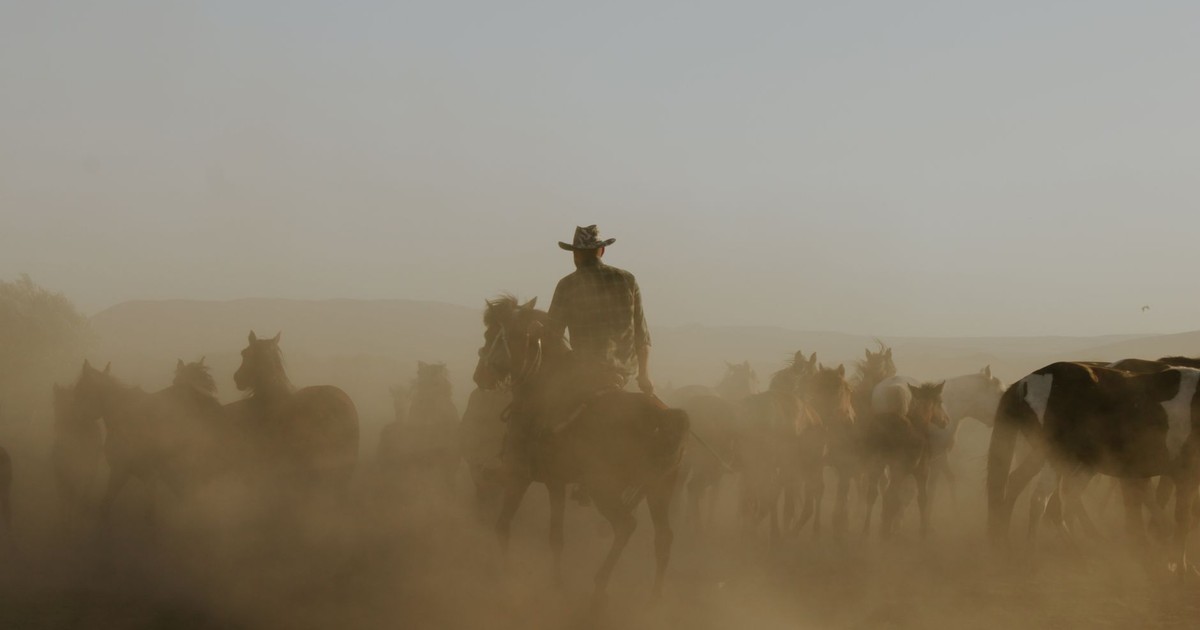
Sergio Leone’s The Good, the Bad and the Ugly is widely recognized as the pinnacle of the Western genre. Released in 1966 and originally Italian-produced, the film stars Clint Eastwood as the Man with No Name alongside Lee Van Cleef and Eli Wallach in a three-way hunt for buried Civil War gold. The plot is almost secondary to the experience of the film, which operates at a pace and a scale that feel completely sui generis.
Leone understood that the Western was fundamentally a genre about silence and tension, and he built the film accordingly. The famous three-way standoff at the end, stretched across what feels like an impossible amount of screen time, remains one of the great exercises in pure cinematic suspense. Ennio Morricone’s score is so embedded in the film’s fabric that it is nearly impossible to separate them – the whistling coyote call of the main theme is probably the most recognizable piece of film music ever composed for the genre.
Men return to this film because it offers something almost archaeological: a way of understanding where their favorite movies came from. Almost every tense standoff, every laconic hero, every morally ambiguous protagonist in American cinema has a line running back through this film. It is the source.
11. Star Wars: The Empire Strikes Back (1980)

The debate over which Star Wars film is best has been running since 1980, and the answer has settled: The Empire Strikes Back. It is the film where the mythology deepens rather than just expands, where the heroes lose, and where the franchise’s central revelation changes the emotional architecture of everything around it. “I am your father” is the most famous plot twist in popular cinema – not because no one saw it coming, but because it carries genuine weight even when you know it’s coming, every single time.
The film works as the best entry in the saga because it is the one where George Lucas stepped back from directing and Irvin Kershner stepped forward, bringing a tonal seriousness and emotional patience that the first film had not fully achieved. The romance between Han Solo and Leia, the training sequences on Dagobah, the carbon-freezing chamber – the film contains more iconic images per minute than almost anything else in the franchise.
Men who grew up with Star Wars often describe The Empire Strikes Back as the film that taught them that stories could genuinely hurt you. The ending offers no resolution. The heroes are scattered, Han is frozen, Luke has lost a hand and discovered that his enemy is his father. Rolling credits. You had to wait three years for the next one. That specific kind of emotional suspension – the refusal to provide comfort on schedule – made an impression.
12. Gladiator (2000)
The Godfather and Gladiator are usually the first ones that come to mind when listing mens’ favorite movies, because they deal with power, family, and honor in such a massive way. Ridley Scott’s 2000 epic stars Russell Crowe as Maximus, a Roman general betrayed by the emperor’s corrupt son Commodus, sold into slavery, and rebuilt through the gladiatorial arena into a vehicle for revenge. The premise is operatically simple, and the film embraces that simplicity without apology.
Maximus does not want power or glory. He wants his family, who are already dead by the end of the first act. Every fight after that is motivated by absence rather than ambition, which gives the film a weight it would otherwise lack. Crowe’s performance is physically committed in a way that the role demanded, but it is the quiet scenes – talking to the small clay figures of his wife and son, touching soil, waiting to die – that hold the film together.
The film also created a blueprint for the arena blockbuster that many imitators borrowed and none surpassed. Its commitment to practical scale, to real crowd noise and dust and blood, set a standard against which later CGI-heavy sword-and-sandal films consistently fell short. If you find yourself watching a Roman epic and thinking something feels off, you are probably measuring it against this.
13. The Matrix (1999)
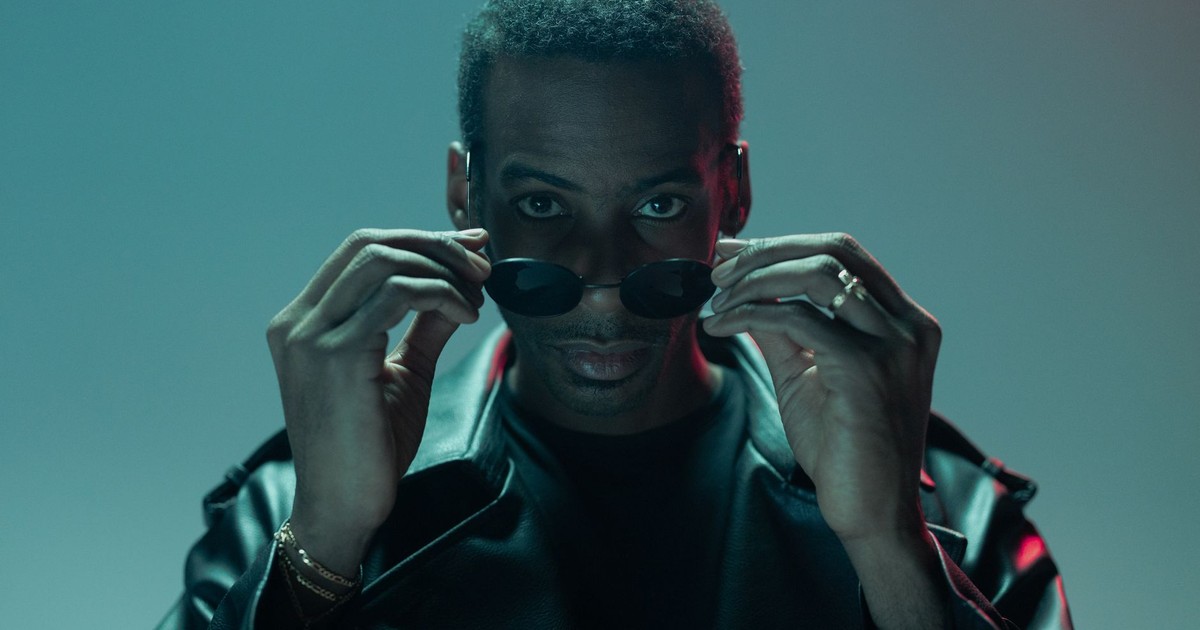
The Wachowskis’ 1999 film arrived as a genuine shock to the system of mainstream cinema. Its combination of Hong Kong action choreography, cyberpunk aesthetics, and genuine philosophical content – drawn from Jean Baudrillard’s work on simulacra and simulation – created something that had not quite existed before and has not quite been replicated since. The story of Neo discovering that the world he inhabits is a computer simulation designed to harvest human energy hit audiences like a live wire.
The bullet-time sequences were the cultural conversation in 1999 and for years afterward, but the film’s staying power comes from something less technical: the central idea that consensus reality might be a construct, that waking up is possible, and that the cost of waking up is losing the comfort of the illusion. That idea was philosophically interesting enough to carry the film beyond its aesthetic achievements.
The Matrix’s influence on action filmmaking is visible in almost everything that followed it. Its visual language – long leather coats, green-tinted digital rain, ultra-slow-motion combat – became the default grammar of a certain kind of mainstream sci-fi action for a decade. Knowing that those images came from this film helps explain both why the sequels were so anticipated and why nothing that came after quite matched the impact of seeing the original for the first time.
14. Saving Private Ryan (1998)
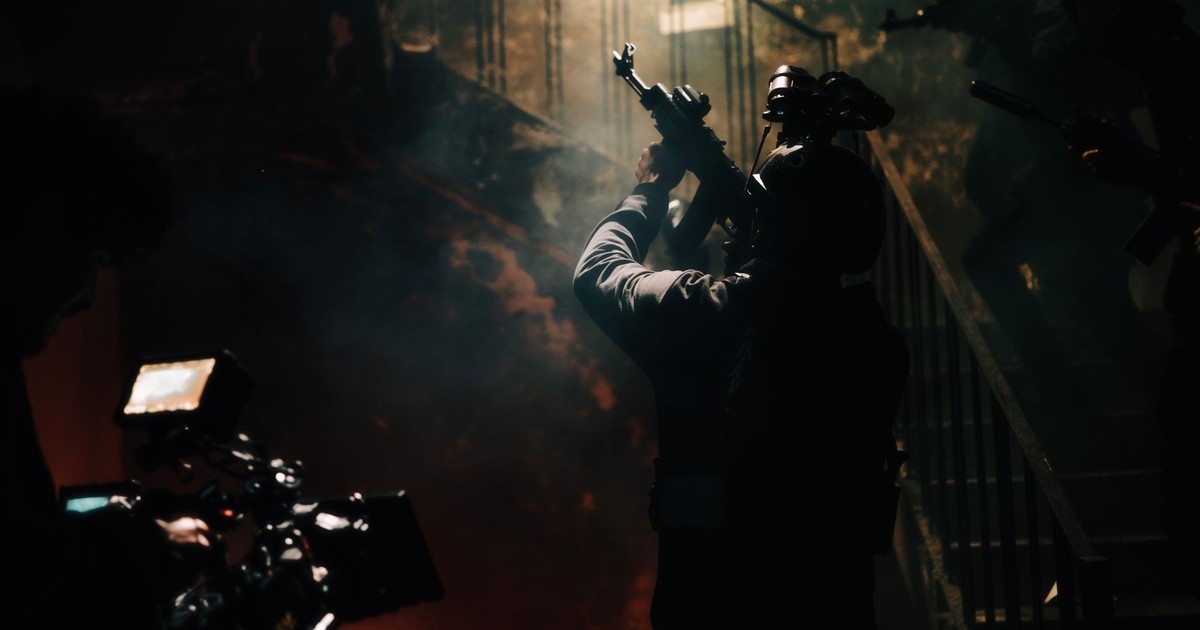
Steven Spielberg’s 1998 war film opens with a twenty-five-minute depiction of the D-Day landings at Omaha Beach that remains the most viscerally accurate portrayal of combat in mainstream cinema. It was so intense that veterans organizations reported significant emotional responses in audiences who had served, and the film’s release prompted widespread conversation about how war is typically represented in movies versus what it actually involves. Nothing about those opening minutes is heroic in the conventional sense. It is chaos, noise, luck, and survival.
The framing story – Tom Hanks leading a squad through occupied France to find and repatriate a sole-surviving brother whose siblings have all been killed in combat – gives the film a narrative shape, but the real subject is the weight of witness. The soldiers in Spielberg’s film are not abstractions. They are scared and specific and mortal, and the camera refuses to look away from what happens to them. For men who have grown up consuming war as entertainment, this film arrives as a correction.
The closing scene, with the aged Private Ryan asking his wife whether he has been a good man, returns to the question that sits under the entire film: whether survival can be earned after others have died for it, and whether any act of subsequent goodness is ever sufficient payment for that debt. Men who watch this film quietly tend to carry that question longer than they expected.
15. Interstellar (2014)
Christopher Nolan’s third appearance on this list is the least discussed in terms of structural brilliance and the most discussed in terms of raw emotional response. Interstellar is a film about time, love, space, and the particular agony of watching your children grow older while you are not there. The science is ambitious and genuinely grounded in theoretical physics, with physicist Kip Thorne serving as executive producer and scientific consultant. The feelings are almost impossible to prepare for.
The scene in which Matthew McConaughey’s Cooper watches years of video messages from his children that he missed while traveling at relativistic speeds – messages that compress his daughter’s childhood into a few minutes of screen time – produces a specific kind of devastation that fathers report being genuinely unprepared for. It is not a manipulative tear-jerker moment. It is a rigorous consequence of the film’s scientific premise deployed with absolute emotional precision.
If you find yourself building a free streaming service watchlist for the man in your life, this is the film where you say nothing about what happens and let the third act speak for itself. Interstellar rewards patience with the kind of payoff that makes people sit silently through the credits, not because the music is good but because they are not quite ready to re-enter the room. The spinning top at the end of Inception started a debate. Interstellar ends a different way: with a father reaching through spacetime to touch his daughter’s hand, and an audience that was not ready for that to mean what it means.
The Pattern Behind the List

Look at these 15 films long enough and a shape emerges. These are not primarily stories about romance, though some of them contain it. They are not comfort films, though some of them have been watched so many times they’ve become comfortable. They are stories about what men cost and what they are capable of, told at scale, with enough craft that the question underneath the action stays audible.
The man in your life has a favorite from this list. Probably more than one. And if you ever want to understand something about how he sees the world – the moral framework he carries around, the kind of loyalty he believes in, the version of resilience he is quietly trying to embody – watching what he reaches for when he just wants to watch a movie is one of the fastest ways to find out.
What They’re Really Watching For

Mens’ favorite movies are not just entertainment. They are autobiography, delivered at a remove safe enough to call fiction. These films keep getting watched because the questions they ask – about belonging, about worth, about whether a person can be both fallible and good – do not resolve themselves in real life either. The screen just makes them easier to sit with for a few hours.
None of the men in these films figure it out completely. Maximus dies. Andy Dufresne disappears to a beach. Michael Corleone loses everything he was trying to protect. The heroes of The Empire Strikes Back roll credits scattered and defeated. The men who love these films are not watching them for reassurance. They are watching them for company in the uncertainty – for proof that someone else understood the weight of the question, even if no one has the answer yet.
Disclaimer: This information is not intended to be a substitute for professional medical advice, diagnosis, or treatment and is for information only. Always seek the advice of your physician or another qualified health provider with any questions about your medical condition and/or current medication. Do not disregard professional medical advice or delay seeking advice or treatment because of something you have read here.
AI Disclaimer: This article was created with the assistance of AI tools and reviewed by a human editor.