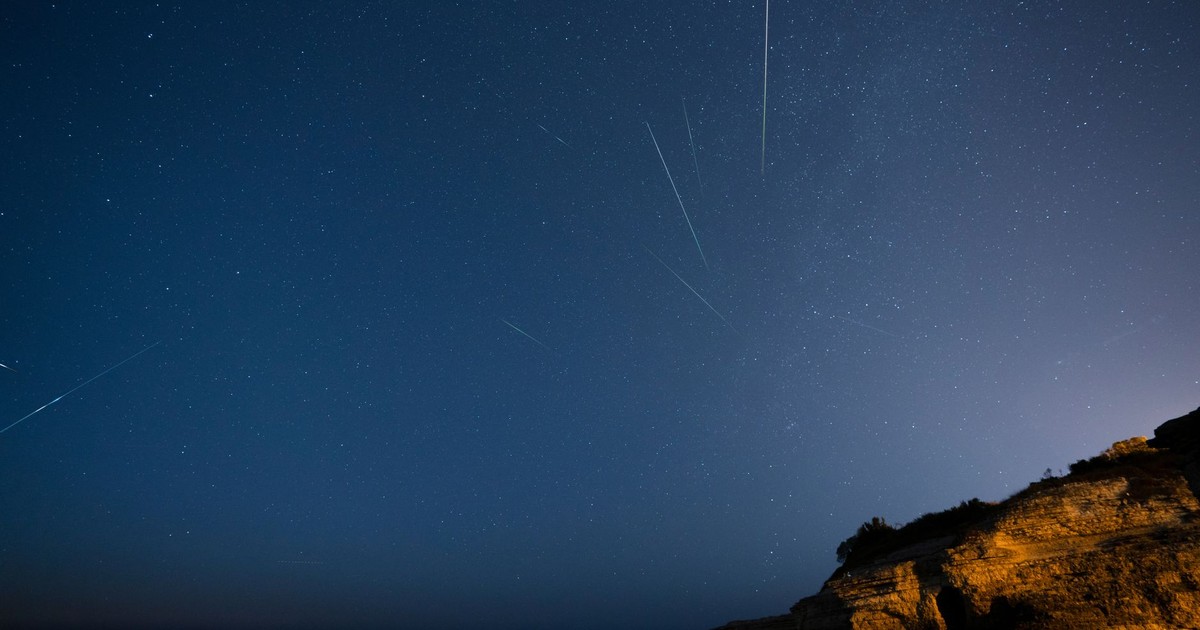

Right now, somewhere in the Southern Hemisphere, the Southern Delta Aquariids are already arcing silently across the dark. And in about 72 hours, when meteor showers peak on the night of July 30 into July 31, two of them will do it at the same time – a rare double event that only happens because Earth’s orbit takes it through two separate debris trails within days of each other.
The setup is genuinely extraordinary. Two showers, two different parent comets, two distinct personalities in the sky – one producing a high-volume stream of faint, fast streaks, the other putting out fewer meteors but making each one worth standing in the dark for. The catch, and there is always a catch, is that July’s full moon arrived on July 29 and has parked itself almost directly between the two radiants with approximately 98 percent illumination. Nature, for all its grandeur, does not always have good timing.
That number is worth knowing before you give up entirely. Because one of these showers produces fireballs bright enough to pierce moonlight, and the other has been active since mid-July – which means the window for catching it under better conditions may not be fully closed yet.
The Two Showers, and What Makes Each One Different
On the night of July 30 to 31, 2026, the Southern Delta Aquariids and the Alpha Capricornids will peak simultaneously, combining medium-speed meteors with bright, slow-moving fireballs. Think of them as two completely different performers who happen to be sharing the same stage on the same night.
The Southern Delta Aquariids are the older, quieter presence. Active beginning in mid-July and visible until late August, they’ve been putting meteors in the sky for weeks already. Their defining characteristic is speed: with a meteor velocity of 25.5 miles per second, they cut fast, faint lines across the sky – the kind you catch at the edge of your vision and aren’t sure you actually saw. These faint meteors are difficult to spot, and if the moon is visible, you will not be able to view them. On a moon-flooded night, most of them will simply disappear into the glow.
The Alpha Capricornids are the opposite problem. The Alpha Capricornids peak on July 30 and July 31, and they’re famous for their slow, bright, colorful fireballs – so although there are fewer meteors per hour during this shower, the luminous nature of the ones that do fall makes up for it. Where the Delta Aquariids are numerous and faint, the Capricornids are rare and spectacular. At peak, expect around five meteors an hour, moving at 23 km/s. Slow-moving, which is part of why they burn so bright – more time in the atmosphere means a longer, more vivid streak.
Where These Showers Come From
Every meteor shower has a backstory, and these two have interesting ones.
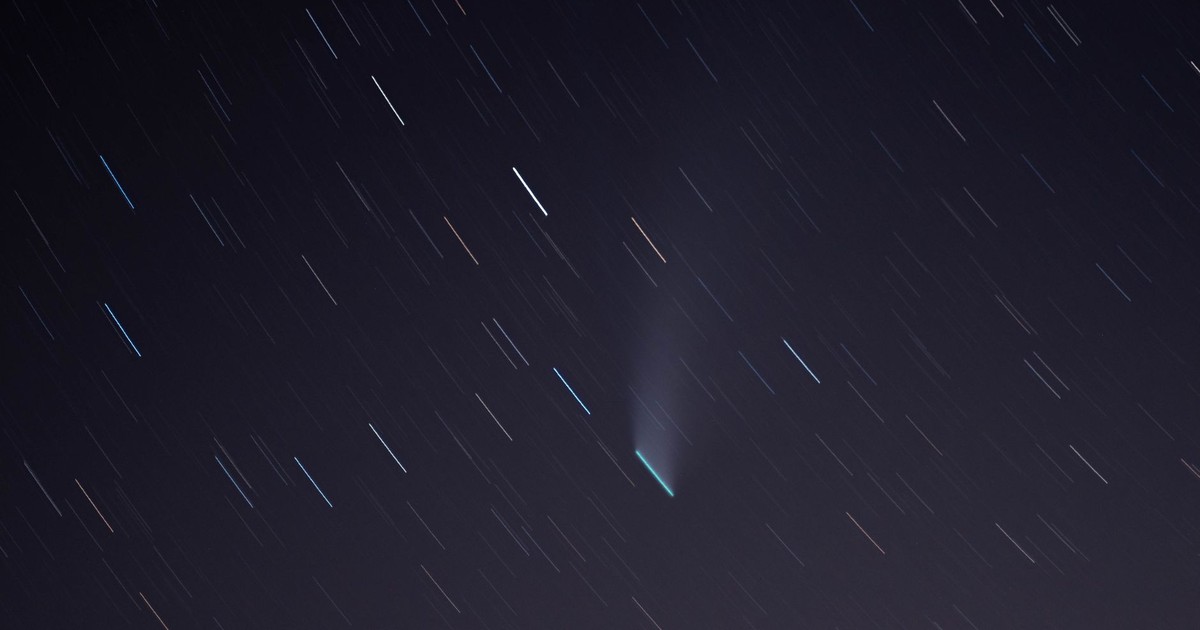
Meteors come from leftover comet particles and bits from broken asteroids. When comets orbit the Sun, the dust they emit gradually spreads into a dusty trail around their orbits. Every year, Earth passes through these debris trails, which allows the bits to collide with our atmosphere where they disintegrate to create fiery and colorful streaks in the sky.
The Southern Delta Aquariids have an unusual mystery attached to them. Scientists don’t know which space rock the Southern Delta Aquariids originate from, unlike most showers. The suspected culprit is Comet 96P/Machholz, according to NASA. This short-period comet orbits the Sun about once every five years and was discovered by Donald Machholz in 1986. Comet Machholz’s nucleus is about 4 miles across – a little more than half the size of the object hypothesized to have led to the demise of the dinosaurs. The “suspected” qualifier matters here. Scientists aren’t certain, and the shower’s origin remains one of the more interesting open questions in meteor astronomy.
The Alpha Capricornids have a stranger backstory still. These meteors appear to originate in the constellation Capricornus, but they are actually the product of debris from Comet 169P/NEAT. What makes this comet remarkable is its age as a source: research has established that the meteoroids Earth passes through now were ejected from the comet roughly 4,500 to 5,000 years ago, following a massive disruption that destroyed about half of the comet’s original mass. Scientists predict that as more material from the comet drifts into Earth’s orbit, the Alpha Capricornids will become stronger in the coming centuries, and by 2220 the shower is expected to become a major annual storm, according to ESA. The brilliant fireballs you might see this week are, in a sense, the early edge of something much larger that won’t fully arrive for another two hundred years.
The Moon Problem – and Why It Isn’t a Complete Dealbreaker
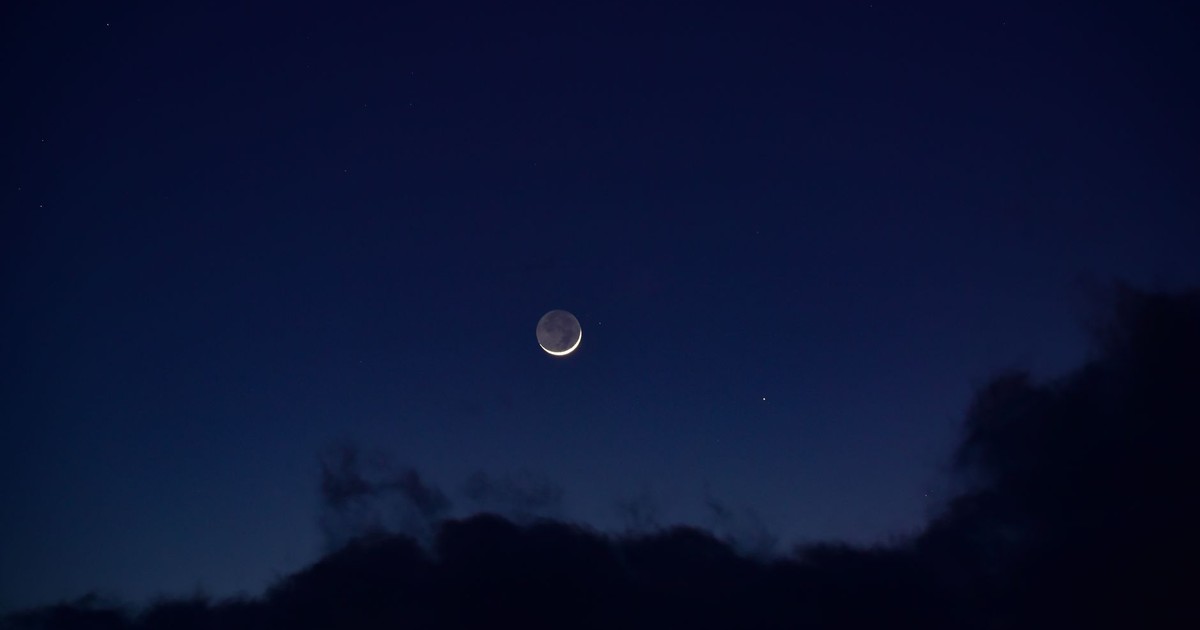
Viewing conditions in 2026 will be challenging. July’s full moon arrives on July 29, leaving the moon approximately 98 percent illuminated during the showers’ peak the following night, and its glare will brighten the night sky and obscure many of the fainter meteors.
For the Southern Delta Aquariids specifically, this is close to worst-case conditions. They’re faint by nature, and a sky that’s been lit up like a parking lot by a near-full moon will swallow most of them whole. One of summer’s most reliable meteor showers reaches its peak around July 30, and in 2026 almost no one will see it at its best.
The Alpha Capricornids are a different calculation. Patient observers may still spot some of the Alpha Capricornids’ signature fireballs shining through the moonlight. Fireballs bright enough to cast faint shadows on the ground don’t care much about a bright sky. If you go out on the night of July 30 into July 31 and spend a couple of hours looking up, there is a real chance of catching one. Not a guarantee, but a real chance.
One strategy worth trying: to improve your chances on peak night, try to observe from a spot where the moon is hidden by a tree, building, or hillside. Blocking the moon itself from your direct line of sight will reduce the sky glow in your field of view and let your eyes adapt better to the surrounding dark. The goal is to find a pocket of relative darkness within an otherwise washed-out sky.
Where to Look and How to Position Yourself
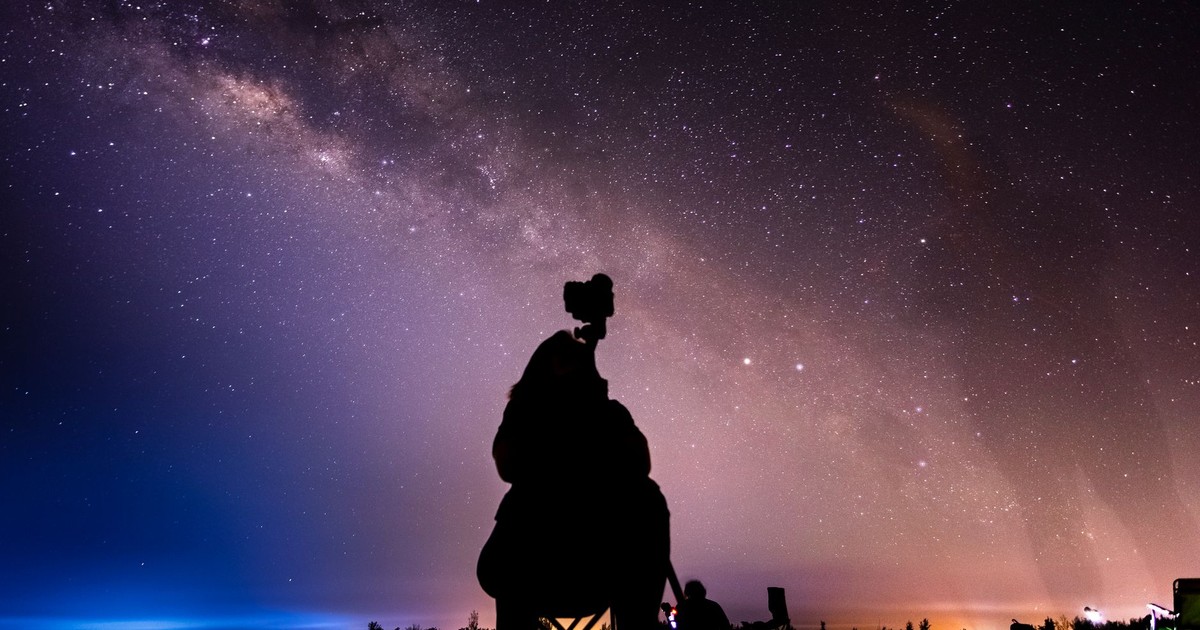
For the best chance of viewing, head somewhere safe and dark outside and be prepared to spend a long time gazing at the sky. The Southern Delta Aquariids are best viewed in the Southern Hemisphere or along southern latitudes of the Northern Hemisphere. NASA advises that you lie flat on your back and look about halfway between the horizon and the middle of the sky above you – about 45 degrees from Aquarius. Give yourself at least 20 to 30 minutes for your eyes to adapt to the dark before the best viewing begins.
Dark adaptation takes time. Checking your phone resets the process entirely, so leave it in your pocket. If you need light, use red-tinted light, which disrupts night vision far less than white.
The Southern Delta Aquariids’ radiant – the point in the sky from which they appear to originate – sits near the faint star Skat in the constellation Aquarius. It rises in mid-evening, is highest around 2 a.m., and low in the sky by dawn. Use the nearby bright star Fomalhaut to guide you to the radiant point – find Fomalhaut by drawing a line southward through the stars on the west side of the Great Square of Pegasus.
The Southern Delta Aquariids’ radiant rises in the east around 9:30 p.m. local time and climbs highest in the south in the hours after midnight. Late night to pre-dawn is your best window, both for the radiant height and because Earth’s night side rotates into the debris stream more directly as the hours pass.
The Alpha Capricornids’ radiant sits nearby in the constellation Capricornus. Because both radiants are close to each other in the southern sky, you can monitor both at once by facing generally south and keeping your gaze at mid-sky elevation. You don’t need to choose one or the other.
No telescope, no binoculars, no equipment of any kind. This is a naked-eye event. They can be observed with the naked eye from a location free of light pollution and obstructions.
There’s Already Something Happening Right Now
Both showers have been active for weeks, and the Southern Delta Aquariids in particular have been putting on a lower-key show since mid-July. The Southern Delta Aquariids remain active from mid-July into late August, while the Alpha Capricornids run from early July into mid-August – and that extended activity means meteors from both showers may appear well before and after the official peak.
This matters because the nights just before and after July 29 – when the moon was slightly less full – offered better actual viewing conditions than the technical peak night itself. If you went out on July 27 or 28, you may have caught a few Delta Aquariids under a sky that was bright but not yet at maximum. And if you miss July 30 to 31, the showers don’t simply stop. Activity will taper over the next few weeks, and any clear dark morning in early August is still worth stepping outside for.
There’s also a bonus waiting in the wings: the Perseid meteor shower peaks in mid-August and is widely regarded as the most-watched shower of the year. With a new moon coinciding with the Perseids’ peak on August 13, this year’s show should be close to ideal, with a zenith hourly rate of around 100 meteors – and the strongest action building after midnight toward dawn. If the moon ruins your late-July plans, you have a genuinely excellent backup arriving in two weeks.
Read More: How to Watch the Perseid Meteor Shower at Its Peak This August
What You Actually Need Tonight
A blanket, a dark patch of sky, and the patience to lie still for at least an hour.
The instinct is to give up before you start when the moon is this bright, and that instinct is wrong specifically for the Alpha Capricornids. A five-per-hour shower of bright fireballs means that over a two-hour session, you might realistically see eight to ten meteors. Those are not bad odds for something that requires nothing more than walking outside after midnight. The Delta Aquariids are a harder sell this year – most of their subtler meteors will be lost in the moon glow – but every so often a brighter one comes through, and on a night when two showers are running at the same time, the sky has more going on than usual.
The American Meteor Society notes that showers that peak with the moon’s phase greater than half illuminated will be affected by moonlight and difficult to observe. But “difficult to observe” and “impossible to observe” are not the same thing. The Alpha Capricornids in particular exist in a category of bright enough to survive a bad moon. Go out, face south, and let your eyes adjust. The sky will do the rest of the work.
The Bigger Picture
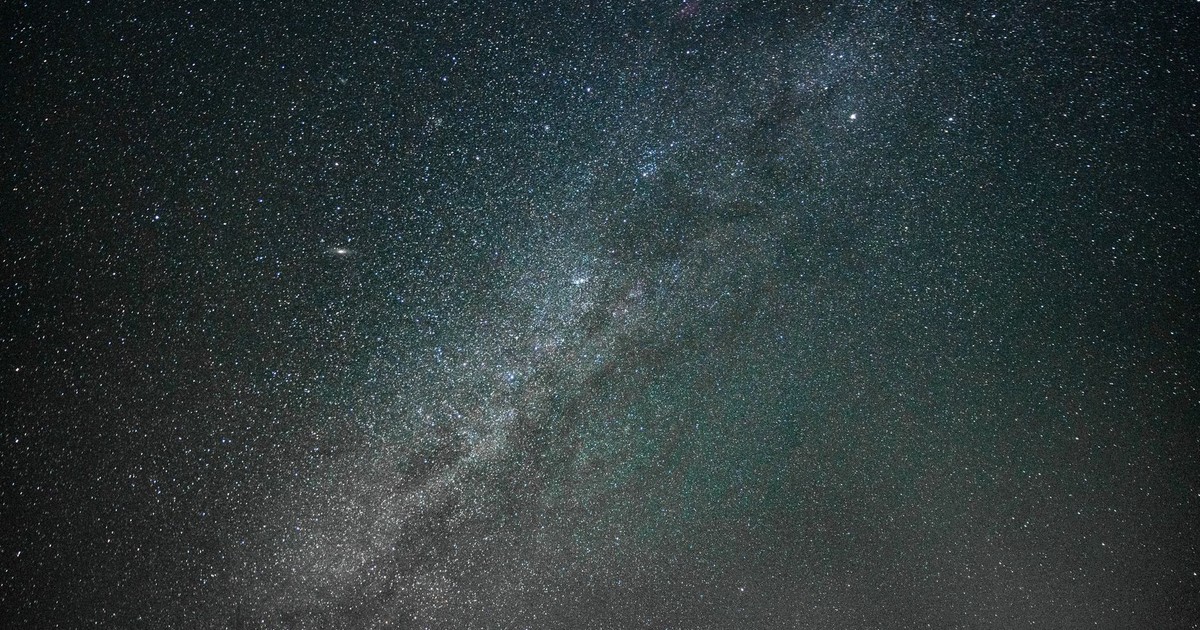
Meteor showers are one of those things that genuinely reward low expectations. You don’t need a once-in-a-decade event or a pristine dark sky to have a night worth remembering. You need to actually go outside.
Both of these showers peak this week in conditions that aren’t perfect, and that fact has dominated most of the coverage. But the meteors are still up there, the cometary debris is still crossing Earth’s orbit on exactly the schedule it has kept for thousands of years, and the Alpha Capricornids are still firing off those slow, brilliant fireballs that are bright enough to catch your eye even through a washed-out sky. The Southern Delta Aquariids may be mostly invisible this year on peak night, but their parent comet – Comet 96P/Machholz, orbiting the Sun on its five-year loop – left this particular debris trail in place long before anyone was watching, and it will still be here next July, and the one after that. Some years the moon cooperates. This is not one of those years.
The Perseids arrive in two weeks under a new moon. The Southern Delta Aquariids will be back next July. The Alpha Capricornids will grow more spectacular over the coming centuries as more of Comet 169P/NEAT’s ancient debris drifts into Earth’s path. The sky keeps its own calendar, and it’s a long one.
Disclaimer: This information is not intended to be a substitute for professional medical advice, diagnosis, or treatment and is for information only. Always seek the advice of your physician or another qualified health provider with any questions about your medical condition and/or current medication. Do not disregard professional medical advice or delay seeking advice or treatment because of something you have read here.
AI Disclaimer: This article was created with the assistance of AI tools and reviewed by a human editor.