
The brain stores no song without also storing what was happening when you first loved it. Pull up any piece of music you haven’t heard in twenty years and the whole surrounding context comes with it: the room, the person, the feeling, the version of yourself who was there. Memory researchers have spent decades trying to explain how an arrangement of notes and rhythm manages to do what years of deliberate recollection cannot.
The answer involves some of the most sophisticated architecture in the human brain, and it turns out that music and memory are not just associated with each other. They are, in a very real neurological sense, built from the same materials.
The brain does not store memories the way a phone stores photos. Memories are distributed patterns of neural activity scattered across multiple regions, and they get reconstructed each time you access them, not replayed. A familiar melody activates part of that pattern, and the brain essentially reassembles the rest of the experience around it, pulling in the emotional texture, the sensory details, the felt sense of who you were in that moment. The song is not a trigger. It is closer to a key that slides into a very specific lock.
The Brain Regions Behind the Flashback
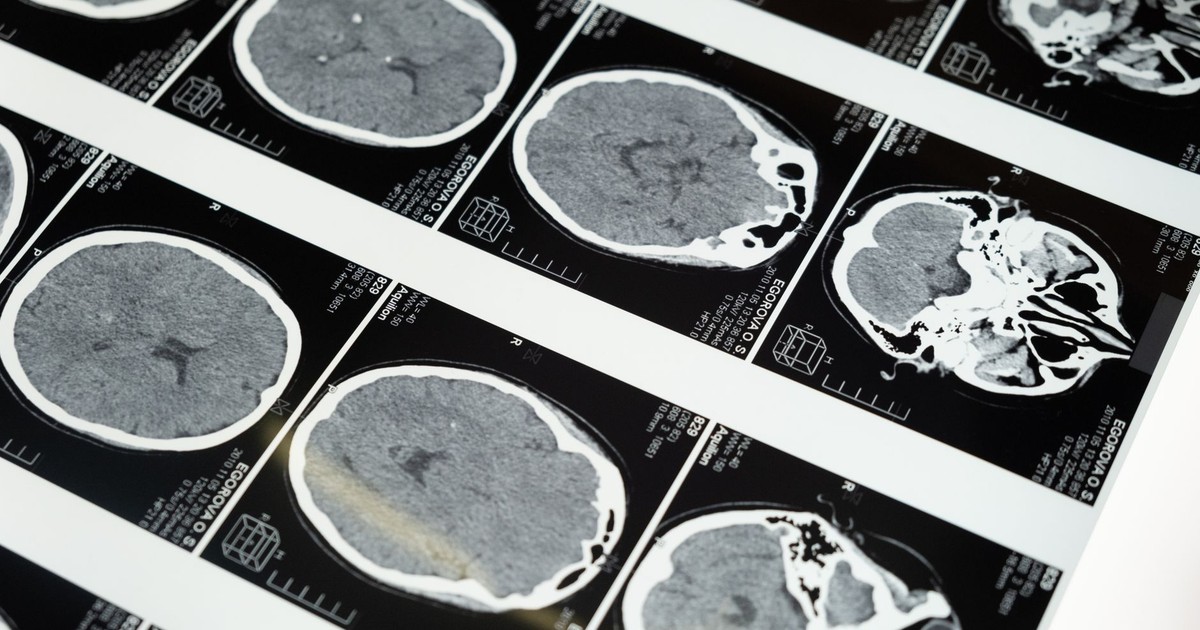
When you hear a song tied to a meaningful moment in your life, it is not one brain region lighting up – it is several, simultaneously, in a way that almost nothing else achieves. Brain imaging scans show that music engages broader and more diverse neural networks than speech does, reaching auditory, emotion, motor, and memory circuits at the same time.
The research has become increasingly precise about which circuits are doing what. A 2025 study led by Assal Habibi of the Brain and Creativity Institute at USC Dornsife found that nostalgic music engages both the brain’s default mode network – linked to memory and self-reflection – and its reward circuitry. The default mode network is the system that activates when you reminisce, daydream, or think about your own life story. The reward circuitry is the system that floods the brain with dopamine when something feels deeply satisfying. The fact that a single piece of music engages both simultaneously is what distinguishes music-triggered memory from almost any other form of recall.
Using functional MRI to monitor participants’ brain activity as they listened to songs tied to meaningful life events, the researchers uncovered a neural signature that may explain music’s unique ability to evoke vivid, autobiographical memories. That signature – the simultaneous activation of memory and reward systems – appears to be what gives music-triggered recollections their almost physical intensity. You don’t just remember the prom or the road trip or the breakup. You re-experience it, right down to how it felt in your chest.
Georgia Tech researchers studying the relationship between music and memory found increased activity in both the amygdala and the hippocampus when participants recalled stories while listening to music – the areas crucial for emotional memory processing – which is why a song associated with a significant life event can feel so powerful: it activates emotion- and memory-processing regions simultaneously. The amygdala functions, roughly, as the brain’s emotional relevance detector. It tags experiences as worth keeping based on how strongly they registered emotionally. When music reactivates the amygdala alongside the hippocampus, it does not just retrieve the memory – it rekindles the emotional state that was encoded with it. The song doesn’t just bring the memory back. It brings the feeling back.
Why Teenage Music Gets Under Your Skin

There is a reason the music from your high school years still stops you cold while the songs you discovered last year require actual effort to summon. Researchers call it the reminiscence bump, and it is one of the most well-documented phenomena in the psychology of memory.
Adult listeners show increased preference for and personal memories associated with music from their adolescence and young adulthood – a bias so consistent across populations that it has its own name. A 2024 study published in Frontiers in Psychology by researchers at Northeastern University found that adolescence is a period of social reorientation away from family and toward peers, characterized by new social bonds and increased prosocial behavior, and that this shift is accompanied by notable structural and functional changes in brain networks supporting reward processing – changes that make adolescence a time of relatively increased music reward valuation.
In practical terms, this means that the music you listened to between roughly twelve and twenty-five was being processed by a brain that was simultaneously more reward-sensitive, more socially attuned, and more neurologically open to deep encoding than it will ever be again. The songs from that era are not just nostalgic. They are neurologically privileged. Every playlist from your formative years was, in effect, writing to a brain that was wide open and storing everything with unusual intensity.
Rewarding experiences generally enhance memory of associated information, perhaps more so in adolescence – and heightened reactivity to musical reward may optimize the effect of musical reward on memory during this developmental window. Which is also, for the record, the explanation for why your parents’ deep conviction that music was objectively better in their day has nothing to do with music quality and everything to do with when their brains were doing the most intensive emotional recording.
The Emotional Sweet Spot

Not all music triggers memory equally, and the reason is more precise than most people assume. It is not just about a song being familiar, or even being from a meaningful era of your life. The emotional intensity of your response in the moment – right now, as you listen – appears to matter just as much as the history attached to the song.
Research from UCLA shows that listening to music after an experience can make it more memorable, but only for those individuals who experienced a moderate emotional response while listening – not those whose emotional response was too high or too low. “Whether music was negative or positive or whether it was familiar didn’t have as much of an influence on memory as the emotional response people felt while listening to it,” said study author Professor Stephanie Leal. “There was an optimal level of emotional response that aided in remembering the details of an experience. Too much or too little emotional response had the opposite effect – worse memory for details, but better memory for the gist of an experience.”
As Leal explained, “Music has the ability to influence a part of your brain called the hippocampus, which is essential for turning experiences into memories.” The hippocampus is essentially the brain’s filing clerk for episodic memory – the kind of memory that stores not just facts but the full experience of a specific moment. When music activates it at the right emotional pitch, events that might otherwise blur together get encoded with unusual clarity and durability. This is why certain years of your life feel like they happened in high definition while others seem to have passed in a fog: it is rarely about what happened, and often about what was playing while it did.
You can also explore how teaching kids music shapes their brain development and memory formation in ways that reach far beyond simply learning to play an instrument.
Music Can Actually Rewrite Your Memories
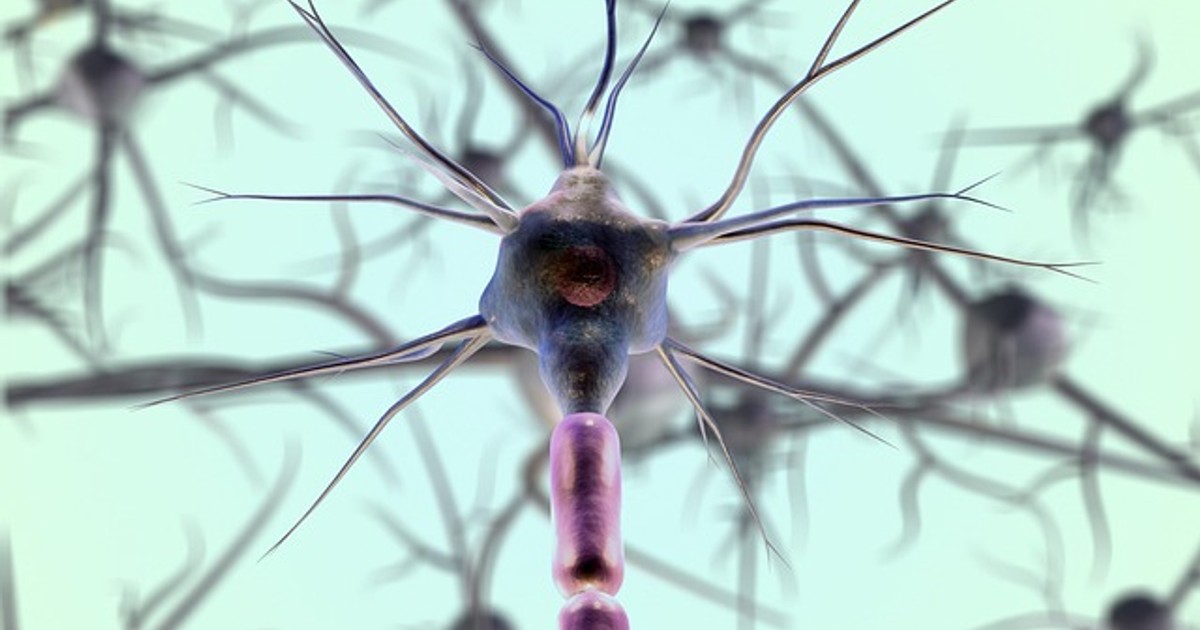
Music does not just retrieve memories in the state you left them. Depending on what you listen to while you recall an experience, the emotional coloring of that memory may actually change.
Research suggests that music acts as an emotional lure, becoming intertwined with memories and subtly altering their emotional tone – and that memories may be more flexible than previously thought, capable of being influenced by external auditory cues during recall. The Georgia Tech team studying this process found evidence of strong communication between the emotional memory processing parts of the brain and the regions involved in visual sensory processing – suggesting that music can infuse emotional details into a memory while a person is actively recalling it, not just while initially forming it.
People could use music intentionally to either soften the emotional charge of a difficult recollection or deepen the emotional richness of a positive one. It also means that the version of your past your brain presents to you is never fully fixed. The archive never gets smaller, only larger, and what plays while you dig through it is actively shaping what you find there.
What This Means for Alzheimer’s and Memory Loss

Some areas of the brain seem to remain accessible to music even as other cognitive abilities fade. People who can no longer recognize familiar faces or orient themselves in time or space are often able to sing along to the soundtracks from their youth. The neurological reason appears to be that the brain regions music activates – including the reward circuitry and the default mode network – are among those most resistant to early Alzheimer’s damage. Music does not just bypass the disease; it reaches areas the disease has not yet reached.
Researchers at Brown University conducted one of the largest studies to date on the effects of personalized music in dementia care in 2024, following over 3,500 nursing home residents. They found that personalized music programs led to improved mood, social engagement, and cognitive awareness, while also reducing agitation, distress, and reliance on psychotropic medications. The scale of that study matters because dementia research is often built from small samples. More than 3,500 people is a hard number to argue with.
The research points to a promising, nonpharmacological path for improving quality of life in people experiencing memory loss – one that starts with a simple playlist. The specificity of the playlist is part of what makes it work. Music a person chose, heard repeatedly during formative years, and attached to relationships and experiences – that is the music with the deepest neural roots and the greatest chance of finding purchase even in a brain that dementia has been working on for years.
Read More: 5 Early Signs of Dementia You Can Spot Years Before Diagnosis
What the Song Already Knows About You

Music and memory are intertwined in a way that makes the whole concept of “just a song” faintly absurd. That thing you dismiss as background noise at a grocery store or elevator filler has the structural power to reassemble a decade-old version of yourself in the span of eight bars. The brain that hears it is not passively receiving. It is actively reconstructing: searching its own distributed architecture for matching patterns, reactivating emotion systems, pulling up sensory context, and delivering the whole package with an immediacy that no photograph or journal entry can match.
What is less comfortable to sit with is the corollary: you are not just remembering through music. Music is, in part, constructing how you remember. The emotional tone it plays over a recalled experience – whether that song was a comfort or a source of anguish when you first heard it – is being woven back into the memory itself, subtly adjusting the version of events your brain considers true. Some of those adjustments have happened so many times, across so many listens, that what you remember now may be quite different from what you lived. That is not a reason to be suspicious of your memories. It is just a reason to hold them a little more lightly – and maybe, on a hard day, to be more deliberate about what you put on.
Disclaimer: This information is not intended to be a substitute for professional medical advice, diagnosis, or treatment and is for information only. Always seek the advice of your physician or another qualified health provider with any questions about your medical condition and/or current medication. Do not disregard professional medical advice or delay seeking advice or treatment because of something you have read here.
AI Disclaimer: This article was created with the assistance of AI tools and reviewed by a human editor.