

Being liked by everyone is not the same thing as being known by anyone. The friend who always picks up. The coworker who smooths every tension before it becomes a confrontation. The woman at the dinner party who laughs at the right moments and never says anything that would make anyone uncomfortable. She leaves every room more popular than she entered it, and she drives home alone feeling like she barely existed.
People pleasers behavior is not just a personality quirk. Nine specific patterns that make someone universally likable are the same ones that quietly hollow out their closest relationships.
The Gap Between Liked and Known

A person who never expresses what she actually wants gives the people around her almost nothing real to attach to. They’re connecting with a performance. And performances, however polished, don’t hold weight the way a person does.
Organizational psychologist Adam Grant put it plainly: “The root of chronic people pleasing is not concern for others. It’s concern for their approval. The fear of being disliked fuels self-sacrifice.” That reframe matters. It moves people pleasing out of the category of virtue and into the category of fear management. And fear-managed behavior, run long enough, produces a very specific kind of loneliness: the kind where you’re surrounded by people who adore you and still feel invisible.
1. They Change Who They Are Depending on the Room
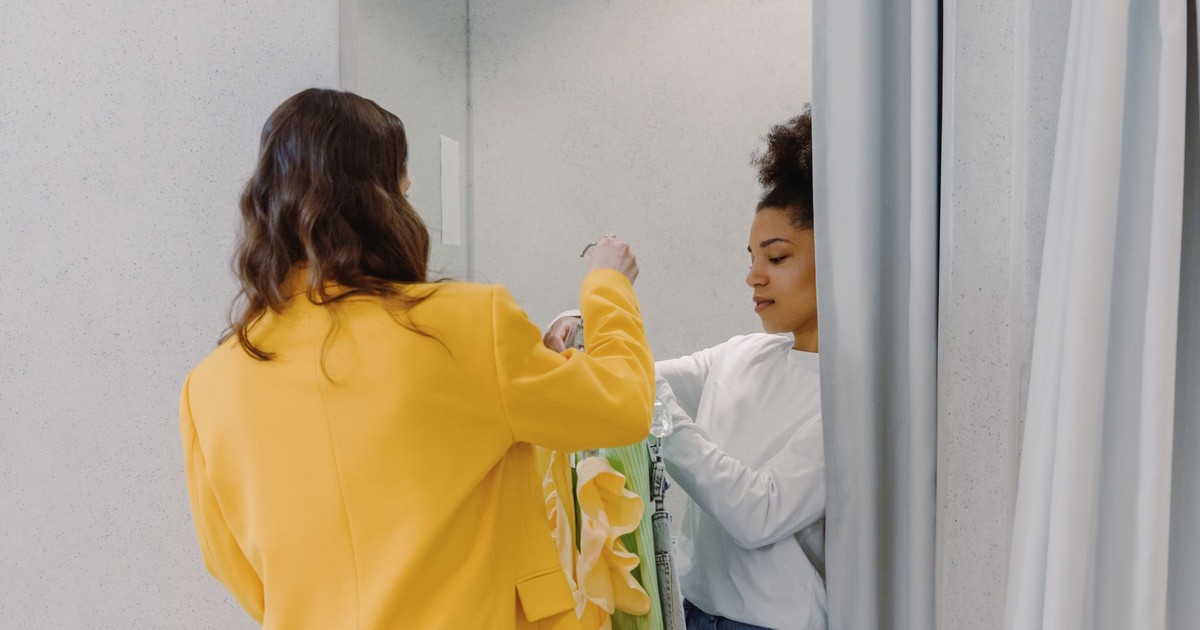
The psychological term for this is high self-monitoring, and it has been one of the most studied constructs in social and applied psychology since psychologist Mark Snyder introduced it in 1974. Self-monitoring refers to “differences in the extent to which people value, create, cultivate, and project social images and public appearances.” A high self-monitor walks into a room, reads who’s there, and adjusts: her opinions, her humor, her level of formality, sometimes her entire apparent personality.
Research finds that self-monitoring is associated with several positive work outcomes. Professionally useful, relationally costly. The same skill that makes you excellent at navigating a difficult meeting makes it nearly impossible for anyone to know which version of you is the real one.
2. They Never Let Anyone See Them Struggle

One of the most consistent people pleasers behavior patterns is the suppression of difficulty. Not just complaints, but anything that might require the other person to be emotionally present. A chronic people pleaser will tell you about the hard week after it’s over and she’s already fine again, or she won’t tell you at all. She packages her suffering so that it asks nothing of you.
Vulnerability is widely recognized in relationship research as an essential component of relational closeness, not merely a byproduct of it. You cannot have a deep relationship with someone who never lets you carry any of their weight. The exchange has to run two ways. Friendship built entirely on someone else’s availability and agreeableness is not a friendship. It’s a service.
3. They Apologize Constantly, for Things That Aren’t Their Fault

She apologizes when someone bumps into her. She apologizes for having a preference. She apologizes for the fact that the restaurant she suggested has a forty-minute wait, as though she controls the restaurant. The constant apology is not about genuine remorse. It functions as a reflexive attempt to keep the peace before any tension can take root.
A fawning response may stem from a fear of rejection or abandonment, leading individuals to prioritize maintaining relationships over their own well-being. When you apologize enough, people stop expecting anything from you that could create friction. Frictionlessness is not warmth.
4. They Agree With the Last Person Who Spoke

Ask a chronic people pleaser what she thinks of a decision, and her answer will track closely with whoever is in the room at the time. Not because she has no opinions (she has plenty, usually quite strong ones) but because stating them out loud creates the possibility of disagreement, and disagreement feels like the first step toward someone leaving.
The extremely high self-monitor fits in everywhere, but because her positions shift with her audience, no one accumulates a consistent picture of what she actually believes or values.
5. They Absorb Conflict So Others Don’t Have To

The peacekeeper at the family dinner. The one who changes the subject when two people start sniping at each other. The woman who, when her partner says something unkind, finds a way to frame it as a misunderstanding rather than a problem. For some people, conflict avoidance runs deeper than a preference for harmony — it operates as an automatic protective response.
Coined by therapist Pete Walker, the fawn response refers to a trauma-driven pattern of people-pleasing behaviors designed to diffuse danger when the brain senses threat, especially social or relational threat. The woman who keeps the peace is not always choosing it freely. Sometimes she learned, early and well, that conflict was a precursor to something worse, and her nervous system has simply never updated that lesson.
6. They Struggle to Name What They Actually Want

Chronic people pleasers often describe a peculiar internal blankness when asked about their own preferences. Not indecision, actual uncertainty. What restaurant do you want? They genuinely don’t know. For years, the exercise of scanning for what others wanted came before the exercise of noticing what she wanted, and the second skill got rusty.
When fawning has been your survival strategy for years, the fear response happens so quickly that it feels like your genuine preference. You’ve spent so long abandoning yourself that you may not know what your authentic desires even are. A generous person knows what they want and chooses to set it aside. A people pleaser often doesn’t know, because the choice was made so early and so automatically that it stopped registering as a choice at all.
7. They Give More Than They Receive, and Quietly Resent It

In a study of friendships, psychologists Bram Buunk and Karin Prins found that people whose exchange with their best friend felt imbalanced — whether they were giving more or receiving more than they gave — reported significantly more loneliness than those in balanced friendships. Loneliness tracked with imbalance in either direction, not with how much affection was present.
The woman who always drives to her friend’s side of town. The one who always checks in first after a fight. The one who remembers everyone’s birthdays and nobody has ever once remembered hers without Facebook. The resentment tends to arrive quietly, long after the pattern has calcified, and she often doesn’t feel entitled to it because she was never explicitly asked to give so much. She volunteered. But she volunteered from a place of fear, not surplus.
8. They Compartmentalize Their Identity Across Relationships

There’s a less-discussed version of the people-pleasing dynamic: the woman who doesn’t just sacrifice her preferences but actually presents a different self to every group she’s in. Her work friends have never met her family. Her family doesn’t know about her ambitions. Her partner doesn’t know how she talks about him when she’s with her closest friends.
Each individual group gets a sliver. Each individual group feels close to her, because the sliver they received was genuine. But none of them has the whole picture — she has divided herself so thoroughly in service of everyone’s comfort that there is no unified self available to be seen.
9. They Are the First to Help and the Last to Ask for It

Unlike fight or flight, fawning is socially rewarded. Kindness is a virtue, and empathy is crucial in any society, but when those traits are compulsively used to manage fear or prevent abandonment, they become survival tools, not values.
The person who arrives at every move, every hospital visit, every crisis without complaint and never, ever calls anyone when she is the one in crisis. Partly because asking for help feels like burdening someone. Partly because being needed is the one currency she trusts. If she is useful, she is safe. If she stops being useful, she is not sure what she is. The result is a life full of people who genuinely love her and have no idea she’s drowning, because she has arranged very carefully never to look like she is.
This is the pattern that connects all nine behaviors: the management of other people’s perception of her, at the cost of her own coherence.
What the Research Actually Explains

The fawn response is a deeply rehearsed pattern born from environments where saying no, expressing anger, or having needs led to punishment or withdrawal. That is not a character flaw. It is a learned survival strategy that worked well enough to stick and that now runs in contexts where it is no longer necessary and is actively getting in the way.
Attachment and developmental trauma research indicates that fawn responses often emerge in childhood environments where a caregiver’s behavior was unpredictable, threatening, or conditional on the child’s compliance. The adult who cannot tolerate someone being mildly annoyed with her may be responding not to the annoyance in front of her but to something much older that her nervous system has never fully archived.
The strongest counterargument to all of this is worth taking seriously: many of these behaviors look, from the outside, like decency. Conflict avoidance can look like grace. Constant giving can look like love. Self-effacement can look like humility. And sometimes it is those things. The difference is not visible in the behavior itself. It lives in the internal landscape of the person doing it, whether she is acting from freedom or from fear.
The fawn response is described in trauma literature not as a moral failing but as a protective strategy the nervous system learned and then forgot to un-learn. According to the CPTSD Foundation, these patterns are survival adaptations that persist long after the original threat has passed. The problem isn’t that she is too nice. The problem is that being nice became the only tool she had.
What Being Liked Without Being Known Actually Costs
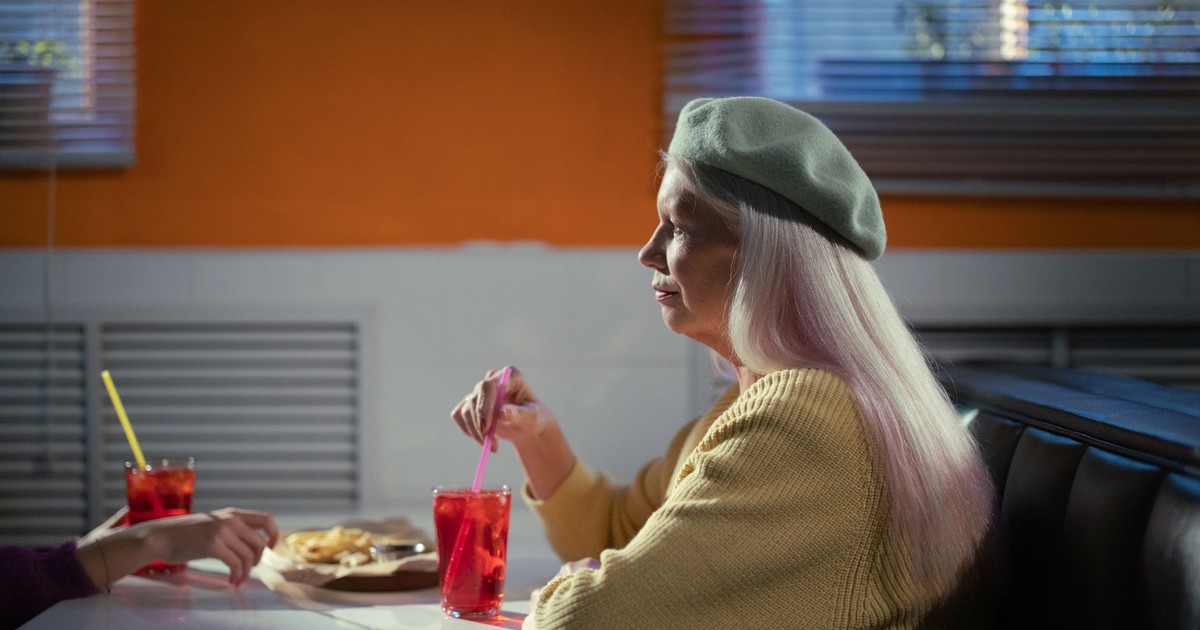
The cost is not dramatic. It does not usually announce itself. It accumulates in small transactions across years: the conversation where she agreed when she didn’t, the friendship where she carried everything and asked for nothing, the decade of being described as “so easy to be around” while feeling entirely alone in rooms full of people who adored her.
When you’re fawning, resentment builds because you’ve abandoned yourself to keep someone else comfortable. Resentment, accumulated quietly across enough relationships and enough years, does not stay quiet. It turns into exhaustion. It turns into the strange grief of realizing that nobody who loves you has ever had to try very hard to love you, because you made yourself so easy that love required nothing of them. The relationships feel thin, not because the people in them don’t care, but because they were never asked to.
Where the Real Conversation Starts

Some of these patterns go back further than any single relationship. They predate the friendships that feel one-sided and the partners who never learned to ask how she was doing. They go back to whatever room she first learned that being easy was safer than being honest, that need was a liability, that a smile was the fastest way to lower the temperature.
Naming that is not a solution. It doesn’t automatically change the way she apologizes for the rain or rearranges her entire personality when she walks into a room full of new people. But it does shift the question from “why can’t I just stop doing this” to something more useful: what was this protecting me from, and does it still need to? That second question is almost always where the real work begins, not in grand declarations or sudden boundary-setting, but in the small moment when she notices the reflex, pauses, and wonders for the first time whether she actually agrees.
Disclaimer: This information is not intended to be a substitute for professional medical advice, diagnosis, or treatment and is for information only. Always seek the advice of your physician or another qualified health provider with any questions about your medical condition and/or current medication. Do not disregard professional medical advice or delay seeking advice or treatment because of something you have read here.
AI Disclaimer: This article was created with the assistance of AI tools and reviewed by a human editor.