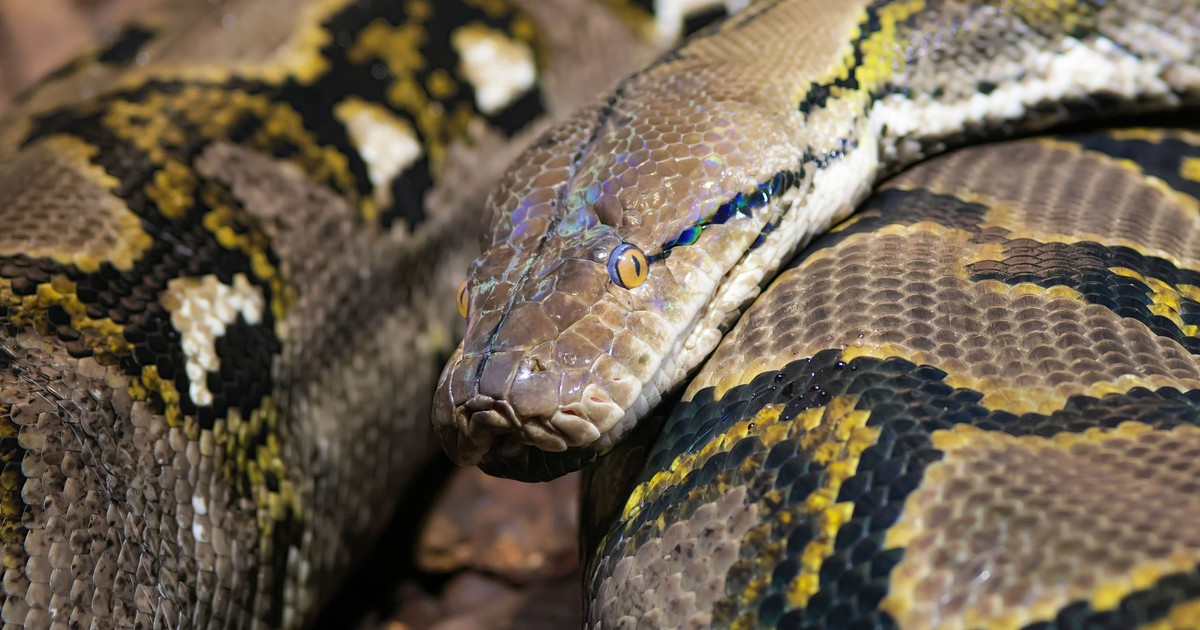

A man left a bar on the night of July 26, 2026, and walked into a forest in North Maluku, Indonesia, to get home. He never came out. His family found him the next morning, whole, inside a 23-foot python. There was nothing left to search for except the snake.
Hasim Lumbessy had been at a bar in North Maluku when he headed home alone toward the village of Waksakai, cutting through a forested stretch he would not survive. At around 3 a.m., drunk and making his way through the dark undergrowth, Hasim was struck by a python that bit into his leg, then coiled around him and squeezed until he was dead. The attack was fast, brutal, and over before anyone knew he was missing.
When his family began searching and came across a large snake with a distended belly, their worst fears came true. They cut open the python and found Hasim’s body inside the reptile. Police confirmed the discovery, and Hasim’s body was taken home to prepare him for his funeral. The python attack fatality sent shockwaves through the local community and quickly drew international attention – not least because it is a kind of death most people cannot fully picture, even when they are told about it.
What Kind of Snake Does This
The reticulated python is a giant constricting snake known as the world’s longest, with the largest recorded individual measuring 10 meters, or 32.8 feet, in length. Most are less than 5 meters long, with females being larger than males, and they weigh between 75 and 175 kilograms. The specimen that killed Hasim was approximately 7 meters, or 23 feet – which is, to put it plainly, longer than most living rooms are wide and heavy enough to immobilize an adult human within seconds of contact.
Reticulated pythons grab their prey with dozens of sharp, curved teeth, then squeeze it to death before swallowing it whole. They stop the heart rather than suffocating their victims, according to Max Nickerson of the Florida Museum of Natural History. While each snake is different, the species is described as “touchy” – when they kill, they sink their large jaws in and coil until blood flow stops.
Scott Boback, a vertebrate ecologist at Dickinson College, notes that the species is an ambush predator. Rather than seeking out prey, it lies in wait for victims to walk past. Using its tongue for chemosensation, the python detects chemicals along trails where animals regularly travel and sets up an ambush along that path. Reticulated python attacks on humans are rare – which is part of what makes their outcomes so shocking when they do happen.
When a human is swallowed, the shoulder blades present the only major obstacle, according to python researcher Mary-Ruth Low of the National University of Singapore. “The restricting factor is human shoulder blades, because they are not collapsible,” she explained to the BBC. Once the shoulders pass, the rest follows. The body is consumed whole and largely intact.
A Pattern of Attacks in Indonesia

The death of Hasim Lumbessy was not an isolated incident, and the village of Waksakai was not the only place in the region dealing with this kind of threat. The month before Hasim’s death, a similarly sized python had struck a biker who stopped to rest in the same area of North Maluku, while elsewhere in the province a python killed a 44-year-old woman on her farm.
Indonesia has recorded a grim string of these deaths stretching back nearly a decade. Such incidents are considered extremely rare globally, but several people have been swallowed by pythons in recent years specifically in Indonesia. One woman was found dead inside the belly of a reticulated python in South Sulawesi in June 2024, and the year prior, a python eight meters long was found strangling and eating a farmer in a village in the same province. A 54-year-old woman was found dead in 2018 inside a seven-meter python in Southeast Sulawesi’s Muna town.
In 2017, the body found inside a 23-foot-long snake in West Sulawesi turned out to be 25-year-old Akbar Salubiro, a harvester who worked on a palm oil plantation. Villagers began searching for Akbar after he failed to return from his crops, and the search party found scattered palm oil fruit, a picking tool, and a boot – before spotting the engorged 7-meter python. It was the case that put the words “man swallowed by python” into international headlines for the first time for many readers. It has not been the last.
Most recently, just weeks before Hasim’s death, a 61-year-old man was reportedly swallowed by a 28-foot python near his village in Southeast Sulawesi after failing to return home from tending livestock. According to regional officials, it was the first time such an incident had occurred in that particular area. La Ode Risawal, head of the local disaster agency, confirmed the incident: “This is the first time a human was eaten by a python in this area.”
Why Indonesia, and Why Now

The geography helps explain some of this. Reticulated pythons live in tropical forest regions throughout Southeast Asia, including Indonesia and the Philippines. Indonesia’s outer islands in particular – Sulawesi, North Maluku, Sumatra – are home to dense forest that borders farming and rural villages, which means humans and very large snakes have always shared the same land.
A lecturer at Hasanuddin University in Makassar believes deforestation from Indonesia’s palm oil industry may be contributing to snake attacks on humans. “Because the habitat is destroyed, the snake’s natural food sources are also affected. Thus, the snake went out to the palm oil plantation to seek prey,” he told the Jakarta Post.
Wildlife observers more broadly believe that ongoing deforestation and shrinking habitats are pushing wild animals, including large snakes, closer to human communities. The logic is straightforward: if the forest gets smaller and the prey inside it gets scarcer, a snake that can grow to 23 feet and weigh over 150 pounds will eventually move toward where the food is. Villages are where the food is.
Reticulated pythons are active at night, concealing themselves until a bird, mammal, or reptile comes within striking range. A man walking alone through a forested path at 3 a.m., slightly intoxicated and not on alert, fits every condition a reticulated python is designed to exploit. This is not a case of an unusually aggressive snake. It is a case of habitat, timing, and bad luck intersecting at the worst possible moment.
The Scale of These Snakes
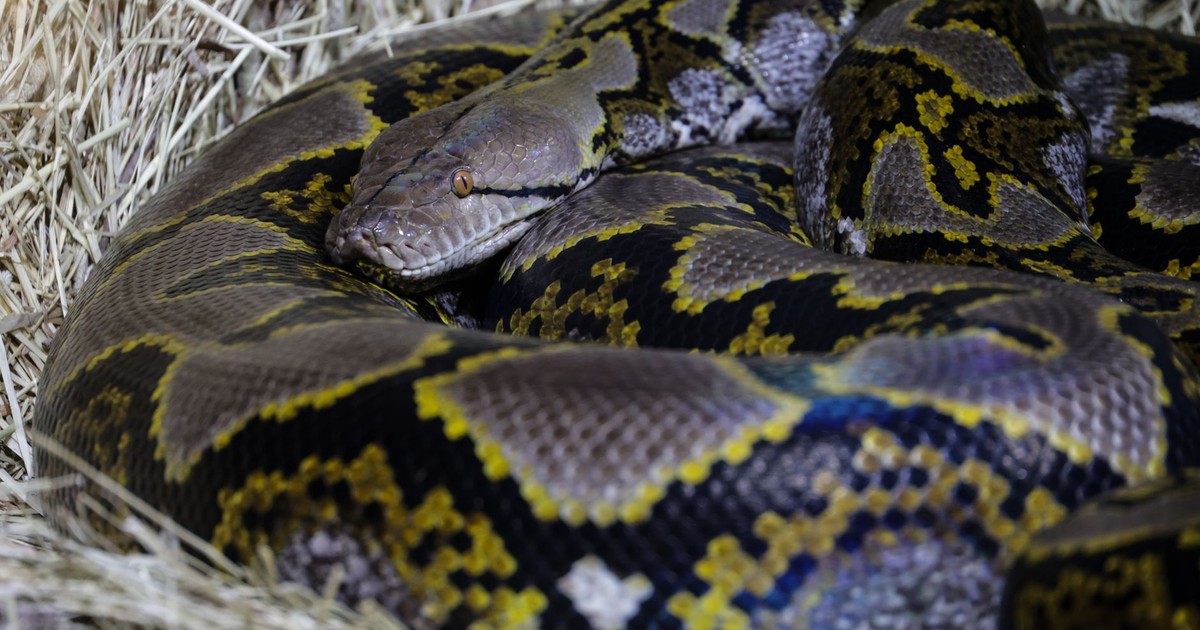
It is worth understanding just how large the species involved actually is, because the numbers have a way of not quite landing until they are spelled out. A giant female reticulated python discovered in the Maros region of Sulawesi in late 2025 was confirmed by Guinness World Records as the longest wild snake to be formally measured, at 7.22 meters or 23 feet 8 inches from head to tail. Under anaesthesia, when snakes’ bodies fully relax, she could be at least 10 percent longer, placing her true length nearer 7.9 meters or 26 feet.
The species typically measures between 3 and 6 meters in the wild, but giant specimens greater than 6 meters have emerged from time to time. The python that killed Hasim Lumbessy was at the larger end of what is commonly encountered. It was also, by that point, well-established in an area that people crossed on foot regularly, in the dark.
The village of Waksakai is not a wilderness outpost. It is a community where people go to bars and walk home through forests because that is how the geography works. There is no drama in that, just ordinary life in a place where the paths run through habitat that belongs, in part, to animals that are perfectly capable of killing and consuming a human being.
What Authorities Are Saying

Sula Islands Police Chief Handres confirmed the incident and issued a public warning urging residents to travel in pairs when moving through forested areas. “We urge the public to be careful when going to their gardens; if possible, they should go to the forest in pairs rather than alone, to minimise the risk of similar incidents,” the police said.
The advice is sensible but also points to how little control anyone has over these encounters. You cannot fence a reticulated python out of a forest path. You cannot light every trail between a bar and a village. The warning to travel in pairs is the equivalent of a coastal safety notice about rip currents – genuinely useful, and also a quiet acknowledgment that the environment itself carries a risk that cannot be fully engineered away.
Wildlife fatalities tend to follow a pattern that defies easy comfort: wild animals do not operate on a schedule of fair warning, and the people who encounter them rarely had time to register what was happening.
What This Kind of Death Means

A python attack fatality is rare enough that it still makes global news every time it happens. Reports of humans being killed by pythons are, by every measure, extremely rare. The sheer accumulation of incidents in Indonesia over recent years does not change that statistical reality – it just makes it harder to dismiss as an isolated anomaly. Something is changing in the relationship between these animals and the communities they border, and the evidence for what is driving it points toward forest loss, food scarcity, and the slow erosion of the buffer between wild habitat and human settlement.
Hasim Lumbessy went to a bar with friends, left to walk home, and did not make it. His family found him the next morning not because of anything dramatic or preventable, but because a 23-foot snake was lying in the dark on the same path he was walking. The python did exactly what it is built to do. The tragedy is that so did Hasim.
These deaths are rare. They are also, in the most literal sense, total. There is no recovering from a python attack fatality of this kind. There is only the search party at dawn, and the distended belly of a snake, and a family who has to carry both the loss and the knowledge of how it happened. That is a weight that does not translate easily into statistics, however useful the statistics are for understanding why it keeps happening.
The Explanation Does Not Soften the Loss

The deforestation argument, the encroachment argument, the habitat-loss argument – these are not new. Scientists and wildlife researchers in Indonesia have been raising them for years, pointing out that the palm oil industry and expanding agricultural land have pushed large predators into contact with farming communities across Sulawesi and the surrounding islands. Palm oil is harvested for use in a vast range of household products, and the industry has resulted in significant habitat loss for animals including orangutans and Sumatran tigers. The large snakes are part of the same ecosystem, and they respond to the same pressures.
What is harder to resolve is that these incidents, however explainable, happen to specific people who were doing nothing unusual. A woman going to buy medicine for her sick child. A farmer tending chickens. A man walking home from a bar. The explanations are real and worth understanding. They do not make the specific deaths any less senseless. Some patterns have causes that are entirely traceable and also entirely irreversible – and the people inside those patterns rarely knew they were in one until it was too late.