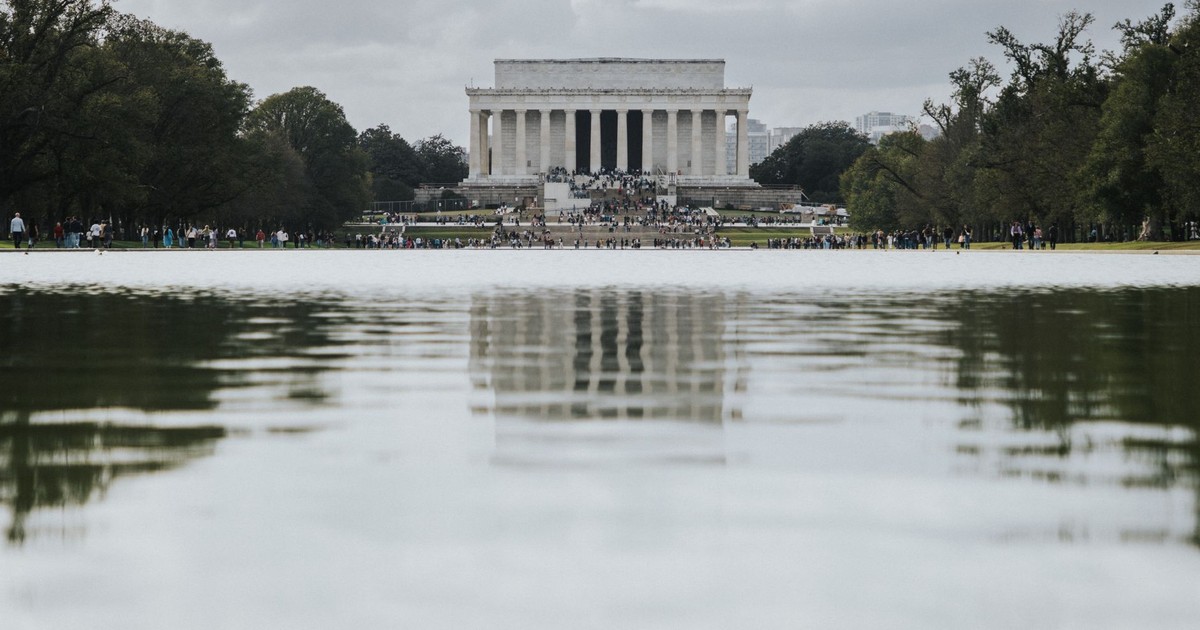

The Lincoln Memorial Reflecting Pool is one of those American landmarks so ingrained in the national imagination that most people assume it just sits there, timeless and gleaming, holding its reflection of the Washington Monument like it has nothing better to do. The reality, as of this summer, is considerably messier and now entangled in a criminal case.
David “Davey” Hearn, a 67-year-old former Olympic canoeist from Bethesda, Maryland, stopped at the pool during a 64-mile bike ride in June and reached into the water to feel a piece of the peeling new coating. What followed was five hours of detention by National Guard troops and Park Police, a grand jury indictment, a felony charge, and a trial date set for September. Hearn, who competed in the 1992, 1996, and 2000 Olympics, was indicted on July 2 after being accused of ripping out a portion of the sealant from the bottom of the Reflecting Pool on June 19. He pleaded not guilty.
On July 27, his legal team filed a motion that reframed the entire case. A National Park Service official had testified that the pool had substantial preexisting damage before Hearn allegedly touched it and could not quantify any damage attributable to Hearn. That official said the same repairs would have been required regardless of Hearn’s conduct.
A $16 Million Makeover That Didn’t Quite Take
President Trump announced a renovation of the Lincoln Memorial Reflecting Pool in April as a beautification effort that included painting the bottom “American flag blue,” tied to the country’s 250th birthday celebrations. The idea was that a darker, richer shade on the pool floor would produce a more vivid, mirror-like reflection of the monument above it.
According to the NBC News renovation timeline, the federal government spent at least $14 million to refinish the pool, not including federal employee labor costs, and the project eventually carried a $16 million price tag. The contract was awarded without competitive bidding. Within days of the refilled pool being unveiled, things started going sideways in a very visible, very green way.
The new paint job, described in contract documents as a “seamless, monolithic, waterproof, antimicrobial, and anti-algae system suitable for continuous submersion,” appeared to be peeling, and an algae bloom overtook the pool. Workers were deployed to combat the algae, and then a second contractor was brought in using nanobubble technology. According to ABC News, the National Park Service paid $1.74 million to an Ohio-based company, Green Water Solutions, to install the nanobubble filtration system under a separate no-bid contract, bringing the total project cost to $16 million. The pool that was supposed to gleam blue for America’s birthday looked, by mid-June, considerably more like a pond.
Rather than directing scrutiny at the companies that received no-bid contracts, Trump blamed vandals for the damage and ordered a law-enforcement response at the site. That is the context in which Davey Hearn stopped his bike.
A Curious Citizen, a Pair of Handcuffs, and a Felony Charge
CBS News reports that Hearn said he stopped by the pool during his 64-mile bike ride and was arrested after reaching down into the pool. He has said he was just interested in the material and briefly touched it. His account to multiple outlets was consistent: he wanted to see what the famously peeling coating felt like, reached in, and was arrested before he fully understood what was happening.
U.S. Attorney Jeanine Pirro alleged that Hearn “ripped a piece of recently installed sealant on the bottom of the Reflecting Pool at the Lincoln Memorial,” and further accused him of “forcefully and violently pulling up and removing the bottom liner with both hands” and damaging two square feet of sealant, citing witness testimony. Pirro described it at a press conference as a deliberate act. Hearn’s lawyers described it as a citizen being curious about a very publicly failing renovation project.
Hearn pleaded not guilty to one felony count of property destruction, with a trial scheduled to start September 28 in D.C. Superior Court. The charge carries a maximum prison sentence of 10 years upon conviction and accuses Hearn of causing at least $1,000 in damage to the pool. That $1,000 threshold is the legal hinge the entire case swings on, because below it the charge drops from a felony to a misdemeanor. At least three other people have been charged in the same court with misdemeanors for allegedly removing pieces of paint from the pool.
What the Government’s Own Witness Said
The motion filed by Hearn’s legal team on July 27 relies on testimony from the government’s own grand jury witness.
Defense attorneys wrote that “the witness’s testimony established that the pool had substantial preexisting damage requiring repair before any alleged conduct by Mr. Hearn.” According to NBC News, the pool was leaking more than one million gallons of water per week, its expansion joints had exceeded their service life, and the liner already contained a rip. That National Park Service official said repairs costing between $6,000 and $15,000 would have been needed regardless of whether Hearn “interacted with the pool.”
Those repairs would have still been necessary before Hearn ever arrived, and the witness could not answer a grand juror’s direct question about the difference in estimated costs before and after Hearn’s actions. “Simply put, the government’s witness could not identify any additional cost caused by Mr. Hearn’s alleged conduct. Indeed, the witness did not even say or suggest that the alleged conduct had compromised the liner at all.”
The felony charge requires proof that Hearn caused at least $1,000 in damage. The government’s own damage witness said he could not attribute any specific cost to what Hearn did. Hearn’s attorneys wrote that “the testimony failed to establish that he caused any damage at all,” arguing that the charges should be dropped, and pointing out that the felony charge requires at least $1,000 in loss, a threshold the government’s witness could not meet.
The Grand Jury Questions
Hearn’s legal team has raised a second issue: whether the grand jury that indicted him was properly informed about what it was actually deciding.
Hearn’s attorneys are seeking access to all of the closed-door testimony that led to his indictment, pointing to “irregularities” in those grand jury proceedings. In a court filing Monday, they requested an order for the government to turn over a complete transcript of all grand jury proceedings, and they also want prosecutors to disclose the legal instructions they gave to grand jurors about the elements of Hearn’s alleged crime.
The defense argues that grand jurors may not have been correctly instructed about what causation and loss actually require under the law. A grand jury can only indict if it finds probable cause that the alleged crime was committed, but if jurors were not properly told what the crime requires, the indictment itself may be built on an incomplete legal foundation. The transcripts prosecutors have shared so far “contain other irregularities that reflect a misleading presentation to the grand jury and a need for review of the entire grand jury record,” according to the defense team.
A spokesperson for U.S. Attorney Jeanine Pirro’s office did not immediately respond to a request for comment on Hearn’s arguments.
Who Is David Hearn?

According to CBS News, Hearn competed in three Summer Olympics in the canoe slalom, and was indicted on July 2 after being accused of ripping out a portion of the sealant from the pool on June 19. He also raced in the 1992 Barcelona and 2000 Sydney Olympics, and won six consecutive world championships in the C-1 team competition from 1979 to 1989, as well as two individual world titles in 1985 and 1995. He is one of the more decorated American canoeists in history.
Hearn owned a company that made composite materials used to build watercraft, and he said he stopped by the pool during his 64-mile bike ride to see what was happening. His interest in the peeling coating was, he says, professional as much as anything else. He knew exactly what that material was, understood why it was failing, and wanted to feel it. He briefly touched a chunk that was still attached to the side of the pool, then let go shortly after a park worker told him to, but was detained by National Guard troops and Park Police for five hours before being released.
His legal team, which includes attorneys Norm Eisen and Mary Dohrmann, said the indictment “should be alarming to every American,” adding: “On the eve of our nation’s Independence Day, Americans should be deeply concerned by the misuse of government power against an ordinary citizen based on a concocted narrative.”
Read More: Ex-Olympian Reveals Why There is So Much Sex Amongst Athletes
The Bigger Picture the Pool Keeps Reflecting
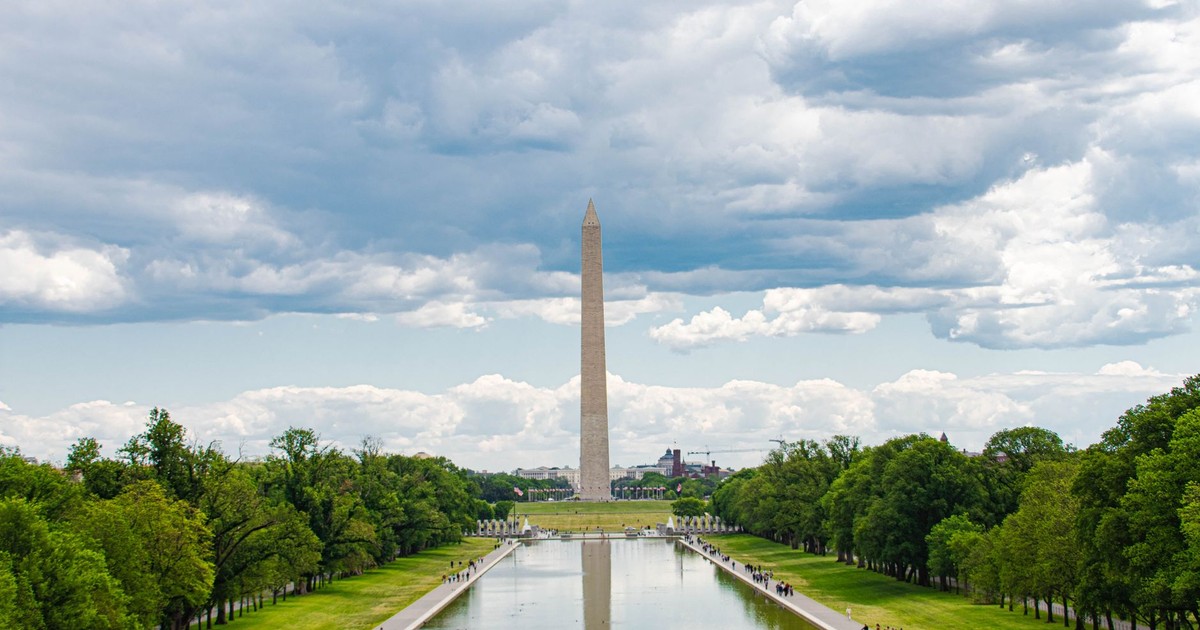
The Reflecting Pool’s troubles this summer did not begin with David Hearn or any other visitor. The lining of the Reflecting Pool had already come up in various locations before Hearn arrived on June 19. The algae bloom, the peeling paint, the structural wear all predates any arrest.
The pool itself has a long history of these kinds of problems. It was built in the early 1920s and by 2010 had sunk roughly a foot into the wet, marshy ground beneath the National Mall. A previous renovation, completed in 2012 at a cost of $34 million and lasting two years, also ended with an algae bloom almost immediately after the pool was refilled. None of that was attributed to vandals.
What is different this time is that the renovation was personally championed by a sitting president, announced as a signature beautification project ahead of a major national celebration, and then visibly and publicly failed within weeks of completion. The political pressure to explain that failure was considerable, and Hearn, a 67-year-old on a bike ride who touched a piece of already-detached coating, became the face of the explanation.
Where the Case Stands
Hearn’s trial is currently set to begin September 28 in D.C. Superior Court. Before that, the court will need to rule on his team’s motion for access to the full grand jury record. If a judge grants that access and the transcripts show what the defense claims they show, the case against Hearn could look considerably different than it does today.
The government’s position, as stated by U.S. Attorney Pirro at her press conference, is that Hearn committed a deliberate, violent act of destruction. Hearn’s position, backed now by testimony from the government’s own damage witness, is that the pool was already broken, that the same repairs were already required, and that no one has identified a single dollar of damage he actually caused.
A pool leaking a million gallons of water per week, with expansion joints beyond their service life and an existing rip in the liner, was not a pool in pristine condition waiting to be vandalized. It was a pool with serious preexisting problems, problems the government’s own witness acknowledged, on the record, in front of the grand jury that indicted Hearn anyway.
The Pool Has Been Sitting Empty Since
The Reflecting Pool has been drained since the controversy erupted. It sits empty on the National Mall right now, surrounded by a fence.
The Reflecting Pool damage at the center of this case may ultimately prove impossible to pin on a 67-year-old canoeist who touched something that was already broken. Whether the courts agree is the question the country will be watching come September 28. For now, the pool is empty, the fence is up, and one man’s bike ride has managed to surface every uncomfortable question the administration would prefer to leave at the bottom.
Disclaimer: This information is not intended to be a substitute for professional medical advice, diagnosis, or treatment and is for information only. Always seek the advice of your physician or another qualified health provider with any questions about your medical condition and/or current medication. Do not disregard professional medical advice or delay seeking advice or treatment because of something you have read here.
AI Disclaimer: This article was created with the assistance of AI tools and reviewed by a human editor.