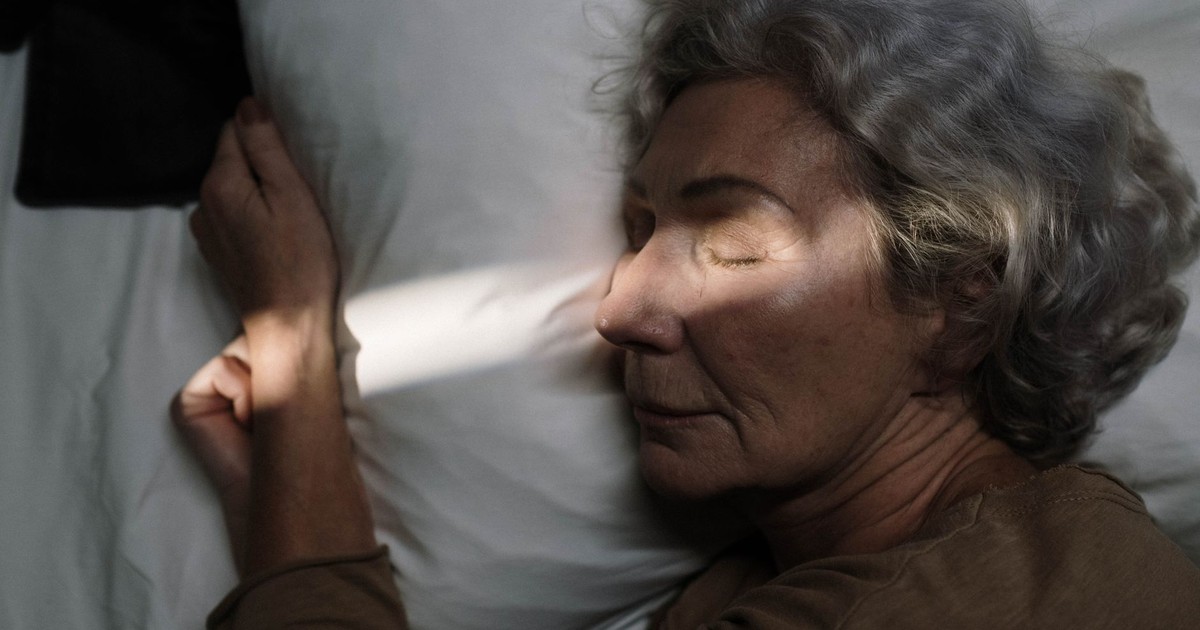

The kind of tired that arrives at 50 is different from the kind you felt at 30. At 30, you were tired because your toddler was up four times, and the fix was theoretically simple even when it felt impossible. Now the children sleep, the house is quiet, the life is calmer on paper, and yet you are lying awake at 2 a.m. watching the ceiling like it owes you something. Estrogen and progesterone fluctuations disrupt the body’s natural sleep rhythms, which can pull sleep out of reach even when every external condition looks right.
Fluctuations in estrogen and progesterone disrupt the body’s natural sleep rhythms, which can lead to insomnia and night sweats. This is not a character flaw or a sign that you are doing something wrong. It is biology doing something specific and inconvenient to your body at this particular stage of life.
“It’s hormonal” gets offered up as a complete explanation when it is really just the starting point. Hormones are one layer. Habits, environment, timing, and how your nervous system has learned to respond to wakefulness are the other layers, and those are the ones you can actually work with. These nine tips are grounded in current research, built around the biology of what is actually happening in your body, and specific enough to be useful tonight.
1. Cool Your Bedroom Down Deliberately

Most people sleep in rooms that are three to five degrees warmer than the research recommends. For women in perimenopause or postmenopause, that margin matters even more because the body’s thermoregulatory system is already being destabilized by declining estrogen. Hot flashes and night sweats are not separate from the sleep problem; they are the sleep problem.
Sleep researchers broadly recommend a bedroom temperature between 60 and 67°F (15.5–19.5°C), though some women in active menopause find they need it even lower on certain nights. The goal is to support the natural drop in core body temperature that the body uses as a sleep-onset signal.
Cooling mattress pads (the kind with circulating water or airflow technology) outperform most over-the-counter solutions. Moisture-wicking sheets in bamboo or linen perform better than cotton when night sweats are a factor. Layering a lightweight blanket over a thin sheet means you have options at 2 a.m. without having to get up and adjust the thermostat.
2. Lock In a Consistent Sleep Schedule, Including Weekends

Your circadian rhythm runs on consistency, and it does not understand the concept of the weekend. Every time you shift your wake time by more than an hour, you are giving your body the equivalent of mild jet lag.
Most adults need around 7 to 9 hours of sleep each night, and although the need for sleep does not reduce with age, many women find that getting sufficient, good quality sleep becomes more difficult during midlife and menopause. The goal is not necessarily to sleep more, but to sleep at consistent times so your body knows when to start producing melatonin and when to start ramping up cortisol for morning.
Set a wake time and protect it. Consistency in the morning anchor matters more than the bedtime, which is harder to control. If you wake at the same time every morning, including Sundays, including after a bad night, your body has an anchor point to organize around. The bedtime will start sorting itself out over a few weeks as sleep pressure builds predictably.
3. Cut Off Caffeine and Alcohol Earlier Than You Think

Caffeine has a half-life of about five to six hours in most adults, which means that a 3 p.m. coffee still has half its stimulant effect in your system at 8 or 9 p.m. If your metabolism has slowed with age, and it has, that half-life can stretch even further. Stopping caffeine by noon or early afternoon is a commonly recommended threshold for women dealing with heightened sleep sensitivity in the menopausal years, and the earlier cutoff genuinely changes outcomes.
Alcohol is the more complicated one because it is often used as a sleep aid and works in that role just long enough to be convincing. A glass of wine does help you fall asleep faster. What it also does is suppress REM sleep in the first half of the night, then bounce back in the second half, producing lighter, more fragmented sleep exactly when you were hoping to be deeply out.
The honest version of this tip is not “stop drinking” but “stop drinking close to bedtime.” Two hours is the minimum. Three is better. If you want a glass with dinner at 6 and bed at 10, that is a different calculation than a glass at 9:30 before bed.
4. Move Your Body, but Not in the Evening

Exercise improves sleep quality for women in midlife consistently, across multiple kinds of research and multiple types of movement. It helps regulate cortisol, reduces anxiety, and builds the kind of physical tiredness that translates into deeper sleep. It is also one of the few interventions shown to reduce the frequency of hot flashes for some women, which matters to sleep directly because hot flashes are what pull many women out of rest at 3 a.m.
The catch is timing. A 2025 study published in Nature Communications analyzing data from nearly 15,000 adults found that exercising within four hours of bedtime was linked to delayed sleep onset, shorter sleep duration, and poorer sleep quality, driven by elevated core body temperature and heart rate. Morning or midday exercise may be better for sleep quality. This is not a license to skip exercise when the only available window is 7 p.m.; something is better than nothing. But if you have schedule flexibility, moving your workout earlier in the day is a meaningful adjustment that costs nothing and changes how you sleep.
The type of exercise matters less than the consistency. Walking, swimming, yoga, strength training, cycling: any of these, done regularly, produce measurable sleep benefits. Yoga and tai chi have the added advantage of including a built-in stress-management component, which is relevant given that anxiety and rumination are common sleep disruptors for women in this life stage.
5. Manage the Racing Mind Before Bed, Concretely

The racing mind at bedtime is not a weakness. It is, for many women in their 50s, what happens when you have been running all day on adrenaline and competence and then suddenly stop. The nervous system does not switch off like a lamp. It has to wind down, and if you do not give it a structure for doing that, it will invent its own, which usually involves cataloguing everything that went wrong in 2019 and drafting strongly worded responses to people who cannot hear you.
Tools such as meditation, yoga, deep breathing, and progressive muscle relaxation can help calm the mind and body before sleep. CBT-I has demonstrated solid evidence for improving sleep in midlife women, particularly for anxiety-driven insomnia. But the key is to start these practices before you are already agitated in bed, not after. A 15-minute wind-down routine that begins an hour before bed, light dimming, no screens, a fixed sequence of calm activities, primes the nervous system for the transition.
One specific technique worth naming: a “worry download” before bed, where you write down everything pending, unresolved, or anxiety-producing for about 10 minutes. The research on this is not definitive, but anecdotally and in smaller studies, the act of externalizing the list reduces the brain’s tendency to keep cycling through it during the night. The notebook does not have to be a journal. The point is to move the items out of working memory and onto paper so your brain registers that they have been handled for now.
6. Rethink What You Eat in the Evening

What you eat in the hours before bed has a more direct relationship to how you sleep than most people realize. Insomnia symptoms affect up to 60 percent of peri- and postmenopausal women, and diet is one of the variables that can either compound or partially offset that risk.
A 2025 study from the Women’s Health Initiative found that postmenopausal women whose diets more closely followed established healthy eating patterns, higher in vegetables, whole grains, and legumes, lower in refined carbohydrates and saturated fat, had a lower risk of developing insomnia symptoms across the study period. The underlying reasons are not entirely settled, but the diet’s effects on inflammation, gut microbiome composition, and the production of serotonin (which is a precursor to melatonin) are the most plausible contributors.
In the short term: large, heavy meals within two to three hours of bed increase core body temperature during digestion, which works directly against the natural temperature drop your body needs to initiate deep sleep. Spicy foods amplify this effect. If you are prone to night sweats, adding a hot flash trigger via dinner is compounding the problem. Lighter evening meals, eaten earlier, give the digestive system time to settle before the body needs to transition.
7. Dim the Lights and Put the Phone Down Earlier

Light is the primary signal your body uses to regulate melatonin production. The pineal gland, the structure in the brain that releases melatonin, responds to darkness by increasing output and to light by suppressing it. Blue-spectrum light, which is the dominant wavelength emitted by phone and laptop screens, is particularly effective at suppressing melatonin because it most closely mimics daylight. Spending an hour on your phone before bed is, from your brain’s perspective, essentially standing in afternoon sunlight.
This is not just a phone problem. Overhead lighting in most homes is far brighter than the dim, warm light of a natural evening, and most people move from full overhead light to bed with no transition at all. Dimming lights an hour before bed, switching to warmer bulbs in the evening (the yellowish kind, not the bright white LEDs), and reducing screen use in that same window creates a genuine hormonal signal that night is coming. For women over 50, whose melatonin production is already declining with age regardless of screen habits, protecting whatever melatonin signal remains is worth taking seriously.
The practical version: a 9 p.m. phone-down rule is more achievable than a 7 p.m. rule and more effective than no rule. Screens off, overhead lights dimmed or off, warm lamp on. You do not need to sit in the dark. You need light that is warm, low, and not pointed directly at your eyes.
8. Consider CBT-I Before You Reach for a Pill

Cognitive behavioral therapy for insomnia (CBT-I) is the gold-standard, first-line treatment for chronic insomnia recommended by major sleep and medical organizations. The reason it is not as widely used as sleep medications comes down to access and effort: it requires working with a trained therapist over several sessions, or completing a structured digital program, rather than taking something before bed. But the outcomes are genuinely different.
A 2025 systematic review and meta-analysis of randomized controlled trials assessing CBT-I outcomes in menopausal women included 11 RCTs and found that CBT-I significantly improved sleep quality and reduced insomnia severity in that population. Sleep medications address the symptom; CBT-I addresses the pattern. For women over 50 who have developed learned insomnia, where the anxiety about not sleeping has become its own reason for not sleeping, the behavioral component is targeting the exact underlying cause driving the problem.
CBT-I includes several components: sleep restriction therapy (temporarily limiting time in bed to build sleep pressure), stimulus control (retraining your brain to associate the bed with sleep rather than wakefulness), cognitive restructuring (challenging the catastrophic thoughts that kick in at 3 a.m.), and relaxation techniques. Digital CBT-I programs now make it possible to work through this without waiting months for a therapist appointment. Sleepio and the National Sleep Foundation’s digital programs are among the more thoroughly researched options, though it is worth confirming current availability directly, as offerings in this space continue to evolve.
9. Stop Watching the Clock

The clock in your bedroom is a threat. Every time you look at it during a night-waking and do the math (“it’s 3:14 a.m., I have to be up at 6:30, that’s three hours and sixteen minutes”), you activate the problem-solving, anxiety-generating part of your brain and make it significantly harder to return to sleep. The clock watch is both a symptom of sleep anxiety and a driver of it.
Turn the clock away from you or remove it from the room entirely. This is the single easiest environmental change on this list, it costs nothing, and the research behind it is clear: clock monitoring during night wakings increases arousal and delays sleep return. For women over 50 who are prone to the particular 3 a.m. wakefulness that menopause produces, removing the clock removes one lever of the spiral.
The deeper principle: the less you fight the wakefulness, the faster it typically passes. Lying quietly in the dark, breathing slowly, without agenda, is not the same as being awake. It is rest. Your body is doing maintenance work it cannot do when you are upright and caffeinated. You do not need to be consciously asleep for all of that to be happening.
What Actually Changes and What Doesn’t

None of these tips will make your hormones stop shifting. They will not eliminate night sweats by force or turn a perimenopausal nervous system back into the one you had at 38. Although the need for sleep does not reduce with age, many women find it becomes harder to get during midlife and menopause, and the knock-on effects of poor sleep extend well beyond fatigue, touching mental health, memory, concentration, and cardiovascular health.
What does change with consistent application of the habits on this list, and this is what the research across multiple study types supports, is the quality and depth of the sleep you do get, the speed at which you return to sleep after waking, and the anxiety response to wakefulness that so often turns a normal mid-sleep arousal into a two-hour event. The sleep deprivation effects that compound across weeks and months of poor rest are real, but so is the body’s capacity to recover when the conditions improve.
Some nights will still be rough, even if you do everything right. The goal is not a perfect night every night. It is enough good nights that the rough ones stop feeling like evidence that something is permanently broken. Because it is not. Sleep in your 50s is different from sleep in your 30s, but different is not ruined.
Disclaimer: This information is not intended to be a substitute for professional medical advice, diagnosis, or treatment and is for information only. Always seek the advice of your physician or another qualified health provider with any questions about your medical condition and/or current medication. Do not disregard professional medical advice or delay seeking advice or treatment because of something you have read here.
AI Disclaimer: This article was created with the assistance of AI tools and reviewed by a human editor.