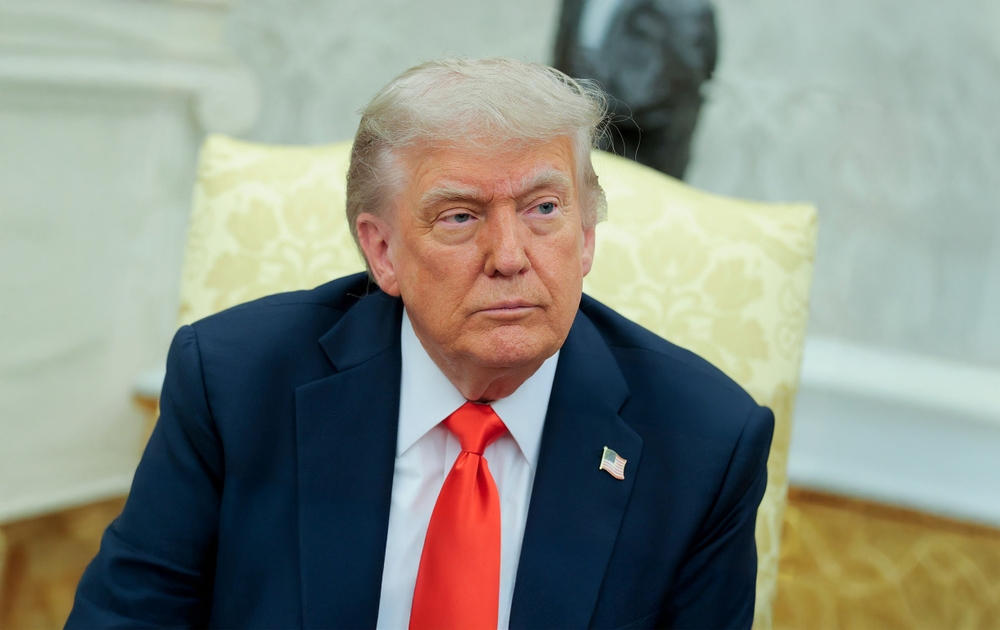

When a sitting president declares he will hand a federal institution back to Congress rather than comply with a court order, the story has stopped being about the building. It has become about something considerably more fundamental: who, in America, gets to put their name on things, and who gets to decide when they have to take it back.
That is, in its plainest form, what happened on May 29, 2026, when U.S. District Judge Christopher Cooper issued a 94-page ruling that blocked the Trump administration’s planned closure of the John F. Kennedy Center for the Performing Arts, ordered Trump’s name stripped from the building within two weeks, and declared that the board of trustees had acted outside its legal authority in voting to rename the institution. President Trump responded within hours, attacking the judge personally, announcing he would transfer control of the Kennedy Center to Congress, and suggesting the center was structurally dangerous to the public. By the following morning, the story was no longer primarily about a renovation project. The Trump judge ruling had become the latest flashpoint in an ongoing constitutional dispute over executive power, institutional authority, and the limits of what a president can do with a building he chairs but does not own.
The Kennedy Center is not a small arena or a regional venue that could change its name and carry on. It is a memorial to an assassinated president, named as such by an act of Congress in 1964. The question of who controls its identity goes to the heart of how American civic institutions are supposed to work.
The Ruling: What Judge Cooper Actually Decided

NBC News reports that U.S. District Judge Christopher Cooper ruled that Trump’s handpicked board did not have the authority to rename the facility on its own, writing in his decision that “The Kennedy Center’s organic founding statute makes crystal clear that the Center is to be named for President Kennedy, and it cannot bear any other formal name or public memorial based on the Board’s say-so alone.”
Cooper concluded with a declaration that has since become the ruling’s most-cited line: “Congress gave the Kennedy Center its name, and only Congress can change it.” That sentence is not rhetorical. It is a direct reading of Public Law 88-260, the 1964 joint resolution passed by Congress two months after President Kennedy’s assassination that renamed the then-National Cultural Center as the John F. Kennedy Center for the Performing Arts and set it apart as a living memorial to the late president. That law is written into Title 20 of the U.S. Code, and Cooper’s ruling treated its text as the controlling authority in the case.
The administration had attempted to argue that calling the institution the “Trump Kennedy Center” was not technically a renaming. According to NBC News, in his ruling, the judge said the administration did not deny the center is legally required to be named after Kennedy but had tried to claim the center had not really been renamed, with officials submitting that “everything is not what it seems” and insisting that calling it the “Trump Kennedy Center” was “merely a secondary name” rather than a name change. Cooper rejected this framing, writing that the argument was unlike a simple clerical rearrangement, and that the “Trump Kennedy Center” label “adds an entirely new name to the Center’s formal title and puts President Kennedy’s name in second place.”
The Closure Injunction
Beyond the naming dispute, Cooper’s ruling also blocked the board’s March decision to close down the Kennedy Center for two years for renovations. According to CNN, the board’s vote on whether to close the center “was foreordained,” though Cooper said repair work may continue and did not bar any future board decision to close the center, as long as the board has sufficient information to make an independent, considered decision.
The judge pointed to comments from Matt Floca, the official put in charge of the center, that appeared to show he was preparing for total closure months before Trump announced in February plans to shut the building down. “Whatever happened during that purported four-month incubation period, board input was, most evidently, an afterthought,” Cooper wrote. “Trustees learned about the plan to close the center at the same time as the general public, by social media post. Deprived of time and information, they had no meaningful opportunity to consider perhaps the most momentous decision in the Center’s lifetime since it opened in 1971.”
The Lawsuit Behind the Ruling
According to The Hill, U.S. District Judge R. Christopher Cooper, an appointee of former President Obama, sided with a challenge to the renovation project from Rep. Joyce Beatty (D-Ohio), a congresswoman who sits as an ex officio member of the Kennedy Center’s board. The decisions represented a major victory for Beatty, who sued after her fellow board members moved to rename the center, later revising her complaint after Trump announced plans to shutter the building while a sprawling renovation was undertaken. Cooper held parallel hearings in late April. He ruled in favor of Beatty’s request, though he rejected a separate challenge filed by a coalition of cultural and historic preservation organizations.
In response to the ruling, Beatty said: “Today’s ruling rightly affirms that this administration’s efforts to rename and close the center have no basis in law. The Kennedy Center is an institution that belongs to the American people, not to Donald Trump.” Trump, who was elected chairman of the board after returning to office, had overseen major programmatic and leadership changes to the center, which some observers saw as driving the desire to temporarily close it, amid slumping ticket sales and major artists pulling out of planned appearances.
Trump’s Response: “Ashamed of Himself”
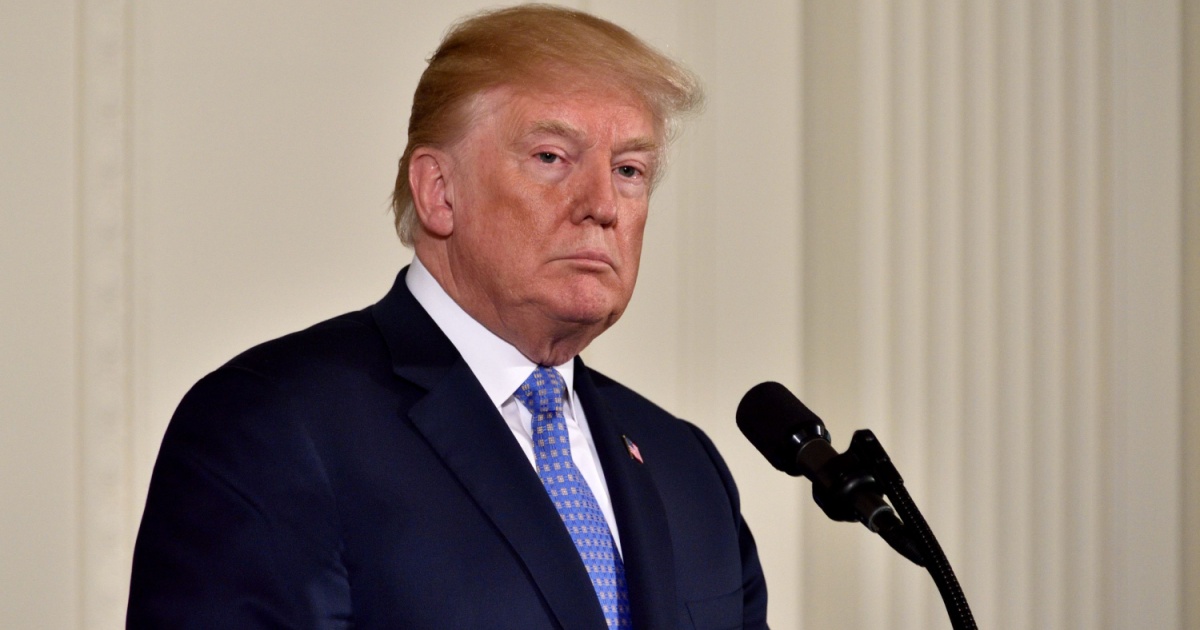
The president did not receive the ruling quietly. President Trump said on Friday that a federal judge should be “ashamed of himself” for blocking his administration’s move to add Trump’s name to the Kennedy Center and ruling that board members improperly voted to close the performing arts center for renovations that summer.
Trump branded Cooper as “an anti-Trump Hater” and predicted that the nation’s premier performing arts center would “soon be closed, probably never to open again,” in a lengthy post on his Truth Social platform in which he fumed about the Friday decision.
Clearly angered by the legal setback, he said it was “impossible for me to be treated fairly,” tying Cooper’s ruling to earlier losses, including the Supreme Court’s rejection in February of his sweeping tariffs.
Trump also argued that the board, not he personally, had voted to add his name to the building. “It was the board, not him, that added the Trump name to the center,” Trump said, writing that “they thought it would be good for this dying Institution.”
Without offering evidence, Trump suggested that Cooper’s wife, lawyer Amy Jeffress, was partly responsible for the ruling. The president noted that Jeffress, a partner at the Hecker Fink law firm, is a former federal prosecutor who served as a counselor to former Attorney General Eric Holder during the Obama administration.
The “Never Never Land” Post
In a formulation that drew immediate attention, Trump framed his response to the Trump judge ruling as an ultimatum directed at the institution itself. “Judge Cooper should be ashamed of himself! I cannot be involved with a situation where danger to the Public is allowed to flourish in plain and open sight,” Trump wrote, adding: “Unless I am free to do what I do better than anyone else, bring this Institution back, physically, financially, and artistically, I have no interest in continuing what could only be a hopeless journey into ‘NEVER NEVER LAND.'”
In a post on Truth Social, Trump said he instructed the Commerce Department to “transfer” the Kennedy Center to Congress and make Congress responsible for its operation, maintenance, and management, though it was unclear how that would work legally.
In a subsequent post, Trump invoked the Kennedy Center episode in connection with musicians backing out of a celebration for the country’s 250th anniversary, writing: “Cancel it, just like I canceled my involvement with the failing and unsafe to be in Kennedy Center, because a Highly Conflicted, Crooked Federal Judge, said that I should not be allowed to spend my time and money in order to MAKE THE CENTER GREAT AGAIN.”
The Legal and Institutional Stakes
The ruling arrived in the middle of a broader contest over what a president can and cannot do with federally chartered institutions. The planned Kennedy Center renovations were part of the Trump administration’s broader efforts to update landmarks in Washington, D.C., under the president’s D.C. Safe and Beautiful Task Force, which has also drawn legal challenges related to renovation projects at the Lincoln Memorial Reflecting Pool and the demolition of the East Wing of the White House to build a ballroom.
The Kennedy Center occupies a distinct legal position within that agenda. The legal protection for its name traces back to two foundational acts of Congress. In 1958, President Eisenhower signed the National Cultural Center Act, which authorized building a national performing arts venue in Washington, D.C. After President Kennedy’s assassination, Congress amended the act in January 1964 through Public Law 88-260, renaming the project and setting it apart as a living memorial to Kennedy – and declaring that any reference to the “National Cultural Center” in any federal document would from that point forward refer to the John F. Kennedy Center for the Performing Arts.
A separate provision of federal law goes further: it designates the center as “the sole national memorial to the late John Fitzgerald Kennedy within the city of Washington and its environs.” Cooper’s ruling treated those provisions not as suggestions but as firm boundaries on what the board could do without an act of Congress.
The Board’s December Vote
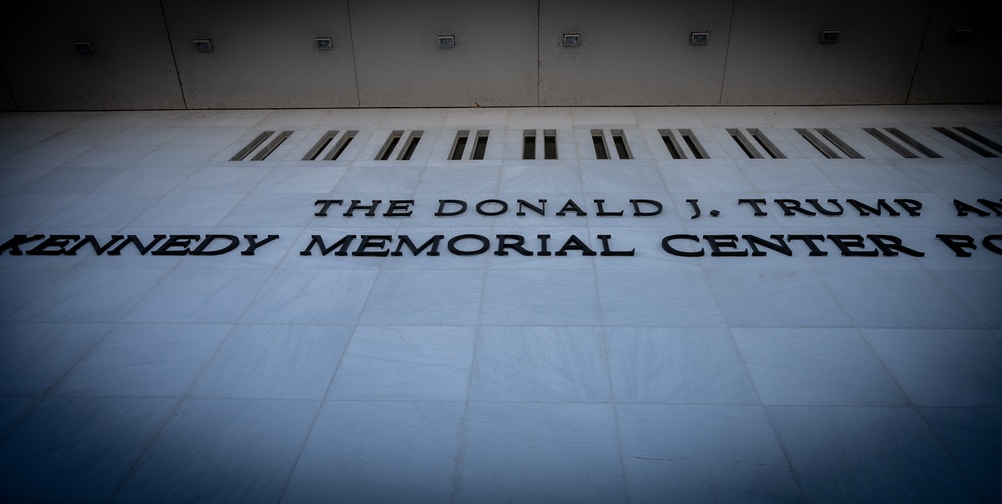
The Kennedy Center’s Board of Trustees voted in December 2025 to rebrand the institution as the “Trump-Kennedy Center,” and workers began adding new signage to the building almost immediately. The center’s legal name under federal statute, however, remained the John F. Kennedy Center for the Performing Arts, written into Title 20 of the U.S. Code, and changing it requires an act of Congress.
Ex officio member Rep. Joyce Beatty said she “was muted on the call and not allowed to speak or voice her opposition to this move.” House Minority Leader Hakeem Jeffries and Representative Rick Larsen indicated they were not present at the meeting; Jeffries further stated that “the Kennedy Center Board has no authority to actually rename the Kennedy Center in the absence of legislative action.”
The center’s website published a new logo in December 2025, and workers added Trump’s name to the building’s façade the following day, despite federal law that prohibits the board from installing another person’s name on the building’s exterior.
What Has Happened to the Kennedy Center
The legal dispute did not arise in a vacuum. Since Trump returned to office and assumed the role of board chairman, the Kennedy Center has experienced significant institutional turbulence that predates the court filing.
The 48th Kennedy Center Honors telecast drew the smallest audience ever recorded for the event, according to Programming Insider. The broadcast received just 2.65 million viewers, marking a 35 percent decline from the 4.1 million viewers in 2024, which itself was one of the lowest-rated shows in recent years.
Ticket sales plummeted and artists canceled performances en masse. Washington National Opera artistic director Francesca Zambello, who said donor confidence had “shattered,” told The Guardian that while it was the company’s “desire to perform in our home at the Kennedy Center,” if they could not raise enough money or sell enough tickets, they had to consider other options – noting that “the two things that support a company financially, because of the takeover, have been severely compromised.” The Washington National Opera left the Kennedy Center shortly after.
You can read more about the broader pattern of Trump’s public controversies in 2026 in our earlier coverage of how voters have responded to his second term’s most contentious decisions.
Hamilton creator Lin-Manuel Miranda told the press that withdrawing the musical’s planned 2026 run at the center was “morally not complicated,” noting that “the Kennedy Center has historically been a bipartisan birthplace for the best of our nation’s arts” and that Trump’s administration “politicized that when they fired the board and Trump named himself head of it,” adding: “We were just not going to participate in that if we had the option not to.”
Nearly nine months into Trump’s oversight, sales for the three largest performance venues were the worst they had been since the pandemic, according to a Washington Post analysis published in late 2025.
Compliance and the Question of Appeal
While the White House and the president’s Truth Social posts suggested defiance, the institution moved toward compliance within days of the ruling.
Kennedy Center lawyers instructed staff to immediately begin removing President Trump’s name from the facility after the federal judge blocked the administration from rebranding the center. In an internal memo obtained and reviewed by CBS News, the center’s general counsel told employees that email signatures, letterhead, and other documents must be changed to reflect the venue’s original name, “The John F. Kennedy Center for the Performing Arts,” or simply “Kennedy Center.”
According to Time, a Thursday memo from the center’s Office of General Counsel ordered staff to begin removing references to Trump from everything – from communication and promotional materials to signage – with a June 12 deadline for templates, forms, signage, brochures, and website pages.
The Kennedy Center’s public-facing stance was carefully worded. A spokesperson for the institution, Roma Daravi, told The Hill: “We are complying with the court’s order while evaluating all legal options to preserve this revitalization and recognize President Trump’s leadership.” That formulation – complying while evaluating – reflects the position of an institution caught between a court order and a board still populated by Trump allies.
Read More: Trump Misses Don Jr.’s Wedding: The Heartbreaking Reason Why
What This Means Going Forward

The Trump judge ruling from U.S. District Judge Christopher Cooper represents more than a setback for a renovation plan. It is a formal judicial declaration that the executive branch cannot unilaterally rebrand a congressionally established institution, regardless of who chairs its board. The 94-page opinion drew a clear line between what a president can influence through political appointments and what requires an act of Congress to change permanently.
Trump’s response – attacking the judge personally, raising his wife’s professional associations without evidence, threatening to hand the institution back to Congress, and declaring the building unsafe – follows a pattern his administration has deployed in previous legal confrontations. The president has consistently characterized adverse rulings as evidence of judicial bias rather than as determinations on the merits. Whether a Kennedy Center appeal produces a different result remains to be seen. What is already visible is the cost: an institution that once attracted the country’s leading artists and audiences has spent the better part of 18 months watching both walk away, and a federal court has now ruled that the legal basis for the changes driving those departures did not exist in the first place.
The question of the building’s future governance, and whether Congress will be willing to take on the role Trump has proposed for it, remains unanswered. A name on a building is, in one sense, the smallest possible thing. In another sense, this whole dispute has always been about who gets to define what an American institution is for – and who the law says has the final word on that question. A federal court has now given its answer. Workers have already been told to get started.
AI Disclaimer: This article was created with the assistance of AI tools and reviewed by a human editor.