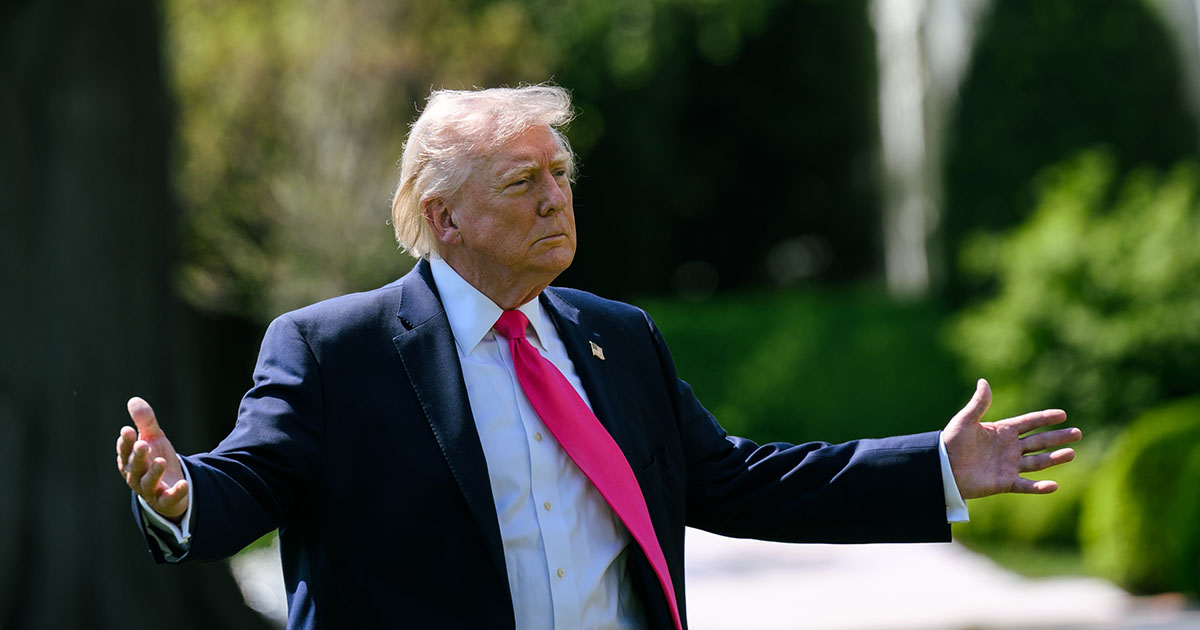

A single word can carry the weight of a presidency. In the summer of 2026, with Donald Trump roughly 18 months into his second term and the midterm elections looming on the November horizon, pollsters at The Economist and YouGov asked Americans to do something deceptively simple: choose from a list of descriptors and say which ones they would use to describe the president. More than half of the country landed on the same word.
The findings arrived in an already turbulent political environment. Trump’s second term has been defined by a cascade of controversies, from the administration’s aggressive immigration enforcement and the fallout from the Jeffrey Epstein files release to the costs and political consequences of a war with Iran. His approval numbers have been sliding for months, his standing among key demographic groups has eroded significantly, and the generic congressional ballot consistently shows Democrats with a meaningful advantage.
Executive Summary
When asked in a new Economist/YouGov poll which word they would use to describe the president, 52 percent of Americans said “dangerous.” Forty-nine percent used “corrupt,” and 45 percent used “racist” and “out-of-touch” to describe Trump. The poll, conducted July 17-20, 2026, presents one of the starkest single-document snapshots of public opinion toward a sitting president in recent polling history.
The findings are not simply a Democratic referendum on a Republican president; they reflect measurable erosion across independent voters and within Trump’s own coalition. Across multiple independent surveys conducted in 2026, Trump’s approval rating has been stuck in the high 30s to low 40s, his economic marks have hit career lows, and his personal-character ratings have declined sharply even from the early months of his second term.
The July 2026 Economist/YouGov Poll: What Americans Actually Said
The Word That Defined the Moment
The July 17-20, 2026 Economist/YouGov poll covered Trump’s unpopularity, low confidence in ICE, and whether politicians were considered socialists, among other topics. But the single most striking result was the personal-qualities portion of the survey, in which respondents were presented with a list of words and asked which they would apply to the president.
Of those polled, 52 percent chose the word “dangerous” as a word they “would use” to describe the president, with only 19 percent saying they would not use it. Then came 49 percent opting in favor of “corrupt” versus just 19 percent against.
The word “racist” came in at 45 percent versus 23 percent who would not use it. “Out-of-touch” was chosen by 45 percent, 44 percent chose “cruel,” 43 percent chose “bold,” and 38 percent chose “divisive,” with numbers continuing down to just 17 percent calling Trump “inspiring.”
The “dangerous” finding is not a partisan artifact. While Democratic respondents drove much of the top-line result, the breadth of that 52 percent majority means that meaningful numbers of independents and some Republicans contributed to the total.
The Partisan Split Behind the Numbers
The word poll also lays bare the extraordinary degree to which Americans are living in entirely separate political realities when they assess the same president.
Democrats and Republicans generally use very different words to describe Trump. Eighty-six percent of Democrats say Trump is dangerous, compared to only 12 percent of Republicans. Seventy-six percent of Republicans and only 6 percent of Democrats say Trump is strong.
There were also 45 percent of Americans who used the word “honest,” 40 percent who used the word “inspiring,” and 38 percent who used the word “intelligent” to describe Trump. Generally, it was Republicans who used favorable words and Democrats who used unfavorable ones.
Job Performance and Issue-Area Ratings
The personal-qualities data did not stand alone. The same poll measured Americans’ views on Trump’s handling of specific policy areas.
Fifty-four percent of Americans disapprove of Trump’s handling of immigration, while just 39 percent approve. Fifty-four percent also disapproved of Trump’s handling of race relations, while 32 percent approved. Trump fared better on crime, but 49 percent still disapproved of his handling of the matter while 41 percent approved.
The Broader Approval Trajectory: From Inauguration to Mid-2026
A Second Term That Started Strong and Declined
Trump’s second-term approval began with a 47 percent inauguration bump, declined through 2025, fell to 41 percent in March 2026, briefly recovered to 43 percent in April, then dropped sharply to 38.1 percent in May 2026, the lowest approval of either Trump term.
By July 17, Trump had a 40 percent approval rating and 59 percent disapproval rating, a one-point decline in his net approval from April, and a 38 percent/60 percent approval/disapproval rating on the economy. That was a net approval rating of negative 22 on the economy, his worst marks on the economy of his political career, according to CNBC polling.
The same survey found 61 percent said they are pessimistic about the state of the economy and outlook for the future, the highest percentage since December 2023.
The CNN/SSRS Year-End Assessment
The mid-year data aligns with how Americans had already characterized Trump’s first year back in office. More than half of Americans in a survey released in early 2026 rated President Trump’s first year back in office as a “failure.” The CNN/SSRS survey found that 58 percent of U.S. adults said 2025 was a failure for the president on a number of issues.
Overall, 61 percent of respondents said they disapprove of the way Trump is handling his job. Of that number, 35 percent cited personal behavior, including putting self-interests above the nation, bullying, being disrespectful, erratic behavior, allegations of racism, and his court record, as the reason for their lack of confidence.
Misuse of power (25 percent), his policy agenda (23 percent), foreign policy moves (15 percent), and cost of living concerns (12 percent) were also among the justifications.
When it comes to priorities, 36 percent of participants said the president has the “right priorities,” marking a 9-point drop from the beginning of the term. About 64 percent said he “hasn’t paid enough attention to the country’s most important problems.” The economy and cost of living (42 percent) and the state of U.S. democracy (22 percent) were ranked as the “most important” issues facing Americans.
Erosion of Personal Character Ratings: The Pew Research Findings
Pew Research Center documented a sharp deterioration in how Americans assessed Trump’s personal qualities earlier in the year, based on a survey of 5,103 U.S. adults conducted April 20-26, 2026.
Americans’ assessments of President Donald Trump had declined across several months. His job approval rating stood at 34 percent in that survey, the lowest mark of his second term. He had also lost ground across a variety of personal attributes and issue areas.
One of the steepest declines had been in the share of Americans who say Trump “keeps his promises.” At that point, 38 percent said this describes Trump very or fairly well, down from 43 percent last August and 51 percent shortly after his reelection in November 2024.
A majority of Americans (56 percent) said the overall level of ethics and honesty in the federal government had fallen over the course of Trump’s term.
Coalition Fractures Within the Trump Base
Perhaps the most significant finding from the Pew data was not about Trump’s standing with Democrats but about fractures within his own coalition.
Trump’s younger and Hispanic voters were substantially less likely than his older and White voters to approve of his job performance: 57 percent of Trump voters under 35 and 70 percent of those ages 35 to 49 approved, compared with 87 percent of his voters ages 50 and older. Sixty-six percent of Hispanic Trump voters approved of the president, compared with 81 percent of White Trump voters.
Trump’s approval rating among his Hispanic voters had declined 27 points since early 2025, compared with a 14-point drop among his White voters.
Trump’s approval rating also declined substantially among those who did not vote in 2024: 26 percent of these U.S. adults approved of his job performance, down from 30 percent in January and 45 percent in early 2025.
The Midterm Dimension: What the Approval Numbers Signal
The Independent Voter Problem
Every major poll conducted in 2026 has flagged the same structural issue for Republicans: Trump’s standing with independent voters has fallen to levels that historically precede significant midterm losses.
Trump’s approval rating in July 2026 stood at 39.4 percent approve and 57.2 percent disapprove, a net of negative 17.8. Independent approval sat at 34 percent, below the 36 percent level that preceded Democrats’ 41-seat wave in 2018.
The 34 percent independent approval is the politically decisive figure. Every president who triggered a wave midterm loss saw independent approval fall below 40 percent before Election Day.
For families and communities watching the approval data accumulate, including those following the Trump and Melania separation rumors that have added personal texture to the political story, the numbers reflect a country whose mood toward this presidency has soured significantly and broadly, not just along predictable partisan lines.
The Generic Ballot and Congressional Implications
With Trump unpopular, his Republican Party was trailing in Americans’ intended House vote, though the margin was smaller there than on approval of Trump’s job handling. When choosing between unnamed Democratic and Republican candidates, registered voters preferred the Democrat by 6 points (46 percent to 41 percent).
CNN Chief Data Analyst Harry Enten noted that while Democrats have an average four-point lead on a generic House ballot in recent polling from The Washington Post and CNBC, it’s a slimmer margin than past midterm election cycles.
The Net Approval Context
Trump’s approval rating improved somewhat over the weeks leading up to late July 2026. It had hit a second-term low of negative 20.2 back in May. By July 22, Trump’s net approval rating had moved up to negative 17.4.
Trump was actually slightly more popular than Joe Biden was at the equivalent point in his term. Biden had a negative 19.2 net approval versus Trump’s negative 17.4 at the comparable stage.
The Positive Descriptors: Where Trump Retains Support
An accurate reading of the data demands acknowledging what the July 2026 poll also found on the positive side of the ledger. The “dangerous” headline was the dominant finding, but it did not capture the full picture.
There were also 45 percent of Americans who used the word “honest,” 40 percent who used the word “inspiring,” and 38 percent who used the word “intelligent” to describe Trump.
These are not trivial numbers. Forty-five percent of Americans calling the president “honest” means that roughly half the country holds a fundamentally different view of his character than the majority that labeled him “dangerous.”
Seventy-six percent of Republicans and only 6 percent of Democrats say Trump is “strong.” That 76 percent figure among Republicans indicates that even as his broader coalition shows signs of erosion, Trump’s core base continues to view him in strongly positive terms on the qualities they prize in a leader.
Key Takeaways
The July 2026 Economist/YouGov poll is the latest data point in a pattern of sustained and accelerating decline in how Americans, across most demographic and partisan groups, perceive Donald Trump’s presidency, his personal character, and his fitness for the office he holds.
The word “dangerous,” chosen by 52 percent of Americans, crossed the majority threshold in a poll that simultaneously found 86 percent of Democrats and 12 percent of Republicans choosing the same descriptor. The numbers on immigration, race relations, and the economy tell a parallel story: a president who ran on strength in each of these areas now faces majority disapproval on all of them.
The coalition cracks documented by Pew, particularly the 27-point drop in approval among Hispanic Trump voters and the steep decline among voters under 35, suggest that the erosion is not confined to people who were always opposed to him. The independent-voter approval figure of 34 percent sits below historical thresholds that have preceded wave elections, and with November 2026 approaching, Republican strategists are watching it closely.
Disclaimer: This information is not intended to be a substitute for professional medical advice, diagnosis, or treatment and is for information only. Always seek the advice of your physician or another qualified health provider with any questions about your medical condition and/or current medication. Do not disregard professional medical advice or delay seeking advice or treatment because of something you have read here.
AI Disclaimer: This article was created with the assistance of AI tools and reviewed by a human editor.